Product Overview
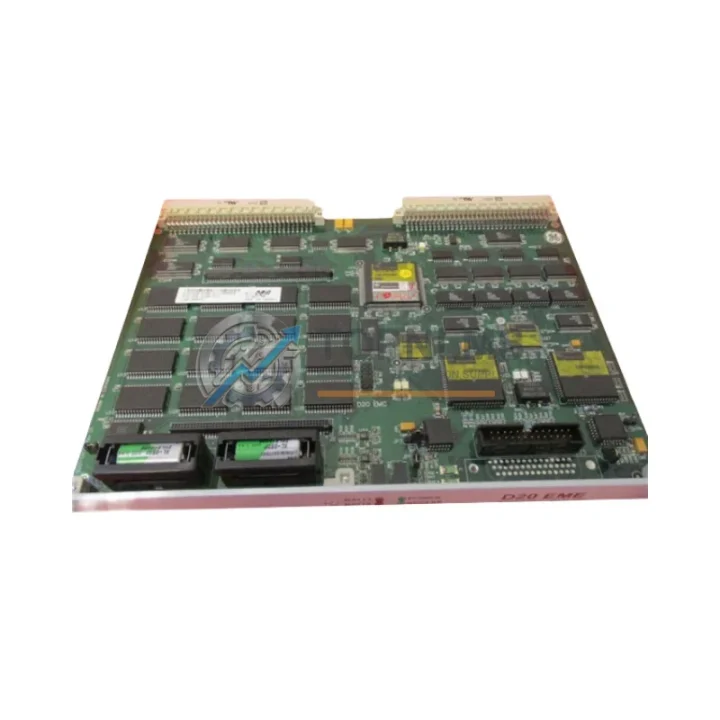
GE WESDAC D20EME Original Industrial Spare D20 Compatible: System Stability & Substation Automation Maintenance
The GE WESDAC D20EME is an original spare RTU (Remote Terminal Unit) module from General Electric’s proven D20 Series substation automation platform. Designed for mission-critical power distribution and utility control environments, this module serves as the communications and data-acquisition backbone of D20-based substation controllers. For maintenance engineers managing aging substation infrastructure, securing a verified WESDAC D20EME replacement unit is one of the highest-impact steps toward eliminating unplanned outages and extending the operational life of existing control systems.
In utility and industrial power environments, the cost of a single unplanned substation outage far exceeds the cost of maintaining a strategic spare inventory. The D20EME module handles real-time data acquisition, protocol conversion, and SCADA communications — functions that are non-negotiable for grid stability. When this module fails, the entire RTU node loses visibility, making rapid like-for-like replacement with a genuine GE D20EME the only path to restoring normal operations without re-engineering the control architecture.
Critical Technical Specs
| Parameter |
Specification |
| Part Number / SKU |
WESDAC D20EME |
| Manufacturer |
General Electric (GE) |
| Series |
D20 Series |
| Module Type |
RTU Communications / Substation Automation Controller Module |
| Application |
Substation SCADA, Power Distribution RTU, Utility Automation |
| Communication Protocols |
DNP3, IEC 60870-5-101/104, Modbus (series-dependent) |
| Compatibility |
GE D20 Series RTU chassis and backplane |
| Installation |
Modular card insertion into D20 Series chassis slot |
| Operating Environment |
Industrial substation; extended temperature range |
| Country of Origin |
United States |
| Weight |
300 g (approx.) |
| Condition |
Original / Genuine GE spare |
| Pre-shipment Testing |
Functional verification performed before dispatch |
| Warranty |
12 Months |
Preventive Maintenance Strategy
Experienced substation maintenance teams know that replacing a failed GE WESDAC D20EME in isolation rarely tells the full story. RTU modules operate within a tightly coupled system of power, communications, and I/O components — and stress on one element typically signals wear across adjacent modules. A structured inspection during any D20EME replacement event should cover the following areas:
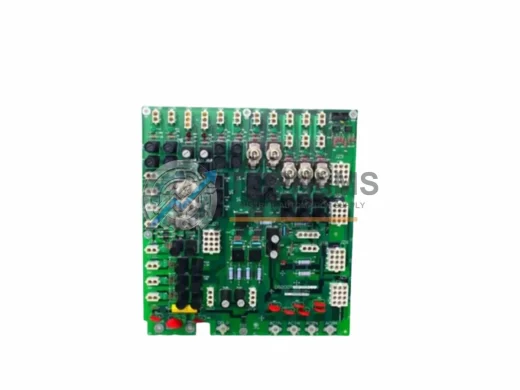
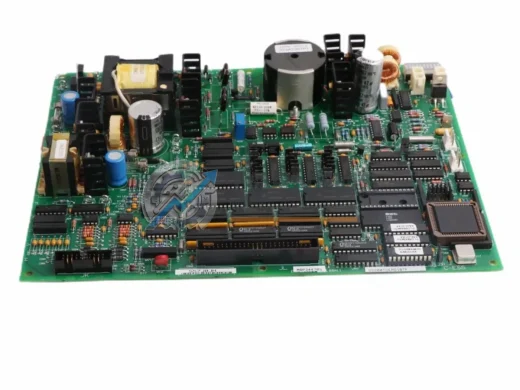
Power Supply Integrity: The D20 Series chassis relies on a dedicated DC power supply module to maintain stable voltage rails for all installed cards. During a D20EME swap, verify that the D20 Series power supply module output is within specification. Voltage sag or ripple is a leading cause of premature communications module failure and should be ruled out before the replacement unit is commissioned.
Backplane and Chassis Condition: Inspect the D20 RTU chassis backplane for oxidized connector pins, mechanical damage, or contamination. A compromised backplane can cause intermittent communication faults that are frequently misdiagnosed as module failures. Cleaning and re-seating all installed cards — including any co-installed D20 Series I/O modules — is recommended as part of the maintenance window.
Communications Infrastructure: The D20EME module interfaces with upstream SCADA systems via serial or Ethernet links. Inspect associated serial communications cables, fiber optic transceivers, and Ethernet patch cables for physical damage or degraded connectors. A marginal cable that passes basic continuity checks can still introduce packet errors that degrade DNP3 or IEC 60870 polling performance.
I/O Module Verification: Co-resident D20 Series analog input modules and digital I/O modules should be checked for correct channel mapping and alarm thresholds. A communications module replacement is an ideal opportunity to audit I/O configuration files against the current field wiring schedule, catching any undocumented changes made during previous emergency repairs.
Terminal Blocks and Field Wiring: Inspect DIN-rail terminal blocks and field wiring terminations within the control cabinet. Loose or corroded terminals are a common source of spurious analog readings and digital input chatter that can mask genuine process alarms. Torque-check all terminal screws and apply contact enhancer where corrosion is present.
Signal Isolation and Surge Protection: For substations exposed to lightning or switching transients, verify that signal isolators and surge protection modules on analog and digital inputs are functional. These components absorb transient energy that would otherwise reach the D20EME’s input circuitry, and they are frequently overlooked until a second module failure occurs.
Battery-Backed Memory and RTC: If the D20 Series installation includes a battery backup module or real-time clock (RTC) board, check battery health and replace on schedule. Loss of RTC accuracy causes timestamp errors in DNP3 event logs, which can complicate post-incident analysis and regulatory reporting.
Addressing these adjacent components during a planned D20EME replacement converts a reactive repair into a comprehensive preventive maintenance event — reducing the probability of a follow-on failure within the same maintenance cycle.
Strategic Replacement Solutions
The GE WESDAC D20EME is a legacy-generation module that is no longer in active production, making genuine spare availability a critical procurement concern for utilities and industrial operators still running D20 Series infrastructure. Unlike generic third-party substitutes, an original GE D20EME module slots directly into the existing chassis without firmware re-flashing, protocol reconfiguration, or backplane adapter modifications — preserving the validated system configuration and minimizing the engineering effort required to return the RTU to service.
For sites managing multiple D20-based RTU nodes across a substation network, a strategic spare holding of one to two D20EME units per site is a widely adopted best practice. The mean time to repair (MTTR) for a substation RTU failure drops from days (procurement lead time) to hours (local spare swap) when a verified replacement is available on-site. This approach is particularly valuable for remote or unmanned substations where emergency procurement logistics are complex.
When planning a broader D20 Series lifecycle extension program, consider auditing all installed module types across the RTU fleet — including communications cards, I/O expansion modules, and power supply units — to identify which variants are approaching end-of-life and should be prioritized for spare stock. Consolidating procurement across multiple module types in a single purchase event typically reduces per-unit cost and simplifies incoming inspection logistics.
All WESDAC D20EME units supplied by TOPNLMS are sourced as original GE components, subjected to functional verification testing prior to dispatch, and covered by a 12-month warranty. Units are packaged in anti-static protective packaging with appropriate cushioning for international freight, and export documentation is provided upon request.
Support FAQ
Q1: Is this a genuine GE WESDAC D20EME or a compatible substitute?
This is an original General Electric WESDAC D20EME module — not a third-party compatible or remanufactured substitute. All units are sourced as genuine GE spare parts and verified against the original part number before listing.
Q2: What testing is performed before shipment?
Each D20EME unit undergoes functional verification testing prior to dispatch. This includes power-on checks and communications interface verification. A test report summary is available upon request. Units are shipped in anti-static packaging with physical inspection documentation.
Q3: Will this module work as a direct drop-in replacement in my existing D20 Series RTU chassis?
Yes — the D20EME is designed for direct slot-compatible installation in GE D20 Series RTU chassis. No backplane adapters or firmware modifications are required for like-for-like replacement. We recommend verifying your chassis revision and firmware version against GE’s compatibility matrix before installation if your system has been modified from its original configuration.
Q4: What does the 12-month warranty cover, and how is a warranty claim handled?
The 12-month warranty covers manufacturing defects and functional failures under normal operating conditions. If a unit fails within the warranty period, contact us at [email protected] with your order reference and a description of the fault. We will arrange a replacement dispatch or credit resolution within a commercially reasonable timeframe. Warranty does not cover damage resulting from incorrect installation, overvoltage events, or physical mishandling.