Product Overview
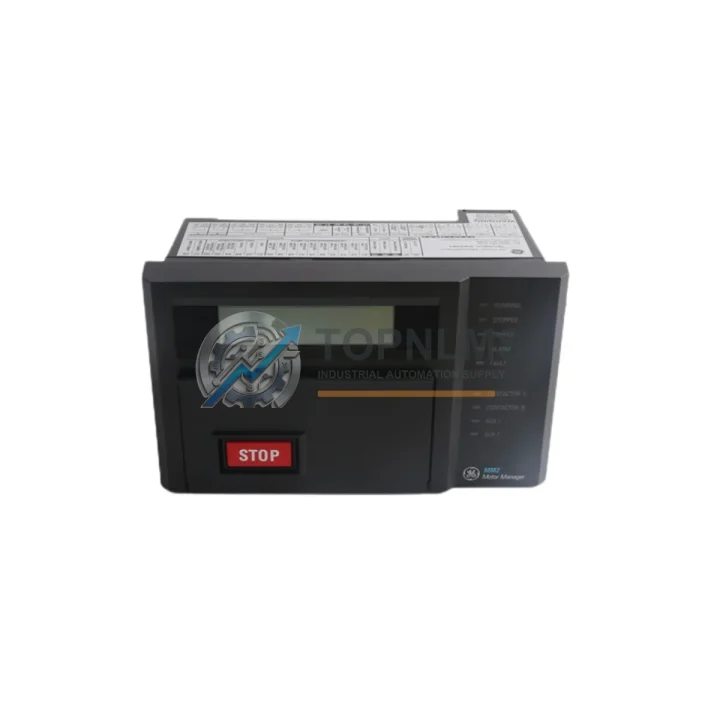
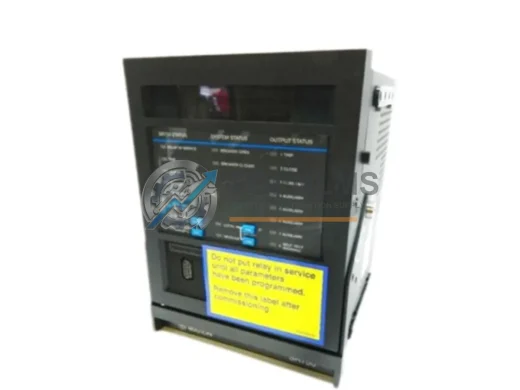
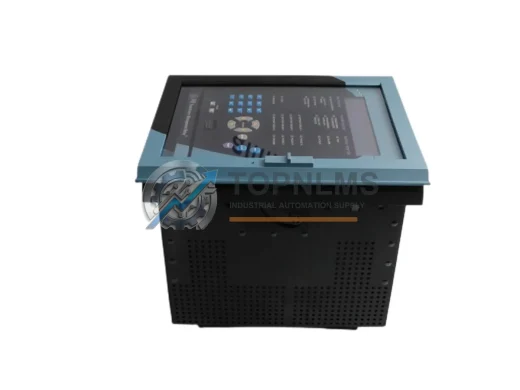
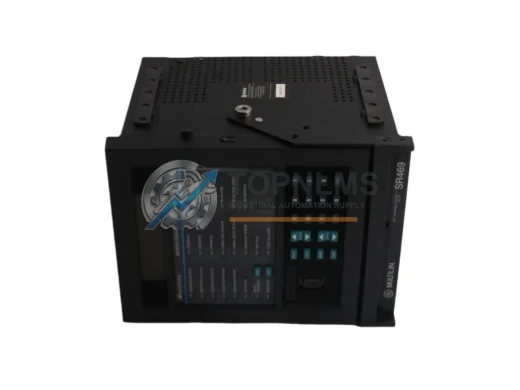
GE MMII-PD-1-2-240 Original Industrial Spare Motor Manager II Compatible: System Stability & Industrial Spare Maintenance Value
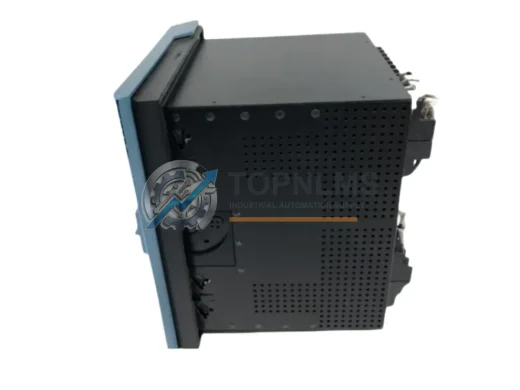
The GE MMII-PD-1-2-240 is a genuine General Electric Motor Manager II protection relay rated at 240V AC, engineered for continuous-duty motor protection in demanding industrial environments. As a critical component in motor control centers (MCCs), switchgear panels, and distributed control cabinets, this relay safeguards motors against overload, phase loss, phase imbalance, undercurrent, ground fault, and thermistor fault conditions. Maintaining an original spare unit on-site is one of the most cost-effective strategies for reducing unplanned downtime and extending the operational life of aging motor control systems.
Industrial facilities running GE Motor Manager II systems — including water treatment plants, mining operations, pulp and paper mills, oil & gas processing, and heavy manufacturing — depend on the MMII-PD-1-2-240 as a cornerstone of their motor protection architecture. When a relay fails during production, every minute of downtime translates directly into lost output and emergency procurement costs. Stocking a verified original replacement eliminates that risk entirely.
Critical Technical Specs
| Parameter |
Specification |
| Model / SKU |
MMII-PD-1-2-240 (GE Motor Manager II) |
| Brand |
General Electric (GE) |
| Series |
Motor Manager II (MMII) |
| Control Voltage |
240V AC |
| Protection Functions |
Overload, Phase Loss, Phase Imbalance, Undercurrent, Ground Fault, Thermistor |
| Communication |
RS-485 / Modbus RTU (series dependent) |
| Mounting |
DIN Rail / Panel Mount |
| Operating Temperature |
-20°C to +60°C |
| Enclosure Rating |
IP20 (panel-mounted) |
| Compatibility |
GE Motor Manager II series; direct replacement for MMII-PD-1-2-240 |
| Application Environment |
MCC panels, switchgear, industrial control cabinets, process automation |
| Maintenance Recommendation |
Inspect every 12–24 months; replace on trip event or calibration drift |
| Warranty |
12 Months — tested before shipment |
| Condition |
Original / Genuine — not refurbished |
Preventive Maintenance Strategy
A scheduled maintenance program built around the MMII-PD-1-2-240 should extend beyond the relay itself. During any planned shutdown or inspection cycle involving this unit, maintenance engineers should simultaneously audit the surrounding motor control infrastructure to prevent cascading failures after restart.
Begin with the current transformer (CT) circuits feeding the MMII relay — worn or mis-rated CTs are a leading cause of nuisance trips and inaccurate overload readings. Inspect the control power transformer (CPT) supplying the 240V AC control voltage; a degraded CPT can cause relay brownouts and false fault signals. Check the motor starter contactor (typically a GE CR305 or equivalent) for contact wear, coil resistance, and arc chute condition — a failing contactor upstream of the MMII will generate erratic current signatures that stress the relay’s measurement circuits.
The RS-485 communication cable and termination resistors connecting the MMII to the SCADA or DCS host should be inspected for insulation damage, loose terminals, and correct impedance matching. In multi-drop Modbus networks, a single bad termination can disrupt communication across all nodes. Alongside this, verify the PLC I/O module receiving discrete trip and run-feedback signals from the MMII — GE Fanuc Series 90 or PACSystems I/O modules are common in these architectures and should be confirmed operational.
Inspect the terminal block assemblies (Phoenix Contact or equivalent) on the MMII wiring harness for corrosion, loose screws, and correct torque. Loose terminals are responsible for a disproportionate share of intermittent relay faults in high-vibration environments. If the motor is equipped with a PTC thermistor, test the thermistor circuit continuity and resistance at the relay input — a degraded thermistor will prevent the MMII from detecting motor winding overtemperature.
For facilities managing multiple motors on a common bus, consider simultaneously reviewing the power factor correction capacitor banks and harmonic filter modules in the MCC lineup. Harmonic distortion from variable frequency drives (VFDs) can cause the MMII’s ground fault detection to generate nuisance trips if the relay’s sensitivity threshold is not correctly configured for the harmonic environment. Finally, confirm that the fuse modules protecting the control circuit (typically 2A or 4A glass fuses) are within rating and show no signs of thermal discoloration.
Strategic Replacement Solutions
The MMII-PD-1-2-240 is a direct original replacement for aging GE Motor Manager II units installed in legacy MCC lineups dating back to the 1990s and 2000s. Many facilities continue to operate these systems well beyond their original design life because the cost of a full MCC replacement — including engineering, installation, and process downtime — far exceeds the cost of maintaining original spare parts inventory.
Sourcing a genuine MMII-PD-1-2-240 eliminates the compatibility risks associated with third-party or remanufactured alternatives. Original units retain factory calibration, certified protection curves, and full Modbus register mapping compatibility with existing SCADA configurations. There is no need to reconfigure PLC logic, update HMI tag databases, or re-commission the motor protection settings — the replacement unit installs and operates identically to the original.
For facilities managing end-of-life GE Motor Manager II systems, a strategic approach involves maintaining a minimum stock of one to two MMII-PD-1-2-240 units per critical motor circuit, combined with a documented replacement procedure that allows a trained technician to complete the swap within a single shift. This approach reduces mean time to repair (MTTR) from days — typical for emergency procurement — to hours, directly protecting production continuity and OEE targets.
When planning a phased modernization, the MMII-PD-1-2-240 also serves as a bridge solution: it keeps legacy motor circuits operational while new control system infrastructure is engineered and budgeted, avoiding the forced emergency replacement scenario that typically results in cost overruns and extended downtime.
Support FAQ
Q1: Is this a genuine original GE MMII-PD-1-2-240 or a compatible substitute?
This is a genuine original General Electric Motor Manager II unit — not a remanufactured, refurbished, or third-party compatible substitute. Each unit is tested for electrical function and communication integrity before shipment and is covered by a 12-month warranty from the date of delivery.
Q2: How do I verify compatibility with my existing Motor Manager II installation?
Confirm the control voltage on your existing relay nameplate reads 240V AC and that the model number matches MMII-PD-1-2-240. The MMII series uses a standardized wiring footprint and Modbus register map, so a direct model-for-model replacement requires no reconfiguration of PLC logic or SCADA tags. If you are replacing a different MMII variant (e.g., 120V AC or 24V DC versions), contact us before ordering to confirm compatibility.
Q3: What is your pre-shipment testing and quality assurance process?
Every MMII-PD-1-2-240 unit undergoes functional testing including control voltage energization, protection function verification, and communication port check prior to packaging. Units that do not pass all test criteria are not shipped. A test report is available upon request for critical applications.
Q4: What inventory strategy do you recommend for facilities running legacy GE Motor Manager II systems?
For facilities with five or more MMII-protected motor circuits, we recommend maintaining a minimum of two MMII-PD-1-2-240 units in on-site spare parts inventory. For critical process motors (pumps, compressors, conveyors) where an unplanned stop causes immediate production loss, a dedicated hot-spare per circuit is the industry best practice. Bulk procurement pricing is available — contact us for volume quotations.