
Honeywell
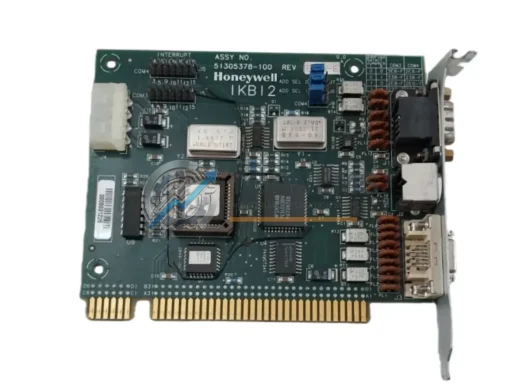
Honeywell 51305378-100 IKBI2 Replacement for TDC 3000
51305378-100Honeywell 51305378-100 IKBI2 Printer Interface Board replacement for TDC 3000 DCS. Original spare, 12-month warranty, fast global shipping. Upgrade legacy systems now.
Request availability, condition, lead time and export shipping details for CPCI-6840V.
Send this exact part number, quantity and destination country. TOPNLMS will confirm availability, condition and export lead time before quotation.
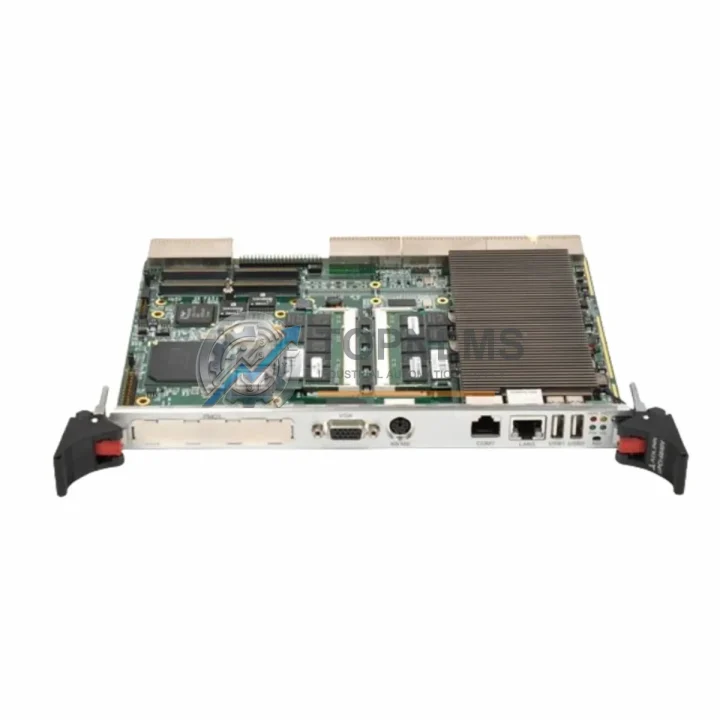
The eiuie CPCI-6840V is a high-performance CompactPCI Serial (CPCI-S.0) processor board designed for demanding industrial control environments. As legacy CompactPCI (cPCI) platforms reach end-of-life and original equipment manufacturers discontinue older processor modules, plant engineers and system integrators face increasing pressure to migrate critical control infrastructure without disrupting production. The CPCI-6840V addresses this challenge directly, offering a validated upgrade path from discontinued or aging CompactPCI processor boards while preserving existing rack architecture, wiring harnesses, and software investments.
Whether you are replacing a failed board in an active production line or executing a planned modernization of a multi-slot CompactPCI chassis, the CPCI-6840V delivers the processing headroom, I/O compatibility, and communication protocol support required for a seamless transition. Its compliance with the PICMG CPCI-S.0 standard ensures mechanical and electrical interoperability with standard 3U CompactPCI Serial backplanes, eliminating the need for chassis replacement in most retrofit scenarios.
| Parameter | Legacy cPCI Processor (Typical) | eiuie CPCI-6840V | Replacement Notes |
|---|---|---|---|
| Form Factor | 3U CompactPCI (PICMG 2.0) | 3U CompactPCI Serial (PICMG CPCI-S.0) | Chassis must support CPCI-S.0 backplane; verify slot keying before installation |
| Bus Interface | PCI / PCI-X parallel bus | PCIe Gen2 via CPCI-S.0 serial fabric | Serial fabric replaces parallel bus; peripheral boards must be CPCI-S.0 compatible |
| Processor Architecture | x86 (Pentium/Core 2 era) or PowerPC | Modern x86-64 (Intel Atom / Core i series) | OS and application software recompilation may be required for PowerPC migrations |
| Communication Interfaces | RS-232, RS-485, legacy Ethernet 10/100 | Dual GbE, USB 3.0, RS-232/422/485 COM ports | Existing serial field device wiring (Modbus RTU, PROFIBUS DP adapters) remains compatible via COM ports |
| Storage | CompactFlash or IDE HDD | mSATA SSD / M.2 NVMe | OS image migration required; industrial-grade SSD recommended for vibration environments |
| Operating System Support | Windows XP Embedded, VxWorks, QNX | Windows 10 IoT, Linux (PREEMPT-RT), VxWorks 7 | SCADA and HMI software compatibility must be verified; most modern SCADA platforms support migration |
| Power Consumption | 25–45 W typical | 15–35 W typical | Reduced thermal load; existing CPCI power supply modules (e.g., 6U or 3U PSU boards) typically remain adequate |
| Front Panel I/O | VGA, PS/2, legacy USB 2.0 | DisplayPort/HDMI, USB 3.0, GbE RJ45 | HMI panel cabling update may be required; industrial KVM adapters available |
| Warranty | Expired / no longer supported | 12-Month Warranty (TOPNLMS) | Full replacement or repair support within warranty period |
A successful migration to the CPCI-6840V rarely involves replacing the processor board in isolation. In practice, the upgrade process touches multiple layers of the control system, and selecting compatible peripheral modules from the outset prevents costly rework during commissioning.
On the backplane and chassis side, the CPCI-6840V slots into any CPCI-S.0 compliant 3U backplane. If your existing chassis uses an older PICMG 2.0 parallel-bus backplane, a backplane replacement or a hybrid transition chassis that supports both legacy cPCI and CPCI-S.0 slots is the recommended first step. Paired with a compatible CompactPCI Serial system slot controller or peripheral slot board, the CPCI-6840V can anchor a fully modernized rack while retaining the original enclosure and DIN rail mounting hardware.
For I/O continuity, existing field wiring connected to legacy CompactPCI digital I/O modules or analog I/O boards can often be retained by installing CPCI-S.0 compatible I/O peripheral boards in adjacent slots. Where the original system used dedicated serial communication modules for Modbus RTU or RS-485 multi-drop networks, the CPCI-6840V’s onboard COM ports can absorb many of these functions directly, reducing slot count and simplifying the rack layout.
Communication protocol continuity is a critical concern in any PLC or DCS migration. If the legacy system relied on a dedicated PROFIBUS DP master module or a CANopen communication card installed in the CompactPCI chassis, equivalent CPCI-S.0 fieldbus interface boards are available and slot directly into the modernized rack. For Ethernet-based protocols such as PROFINET, EtherNet/IP, or Modbus TCP, the CPCI-6840V’s dual GbE ports provide native connectivity, often eliminating the need for a separate industrial Ethernet switch module within the chassis.
Power integrity during the transition is managed through the existing CompactPCI power supply module or an external DIN-rail mounted 24 VDC PSU feeding the chassis. The CPCI-6840V’s lower thermal envelope compared to older processor boards typically means the existing power budget is sufficient, though a power audit is recommended when adding new peripheral boards to previously fully loaded chassis.
For programming and commissioning, a standard USB-to-serial programming cable or direct Ethernet connection to the CPCI-6840V’s management port allows engineers to load OS images, configure BIOS settings, and deploy application software without specialized tools. If the legacy system used a proprietary JTAG debug interface board for firmware updates, the CPCI-6840V’s standard Intel platform management interface simplifies this process considerably.
Where the control system includes a local operator HMI panel or industrial touch screen connected to the processor board via VGA or serial, the CPCI-6840V’s DisplayPort output and USB 3.0 ports support modern panel PCs and industrial monitors. Signal conditioning between legacy 4–20 mA field instruments and the new processor platform can be maintained through existing signal isolator and terminal block assemblies mounted in the control cabinet, which typically require no modification during a processor board swap.
Q: Can I reuse my existing control cabinet wiring when replacing the processor board with the CPCI-6840V?
A: In most cases, yes. Field wiring connected to I/O modules in adjacent CompactPCI slots is unaffected by the processor board replacement. Front-panel cables (VGA, USB, serial) may require adapters or replacement due to connector changes between legacy and CPCI-S.0 processor boards.
Q: Is the CPCI-6840V compatible with my existing CompactPCI chassis and backplane?
A: The CPCI-6840V requires a PICMG CPCI-S.0 compliant backplane. Legacy PICMG 2.0 (parallel PCI bus) chassis are not directly compatible. A backplane assessment is the recommended first step before ordering. Contact our technical team with your chassis model for a compatibility confirmation.
Q: Will my existing PLC or SCADA application software run on the CPCI-6840V?
A: Software compatibility depends on the operating system and runtime environment. Applications developed for Windows XP Embedded or modern Linux distributions can typically be migrated with recompilation or compatibility layer tools. VxWorks 7 is supported natively. Legacy PowerPC binaries require recompilation for x86-64 architecture.
Q: How do I handle Modbus RTU or RS-485 field devices during the migration?
A: The CPCI-6840V includes onboard RS-232/422/485 COM ports that support Modbus RTU natively. Existing RS-485 multi-drop wiring can be connected directly to the board’s COM port terminals, preserving the field device network without protocol conversion hardware.
Q: What is the physical installation space requirement?
A: The CPCI-6840V occupies a single 3U system slot in a CompactPCI Serial chassis. Its front panel dimensions conform to the CPCI-S.0 standard, ensuring drop-in fit in any compliant chassis without modification to the enclosure or adjacent slot assignments.
Q: How long does commissioning typically take after board replacement?
A: For a like-for-like OS image restore and application redeployment, experienced engineers typically complete commissioning within 4–8 hours. Full system validation including I/O loop checks and communication protocol verification may extend this to 1–2 days depending on system complexity.
Every eiuie CPCI-6840V unit supplied by TOPNLMS is covered by a 12-month warranty from the date of shipment. Prior to dispatch, each board undergoes functional verification including power-on self-test, memory diagnostics, interface port validation, and thermal cycling checks to confirm operational integrity.
In the event of a warranty claim, TOPNLMS provides direct replacement or repair support with a target response time of 1–3 business days for initial assessment. Replacement units are dispatched from our Xiamen warehouse, with express international shipping available to minimize control system downtime. Warranty coverage includes manufacturing defects, component failures under normal operating conditions, and DOA (dead on arrival) units confirmed through our technical verification process.
For procurement teams requiring documentation, TOPNLMS issues a formal warranty certificate with each shipment, including the unit serial number, shipment date, and warranty expiry date. This documentation supports asset management records and maintenance planning for facilities operating under ISO 9001 or IEC 62443 compliance frameworks.
Post-warranty technical support, extended service agreements, and consignment stock arrangements for high-volume customers are available upon request. Contact our sales team to discuss stocking programs tailored to your maintenance and spare parts strategy.
Honeywell 51305378-100 IKBI2 Printer Interface Board replacement for TDC 3000 DCS. Original spare, 12-month warranty, fast global shipping. Upgrade legacy systems now.
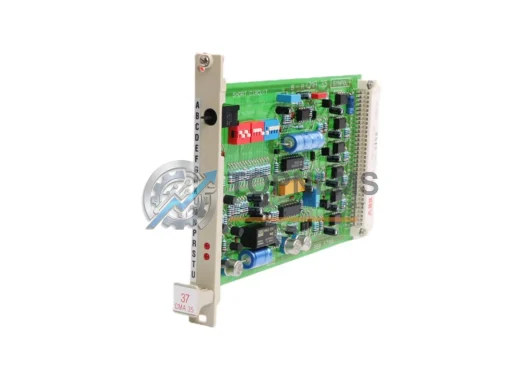
ABB CMA35 GVT3605799 original short circuit protection card for AC500 & ACS drive systems. Industrial replacement spare, tested, 12-month warranty, fast shipping.
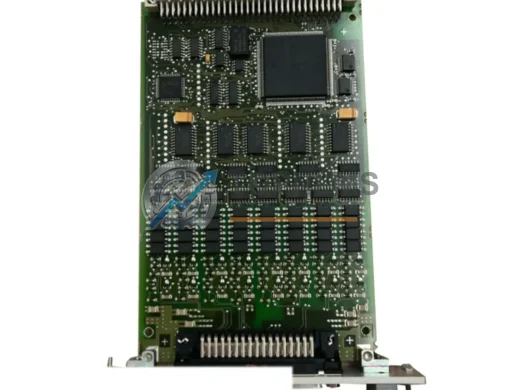
Siemens 6AR1302-0AA00-0AA0 CP51M1 SIMATIC TDC communication processor. Ruggedized for harsh environments. In stock, tested, 12-month warranty. Fast shipping.
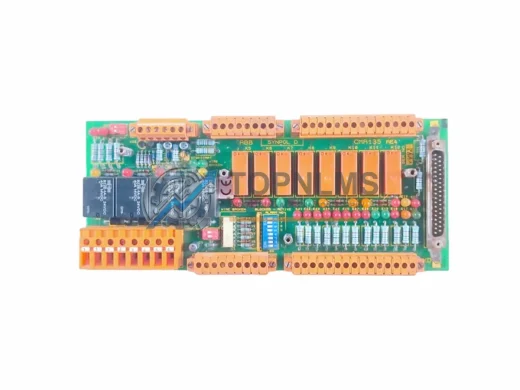
ABB CMA135 3DDE300415 UNITROL generator sequencing control module. Ruggedized for harsh environments. In stock, tested, 12-month warranty. Fast global shipping.
Click Quote This Model and the Part Number field will auto-fill with CPCI-6840V.