
Honeywell
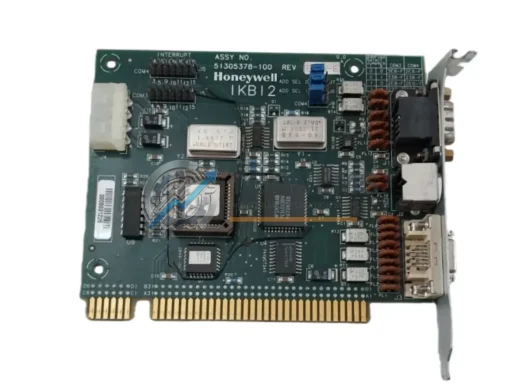
Honeywell 51305378-100 IKBI2 Replacement for TDC 3000
51305378-100Honeywell 51305378-100 IKBI2 Printer Interface Board replacement for TDC 3000 DCS. Original spare, 12-month warranty, fast global shipping. Upgrade legacy systems now.
Request availability, condition, lead time and export shipping details for EPYC-7H12.
Send this exact part number, quantity and destination country. TOPNLMS will confirm availability, condition and export lead time before quotation.
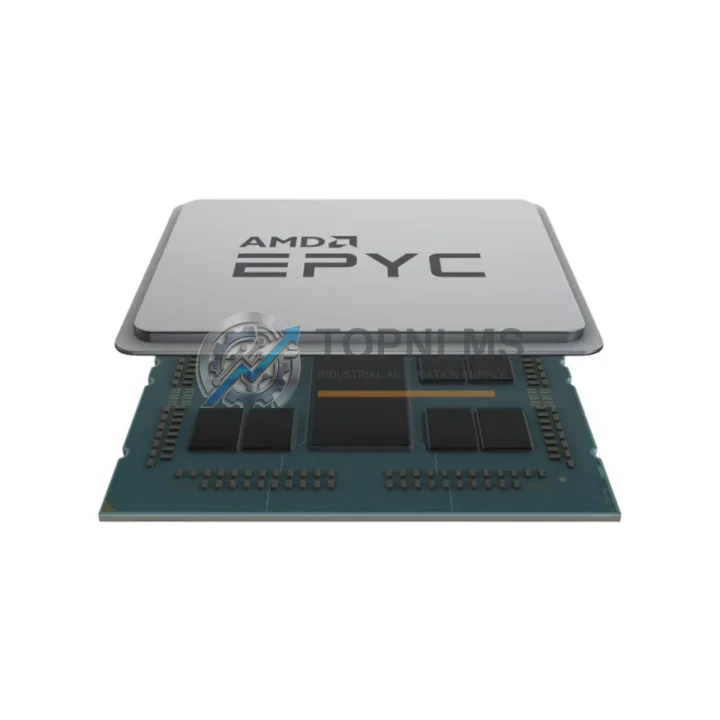
The AMD EPYC 7H12 is a 64-core, 128-thread server-grade processor built on AMD’s Zen 2 architecture and designed for the SP3 socket platform. In industrial automation and critical infrastructure environments — where continuous uptime, electromagnetic resilience, and thermal stability are non-negotiable — the EPYC 7H12 delivers the computational backbone that modern control systems demand. Whether deployed in edge computing nodes, industrial PCs, or ruggedized server enclosures integrated into control cabinets, this processor sustains peak performance under the relentless demands of 24/7 production environments.
With a base clock of 2.6 GHz, a boost clock reaching 3.3 GHz, and a 256 MB L3 cache, the EPYC 7H12 handles the real-time data processing requirements of distributed control systems (DCS), SCADA platforms, and high-density I/O management without thermal throttling or performance degradation. Its 280W TDP is matched by AMD’s robust power delivery architecture, making it compatible with industrial-grade power supply units and redundant power modules commonly found in mission-critical control cabinets.
| Parameter | Specification |
|---|---|
| SKU / Part Number | EPYC-7H12 |
| Brand / Vendor | AMD |
| Series | EPYC Rome (2nd Gen, Zen 2) |
| Socket | SP3 (LGA 4094) |
| Cores / Threads | 64 Cores / 128 Threads |
| Base / Boost Clock | 2.6 GHz / 3.3 GHz |
| L3 Cache | 256 MB |
| TDP | 280W |
| Memory Support | DDR4-3200, 8-channel, up to 4TB ECC RDIMM/LRDIMM |
| PCIe Lanes | 128 PCIe Gen 4 lanes |
| Process Node | 7nm TSMC (Zen 2) |
| Operating Temperature | 0°C to 70°C (industrial server enclosure rated) |
| EMI / ESD Protection | Compliant with industrial server platform EMC standards |
| Vibration Resistance | Suitable for rack-mount industrial server chassis with anti-vibration mounting |
| Application Scenarios | DCS edge servers, SCADA computing nodes, industrial PCs, PLC host controllers, AI inference at the edge |
| Compatibility | Dual-socket SP3 platforms; compatible with AMD EPYC 7002 series ecosystem |
| Origin | United States (AMD) |
| Warranty | 12 Months — TOPNLMS Quality Guarantee |
In a fully integrated industrial control architecture, the EPYC 7H12 does not operate in isolation. It serves as the computational core of a broader ecosystem of ruggedized components. When paired with industrial-grade ECC RDIMM memory modules and NVMe SSDs rated for extended temperature ranges, the processor sustains deterministic performance even in high-vibration environments such as mining conveyors or steel rolling mills.
Within the control cabinet, the EPYC 7H12-based industrial server interfaces directly with Siemens SIMATIC S7-1500 PLC modules via high-speed Ethernet or PROFINET communication cards, enabling real-time supervisory control and data acquisition. The processor’s 128 PCIe Gen 4 lanes accommodate multiple industrial communication interface cards — including PROFIBUS DP adapters, Modbus TCP gateways, and EtherNet/IP modules — without bandwidth contention, ensuring that I/O response latency remains within the deterministic windows required by safety-rated control loops.
Power integrity is maintained through redundant industrial power supply units (PSUs) with active PFC and wide-input voltage tolerance (100–240VAC), which protect the processor and co-located components — such as Beckhoff EtherCAT I/O terminals, Phoenix Contact relay output modules, and Wago 750-series fieldbus couplers — from voltage transients common in heavy industrial environments. Surge protection modules and DIN-rail-mounted EMC filters installed upstream in the control cabinet further shield the EPYC 7H12 platform from conducted interference generated by variable frequency drives (VFDs) and high-current motor starters.
For safety-critical applications, the server platform running on the EPYC 7H12 is typically integrated alongside Pilz PNOZ safety relay modules or Rockwell Allen-Bradley GuardLogix safety controllers, where the EPYC-based system handles non-safety supervisory tasks while the dedicated safety PLCs manage SIL-rated interlocks. This architectural separation ensures that computational load on the EPYC 7H12 does not compromise the response time of safety functions.
The AMD EPYC 7H12 has established a strong track record in the most demanding industrial sectors. In oil and gas upstream operations, ruggedized servers equipped with the EPYC 7H12 manage real-time pipeline pressure monitoring, wellhead SCADA data aggregation, and predictive maintenance analytics for rotating equipment — all within explosion-proof or pressurized enclosures rated for Zone 1 hazardous areas. The processor’s high memory bandwidth (up to 3.2 TB/s aggregate across both sockets in dual-socket configurations) enables simultaneous processing of thousands of sensor data streams without queuing delays.
In power generation and grid management facilities, the EPYC 7H12 underpins energy management systems (EMS) and distribution management systems (DMS) that require sub-second response to grid events. Its support for up to 4TB of ECC-protected DDR4 memory per socket ensures that large historian databases and real-time analytics workloads can be co-hosted without memory-related failures — a critical requirement in substations and control rooms where hardware redundancy is mandated by grid reliability standards.
Water treatment and wastewater management plants deploy EPYC 7H12-based servers as the central computing nodes for SCADA systems overseeing chemical dosing, filtration control, and effluent monitoring. The processor’s multi-core architecture allows concurrent execution of HMI server processes, historian services, and alarm management systems on a single physical platform, reducing the hardware footprint in space-constrained pump stations and treatment facilities.
In metallurgical and heavy manufacturing environments — including aluminum smelters, continuous casting lines, and automotive body-in-white welding cells — the EPYC 7H12 provides the processing headroom required for real-time quality inspection systems, robot controller supervision, and MES integration. Its thermal design, when paired with high-airflow industrial server chassis and redundant cooling fans, sustains full-core performance in ambient temperatures up to 45°C, which is common on foundry floors and near heat treatment furnaces.
Q1: What warranty coverage does TOPNLMS provide for the AMD EPYC 7H12?
Every AMD EPYC 7H12 unit shipped by TOPNLMS is backed by a 12-month warranty covering manufacturing defects and functional failures under normal operating conditions. Warranty claims are processed with priority turnaround, and replacement units are dispatched from our Xiamen warehouse to minimize production downtime for our industrial customers.
Q2: How is each unit tested before shipment?
All EPYC 7H12 processors undergo pre-shipment functional verification including POST validation, memory controller stress testing, and thermal cycling checks. Units that do not meet AMD’s published specifications are quarantined and not dispatched. A test report is available upon request for customers with strict incoming inspection requirements.
Q3: Is the EPYC 7H12 compatible with my existing SP3 server platform and industrial software stack?
The EPYC 7H12 is fully compatible with all AMD SP3 (LGA 4094) dual-socket server platforms supporting the EPYC 7002 (Rome) series, including platforms from HPE, Dell EMC, Supermicro, and Inspur. It is validated for use with major industrial operating systems including Windows Server, Red Hat Enterprise Linux, and real-time Linux distributions commonly used in SCADA and DCS server applications. BIOS compatibility should be confirmed with your platform vendor for specific firmware versions.
Q4: Can TOPNLMS support long-term supply and emergency replacement needs?
Yes. TOPNLMS maintains strategic inventory of the EPYC 7H12 and other EPYC Rome series processors to support long-term production continuity for industrial customers. For facilities operating on extended maintenance cycles — such as annual planned shutdowns in petrochemical or power generation plants — we offer reserved stock arrangements and priority fulfillment agreements. Contact our technical sales team to discuss your spare parts management requirements.
Honeywell 51305378-100 IKBI2 Printer Interface Board replacement for TDC 3000 DCS. Original spare, 12-month warranty, fast global shipping. Upgrade legacy systems now.
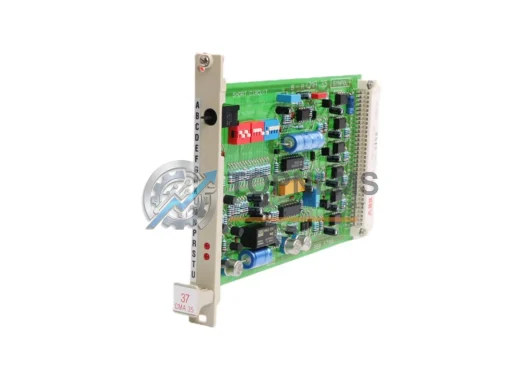
ABB CMA35 GVT3605799 original short circuit protection card for AC500 & ACS drive systems. Industrial replacement spare, tested, 12-month warranty, fast shipping.
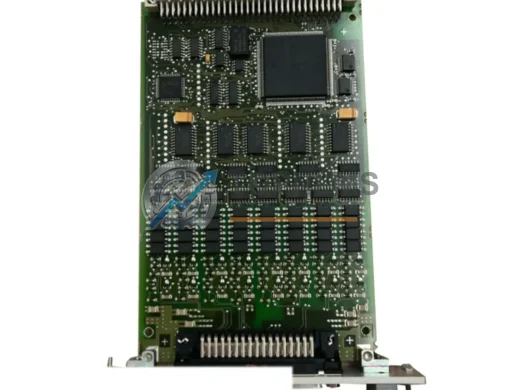
Siemens 6AR1302-0AA00-0AA0 CP51M1 SIMATIC TDC communication processor. Ruggedized for harsh environments. In stock, tested, 12-month warranty. Fast shipping.
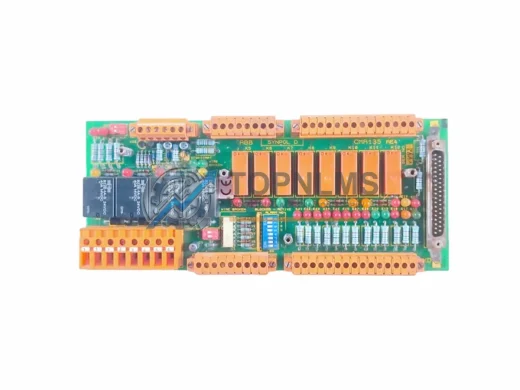
ABB CMA135 3DDE300415 UNITROL generator sequencing control module. Ruggedized for harsh environments. In stock, tested, 12-month warranty. Fast global shipping.
Click Quote This Model and the Part Number field will auto-fill with EPYC-7H12.