
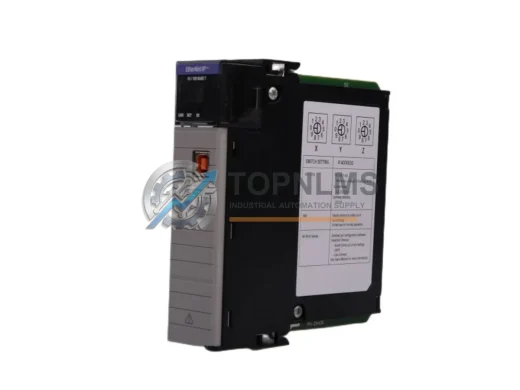
Allen-Bradley
Allen-Bradley 1756-EN2T EtherNet/IP Replacement for ControlLogix
1756-EN2TDrop-in replacement for Allen-Bradley 1756-EN2T ControlLogix EtherNet/IP Bridge Module. Compatible upgrade, 12-month warranty, fast global shipping.
Request availability, condition, lead time and export shipping details for 2711P-RN10C.
Send this exact part number, quantity and destination country. TOPNLMS will confirm availability, condition and export lead time before quotation.
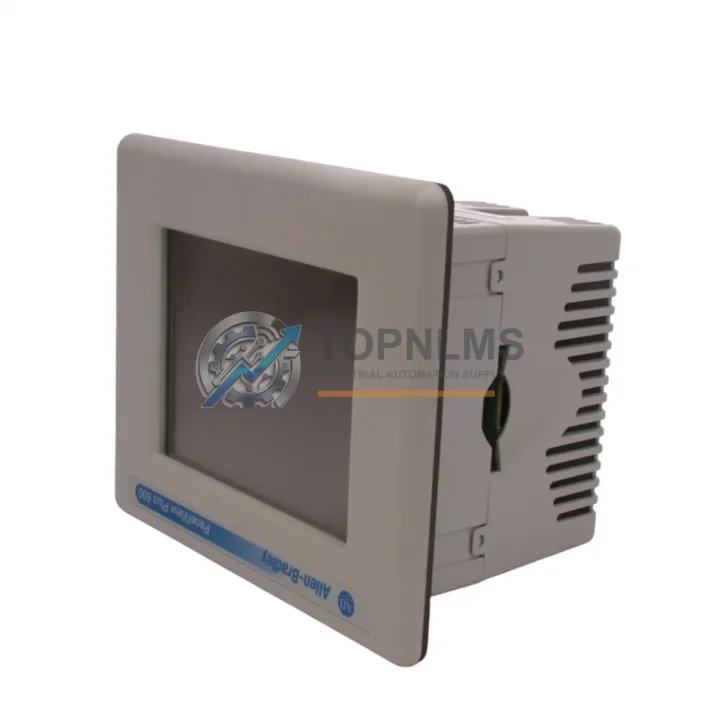
In modern industrial automation environments, the reliability of human-machine interface (HMI) communication infrastructure is non-negotiable. The Allen-Bradley 2711P-RN10C is a genuine DeviceNet plug-in communication module engineered specifically for the PanelView Plus terminal family — a cornerstone HMI platform deployed across manufacturing, process control, packaging, and utilities worldwide. Sourcing an original, tested 2711P-RN10C spare is one of the most impactful decisions a maintenance team can make to protect system uptime and reduce unplanned downtime risk.
At TOPNLMS, every 2711P-RN10C unit is sourced from verified supply channels, functionally tested prior to dispatch, and backed by a 12-month warranty. Whether you are building a critical spare inventory, responding to an emergency breakdown, or executing a planned preventive maintenance overhaul, this module ships promptly with full documentation support.
| Part Number | 2711P-RN10C |
| Brand / Manufacturer | Allen-Bradley (Rockwell Automation) |
| Series | PanelView Plus |
| Module Type | DeviceNet Plug-In Communication Module |
| Network Protocol | DeviceNet (CAN-based, IEC 62026-3) |
| Data Rate | 125 kbps / 250 kbps / 500 kbps (auto-detect) |
| Connector Type | 5-pin open-style DeviceNet connector |
| Compatible Terminals | PanelView Plus 600, 700, 1000, 1250, 1500 (2711P series) |
| Installation | Plug-in slot on rear of PanelView Plus terminal |
| Operating Temperature | 0°C to 55°C (32°F to 131°F) |
| Storage Temperature | -40°C to 85°C |
| Humidity | 5% to 95% non-condensing |
| Enclosure Rating | IP20 (module); terminal enclosure rating applies |
| Power Supply | Powered via PanelView Plus backplane |
| Country of Origin | United States |
| Warranty | 12 Months (TOPNLMS) |
| Condition | Original / Genuine — Tested before shipment |
The 2711P-RN10C does not operate in isolation. It is one node in a broader DeviceNet communication loop that connects your PanelView Plus HMI to field devices — drives, sensors, actuators, and safety relays — via a shared network bus. When planning a maintenance window or responding to a communication fault, experienced maintenance engineers know that a single failed module can mask deeper systemic issues across the control cabinet.
During any scheduled inspection involving the 2711P-RN10C, it is best practice to simultaneously audit the DeviceNet trunk cable and drop lines for insulation degradation, connector corrosion, or improper termination resistance. The network requires 121-ohm terminating resistors at both ends of the trunk; missing or failed terminators are a leading cause of intermittent DeviceNet communication errors that are often misdiagnosed as module failure.
The PanelView Plus terminal itself — particularly the 2711P-series logic module and backplane — should be inspected for firmware currency and physical connector integrity when replacing the 2711P-RN10C. Rockwell Automation periodically releases firmware updates that improve DeviceNet node management and fault recovery behavior. Pairing a new communication module with an outdated terminal firmware version can introduce compatibility edge cases.
In the same control cabinet, maintenance teams should also verify the condition of the 1756-DNB DeviceNet Bridge module (if a ControlLogix PLC is the DeviceNet scanner) or the 1769-SDN Scanner module in CompactLogix-based systems. These scanner modules manage the DeviceNet I/O map and node polling; a degraded scanner can cause the 2711P-RN10C to report spurious communication faults even when the HMI module itself is healthy.
Power quality is another critical variable. The 1606-XLP power supply or equivalent 24VDC panel power supply feeding the DeviceNet network trunk should be load-tested during the maintenance window. Voltage sag on the DeviceNet bus — particularly in large networks with many nodes — can cause intermittent node dropouts that are difficult to trace without a network analyzer. Replacing an aging power supply proactively is far less costly than an unplanned shutdown.
For facilities running mixed Allen-Bradley HMI generations, it is also advisable to audit 2711P-series compact flash cards and USB communication adapters used for application backup and firmware transfer. These peripheral components have finite read/write cycle lifespans and are frequently overlooked in spare parts planning. Maintaining at least one spare compact flash card pre-loaded with the current application image dramatically reduces recovery time after a terminal failure.
Finally, if your facility uses RSLinx Classic or FactoryTalk Linx as the communication driver layer, ensure that the DeviceNet driver configuration is documented and backed up. Driver misconfiguration after a module swap is a common source of post-maintenance commissioning delays. Pairing the 2711P-RN10C replacement with a verified driver backup and a network topology diagram ensures the fastest possible return to production.
The Allen-Bradley 2711P-RN10C addresses one of the most persistent challenges in industrial maintenance: keeping legacy HMI communication infrastructure operational without migrating to a new platform. PanelView Plus terminals have been deployed in production environments for over two decades, and many facilities have standardized their operator interface workflows, alarm management logic, and process visualization on this platform. A full HMI migration project — including new hardware, software licensing, application redevelopment, and operator retraining — can cost orders of magnitude more than maintaining a healthy spare parts inventory.
By stocking one or two 2711P-RN10C units as critical spares, maintenance managers can reduce mean time to repair (MTTR) for DeviceNet communication faults from days (waiting for emergency procurement) to hours (immediate swap and recommission). This is particularly valuable in continuous process industries — food and beverage, chemical, water treatment, and automotive assembly — where every hour of unplanned downtime carries significant production and quality cost.
The 2711P-RN10C is a direct plug-in replacement for the same part number across all compatible PanelView Plus terminal sizes. No application software changes, no I/O remapping, and no PLC program modifications are required. The replacement procedure involves powering down the terminal, removing the existing module from the rear plug-in slot, inserting the replacement, and restoring power. Full DeviceNet network communication typically resumes within the normal node scan cycle after power-up.
For facilities transitioning from older PanelView 1000e or PanelView 1400e terminals to the PanelView Plus platform, the 2711P-RN10C provides a forward-compatible DeviceNet communication path that preserves existing network wiring infrastructure. This reduces migration cost and risk while delivering the enhanced visualization and application development capabilities of the PanelView Plus platform.
Q1: Is the 2711P-RN10C compatible with all PanelView Plus terminal sizes?
The 2711P-RN10C is compatible with PanelView Plus 600, 700, 1000, 1250, and 1500 terminals (all 2711P-series models with a rear plug-in communication slot). It is not compatible with PanelView Plus 6 (2711P-T series with integrated communication) or PanelView 550/900/1000/1400 legacy terminals. Always verify your terminal catalog number before ordering.
Q2: What pre-shipment testing does TOPNLMS perform on the 2711P-RN10C?
Every unit undergoes functional verification including power-on self-test, DeviceNet port continuity check, and connector integrity inspection before dispatch. Units that do not pass testing are not shipped. A 12-month warranty covers defects in materials and workmanship from the date of receipt.
Q3: How quickly can I replace the 2711P-RN10C in the field, and do I need special tools?
Field replacement requires no special tools. The module is a plug-in design secured by a single retention screw. With the terminal powered down, an experienced technician can complete the physical swap in under five minutes. Network recommissioning — verifying DeviceNet node address, baud rate, and I/O map — typically adds 15–30 minutes depending on system complexity and documentation availability.
Q4: What is the recommended spare parts stocking strategy for facilities with multiple PanelView Plus terminals?
For facilities with three or more PanelView Plus terminals on DeviceNet networks, maintaining a minimum of one 2711P-RN10C spare per five terminals is a widely adopted benchmark. High-criticality production lines — where a single HMI failure can halt an entire line — warrant a 1:1 or 1:2 spare ratio. Pairing the communication module spare with a pre-configured compact flash card backup of each terminal application maximizes recovery speed and minimizes commissioning risk during an emergency replacement.
Drop-in replacement for Allen-Bradley 1756-EN2T ControlLogix EtherNet/IP Bridge Module. Compatible upgrade, 12-month warranty, fast global shipping.
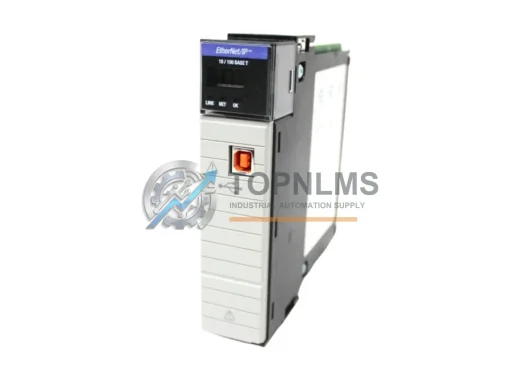
Allen-Bradley 1756-EN2T/C original ControlLogix EtherNet/IP module. Industrial replacement spare, 12-month warranty, tested before shipment. Fast global delivery.
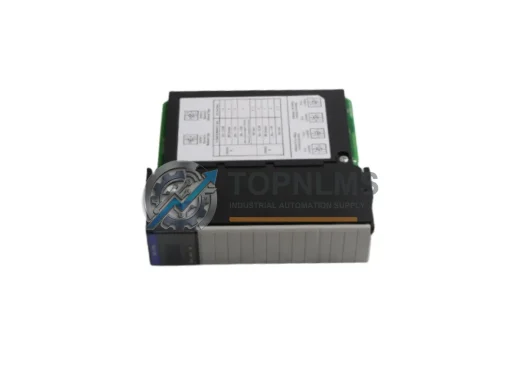
Allen-Bradley 1756-DHRIO ControlLogix DH+/RIO Bridge Scanner Module. Drop-in replacement, upgrade solution, 12-month warranty. Ships from stock. Compatible with 1756 chassis.
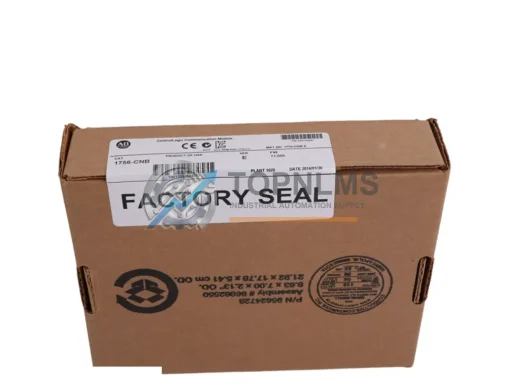
Buy Allen-Bradley 1756-CNB original ControlNet bridge module for ControlLogix systems. Genuine spare, 12-month warranty, fast shipping. SKU: 1756-CNB.
Click Quote This Model and the Part Number field will auto-fill with 2711P-RN10C.