
Allen-Bradley
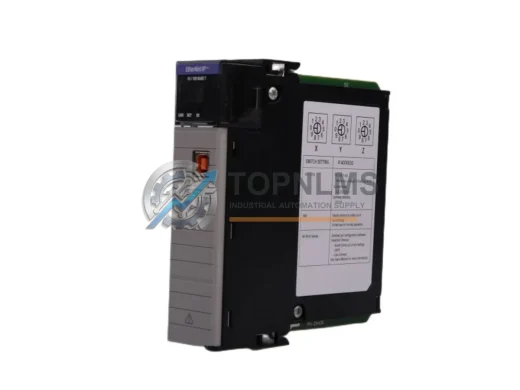
Allen-Bradley 1756-EN2T EtherNet/IP Replacement for ControlLogix
1756-EN2TDrop-in replacement for Allen-Bradley 1756-EN2T ControlLogix EtherNet/IP Bridge Module. Compatible upgrade, 12-month warranty, fast global shipping.
Request availability, condition, lead time and export shipping details for 1788-ENBT.
Send this exact part number, quantity and destination country. TOPNLMS will confirm availability, condition and export lead time before quotation.
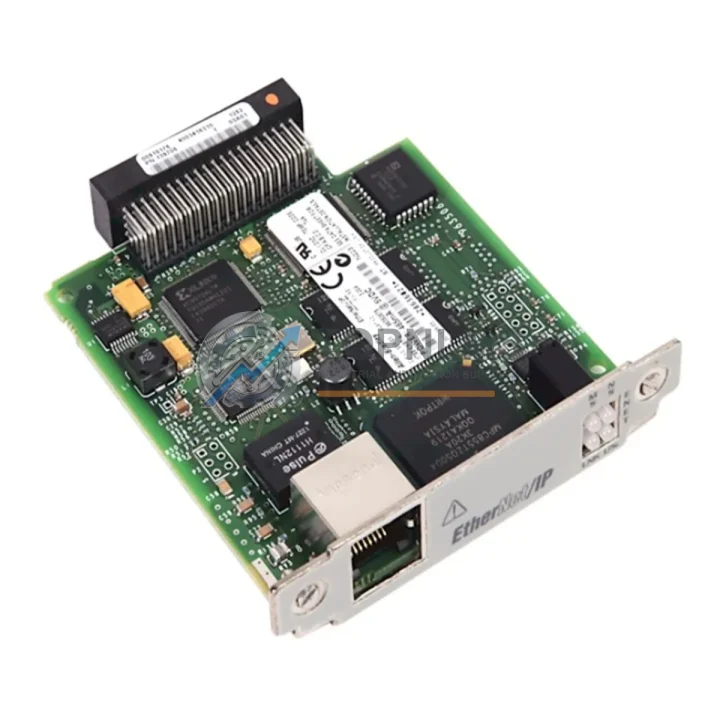
The Allen-Bradley 1788-ENBT EtherNet/IP Daughterboard is a critical communication interface module used within the ControlLogix platform to bridge legacy DeviceNet or ControlNet backplane architectures to modern EtherNet/IP networks. As industrial facilities accelerate migration away from aging 1770, 1771, and early 1756 ControlLogix configurations, the 1788-ENBT serves as a proven, cost-effective upgrade path that preserves existing wiring infrastructure while delivering contemporary Ethernet connectivity.
This replacement and upgrade solution is sourced directly from authorized distribution channels, fully tested prior to shipment, and backed by a 12-month warranty. Whether you are managing an emergency breakdown, executing a planned retrofit, or building a spare-parts inventory for a multi-site facility, TOPNLMS maintains ready stock to support your procurement timeline.
| Parameter | Legacy / Replaced Module | 1788-ENBT (This Unit) |
|---|---|---|
| Module Type | 1788-DNBO / 1788-CNF / 1788-CNCR (DeviceNet / ControlNet daughterboards) | EtherNet/IP Daughterboard |
| Host Backplane | 1756 ControlLogix chassis (any slot) | 1756 ControlLogix chassis (any slot) |
| Communication Protocol | DeviceNet / ControlNet | EtherNet/IP (IEEE 802.3) |
| Network Port | 5-pin open-style / BNC / coax | RJ-45 (10/100 Mbps) |
| IP Address Configuration | N/A (node-based addressing) | BOOTP / DHCP / Static |
| Programming Software | RSNetWorx for DeviceNet / ControlNet | RSLogix 5000 / Studio 5000 Logix Designer |
| Physical Dimensions | Varies by daughterboard type | Standard 1788-series form factor |
| Power Source | Backplane-powered (1756 chassis) | Backplane-powered (1756 chassis) |
| Installation Space | Occupies daughterboard slot on host 1756 module | Occupies daughterboard slot on host 1756 module |
| Replacement Recommendation | Direct drop-in for 1788-DNBO / 1788-CNF in same host module | ✔ Compatible with 1756-DHRIO, 1756-DNB host modules |
| Warranty | — | 12-Month Warranty (TOPNLMS) |
A successful migration from a legacy ControlNet or DeviceNet architecture to EtherNet/IP using the 1788-ENBT typically involves coordinating several interdependent components within the same control cabinet or rack. The host module — commonly a 1756-DHRIO (DH+/Remote I/O bridge) or 1756-DNB (DeviceNet scanner) — must be confirmed compatible before the daughterboard is installed. In many brownfield projects, engineers also replace the associated 1756-L63 or 1756-L71 ControlLogix controller at the same time to take full advantage of the expanded EtherNet/IP bandwidth and CIP routing capabilities.
On the I/O side, remote I/O racks previously communicating over ControlNet via 1756-CNB or 1756-CNBR bridge modules are reconfigured to use EtherNet/IP-native adapters such as the 1756-EN2T or 1756-EN2TR (ring topology). This eliminates the need for dedicated coaxial cabling and simplifies the physical layer to standard Cat5e/Cat6 structured cabling — a significant reduction in cabinet wiring complexity and long-term maintenance cost.
Power distribution within the 1756 chassis is handled by the 1756-PA72 or 1756-PB72 power supply modules, which remain unchanged during a daughterboard swap, as the 1788-ENBT draws power exclusively from the backplane. However, if the retrofit scope includes adding new I/O modules or expanding the chassis, verifying power budget against the existing supply rating is a recommended pre-commissioning step.
For facilities running distributed I/O over legacy DeviceNet, the transition often involves replacing 1794-ADN FLEX I/O DeviceNet adapters with 1794-AENT EtherNet/IP equivalents, allowing the same FLEX I/O terminal bases and I/O modules to remain in service. This approach dramatically reduces retrofit cost and downtime by preserving field wiring and I/O hardware while modernizing the communication layer.
Programming cable connectivity during commissioning is typically handled via a 1784-U2DHP USB-to-DH+ interface or direct Ethernet connection to the 1756-EN2T module, depending on the controller revision. Studio 5000 Logix Designer v21 and above natively supports EtherNet/IP module discovery, making online configuration of the 1788-ENBT straightforward once the IP address is assigned. Signal isolation requirements between the Ethernet segment and field devices are addressed using DIN-rail-mounted signal isolators where analog loops cross the network boundary.
Q: Can the 1788-ENBT be installed without modifying existing ladder logic or function block programs?
A: In most cases, yes. The 1788-ENBT replaces the physical communication layer without altering the I/O data table structure visible to the controller. However, any explicit network path references (e.g., MSG instructions targeting ControlNet node addresses) must be updated to reflect EtherNet/IP IP addresses. A full offline program review is recommended before live commissioning.
Q: Is the wiring to field devices affected by this upgrade?
A: No. The 1788-ENBT is a daughterboard that modifies the network-side interface of the host module only. Field wiring connected to I/O modules in the 1756 chassis or remote racks is unaffected. Only the network cable between the host module and the Ethernet switch requires replacement (coax or DeviceNet trunk → RJ-45 Cat5e/Cat6).
Q: What switch infrastructure is required on the Ethernet side?
A: A managed industrial Ethernet switch supporting EtherNet/IP (CIP) traffic prioritization is recommended. Unmanaged switches are acceptable for simple star topologies, but ring topologies using DLR (Device Level Ring) require switches with DLR-aware firmware. TOPNLMS can advise on compatible switch models upon request.
Q: How is the IP address assigned to the 1788-ENBT?
A: The module supports BOOTP, DHCP, and static IP assignment. Rockwell’s BOOTP/DHCP Server utility (included with Studio 5000) is the standard commissioning tool. Static assignment via RSLogix 5000 module properties is also supported for fixed-address environments.
Q: What is the physical installation space requirement?
A: The 1788-ENBT occupies the daughterboard connector on the host 1756-series module. No additional chassis slot is consumed. Verify that the host module (e.g., 1756-DNB) has an unpopulated daughterboard connector before ordering.
Q: Can this module be used in a redundant ControlLogix system?
A: The 1788-ENBT is compatible with standard (non-redundant) ControlLogix configurations. For redundant systems using the 1756-RM2 redundancy module, consult Rockwell Automation publication 1756-UM535 for supported communication module combinations.
Every 1788-ENBT unit shipped by TOPNLMS is subject to a multi-point pre-shipment functional test covering backplane communication integrity, EtherNet/IP port link negotiation, and firmware version verification. Units are packaged in anti-static ESD bags with protective foam inserts to prevent transit damage.
Our 12-month warranty covers manufacturing defects and functional failures under normal operating conditions from the date of shipment. In the event of a warranty claim, TOPNLMS provides a replacement unit or full refund within the warranty period, subject to return inspection. Expedited replacement is available for critical production environments — contact our team to arrange advance replacement shipment.
Typical order processing time is 1–3 business days from payment confirmation. International shipments are dispatched via DHL Express, FedEx International Priority, or UPS Worldwide, with tracking provided at time of dispatch. Export documentation including commercial invoice, packing list, and certificate of origin is prepared for all cross-border shipments.
For volume procurement, multi-site spare-parts programs, or consignment stock arrangements, TOPNLMS offers framework agreements with fixed pricing and priority allocation. Contact our sales team to discuss your facility’s requirements.
Drop-in replacement for Allen-Bradley 1756-EN2T ControlLogix EtherNet/IP Bridge Module. Compatible upgrade, 12-month warranty, fast global shipping.
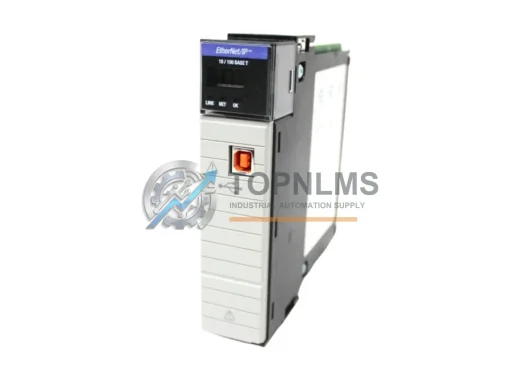
Allen-Bradley 1756-EN2T/C original ControlLogix EtherNet/IP module. Industrial replacement spare, 12-month warranty, tested before shipment. Fast global delivery.
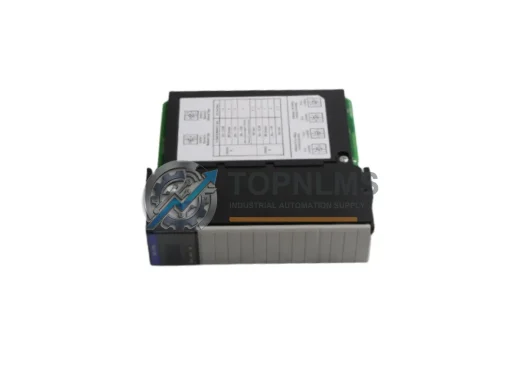
Allen-Bradley 1756-DHRIO ControlLogix DH+/RIO Bridge Scanner Module. Drop-in replacement, upgrade solution, 12-month warranty. Ships from stock. Compatible with 1756 chassis.
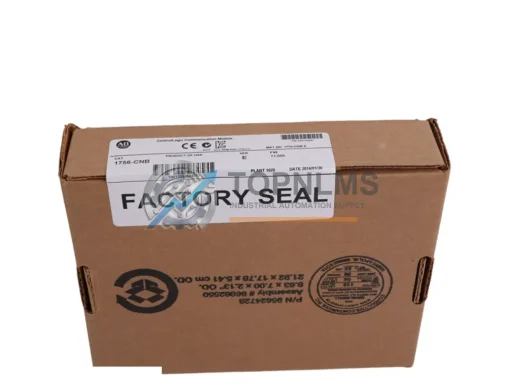
Buy Allen-Bradley 1756-CNB original ControlNet bridge module for ControlLogix systems. Genuine spare, 12-month warranty, fast shipping. SKU: 1756-CNB.
Click Quote This Model and the Part Number field will auto-fill with 1788-ENBT.