
Allen-Bradley
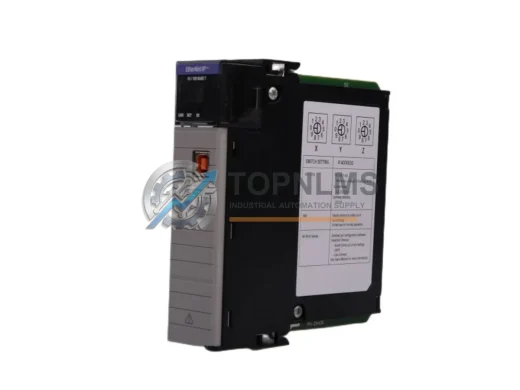
Allen-Bradley 1756-EN2T EtherNet/IP Replacement for ControlLogix
1756-EN2TDrop-in replacement for Allen-Bradley 1756-EN2T ControlLogix EtherNet/IP Bridge Module. Compatible upgrade, 12-month warranty, fast global shipping.
Request availability, condition, lead time and export shipping details for 1783-US06T.
Send this exact part number, quantity and destination country. TOPNLMS will confirm availability, condition and export lead time before quotation.
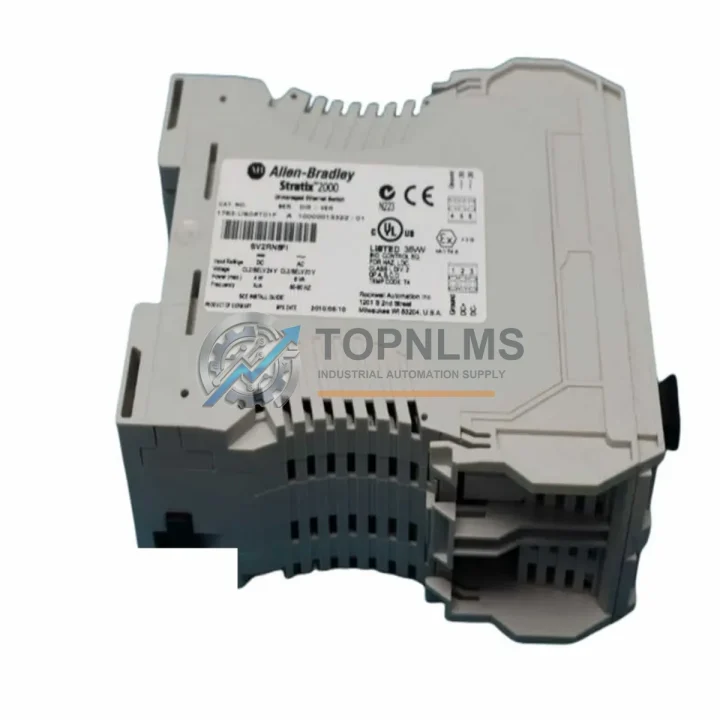
The Allen-Bradley 1783-US06T is a 6-port modular managed EtherNet/IP switch from the Stratix 8000 series, engineered for demanding industrial network environments. As a critical node in factory automation infrastructure, this switch enables deterministic, high-availability communication between PLCs, HMIs, drives, and I/O subsystems. Maintaining a verified original spare of the 1783-US06T in your parts inventory is one of the most effective strategies for reducing unplanned downtime, protecting production continuity, and extending the operational life of existing control architectures.
Whether you are managing a Rockwell Automation-based production line, a distributed motion control system, or a legacy EtherNet/IP backbone, the 1783-US06T delivers the port density, managed switching capability, and DIN-rail form factor required for seamless integration into existing control cabinets without re-engineering the network topology.
| Part Number | 1783-US06T |
| Series | Stratix 8000 |
| Manufacturer | Allen-Bradley / Rockwell Automation |
| Switch Type | Modular Managed EtherNet/IP Switch |
| Port Count | 6 × 10/100BASE-TX RJ45 Copper Ports |
| Protocol Support | EtherNet/IP, IGMP Snooping, QoS, VLAN (802.1Q), RSTP/STP |
| Mounting | DIN-Rail |
| Supply Voltage | 24 VDC (nominal) |
| Operating Temperature | 0 °C to +60 °C |
| Protection Rating | IP20 |
| Certifications | UL, CE, cUL |
| Compatibility | Rockwell Automation Studio 5000, FactoryTalk, ControlLogix, CompactLogix, GuardLogix PLC families |
| Country of Origin | United States |
| Warranty | 12 Months — Tested before shipment, full functional verification |
Industrial Ethernet infrastructure is often overlooked during scheduled maintenance cycles until a network fault triggers a line stoppage. The 1783-US06T sits at the convergence point of multiple automation subsystems — a single switch failure can simultaneously isolate PLCs, drives, safety controllers, and operator panels from the control network. A proactive maintenance approach treats the 1783-US06T not as a passive component but as a mission-critical asset with a defined replacement lifecycle.
During scheduled cabinet inspections, technicians should verify the switch’s port link status, check for excessive heat at the DIN-rail mounting point, and confirm that the 24 VDC power supply feeding the switch — such as the 1606-XLP95E or equivalent Rockwell power supply module — is within specification. A degraded power supply is a leading cause of intermittent switch resets and unexplained network dropouts that are frequently misdiagnosed as PLC faults.
When replacing or inspecting the 1783-US06T, it is also advisable to simultaneously audit the 1783-US08T (8-port Stratix 8000 variant) if deployed elsewhere in the same facility, as both units share the same firmware baseline and configuration export format, simplifying spare management. Technicians should also inspect the 1783-MMS expansion modules attached to the base switch chassis, as connector wear on the module interface can cause intermittent port failures that mimic switch-level faults.
For facilities running ControlLogix or CompactLogix systems, the network path from the 1756-EN2T or 1769-L33ER controller to the field devices passes through the Stratix 8000 switch. Any degradation in switch performance directly impacts scan time consistency and I/O update rates. Pairing a spare 1783-US06T with a pre-configured 1756-EN2TR EtherNet/IP communication module in your parts inventory ensures that both the network edge and the controller communication layer can be restored independently without waiting for procurement lead times.
Cable integrity is equally important. Patch cables connecting the 1783-US06T to field devices should be inspected for jacket damage, connector oxidation, and bend radius violations, particularly in high-vibration environments. Stocking a set of industrial-grade Cat5e or Cat6 patch cables alongside the switch spare reduces restoration time during emergency replacements. Similarly, the 1783-SFP1GSX fiber SFP modules used in expanded Stratix 8000 configurations should be included in the preventive maintenance checklist, as fiber transceivers are sensitive to contamination and mechanical stress.
For facilities with safety-rated networks, the interaction between the 1783-US06T and 1791DS or 1732DS safety I/O modules over EtherNet/IP should be validated after any switch replacement to confirm that CIP Safety connections re-establish correctly and that the safety controller does not enter a fault state due to connection timeout parameters.
The 1783-US06T is a direct replacement for earlier Stratix 8000 6-port configurations and is backward-compatible with existing EtherNet/IP network designs built around Rockwell Automation’s Integrated Architecture. Unlike generic unmanaged switches, the 1783-US06T supports full Studio 5000 / RSLogix 5000 integration, allowing the switch configuration to be stored within the controller project file and restored automatically upon replacement — a critical advantage in facilities where network configuration documentation may be incomplete.
For aging systems originally built around the 1783-US05T (5-port predecessor) or early Stratix 5700 deployments, the 1783-US06T provides a compatible upgrade path that preserves the existing DIN-rail footprint and 24 VDC power architecture, eliminating the need for panel redesign. This makes it particularly valuable in brownfield modernization projects where the goal is to extend system life by 5–10 years without a full controls upgrade.
Facilities managing multiple production lines should consider stocking at least one 1783-US06T per network segment as a hot-spare, pre-configured with the segment’s VLAN and QoS settings. This approach reduces mean time to repair (MTTR) from hours to minutes, as the replacement unit can be installed and the network restored before the maintenance team completes the fault isolation report. Combined with a spare 1756-L73 ControlLogix processor and a backup 2711P-T10C21D8S PanelView Plus 7 HMI, a comprehensive spare parts strategy covers the three most common causes of extended downtime in EtherNet/IP-based automation systems.
Q1: Is the 1783-US06T compatible with my existing Stratix 8000 chassis and expansion modules?
Yes. The 1783-US06T is the standard 6-port base unit for the Stratix 8000 modular platform and is compatible with all 1783-MM series expansion modules. Configuration is managed through Cisco IOS-based CLI or through RSLogix/Studio 5000 Device Configuration, ensuring seamless integration into existing Rockwell Automation projects.
Q2: What does the 12-month warranty cover, and how is the unit tested before shipment?
Every 1783-US06T unit is functionally tested prior to shipment, including port link verification, power-up self-test, and firmware version confirmation. The 12-month warranty covers manufacturing defects and functional failures under normal operating conditions. Units are shipped with protective packaging to prevent ESD and transit damage.
Q3: How quickly can I replace a failed 1783-US06T in the field without reconfiguring the network?
If the replacement unit is pre-loaded with the same firmware version and the switch configuration has been exported from Studio 5000 or backed up via the switch’s configuration file, replacement can be completed in under 30 minutes. We recommend maintaining a configuration backup as part of your standard maintenance documentation.
Q4: Should I stock the 1783-US06T as a single spare or in multiples for a large facility?
For facilities with more than three Stratix 8000 switches deployed, stocking a minimum of two 1783-US06T units is recommended. Network switches are statistically more likely to fail during high-ambient-temperature periods (summer shutdowns, peak production cycles) when thermal stress is highest. A two-unit spare policy ensures coverage even if one spare is consumed during a maintenance window while a second fault occurs on a separate line.
Drop-in replacement for Allen-Bradley 1756-EN2T ControlLogix EtherNet/IP Bridge Module. Compatible upgrade, 12-month warranty, fast global shipping.
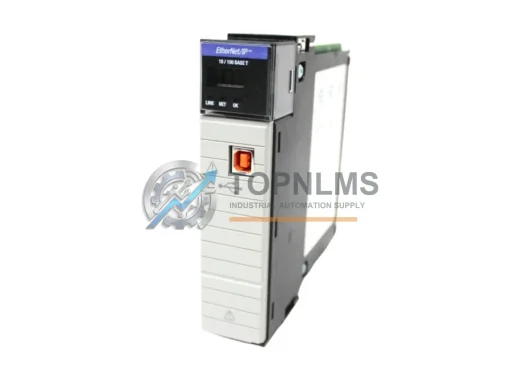
Allen-Bradley 1756-EN2T/C original ControlLogix EtherNet/IP module. Industrial replacement spare, 12-month warranty, tested before shipment. Fast global delivery.
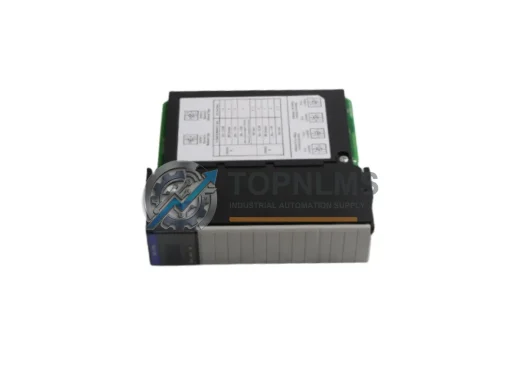
Allen-Bradley 1756-DHRIO ControlLogix DH+/RIO Bridge Scanner Module. Drop-in replacement, upgrade solution, 12-month warranty. Ships from stock. Compatible with 1756 chassis.
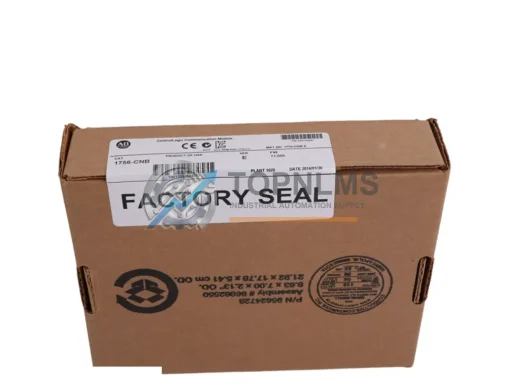
Buy Allen-Bradley 1756-CNB original ControlNet bridge module for ControlLogix systems. Genuine spare, 12-month warranty, fast shipping. SKU: 1756-CNB.
Click Quote This Model and the Part Number field will auto-fill with 1783-US06T.