Product Overview
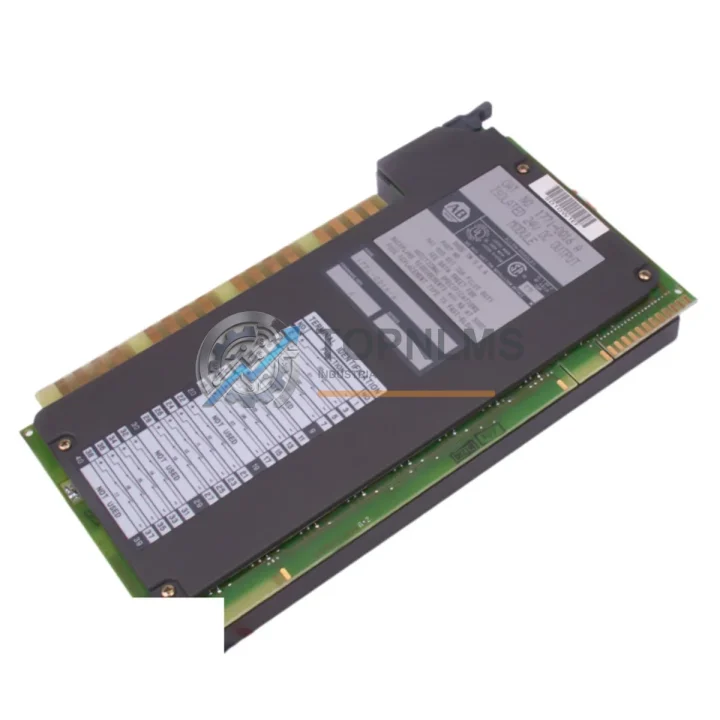
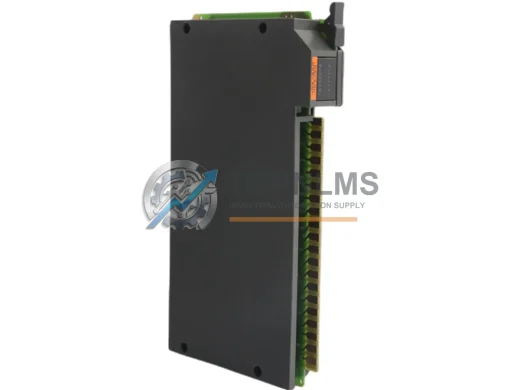
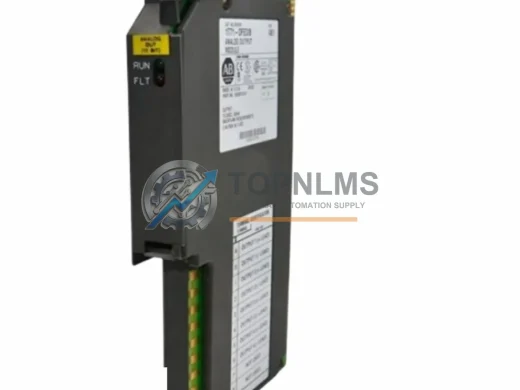
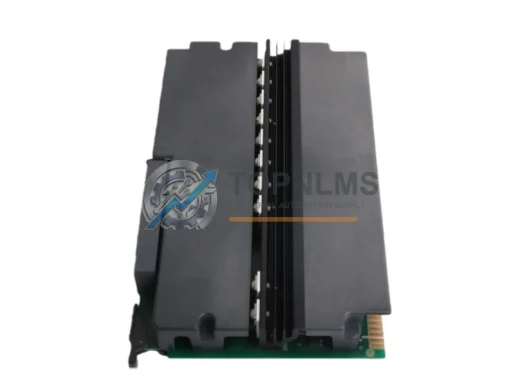
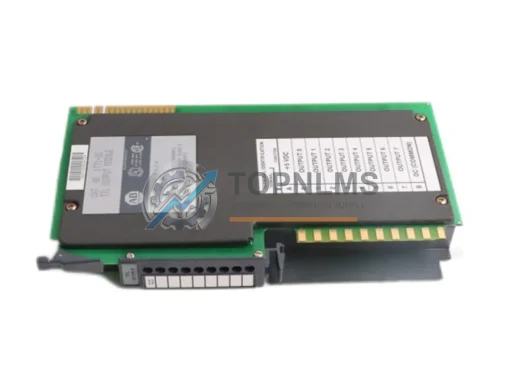
Allen-Bradley 1771-OQ16 Original Industrial Spare PLC-5 Compatible: Ensuring System Stability in Demanding Automation Environments
The Allen-Bradley 1771-OQ16 is a 16-point transistor output module engineered for the PLC-5 family and the 1771 I/O chassis platform — one of the most widely deployed programmable logic controller architectures in global industrial automation. Whether your facility runs continuous process lines, discrete manufacturing cells, or hybrid control systems, the 1771-OQ16 remains a mission-critical component whose reliable operation directly determines uptime, throughput, and safety compliance. Sourced as an original spare, this module is inspected, tested, and dispatched with a 12-month warranty, giving maintenance engineers and procurement teams the confidence to stock it as a primary replacement unit.
In aging PLC-5 installations — many of which have been in service for 15 to 25 years — the output module is statistically among the first components to exhibit degradation. Transistor output channels can fail individually due to sustained inductive load switching, voltage transients, or thermal cycling. A single failed output point can halt an entire production line if no verified replacement is on hand. Stocking the 1771-OQ16 as a ready-to-install spare eliminates the procurement lead time that typically extends unplanned downtime from hours into days.
Critical Technical Specs
| Parameter |
Specification |
| Part Number |
1771-OQ16 |
| Brand |
Allen-Bradley (Rockwell Automation) |
| Series |
PLC-5 / 1771 I/O |
| Module Type |
Transistor (Sourcing) Output Module |
| Number of Output Points |
16 |
| Output Voltage Range |
10–50 VDC |
| Output Current per Point |
1 A continuous |
| Total Module Current |
8 A maximum |
| Backplane Current Draw |
800 mA @ 5 VDC |
| Isolation |
Optical isolation between field and backplane |
| Chassis Compatibility |
1771-A1B, 1771-A2B, 1771-A3B, 1771-A4B series chassis |
| Controller Compatibility |
PLC-5/10, PLC-5/12, PLC-5/15, PLC-5/20, PLC-5/25, PLC-5/30, PLC-5/40, PLC-5/60, PLC-5/80 |
| Operating Temperature |
0°C to 60°C (32°F to 140°F) |
| Storage Temperature |
-40°C to 85°C |
| Relative Humidity |
5% to 95% non-condensing |
| Installation |
Single-slot 1771 I/O chassis module |
| Origin |
United States |
| Warranty |
12 Months (TOPNLMS) |
Preventive Maintenance Strategy
A structured preventive maintenance program for PLC-5-based control systems should treat the 1771-OQ16 not in isolation, but as part of an interconnected electrical architecture. When scheduling a planned shutdown for output module inspection or replacement, maintenance teams should simultaneously audit the adjacent components that share the same I/O chassis, power distribution circuit, and field wiring terminations.
Begin with the 1771-P4S or 1771-P7 chassis power supply: output module failures are frequently preceded by power supply ripple or voltage sag that stresses transistor output stages. A power supply showing marginal output voltage under load should be replaced proactively during the same maintenance window. Next, inspect the 1771-IQ16 or 1771-IA16 input modules installed in the same chassis — input and output modules in the same I/O rack share backplane power and are subject to the same environmental stressors, making simultaneous inspection logical and cost-effective.
Field wiring terminations at the 1771-WN or 1771-WB wiring arm should be checked for loose terminals, oxidation, and insulation degradation. A corroded terminal block connection can cause intermittent output faults that are misdiagnosed as module failure, leading to unnecessary module replacement. Cleaning and re-torquing terminal connections is a low-cost step that extends module service life significantly.
For facilities running multiple 1771 I/O chassis in a remote I/O network, the 1771-ASB remote I/O adapter should be inspected for communication errors and firmware currency. An adapter operating with accumulated communication faults can cause false output state changes that damage field devices and create safety incidents. Similarly, the 1747-SN remote I/O scanner or 1785-KA5 communication adapter connecting the PLC-5 processor to remote racks should be verified for error-free operation.
Relay output modules such as the 1771-OW16 installed in adjacent slots for high-current or AC load switching should be inspected for contact wear — relay contacts in high-cycle applications typically require replacement every 12 to 18 months in demanding environments. Pairing relay module inspection with transistor output module replacement during the same shutdown minimizes future unplanned outages.
Finally, review the 1771-OFE2 or 1771-OFE3 analog output modules if your process includes proportional valve control, variable speed drive setpoint signals, or temperature control loops. Analog output drift is a common source of process quality deviation that is often overlooked during discrete I/O-focused maintenance cycles. A comprehensive inspection covering both discrete and analog output modules during a single planned shutdown delivers the highest return on maintenance investment.
Strategic Replacement Solutions
The 1771-OQ16 has been in production for decades, and while Rockwell Automation has transitioned its strategic platform to ControlLogix and CompactLogix, the installed base of PLC-5 systems remains substantial across petrochemical, automotive, food and beverage, water treatment, and heavy manufacturing sectors. Many facilities have made a deliberate decision to extend the operational life of their PLC-5 infrastructure rather than undertake a full migration — a decision driven by capital cost, production continuity requirements, and the complexity of re-validating control logic in regulated industries.
For these facilities, maintaining a verified stock of original 1771-OQ16 modules is the most operationally sound strategy. Original modules guarantee full compatibility with existing 1771 chassis backplane signaling, PLC-5 processor I/O image table addressing, and field wiring configurations. Substituting with uncertified aftermarket modules introduces compatibility risks that can manifest as intermittent output faults, incorrect I/O image mapping, or chassis communication errors — all of which are difficult to diagnose and costly to resolve during production.
When a 1771-OQ16 fails in service, the replacement procedure is straightforward: power down the chassis or use the hot-swap capability if supported by your chassis configuration, remove the failed module, insert the replacement, and verify output states against the PLC-5 processor’s I/O status display. No firmware update or re-configuration is required for a like-for-like replacement. This simplicity is a key operational advantage of maintaining original spare inventory versus pursuing ad-hoc procurement at the time of failure.
For facilities considering a phased migration path, the 1771-OQ16 can coexist with newer 1756-OB16 ControlLogix output modules in hybrid architectures using the 1756-DHRIO or 1756-RIO bridge modules, allowing gradual system modernization without a full cutover. This approach preserves capital investment while progressively improving system diagnostics and remote monitoring capability.
Support FAQ
Q1: What is the expected service life of the 1771-OQ16, and when should I plan for replacement?
Under normal operating conditions — ambient temperature within specification, properly sized loads, and clean power supply — the 1771-OQ16 transistor output module can deliver 10 to 20 years of reliable service. However, modules operating in high-cycle applications, elevated ambient temperatures, or environments with significant electrical noise should be inspected every 3 to 5 years. Proactive replacement based on operating hours and cycle count is more cost-effective than reactive replacement after an unplanned failure.
Q2: How do I verify compatibility before installing a replacement 1771-OQ16?
Confirm that your chassis is a 1771-series I/O chassis (1771-A1B through 1771-A4B or equivalent) and that your controller is a PLC-5 processor. The 1771-OQ16 is not compatible with SLC 500 or MicroLogix platforms. Verify the output wiring arm (1771-WN or 1771-WB) is correctly configured for sourcing DC output connections. No software configuration changes are required for a like-for-like module swap.
Q3: What pre-shipment testing does TOPNLMS perform on the 1771-OQ16?
Each 1771-OQ16 unit is functionally tested prior to dispatch: all 16 output channels are verified for correct switching operation, optical isolation integrity is confirmed, and backplane connector pins are inspected for damage or oxidation. Units are shipped in anti-static packaging with documentation. The 12-month warranty covers manufacturing defects and functional failures under normal operating conditions.
Q4: Can I stock the 1771-OQ16 as a long-term inventory spare, and what are the storage requirements?
Yes. The 1771-OQ16 is well-suited for long-term spare inventory. Store units in original anti-static packaging in a climate-controlled environment: temperature between 0°C and 40°C, relative humidity below 70% non-condensing, away from direct sunlight and electromagnetic interference sources. Modules stored under these conditions retain full functionality for 5 to 10 years. Annual visual inspection of stored units is recommended to verify packaging integrity and connector condition.