
Allen-Bradley
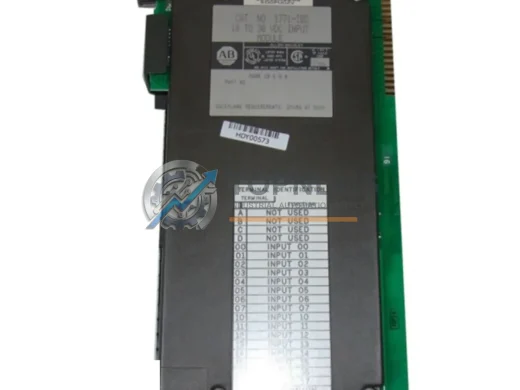
Allen-Bradley 1771-IB Ruggedized DC Input Module
1771-IBAllen-Bradley 1771-IB 16-point DC digital input module for PLC-5 1771 chassis. Rugged, reliable, in-stock. 12-month warranty. Fast global shipping from TOPNLMS.
Request availability, condition, lead time and export shipping details for 1771-ASB.
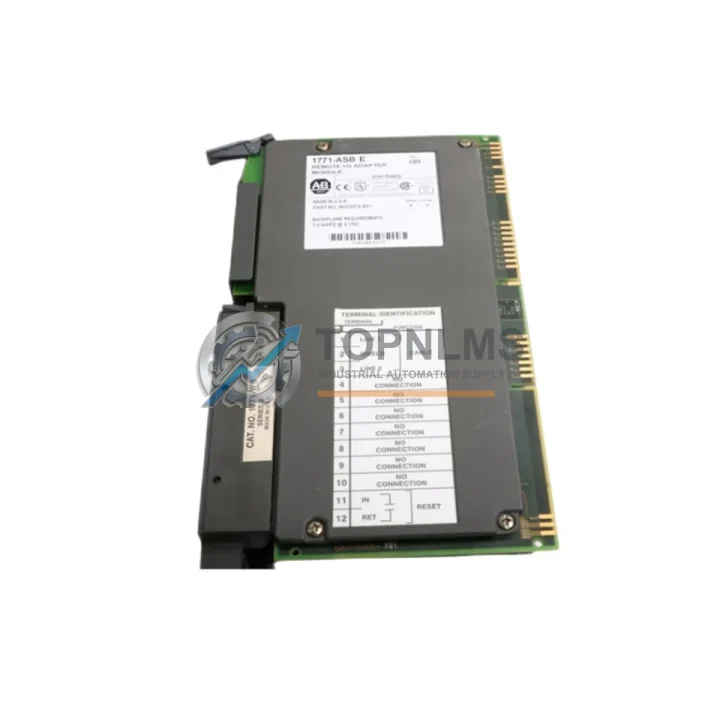
Send this exact part number, quantity and destination country. TOPNLMS will confirm availability, condition and export lead time before quotation.
The Allen-Bradley 1771-ASB Remote I/O Adapter is a mission-critical component in Rockwell Automation’s PLC-5 and 1771 distributed I/O architecture. Designed to interface remote I/O chassis with the PLC-5 processor over a dedicated Remote I/O (RIO) link, the 1771-ASB enables reliable, high-speed communication between the controller and field devices across large-scale industrial facilities. For maintenance engineers managing aging PLC-5 systems, securing a verified original 1771-ASB spare is one of the most impactful steps toward ensuring continuous production uptime and long-term system stability.
In modern industrial environments — from automotive assembly lines and chemical processing plants to water treatment facilities and discrete manufacturing cells — the PLC-5 platform continues to serve as the backbone of legacy control infrastructure. The 1771-ASB adapter sits at the heart of this distributed architecture, managing I/O data exchange between the processor and remote chassis housing analog and digital I/O modules. A failed or degraded 1771-ASB can instantly isolate an entire remote I/O rack, triggering unplanned shutdowns and costly production losses. Stocking a verified original replacement is not optional — it is a fundamental element of any responsible preventive maintenance program.
| Parameter | Specification |
|---|---|
| Part Number | 1771-ASB |
| Manufacturer | Allen-Bradley (Rockwell Automation) |
| Series | PLC-5 / 1771 Remote I/O |
| Function | Remote I/O Adapter — interfaces 1771 I/O chassis to PLC-5 RIO link |
| Communication | Remote I/O (RIO) link, 57.6K / 115.2K / 230.4K baud |
| Backplane Compatibility | 1771 I/O chassis (all standard slot widths) |
| Power Supply Requirement | 1771-P4 / 1771-P4S or equivalent 1771-series power supply |
| Compatible Controllers | PLC-5/10, PLC-5/15, PLC-5/20, PLC-5/25, PLC-5/30, PLC-5/40, PLC-5/60, PLC-5/80 |
| Node Addressing | Configurable via DIP switches (0–77 octal) |
| Operating Temperature | 0°C to 60°C (32°F to 140°F) |
| Storage Temperature | -40°C to 85°C |
| Relative Humidity | 5% to 95% non-condensing |
| Mounting | 1771 I/O chassis backplane slot (leftmost slot) |
| Country of Origin | United States |
| Condition | Original / Genuine — tested before shipment |
| Warranty | 12 Months |
When scheduling a planned maintenance window around the 1771-ASB, experienced maintenance teams know that the adapter rarely fails in isolation. The entire remote I/O node — including the chassis, power supply, and installed I/O modules — should be inspected simultaneously to avoid repeat shutdowns. Begin by verifying the integrity of the 1771-P4 or 1771-P4S power supply module; a degraded power supply is one of the leading causes of intermittent RIO communication faults that are often misdiagnosed as adapter failures.
Next, inspect all installed 1771-series digital and analog I/O modules — including common types such as the 1771-OBD (DC output), 1771-IBD (DC input), and 1771-OFE (analog output) — for signs of overheating, contamination, or terminal corrosion. Loose or oxidized terminal connections on 1771-series wiring arm assemblies are a frequent source of intermittent I/O faults that can be mistakenly attributed to the adapter itself.
The Remote I/O cable and termination resistors connecting the PLC-5 processor to the 1771-ASB node should also be tested. Damaged shielding, improper termination resistance (typically 82Ω at the last node), or excessive cable length can cause RIO link instability that manifests as adapter faults. If the facility runs multiple remote I/O nodes, inspect the 1771-ASB adapters at all downstream nodes during the same maintenance cycle — a failing adapter at one node can introduce noise that degrades communication across the entire RIO link.
For facilities running PLC-5 processors such as the 1785-L40B or 1785-L80B, it is advisable to verify processor firmware revision compatibility with the 1771-ASB revision installed. Mismatched firmware can cause subtle I/O mapping errors that are difficult to diagnose under production conditions. Simultaneously, check the 1771-series chassis backplane for physical damage or bent connector pins that could cause intermittent slot communication errors.
Proactive spare parts planning should also include 1771-series communication modules such as the 1771-KA or 1771-KA2 RIO scanner modules if your architecture uses scanner-based remote I/O topologies. Maintaining at least one verified spare 1771-ASB adapter per remote I/O node — alongside a spare power supply and a representative set of I/O modules — is the industry-standard approach for facilities that cannot tolerate extended unplanned downtime.
The 1771-ASB has been a cornerstone of Allen-Bradley’s distributed I/O strategy since the PLC-5 platform’s introduction. While Rockwell Automation has transitioned its current portfolio toward ControlLogix and CompactLogix architectures, the installed base of PLC-5 / 1771 systems remains enormous — particularly in industries where the cost and complexity of full system migration outweigh the benefits of modernization in the near term.
Sourcing a verified original 1771-ASB replacement allows maintenance teams to restore full remote I/O functionality without any software reconfiguration, I/O mapping changes, or processor program modifications. The replacement adapter installs directly into the leftmost slot of the existing 1771 chassis, with node address and baud rate configured via the onboard DIP switches to match the original unit’s settings — a process that typically takes under 30 minutes for a trained technician.
For facilities evaluating a phased migration path, the 1771-ASB can continue to serve reliably as part of a hybrid architecture where legacy 1771 I/O nodes are retained while newer ControlLogix or CompactLogix processors are introduced at the controller level via 1756-DHRIO or 1756-RIO bridge modules. This approach preserves the existing field wiring investment while enabling a gradual transition to modern control platforms — significantly reducing migration risk and capital expenditure.
Every 1771-ASB unit supplied by TOPNLMS is sourced from verified original inventory, functionally tested prior to shipment, and backed by a 12-month warranty. Units are shipped with full anti-static packaging and documentation to support incoming inspection and traceability requirements.
Q1: Is this a genuine original Allen-Bradley 1771-ASB or a compatible replacement?
This is a genuine original Allen-Bradley 1771-ASB sourced from verified industrial inventory. It is not a third-party compatible or remanufactured unit. Each unit undergoes functional testing before shipment to confirm RIO communication integrity and backplane interface performance.
Q2: What is the warranty coverage and what does it include?
All 1771-ASB units are covered by a 12-month warranty from the date of shipment. The warranty covers functional defects identified under normal operating conditions. Units that fail within the warranty period are eligible for replacement or refund subject to inspection. The warranty does not cover damage resulting from incorrect installation, overvoltage, or physical mishandling.
Q3: How do I verify compatibility with my existing PLC-5 system before installation?
The 1771-ASB is compatible with all standard PLC-5 processors (PLC-5/10 through PLC-5/80) and all standard 1771 I/O chassis configurations. Verify the existing adapter’s DIP switch settings for node address and baud rate before removal, and configure the replacement unit to match. If you require compatibility verification for a specific processor catalog number or firmware revision, contact our technical team at [email protected] with your system details.
Q4: What is the typical lead time and how is the unit packaged for shipment?
In-stock units are typically dispatched within 1–3 business days. Each unit is packaged in anti-static foam with protective outer carton to prevent transit damage. A packing list and basic inspection record are included. Expedited shipping options are available for urgent maintenance requirements — contact us directly to arrange priority dispatch.
Allen-Bradley 1771-IB 16-point DC digital input module for PLC-5 1771 chassis. Rugged, reliable, in-stock. 12-month warranty. Fast global shipping from TOPNLMS.
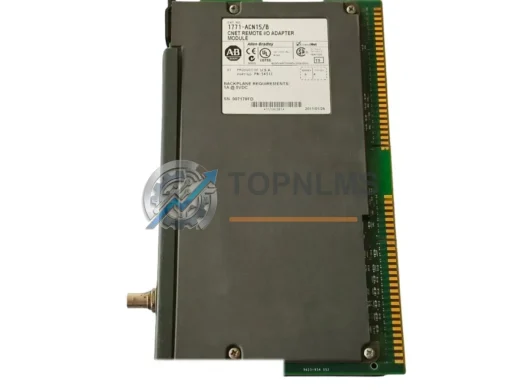
Allen-Bradley 1771-ACN15 original ControlNet I/O adapter for PLC-5 1771 chassis. Fast shipping, 12-month warranty. Industrial spare for legacy system continuity.
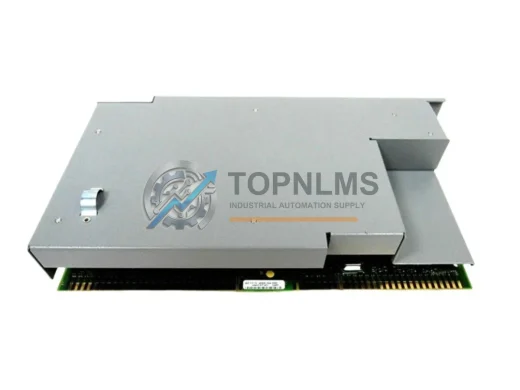
Allen-Bradley 1771-ACN ControlNet I/O Adapter Module. Ruggedized for harsh environments. 12-month warranty, tested stock, fast shipping. Contact TOPNLMS.
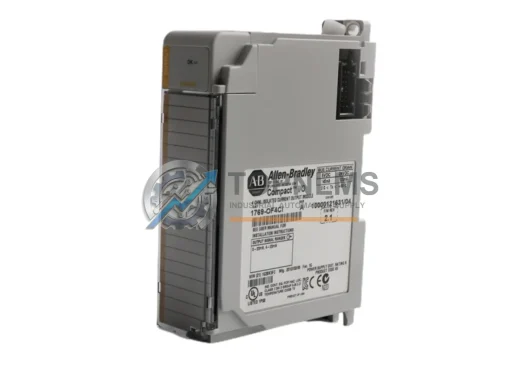
Allen-Bradley 1769-OF4CI original isolated analog current output module. Compact I/O compatible, 12-month warranty, tested & ready to ship. Industrial replacement.
Click Quote This Model and the Part Number field will auto-fill with 1771-ASB.