
Allen-Bradley
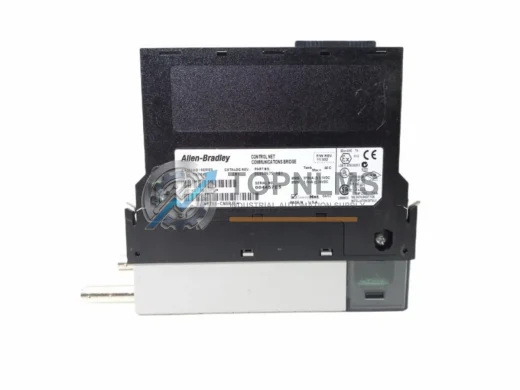
Allen-Bradley 1756-CNBR/E Original Industrial Spare ControlLogix
1756-CNBR/EOriginal Allen-Bradley 1756-CNBR/E ControlNet Bridge Module for ControlLogix 1756 Series E. Industrial spare, fast ship, 12-month warranty. topnlms.com
Request availability, condition, lead time and export shipping details for 1769-L31.
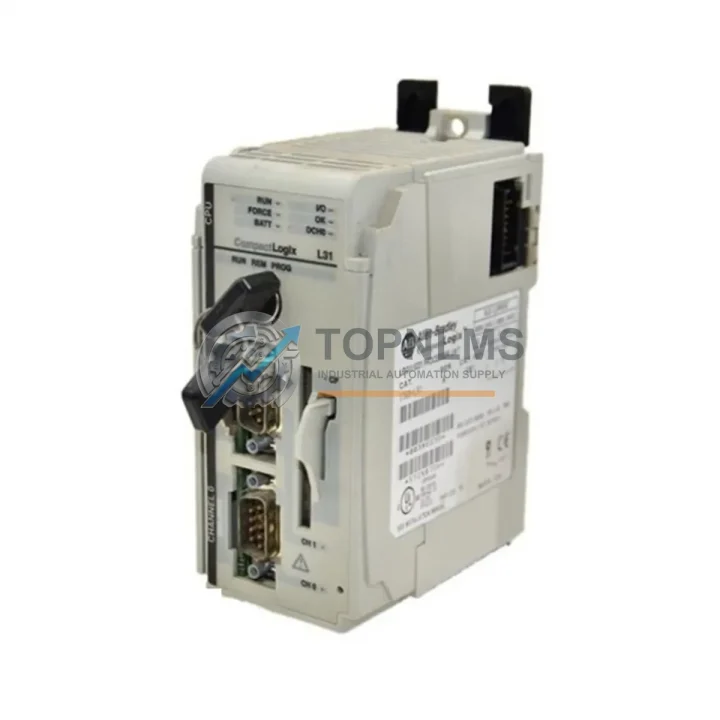
Send this exact part number, quantity and destination country. TOPNLMS will confirm availability, condition and export lead time before quotation.
The Allen-Bradley 1769-L31 CompactLogix Dual Serial Processor has been a dependable control platform across manufacturing, oil & gas, water treatment, food processing, and material handling facilities for well over a decade. Built around dual RS-232 serial ports supporting DF1 and DH-485 communication protocols, the 1769-L31 offered a compact, cost-effective solution for mid-range machine control at a time when serial-based fieldbus architectures were the industry standard.
As the 1769-L31 reaches end-of-life status and Rockwell Automation discontinues active support, plant engineers and maintenance managers are now confronted with a familiar challenge: how to migrate away from a proven but aging processor without halting production, rewriting entire control programs from scratch, or redesigning control cabinet layouts that have been in service for years. TOPNLMS addresses this challenge directly by supplying the 1769-L31 as a certified replacement unit for like-for-like swaps, while also providing full technical guidance for customers planning a phased upgrade to current-generation CompactLogix 5370 L3 processors.
Whether your priority is keeping an existing line operational with a direct spare, or executing a structured migration to a modern EtherNet/IP-native controller, TOPNLMS maintains in-stock inventory, performs pre-shipment functional testing, and backs every unit with a 12-month warranty from the date of shipment.
| Parameter | 1769-L31 (Legacy) | 1769-L33ER / 1769-L36ERM (Upgrade Target) |
|---|---|---|
| Series | CompactLogix 5370 L3 | CompactLogix 5370 L3 |
| Communication Ports | 2× RS-232 Serial (DF1 / DH-485) | EtherNet/IP (dual-port), USB programming |
| User Memory | 512 KB | 1 MB – 3 MB |
| I/O Capacity | Up to 16 local 1769 Compact I/O modules | Up to 16 local 1769 Compact I/O modules |
| Backplane / Rack | 1769 CompactLogix backplane | 1769 CompactLogix backplane (fully compatible) |
| Programming Software | RSLogix 5000 / Studio 5000 | Studio 5000 Logix Designer |
| Power Supply | 1769-PA2 / 1769-PB2 | 1769-PA2 / 1769-PB2 (unchanged) |
| Mounting | DIN rail / panel mount, standard 1769 form factor | DIN rail / panel mount, standard 1769 form factor |
| Protocol Migration | DF1, DH-485 (serial) | EtherNet/IP — gateway required for legacy serial devices |
| Replacement Recommendation | — | Direct upgrade; .ACD project re-targeted in Studio 5000 |
| Warranty (TOPNLMS) | 12 Months | 12 Months |
A successful migration from the 1769-L31 rarely involves the processor in isolation. In most retrofit projects, the surrounding system components — I/O modules, power supplies, HMI terminals, communication adapters, and programming cables — must be evaluated and, where necessary, upgraded in parallel to ensure full system compatibility and long-term operational reliability.
The 1769-L31 communicates with field devices, operator interfaces, and remote I/O via RS-232 serial ports using DF1 or DH-485 protocols. When the migration target is an EtherNet/IP-native processor such as the 1769-L33ER or 1769-L36ERM, legacy serial field devices — including older PanelView 550 and PanelView 600 operator terminals — cannot connect directly to the new processor’s EtherNet/IP port without a protocol bridge. In these scenarios, a 1761-NET-AIC Advanced Interface Converter or a dedicated Modbus-to-EtherNet/IP gateway can be inserted into the communication path to maintain connectivity during the transition period, allowing the HMI and drive systems to remain in service while the controller is upgraded.
On the I/O side, the 1769-L31 shares the same 1769 CompactLogix backplane as all current-generation CompactLogix 5370 L3 processors. This means that existing 1769-IQ16 digital input modules, 1769-OB16 digital output modules, and 1769-IF4 analog input modules installed in the local rack can typically be retained without any field wiring changes. Preserving the existing I/O infrastructure dramatically reduces labor costs, eliminates the risk of wiring errors during cutover, and shortens the overall commissioning window — a critical advantage in facilities where planned downtime is measured in hours rather than days.
Power supply compatibility is another significant advantage of staying within the 1769 ecosystem. The 1769-PA2 120/240 VAC power supply and the 1769-PB2 24 VDC power supply are fully compatible with both the 1769-L31 and its recommended upgrade processors. The control cabinet power architecture, including existing circuit breakers, terminal blocks, and cable routing, does not need to change, which simplifies the physical retrofit considerably.
For facilities that use 1747-SN Remote I/O Scanner modules or 1756-DNB DeviceNet Bridge modules in adjacent ControlLogix racks, the migration plan should include a protocol mapping review. In some architectures, a 1769-SDN DeviceNet Scanner module can be retained in the 1769 local rack to preserve connectivity to existing DeviceNet field devices — variable frequency drives, smart sensors, and valve manifolds — without requiring a full network replacement at the time of the controller swap.
Programming cable requirements also change during migration. The 1769-L31 is typically programmed via a 1747-CP3 RS-232 serial cable connected to a laptop running RSLogix 5000. Current-generation CompactLogix processors use a standard USB-A to USB-B cable for direct programming port access, eliminating the need for serial adapters or USB-to-serial converters on modern engineering workstations. This simplification reduces setup time during commissioning and troubleshooting visits.
For sites planning a full HMI refresh alongside the controller upgrade, replacing legacy PanelView terminals with current PanelView Plus 7 graphic terminals provides a clean EtherNet/IP-native operator interface solution that integrates directly with the new processor without any protocol conversion overhead.
Q: Can I reuse my existing 1769 Compact I/O modules after replacing the 1769-L31?
A: Yes. All standard 1769 Compact I/O modules — digital, analog, and specialty types — are compatible with the 1769 backplane used by both the 1769-L31 and its recommended upgrade targets. Field terminal wiring does not need to change in most cases, which is one of the primary cost advantages of migrating within the CompactLogix 5370 L3 family.
Q: Will my existing RSLogix 5000 program run on a newer CompactLogix processor without modification?
A: In most cases, the existing .ACD project file can be opened in Studio 5000 Logix Designer and re-targeted to the new processor model with minimal rework. Communication path configurations and any serial MSG instructions referencing DF1 or DH-485 addresses will need to be updated to reflect EtherNet/IP node addressing. Ladder logic, function block diagrams, and tag databases are generally portable without structural changes.
Q: How do I handle serial communication devices that currently connect to the 1769-L31?
A: Legacy serial devices can be bridged using a protocol converter such as the 1761-NET-AIC or a third-party Modbus RTU-to-EtherNet/IP gateway. If the migration timeline and budget allow, replacing serial HMI panels with PanelView Plus 7 terminals provides a cleaner long-term solution that eliminates the protocol conversion layer entirely.
Q: Does the physical footprint change when I replace the 1769-L31?
A: No. The 1769-L31 and its direct upgrade replacements share the same DIN rail mounting form factor and 1769 backplane connector. Cabinet space requirements are essentially unchanged, making the physical swap straightforward and minimizing the need for mechanical modifications to the control enclosure.
Q: What is the lead time and shipping arrangement?
A: Units are in stock at our Xiamen warehouse. Orders are typically dispatched within 1–2 business days via DHL Express, FedEx International Priority, or sea freight for bulk orders. Estimated delivery to most destinations is 3–7 business days for express shipments. Bulk procurement and project-based orders are welcome — contact us for volume pricing and consolidated shipping arrangements.
Q: Can TOPNLMS supply both the 1769-L31 replacement unit and the upgrade target processor?
A: Yes. TOPNLMS maintains inventory of both legacy CompactLogix processors for like-for-like replacement and current-generation 1769-L33ER and 1769-L36ERM units for customers executing a planned upgrade. We can supply both in a single order to support phased migration strategies where the legacy unit is used as a temporary spare while the new processor is commissioned.
Every 1769-L31 unit supplied by TOPNLMS is covered by a 12-month warranty from the date of shipment. Prior to dispatch, each unit undergoes a pre-shipment functional test to verify processor initialization, memory integrity, communication port operation, and backplane connectivity. Units that do not pass inspection are quarantined and are never shipped to customers.
In the event of a warranty claim, TOPNLMS provides a replacement unit or full refund within the warranty period. Our after-sales response target is 24 hours for initial acknowledgment and 72 hours for a resolution proposal. For customers in critical production situations, we assess each case individually and can dispatch a replacement unit before the defective unit is returned, minimizing your downtime exposure.
Procurement documentation — including pre-shipment test reports, packing lists, and commercial invoices — is provided with every shipment to support your incoming inspection process, asset management records, and customs clearance requirements.
Original Allen-Bradley 1756-CNBR/E ControlNet Bridge Module for ControlLogix 1756 Series E. Industrial spare, fast ship, 12-month warranty. topnlms.com
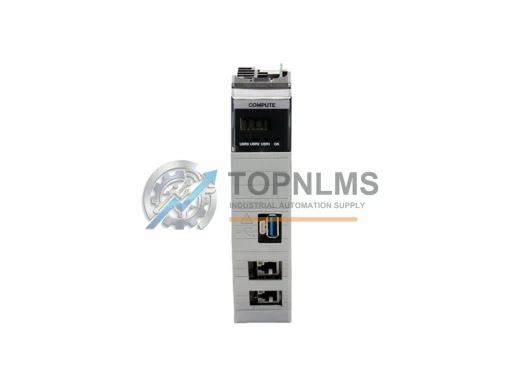
Allen-Bradley 1756-CMS1B1 ControlLogix Compute Module. Ruggedized for harsh environments. 12-month warranty, tested, fast shipping. Buy at TOPNLMS.
Allen-Bradley 1753-L32BBBM-8A GuardPLC 1800 Safety PLC Controller. Ruggedized for harsh environments. In stock, tested, 12-month warranty. Fast global shipping.
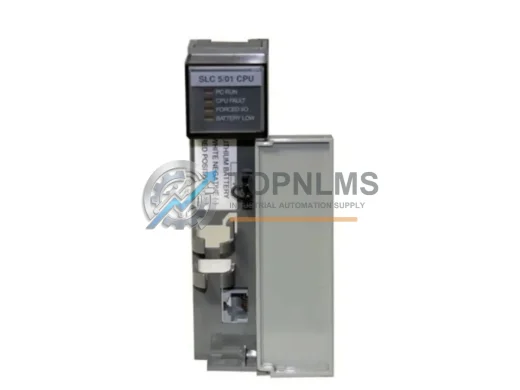
Allen-Bradley 1747OC-EBCBA SLC 500 Open Controller CPU Module. Rugged, EMI-resistant, 12-month warranty. In stock — fast shipping from TOPNLMS.
Click Quote This Model and the Part Number field will auto-fill with 1769-L31.