

Allen-Bradley
Allen-Bradley 2080-LC50-24QWB Micro850 Replacement
2080-LC50-24QWBAllen-Bradley 2080-LC50-24QWB Micro850 24-point compact PLC replacement. EtherNet/IP compatible, drop-in upgrade. 12-month warranty. Ships from stock.
Request availability, condition, lead time and export shipping details for 1786-BNC.
Send this exact part number, quantity and destination country. TOPNLMS will confirm availability, condition and export lead time before quotation.
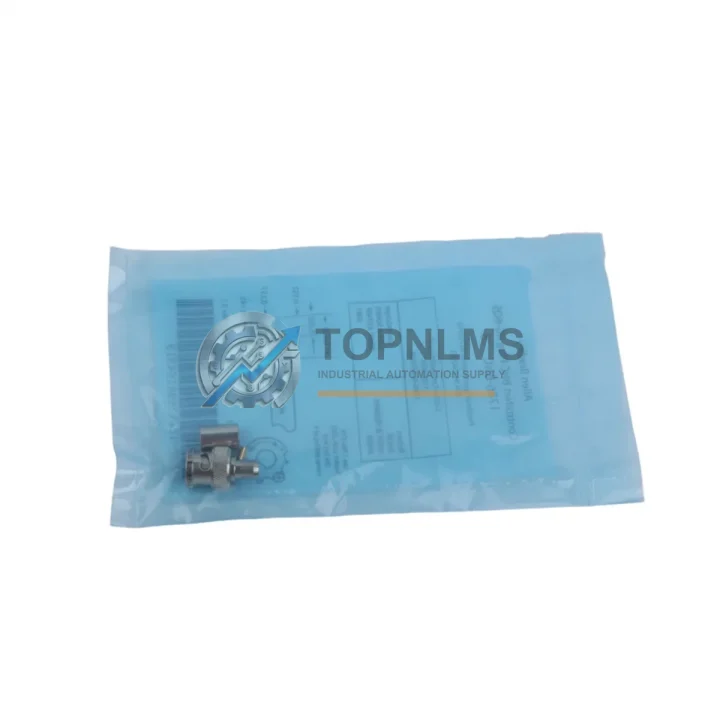
The Allen-Bradley 1786-BNC is a genuine ControlNet coaxial BNC connector designed for use in Rockwell Automation ControlNet network architectures. In industrial environments where network integrity directly determines production uptime, the physical layer of your ControlNet topology — including every connector, cable segment, and terminator — is as mission-critical as the PLC logic itself. A single degraded or counterfeit BNC connector can introduce signal reflections, intermittent communication faults, and ultimately trigger unplanned shutdowns across an entire control system. Sourcing original, specification-compliant connectors like the 1786-BNC is not a procurement detail — it is a maintenance strategy.
Whether you are managing a greenfield installation, executing a scheduled turnaround, or responding to an unplanned network fault, having verified 1786-BNC connectors in your maintenance inventory eliminates one of the most common and underestimated failure points in ControlNet-based automation systems. TOPNLMS supplies this component with full pre-shipment electrical testing, original packaging where available, and a 12-month warranty covering manufacturing defects and functional performance.
| Parameter | Specification |
|---|---|
| Part Number | 1786-BNC |
| Brand / Manufacturer | Allen-Bradley (Rockwell Automation) |
| Series | ControlNet 1786 |
| Connector Type | BNC Coaxial Connector |
| Network Protocol | ControlNet (IEEE 802.4 / IEC 61158) |
| Cable Compatibility | RG-6 ControlNet coaxial cable (1786-RG6 series) |
| Impedance | 75 Ω (nominal) |
| Application | ControlNet node tap connections, trunk cable terminations, media redundancy segments |
| Installation | Tool-assisted crimp or compression; compatible with standard BNC crimp tooling |
| Operating Temperature | 0°C to +60°C (standard industrial enclosure range) |
| Ingress Protection | Suitable for use inside control cabinets; external use requires conduit or weatherproof enclosure |
| Compatibility | 1786-TP, 1786-TPYR, 1786-TPYS, 1786-RPFM, 1786-RPCD ControlNet tap and repeater modules |
| Maintenance Recommendation | Inspect and replace at every major turnaround or upon any ControlNet communication fault diagnosis |
| Warranty | 12 Months — covers manufacturing defects and functional performance |
| Pre-Shipment Testing | Yes — electrical continuity and impedance verification |
| Origin | USA (Allen-Bradley / Rockwell Automation) |
ControlNet network faults rarely announce themselves in advance. In most field cases, the degradation is gradual — a connector that passes a basic continuity check but introduces micro-reflections under load, a cable segment with marginal impedance matching, or a tap module with oxidized contacts. By the time a ControlNet node drops offline or a 1756-CNB or 1756-CNBR communication module logs a persistent fault, the root cause has often been present for weeks or months.
A disciplined preventive maintenance approach for ControlNet infrastructure should include the 1786-BNC connector as a standard consumable in your spare parts inventory. During scheduled shutdowns or annual electrical inspections, maintenance teams should systematically inspect all BNC termination points along the ControlNet trunk and drop cables. This is also the appropriate time to verify the condition of associated components: the 1786-RG6 coaxial trunk cable should be checked for jacket integrity and bend radius compliance, while 1786-TP and 1786-TPYR tap modules should be inspected for secure seating and contact corrosion.
At the same time, it is sound practice to verify the operational status of the ControlNet communication modules themselves — particularly the 1756-CNB (ControlNet Bridge) and 1756-CNBR (redundant variant) installed in your ControlLogix chassis. These modules manage all scheduled and unscheduled ControlNet traffic and are directly affected by physical layer quality. If your system uses media redundancy, both the primary and redundant coaxial paths should be inspected simultaneously, including all 1786-RPFM or 1786-RPCD repeater modules in the segment.
For facilities running mixed ControlNet and EtherNet/IP architectures, the inspection scope should extend to 1756-EN2T or 1756-EN2TR EtherNet/IP communication modules, as well as the 1756-PA72 or 1756-PB72 chassis power supply modules that power the entire backplane. A power supply operating near its thermal limits can cause intermittent communication faults that are misdiagnosed as network media issues. Including these components in your inspection checklist reduces diagnostic time and prevents misattributed maintenance actions.
For older installations still running 1747-SDN DeviceNet Scanner modules or legacy 1785-L series PLC-5 processors with ControlNet interfaces, maintaining a stock of 1786-BNC connectors is especially important, as original media components for these platforms are increasingly difficult to source on short notice. Proactive inventory management — keeping 10 to 20 connectors on the shelf — is a low-cost insurance policy against extended downtime caused by a component that costs a fraction of one hour of lost production.
The 1786-BNC is a direct, specification-compliant replacement for any worn, damaged, or suspect BNC connector in an existing Allen-Bradley ControlNet installation. Because it is an original Allen-Bradley component manufactured to Rockwell Automation’s ControlNet media specifications, it requires no firmware changes, no network reconfiguration, and no compatibility validation beyond confirming the cable type (RG-6, 75 Ω). This makes it the lowest-risk replacement option for maintenance teams working under time pressure during an unplanned outage.
For facilities managing aging ControlNet infrastructure — particularly systems installed in the late 1990s or early 2000s — the connector is often the first component to show wear, long before the tap modules or communication cards require replacement. Replacing connectors proactively during planned maintenance windows, rather than reactively during production stoppages, is consistently the more cost-effective strategy. A single unplanned shutdown in a process manufacturing or automotive assembly environment typically costs orders of magnitude more than a full set of replacement connectors and a half-day of scheduled maintenance labor.
TOPNLMS maintains stock of the 1786-BNC and related ControlNet media components to support both emergency procurement and planned maintenance purchasing. Orders are processed with same-day or next-business-day dispatch for in-stock items, with full pre-shipment testing documentation available upon request. For customers managing multi-site maintenance programs or annual MRO procurement cycles, volume pricing and reserved stock arrangements are available — contact our team directly to discuss your requirements.
Q1: Is the 1786-BNC compatible with all ControlNet cable types?
The 1786-BNC is designed for use with RG-6 coaxial cable as specified in the Allen-Bradley ControlNet media system (1786-RG6 series). It is not intended for use with RG-59 or other non-specified coaxial cable types. Always verify cable type before installation to ensure impedance matching and signal integrity across the ControlNet segment.
Q2: How do I verify that a 1786-BNC connector is causing my ControlNet communication fault?
ControlNet physical layer faults typically manifest as intermittent node dropouts, increased error counters on the 1756-CNB module, or NUT (Network Update Time) violations visible in RSNetWorx for ControlNet. Use a ControlNet cable tester or TDR (Time Domain Reflectometer) to locate impedance discontinuities along the trunk. A faulty BNC connector will typically appear as a reflection point at a known tap location. Replace suspect connectors and re-test before concluding the fault lies in a tap module or communication card.
Q3: What is the recommended inventory quantity for a production facility?
For a facility with a single ControlNet segment (up to 48 nodes), we recommend maintaining a minimum of 10–20 spare 1786-BNC connectors. Larger installations with multiple segments or media-redundant topologies should scale accordingly. Given the low unit cost relative to downtime risk, erring on the side of over-stocking is the standard recommendation for MRO spare parts at this criticality level.
Q4: What does the 12-month warranty cover, and what is the claims process?
The 12-month warranty covers manufacturing defects and functional performance failures under normal operating conditions. It does not cover damage resulting from incorrect installation, cable type mismatch, or physical abuse. To initiate a warranty claim, contact TOPNLMS with your order reference, a description of the fault, and any available test data. Replacement units are dispatched upon claim verification, typically within 3–5 business days.
Allen-Bradley 2080-LC50-24QWB Micro850 24-point compact PLC replacement. EtherNet/IP compatible, drop-in upgrade. 12-month warranty. Ships from stock.

Allen-Bradley 1775-MED original PLC-2 series memory module. Genuine industrial spare for factory maintenance, fast shipping, 12-month warranty. In stock.

Allen-Bradley 1769-BOOLEAN Compact I/O Boolean Control Module replacement & upgrade. Compatible wiring, DIN rail fit, 12-month warranty. Ships from stock.

Allen-Bradley 150-FS1FX SMC Flex internal control module. Ruggedized for harsh environments. In stock, tested, 12-month warranty. Fast global shipping.
Click Quote This Model and the Part Number field will auto-fill with 1786-BNC.