
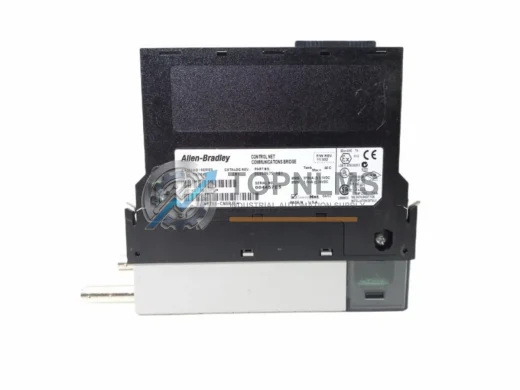
Allen-Bradley
Allen-Bradley 1756-CNBR/E Original Industrial Spare ControlLogix
1756-CNBR/EOriginal Allen-Bradley 1756-CNBR/E ControlNet Bridge Module for ControlLogix 1756 Series E. Industrial spare, fast ship, 12-month warranty. topnlms.com
Request availability, condition, lead time and export shipping details for 1756-RMC1.
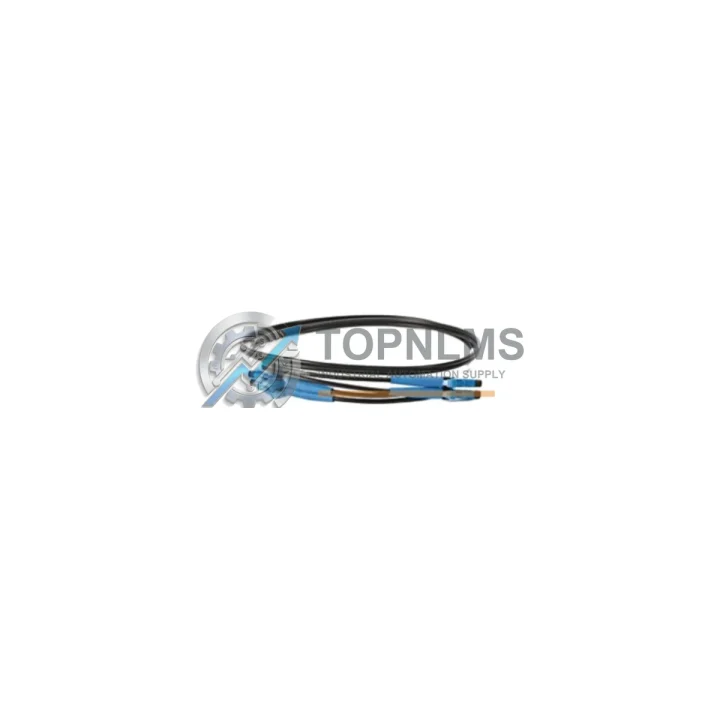
Send this exact part number, quantity and destination country. TOPNLMS will confirm availability, condition and export lead time before quotation.
The Allen-Bradley 1756-RMC1 is a ControlLogix-series redundancy fiber cable module engineered for mission-critical industrial automation environments where system downtime is not an option. Designed to operate reliably under extreme thermal stress, high-humidity conditions, heavy vibration, airborne particulates, and intense electromagnetic interference (EMI), the 1756-RMC1 delivers the fault-tolerant communication backbone that modern continuous production lines and safety-critical control architectures demand.
As part of Rockwell Automation’s proven ControlLogix 1756 platform, this module provides the high-speed fiber-optic redundancy link between primary and secondary chassis in a ControlLogix Redundancy System. Its fiber-optic medium inherently eliminates ground loop issues and provides superior immunity to EMI — a decisive advantage in environments such as high-voltage switchgear rooms, arc furnace facilities, and variable frequency drive (VFD) enclosures where copper-based communication is routinely compromised.
In oil and gas upstream processing facilities, the 1756-RMC1 maintains seamless bumpless transfer between redundant ControlLogix controllers, ensuring that safety instrumented systems (SIS) and emergency shutdown (ESD) logic remain continuously active even during controller diagnostics or planned maintenance. Paired with the 1756-RM2 redundancy module and 1756-L8x series controllers, the 1756-RMC1 forms the communication spine of a fully redundant control node capable of sustaining SIL 2-rated process control without interruption.
In mining and mineral processing operations — where conveyor drives, crusher motors, and slurry pump systems generate persistent mechanical vibration and conductive dust — the fiber-optic design of the 1756-RMC1 ensures that chassis-to-chassis synchronization data is transmitted without signal degradation. The module integrates directly into the 1756 backplane alongside 1756-EN2T EtherNet/IP communication modules, 1756-IB16 digital input modules, and 1756-OB16E digital output modules, enabling a fully coordinated I/O and control architecture within a single ruggedized control cabinet.
For power generation and grid substation automation, where thermal cycling between cold startup and full-load operation is a daily reality, the 1756-RMC1 maintains stable fiber link integrity across its full operating temperature range. It works in concert with 1756-DNB DeviceNet bridge modules and 1756-DHRIO Data Highway Plus/Remote I/O modules to support legacy device integration while preserving the redundancy architecture of the primary control system.
In water and wastewater treatment plants, where chemical vapors and high-humidity environments accelerate corrosion on conventional copper interconnects, the 1756-RMC1’s fiber medium provides a corrosion-immune communication path. The module supports the 1756-L73 and 1756-L74 ControlLogix controllers in redundant configurations, ensuring that SCADA-connected treatment processes — including dosing, filtration, and UV disinfection — remain under continuous automated control without manual intervention during controller switchover events.
Steel mills and heavy metallurgical plants present some of the most demanding electromagnetic environments in industrial automation. High-current bus bars, induction furnaces, and large synchronous motors generate broadband EMI that can disrupt copper-based fieldbus communications. The 1756-RMC1’s fiber-optic link is immune to these interference sources, making it the preferred redundancy interconnect in hot-rolling mill control systems where 1756-M02AE servo drive interface modules and 1756-PA75 power supply modules are co-located in the same control cabinet.
| Parameter | Specification |
|---|---|
| Part Number / SKU | 1756-RMC1 |
| Brand | Allen-Bradley / Rockwell Automation |
| Series | ControlLogix 1756 |
| Module Function | Redundancy Fiber Communication Cable / Link Module |
| Communication Medium | Fiber Optic (EMI-immune, galvanically isolated) |
| Compatible Controllers | 1756-L6x, 1756-L7x, 1756-L8x ControlLogix Series |
| Redundancy Partner Module | 1756-RM, 1756-RM2 |
| Operating Temperature | 0 °C to +60 °C (32 °F to 140 °F) |
| Storage Temperature | -40 °C to +85 °C |
| Relative Humidity | 5% to 95% non-condensing |
| Vibration Resistance | Compliant with IEC 60068-2-6 |
| EMI/EMC Protection | Fiber-optic medium; inherently immune to electromagnetic interference |
| Enclosure / IP Rating | Designed for installation within IP54+ rated control cabinets |
| Hazardous Area Suitability | Suitable for use in control rooms adjacent to Zone 2 / Division 2 classified areas |
| Application Sectors | Oil & Gas, Mining, Power Generation, Water Treatment, Steel & Metallurgy, Chemical Processing |
| Compatibility | ControlLogix Redundancy System; integrates with 1756 backplane modules |
| Warranty | 12 Months — Covered by TOPNLMS Quality Guarantee |
| Condition | New / Refurbished (tested and certified prior to shipment) |
| Origin | China (CN) — Sourced and quality-verified by TOPNLMS |
The 1756-RMC1 does not operate in isolation — it is the critical link in a layered protection architecture. In a fully configured ControlLogix redundancy system, the 1756-RMC1 fiber cable connects two 1756-RM2 redundancy modules housed in separate chassis, enabling real-time controller state synchronization at millisecond intervals. The primary chassis typically houses a 1756-L74 controller alongside 1756-EN2TR EtherNet/IP modules for ring-topology network resilience, while 1756-IF16 analog input modules and 1756-OF8 analog output modules handle process variable acquisition and control signal output.
On the power supply side, 1756-PA75R redundant power supply modules ensure that neither chassis loses power during a utility fluctuation, complementing the controller-level redundancy provided by the 1756-RMC1 fiber link. For safety-rated applications, the system may also incorporate 1756-L8xS GuardLogix safety controllers, which leverage the same ControlLogix backplane infrastructure while adding IEC 61508 SIL 2 certified safety logic execution. Communication to field devices is handled through 1756-DNB DeviceNet scanner modules and 1756-DHRIO modules for legacy DH+ networks, ensuring that the redundancy architecture extends across all communication layers — not just the controller tier.
For cabinet-level protection, the 1756-RMC1 is typically deployed alongside surge protection devices, EMI filtering modules, and industrial-grade terminal blocks rated for the full operating temperature range of the system. This holistic approach to control system protection — spanning the fiber redundancy link, redundant power, safety logic, and multi-protocol communication — is what makes the 1756-RMC1 a foundational component rather than a peripheral accessory.
Across critical infrastructure sectors, the Allen-Bradley 1756-RMC1 has established a track record of reliable service in environments that would compromise lesser components. In offshore oil and gas platforms, where salt-laden air, constant vibration from wave action, and the ever-present risk of hydrocarbon ignition demand the highest standards of control system integrity, the 1756-RMC1 enables bumpless redundancy switchover without process upset — a capability that directly supports compliance with IEC 61511 functional safety requirements for SIS applications.
In underground coal and metal mines, where explosive atmospheres, high dust concentrations, and ground vibration are constant operational realities, the fiber-optic nature of the 1756-RMC1 eliminates the spark risk associated with copper interconnects while providing a communication medium that is unaffected by the broadband EMI generated by large electric haulage motors and ventilation fan drives.
At thermal and hydroelectric power stations, the 1756-RMC1 supports the redundant control of turbine governor systems, excitation control, and auxiliary plant automation. Its ability to maintain controller synchronization during planned maintenance windows — without requiring a process shutdown — is a key operational advantage in baseload generation facilities where availability targets exceed 99.5%.
In municipal water and wastewater treatment, the 1756-RMC1 underpins the redundant control of lift stations, chemical dosing systems, and membrane bioreactor (MBR) filtration processes. Its corrosion-resistant fiber medium is particularly well-suited to the chemically aggressive atmospheres found in chlorination and ozone treatment areas, where copper-based communication infrastructure requires frequent inspection and replacement.
For steel and aluminum smelting operations, where induction furnaces and arc furnaces generate electromagnetic fields that can saturate conventional shielded cables, the 1756-RMC1’s fiber link provides a guaranteed interference-free synchronization path between redundant controllers managing casting speed, cooling water flow, and rolling mill tension control.
Q1: What does the 12-month warranty cover for the 1756-RMC1?
All 1756-RMC1 units supplied by TOPNLMS are covered by a 12-month warranty from the date of shipment. This warranty covers defects in materials and workmanship under normal operating conditions. In the event of a confirmed fault, TOPNLMS will provide a replacement unit or full refund. Our warranty applies equally to new and certified-refurbished units, both of which undergo full functional testing prior to dispatch.
Q2: What pre-shipment testing does each 1756-RMC1 undergo?
Every unit is subject to a multi-stage inspection protocol before shipment. This includes visual inspection for physical damage, fiber connector integrity verification, functional communication link testing using compatible ControlLogix chassis and redundancy modules, and firmware version confirmation. Units that do not pass all test stages are quarantined and not offered for sale. A test report is available upon request for critical infrastructure procurement.
Q3: Is the 1756-RMC1 compatible with all ControlLogix redundancy configurations?
The 1756-RMC1 is designed for use with the ControlLogix Redundancy System and is compatible with 1756-RM and 1756-RM2 redundancy modules across the 1756-L6x, 1756-L7x, and 1756-L8x controller families. Compatibility with specific firmware revisions should be verified against the Rockwell Automation Product Compatibility and Download Center (PCDC). TOPNLMS technical staff can assist with compatibility verification prior to purchase.
Q4: Can TOPNLMS support long-term supply and emergency replacement requirements?
Yes. TOPNLMS maintains standing inventory of the 1756-RMC1 and related ControlLogix redundancy components to support both planned maintenance schedules and emergency breakdown replacement scenarios. For critical infrastructure operators requiring guaranteed availability, we offer reserved stock arrangements and priority dispatch with same-day or next-day shipping for in-stock items. Contact our technical sales team to discuss long-term supply agreements tailored to your maintenance cycle.
Original Allen-Bradley 1756-CNBR/E ControlNet Bridge Module for ControlLogix 1756 Series E. Industrial spare, fast ship, 12-month warranty. topnlms.com
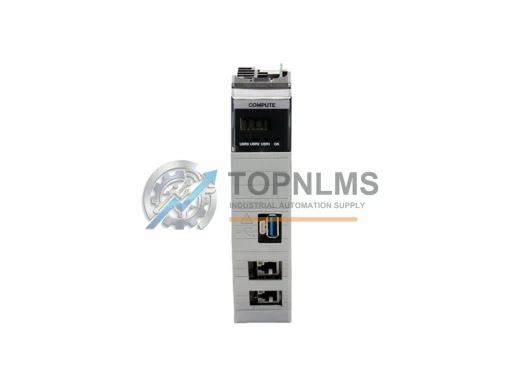
Allen-Bradley 1756-CMS1B1 ControlLogix Compute Module. Ruggedized for harsh environments. 12-month warranty, tested, fast shipping. Buy at TOPNLMS.
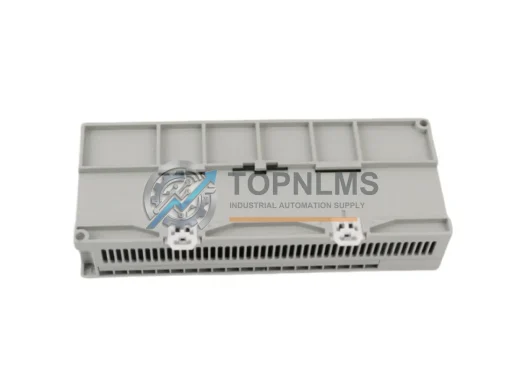
Allen-Bradley 1753-L32BBBM-8A GuardPLC 1800 Safety PLC Controller. Ruggedized for harsh environments. In stock, tested, 12-month warranty. Fast global shipping.
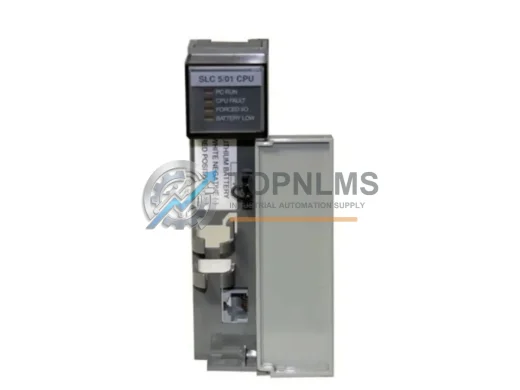
Allen-Bradley 1747OC-EBCBA SLC 500 Open Controller CPU Module. Rugged, EMI-resistant, 12-month warranty. In stock — fast shipping from TOPNLMS.
Click Quote This Model and the Part Number field will auto-fill with 1756-RMC1.