
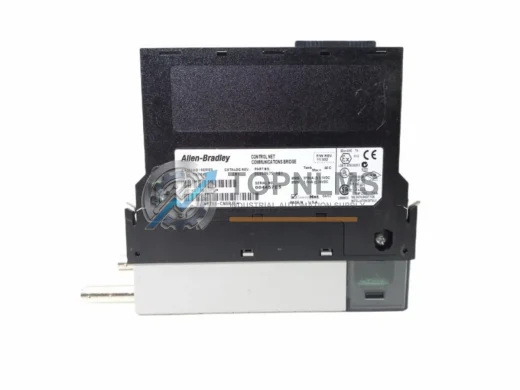
Allen-Bradley
Allen-Bradley 1756-CNBR/E Original Industrial Spare ControlLogix
1756-CNBR/EOriginal Allen-Bradley 1756-CNBR/E ControlNet Bridge Module for ControlLogix 1756 Series E. Industrial spare, fast ship, 12-month warranty. topnlms.com
Request availability, condition, lead time and export shipping details for 1756-RM2K.
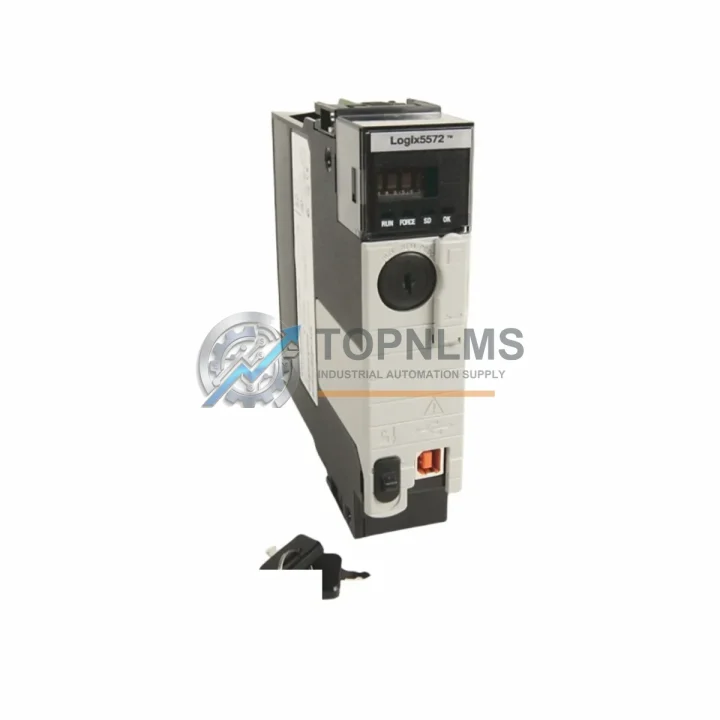
Send this exact part number, quantity and destination country. TOPNLMS will confirm availability, condition and export lead time before quotation.
The Allen-Bradley 1756-RM2K is a ControlLogix Redundancy Module designed for mission-critical hot-standby control architectures. As Rockwell Automation continues to evolve its ControlLogix platform, many facilities running legacy 1756-RM or 1756-RM2 redundancy configurations are now facing end-of-life support challenges, discontinued spare parts, and increasing pressure to modernize without disrupting continuous production. TOPNLMS supplies verified 1756-RM2K modules to support direct replacement, system upgrade, and platform migration projects across process industries, utilities, oil & gas, and discrete manufacturing.
Whether you are replacing a failed 1756-RM2 in an existing redundancy chassis pair, upgrading from an earlier 1756-RM revision, or commissioning a new ControlLogix redundancy system from scratch, the 1756-RM2K integrates directly into your existing 1756-A13 or 1756-A7 chassis without requiring backplane rewiring or controller replacement. The module communicates with the primary and secondary 1756-L7x or 1756-L8x controllers via the ControlLogix backplane, synchronizing program data, I/O state, and communication status at scan-rate intervals to ensure bumpless switchover in the event of a primary controller fault.
For sites currently operating with the earlier 1756-RM or 1756-RM2 modules, the 1756-RM2K offers expanded synchronization bandwidth and improved crossload performance, reducing the time required to achieve a fully synchronized redundant pair after a switchover event. This is particularly important in high-speed process control applications where the 1756-L73 or 1756-L75 controllers are managing fast analog loops or high-density digital I/O through 1756-IB16 or 1756-OB16E output modules.
Migration from a non-redundant ControlLogix system to a redundant architecture using the 1756-RM2K typically involves adding a secondary chassis, duplicating the controller and I/O configuration, and installing the redundancy modules in slot 1 of each chassis. The 1756-RM2K connects the two chassis via a dedicated fiber-optic RMCT cable, and the Redundancy Module Communication Cable (RMCC) provides the physical synchronization link. No changes to the existing EtherNet/IP network topology or 1756-EN2T communication module configuration are required in most retrofit scenarios, significantly reducing engineering risk and commissioning time.
For DCS migration projects where legacy Honeywell, Emerson, or ABB distributed control systems are being replaced with ControlLogix-based architectures, the 1756-RM2K provides the redundancy layer required to meet SIL 2 or high-availability process requirements. In these projects, the 1756-RM2K is typically paired with 1756-L83E or 1756-L85E controllers, 1756-EN3TR dual-port EtherNet/IP modules for Device Level Ring topology, and 1756-IF16 analog input modules for thermocouple and 4–20 mA signal migration from legacy field wiring.
| Parameter | Legacy: 1756-RM / 1756-RM2 | Replacement: 1756-RM2K |
|---|---|---|
| Module Type | ControlLogix Redundancy Module | ControlLogix Redundancy Module |
| Chassis Compatibility | 1756-A7, 1756-A10, 1756-A13 | 1756-A7, 1756-A10, 1756-A13 (same) |
| Controller Compatibility | 1756-L6x, 1756-L7x | 1756-L7x, 1756-L8x (expanded) |
| Synchronization Link | RMCT fiber-optic cable | RMCT fiber-optic cable (same) |
| Crossload Bandwidth | Standard | Enhanced — faster sync after switchover |
| Communication Protocol | ControlLogix backplane / EtherNet/IP | ControlLogix backplane / EtherNet/IP (same) |
| Slot Requirement | Slot 1 (dedicated) | Slot 1 (dedicated, same) |
| Firmware Upgrade Required | N/A | Match controller firmware revision |
| Physical Dimensions | Standard 1756 module form factor | Standard 1756 module form factor (drop-in) |
| Power Supply Compatibility | 1756-PA72 / 1756-PB72 | 1756-PA72 / 1756-PB72 (same) |
| Installation Space | 1 slot per chassis | 1 slot per chassis (no additional space needed) |
| Replacement Recommendation | End-of-life / limited availability | Direct drop-in replacement — no rewiring required |
| Warranty | — | 12-Month Warranty (TOPNLMS) |
A successful 1756-RM2K migration rarely involves a single module swap. In practice, the redundancy upgrade is part of a broader system modernization that touches multiple components across both chassis. The 1756-L75 or 1756-L83E controllers in the primary and secondary chassis must be running compatible firmware revisions — typically Logix Designer v30 or later — to support the enhanced synchronization features of the 1756-RM2K. If the existing controllers are 1756-L6x series, a controller upgrade to the 1756-L7x or 1756-L8x family is recommended to take full advantage of the module’s capabilities.
The communication infrastructure also requires attention. The 1756-EN2T or 1756-EN3TR EtherNet/IP communication modules in each chassis must be configured to support the Produced/Consumed tag architecture used by the redundancy system for cross-chassis data exchange. In Device Level Ring (DLR) topologies, the 1756-EN3TR dual-port module is preferred for its built-in ring supervisor capability, eliminating the need for an external managed switch in the control cabinet.
On the I/O side, 1756-IB16 digital input modules and 1756-OB16E digital output modules connected to remote I/O adapters via ControlNet or EtherNet/IP remain fully compatible with the 1756-RM2K redundancy architecture. For analog process signals, the 1756-IF16 16-channel analog input module and 1756-OF8 analog output module continue to operate without modification. Signal isolators or terminal blocks such as the 1492-CABLE series wiring systems can be reused, reducing field wiring costs during the upgrade.
For programming and commissioning, the 1784-U2DHP USB-to-DH+ programming cable or a standard USB-to-Ethernet connection to Logix Designer is used to configure the redundancy parameters, set the chassis qualifier, and verify synchronization status before cutover. The entire commissioning sequence — from module insertion to first synchronized state — typically takes less than 30 minutes on a pre-configured system, minimizing planned maintenance window requirements.
Q: Can I replace a 1756-RM2 with a 1756-RM2K without changing the chassis or controller?
A: Yes. The 1756-RM2K is a direct form-factor replacement for the 1756-RM2 in the same 1756-A7 or 1756-A13 chassis. No backplane rewiring is required. You will need to verify that the controller firmware is compatible with the 1756-RM2K revision.
Q: Does the 1756-RM2K require a dedicated fiber-optic cable between the two chassis?
A: Yes. The Redundancy Module Communication Cable (RMCT) is a fiber-optic link that connects the two 1756-RM2K modules in the primary and secondary chassis. This cable is separate from the EtherNet/IP network and is required for synchronization.
Q: Is the EtherNet/IP network configuration affected by the redundancy module upgrade?
A: In most cases, no. The 1756-EN2T or 1756-EN3TR modules retain their IP addresses and network configuration. The redundancy system uses a virtual IP address for the active controller, which automatically transfers to the secondary chassis during a switchover event without requiring network reconfiguration.
Q: Can the 1756-RM2K be used with 1756-L8x controllers?
A: Yes. The 1756-RM2K is compatible with the 1756-L8x controller family, including the 1756-L83E and 1756-L85E, which are the recommended controllers for new ControlLogix redundancy installations.
Q: How much physical space does the 1756-RM2K require in the control cabinet?
A: The 1756-RM2K occupies one slot in the 1756 chassis, identical to the legacy 1756-RM and 1756-RM2 modules. No additional cabinet space is required for a direct replacement.
Q: What happens to the running process during a switchover?
A: The 1756-RM2K is designed for bumpless switchover. When the primary controller faults, the secondary controller assumes control within one scan cycle. I/O state, program data, and communication connections are preserved, ensuring process continuity without operator intervention.
Every 1756-RM2K module supplied by TOPNLMS is covered by a 12-month warranty from the date of shipment. Prior to dispatch, each unit undergoes functional verification including power-on self-test, backplane communication check, and firmware revision confirmation. Modules are shipped in anti-static packaging with full documentation.
In the event of a warranty claim, TOPNLMS provides replacement dispatch within 3 business days upon confirmation of the fault. Our after-sales team is available via email and phone to support installation, commissioning, and compatibility verification queries. We maintain stock of 1756-RM2K and related ControlLogix components to support emergency replacement orders with same-day or next-day dispatch from our Xiamen warehouse.
For procurement teams, we provide a formal quotation, packing list, and certificate of conformance with every order. Volume pricing is available for MRO contracts and system integrators. Contact our sales team to discuss lead times, inspection requirements, and consolidated shipment options for multi-module upgrade projects.
Original Allen-Bradley 1756-CNBR/E ControlNet Bridge Module for ControlLogix 1756 Series E. Industrial spare, fast ship, 12-month warranty. topnlms.com
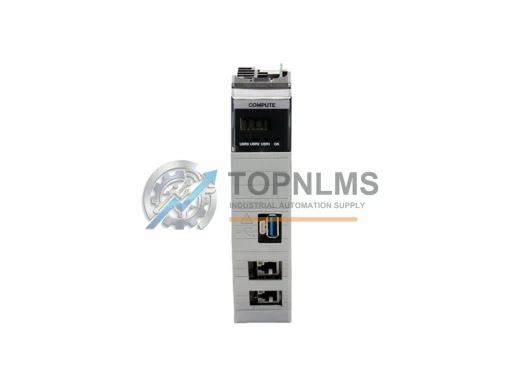
Allen-Bradley 1756-CMS1B1 ControlLogix Compute Module. Ruggedized for harsh environments. 12-month warranty, tested, fast shipping. Buy at TOPNLMS.
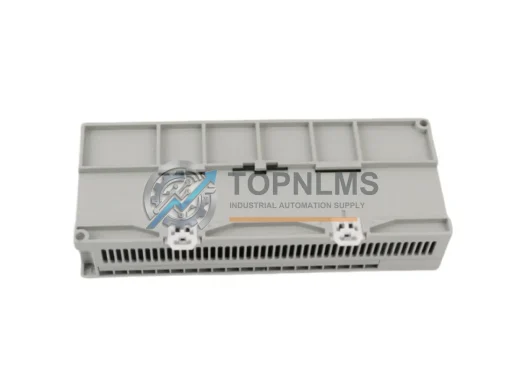
Allen-Bradley 1753-L32BBBM-8A GuardPLC 1800 Safety PLC Controller. Ruggedized for harsh environments. In stock, tested, 12-month warranty. Fast global shipping.
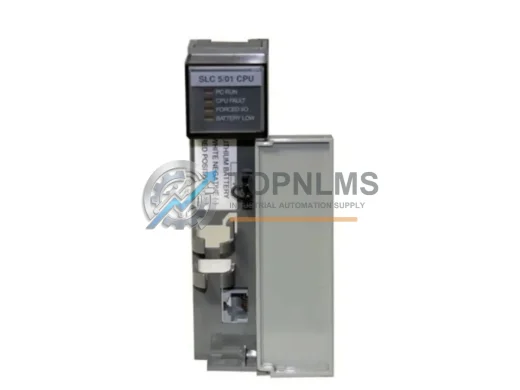
Allen-Bradley 1747OC-EBCBA SLC 500 Open Controller CPU Module. Rugged, EMI-resistant, 12-month warranty. In stock — fast shipping from TOPNLMS.
Click Quote This Model and the Part Number field will auto-fill with 1756-RM2K.