
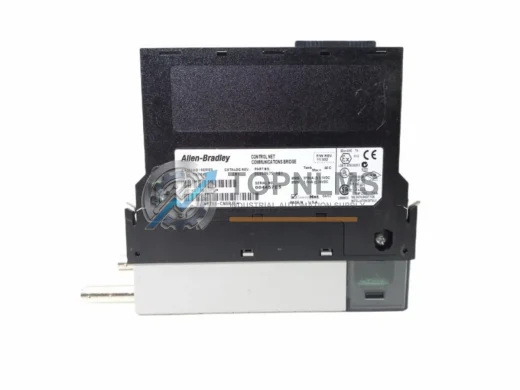
Allen-Bradley
Allen-Bradley 1756-CNBR/E Original Industrial Spare ControlLogix
1756-CNBR/EOriginal Allen-Bradley 1756-CNBR/E ControlNet Bridge Module for ControlLogix 1756 Series E. Industrial spare, fast ship, 12-month warranty. topnlms.com
Request availability, condition, lead time and export shipping details for 1756-L81E.
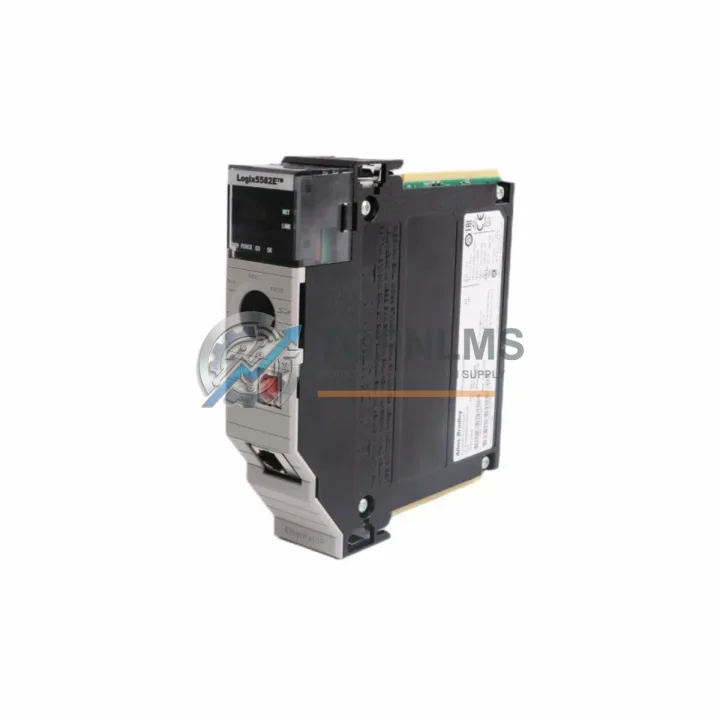
Send this exact part number, quantity and destination country. TOPNLMS will confirm availability, condition and export lead time before quotation.
Migrating from an aging or discontinued Rockwell Automation ControlLogix controller to the Allen-Bradley 1756-L81E is one of the most common modernization projects in industrial control system engineering today. Whether your facility is running an end-of-life 1756-L61, 1756-L71, or 1756-L75 processor, or managing a multi-chassis architecture with legacy 1756-A7 or 1756-A13 backplanes, the 1756-L81E offers a direct upgrade path that preserves your existing wiring infrastructure, I/O module assignments, and EtherNet/IP network topology.
The 1756-L81E is a ControlLogix 5580 series Programmable Automation Controller (PAC) featuring 40MB of user memory, dual EtherNet/IP ports for Device Level Ring (DLR) or linear/star topologies, and full backward compatibility with Studio 5000 Logix Designer projects developed on earlier ControlLogix 5570 or 5560 platforms. This makes it an ideal drop-in replacement for facilities seeking to extend system life, reduce unplanned downtime, and consolidate spare parts inventory without a full greenfield redesign.
| Parameter | Legacy Models (Replaced) | 1756-L81E (This Unit) |
|---|---|---|
| Series / Platform | ControlLogix 5560 / 5570 (1756-L61, 1756-L71, 1756-L75) | ControlLogix 5580 |
| User Memory | 2MB – 8MB (5560); 4MB – 32MB (5570) | 40MB |
| EtherNet/IP Ports | Single port (via 1756-ENBT or 1756-EN2T bridge) | Dual embedded EtherNet/IP (DLR capable) |
| Chassis Compatibility | 1756-A4, 1756-A7, 1756-A10, 1756-A13, 1756-A17 | All standard 1756 ControlLogix chassis (same form factor) |
| Communication Protocols | EtherNet/IP, ControlNet (via 1756-CNB), DeviceNet (via 1756-DNB) | EtherNet/IP (native dual), ControlNet & DeviceNet via bridge modules |
| Programming Software | RSLogix 5000 v16–v20; Studio 5000 v21+ | Studio 5000 Logix Designer v28+ (project import supported) |
| I/O Module Compatibility | 1756 series digital, analog, and specialty I/O | Full 1756 I/O compatibility (no rewiring required) |
| Power Supply | 1756-PA72 / 1756-PB72 / 1756-PA75 | Compatible with all standard 1756 power supplies |
| Physical Dimensions | Standard ControlLogix slot width (1 slot) | Standard ControlLogix slot width (1 slot) — direct slot replacement |
| Replacement Recommendation | End-of-life / discontinued — limited Rockwell support | Current production — full Rockwell Automation support lifecycle |
| Warranty | — | 12-Month Warranty (TOPNLMS) |
A successful migration from a legacy ControlLogix platform to the 1756-L81E rarely involves swapping only the processor. In practice, field engineers must evaluate the entire control cabinet architecture to ensure every interconnected component supports the new controller’s capabilities and communication requirements.
For facilities still relying on a 1756-EN2T EtherNet/IP bridge module to connect their legacy processor to the plant network, the 1756-L81E’s dual embedded ports eliminate the need for a dedicated bridge in most single-chassis applications, freeing up a valuable chassis slot. However, in multi-chassis or remote I/O configurations, the 1756-EN2TR (ring topology variant) remains essential for maintaining Device Level Ring redundancy across distributed I/O racks.
When the existing system uses a 1756-CNB ControlNet bridge module for time-critical motion or process control loops, this module can be retained in the same chassis alongside the 1756-L81E without any hardware modification. The new processor communicates with the 1756-CNB via the chassis backplane, preserving all existing ControlNet node addresses and scheduled connection parameters.
I/O wiring is typically the most labor-intensive aspect of any PLC migration. Because the 1756-L81E occupies the same single-slot form factor as its predecessors, all existing 1756-IB16 digital input modules, 1756-OB16E digital output modules, and 1756-IF8 analog input modules remain in their current chassis slots with no terminal block rewiring. Tag names and I/O tree structures from the original RSLogix 5000 or Studio 5000 project can be imported directly, dramatically reducing commissioning time.
For installations where the legacy system communicated with variable frequency drives or servo amplifiers over DeviceNet, the existing 1756-DNB DeviceNet bridge module continues to function as a scanner in the 1756-L81E’s I/O tree. Drive parameters, node addresses, and polled I/O connection sizes require no modification, allowing the upgraded controller to resume drive communication immediately after processor swap and program download.
Power supply compatibility is another critical checkpoint. The 1756-PA72 and 1756-PB72 power supplies that support legacy ControlLogix chassis are fully compatible with the 1756-L81E. No power supply replacement is required unless the existing unit is already showing signs of wear or is approaching its rated service life — a common consideration when the original system has been in service for more than ten years.
In control cabinets where panel space is constrained, the 1756-L81E’s integrated dual EtherNet/IP ports can also eliminate the need for an external Stratix 5700 managed switch port dedicated to the controller, simplifying the cabinet’s network patch panel layout. For applications requiring signal isolation between legacy field devices and the new controller’s I/O modules, signal isolators or terminal block signal conditioners can be inserted at the marshalling panel without affecting the chassis configuration.
Finally, for programming and firmware upgrade tasks during commissioning, a standard 1756-USB programming cable or direct EtherNet/IP connection via Studio 5000 Logix Designer is all that is required. No proprietary DH+ or serial programming adapters are needed, which further simplifies the migration workflow for maintenance teams unfamiliar with legacy Rockwell communication interfaces.
Q: Can I reuse my existing 1756 chassis and power supply when installing the 1756-L81E?
A: Yes. The 1756-L81E uses the same standard ControlLogix chassis form factor (1 slot) and is compatible with all 1756-series chassis (A4, A7, A10, A13, A17) and standard power supplies (1756-PA72, 1756-PB72, 1756-PA75). No chassis or power supply replacement is required.
Q: Do I need to rewire my I/O terminal blocks?
A: No. All 1756-series I/O modules remain in their existing chassis slots. The 1756-L81E communicates with them via the chassis backplane. Field wiring at terminal blocks is completely unaffected by the processor swap.
Q: Is my existing Studio 5000 or RSLogix 5000 program compatible?
A: Projects created in RSLogix 5000 v16 and later, or Studio 5000 v21 and later, can be imported into Studio 5000 Logix Designer v28+ and downloaded to the 1756-L81E. A firmware upgrade of the project file is required, but logic, tags, and I/O configurations are preserved. Always validate the upgraded project in a test environment before live deployment.
Q: Will my EtherNet/IP network topology change?
A: The 1756-L81E’s dual embedded EtherNet/IP ports support linear, star, and Device Level Ring (DLR) topologies. If your existing system uses a 1756-EN2T bridge module for network connectivity, you may be able to remove it and connect directly to the controller’s embedded ports, freeing a chassis slot. Existing IP addresses and CIP connection parameters can be preserved.
Q: Can the 1756-L81E communicate with my existing ControlNet or DeviceNet devices?
A: Yes, via existing bridge modules (1756-CNB for ControlNet, 1756-DNB for DeviceNet) installed in the same or remote chassis. The 1756-L81E manages these bridges through the chassis backplane, and all existing node addresses and scheduled connections remain valid.
Q: How long does a typical processor swap take on-site?
A: For a prepared team with the upgraded project file pre-validated, a processor swap typically takes 30–90 minutes: remove the old processor, insert the 1756-L81E, set the IP address, download the program, and verify I/O status. Planned maintenance windows of 2–4 hours are recommended to allow for unexpected commissioning steps.
Every Allen-Bradley 1756-L81E unit shipped by TOPNLMS is covered by a 12-month warranty from the date of delivery. Prior to shipment, each unit undergoes functional verification including power-on testing, firmware version confirmation, and communication port validation to ensure it meets operational specifications.
In the event of a confirmed hardware defect within the warranty period, TOPNLMS provides a replacement unit or full refund — whichever the customer prefers — with priority processing to minimize impact on production schedules. Our technical support team is available to assist with installation questions, firmware compatibility queries, and commissioning guidance throughout the warranty period.
We maintain in-stock inventory of the 1756-L81E and related ControlLogix 5580 series components to support urgent replacement requirements. Standard orders are processed and shipped within 1–3 business days from our Xiamen warehouse, with express international shipping options available for time-critical downtime recovery situations.
For volume procurement, OEM partnerships, or system integrator accounts, please contact our sales team directly to discuss pricing, lead times, and extended support arrangements.
Original Allen-Bradley 1756-CNBR/E ControlNet Bridge Module for ControlLogix 1756 Series E. Industrial spare, fast ship, 12-month warranty. topnlms.com
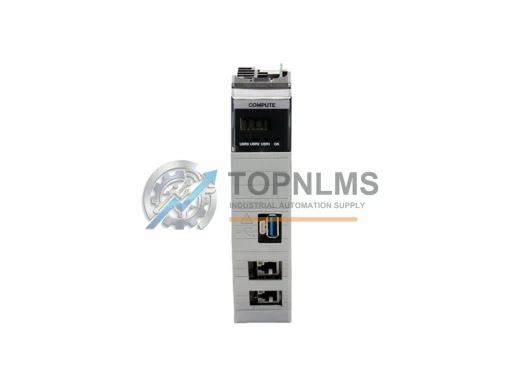
Allen-Bradley 1756-CMS1B1 ControlLogix Compute Module. Ruggedized for harsh environments. 12-month warranty, tested, fast shipping. Buy at TOPNLMS.
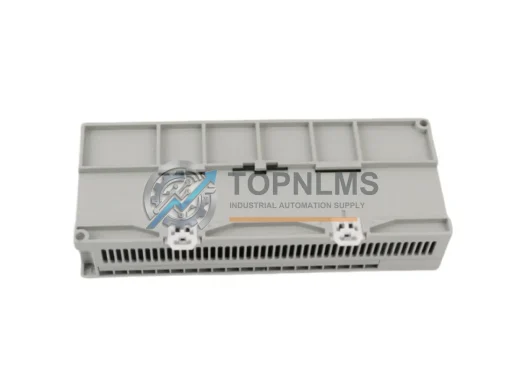
Allen-Bradley 1753-L32BBBM-8A GuardPLC 1800 Safety PLC Controller. Ruggedized for harsh environments. In stock, tested, 12-month warranty. Fast global shipping.
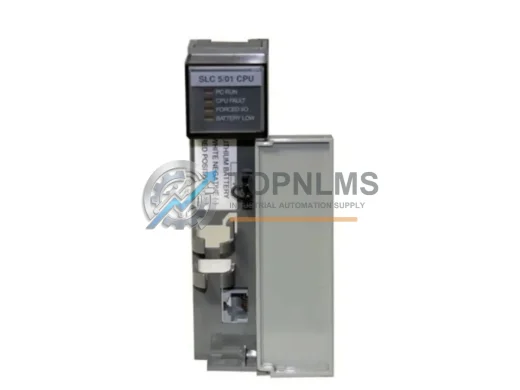
Allen-Bradley 1747OC-EBCBA SLC 500 Open Controller CPU Module. Rugged, EMI-resistant, 12-month warranty. In stock — fast shipping from TOPNLMS.
Click Quote This Model and the Part Number field will auto-fill with 1756-L81E.