
Allen-Bradley
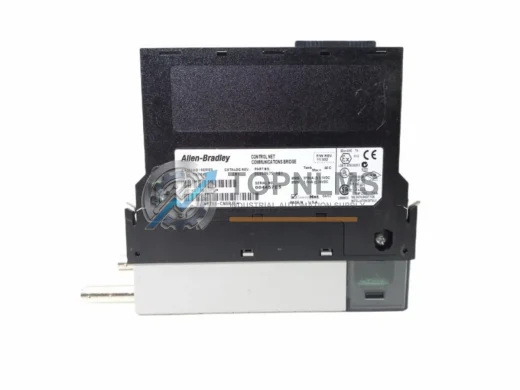
Allen-Bradley 1756-CNBR/E Original Industrial Spare ControlLogix
1756-CNBR/EOriginal Allen-Bradley 1756-CNBR/E ControlNet Bridge Module for ControlLogix 1756 Series E. Industrial spare, fast ship, 12-month warranty. topnlms.com
Request availability, condition, lead time and export shipping details for 1756-L71.
Send this exact part number, quantity and destination country. TOPNLMS will confirm availability, condition and export lead time before quotation.
When your existing ControlLogix system reaches end-of-life or your 1756-L71 CPU fails unexpectedly, every hour of unplanned downtime translates directly into production loss. The Allen-Bradley 1756-L71 is a Logix5571 processor within the ControlLogix 1756 platform, offering 2 MB of user memory and full compatibility with the 1756 chassis ecosystem. Whether you are replacing a failed unit, upgrading from an earlier Logix5550 or Logix5555 processor, or migrating an entire control cabinet from a legacy SLC 500 or PLC-5 architecture, the 1756-L71 provides a proven, drop-in upgrade path that minimizes re-engineering effort and preserves your existing wiring infrastructure.
The 1756-L71 slots directly into any standard 1756 chassis — including the 1756-A4, 1756-A7, 1756-A10, and 1756-A17 rack sizes — without requiring chassis replacement. The module communicates natively over EtherNet/IP via the onboard USB programming port and through a 1756-EN2T or 1756-EN3TR EtherNet/IP communication module installed in the same rack. If your legacy system relied on ControlNet or DeviceNet, the 1756-L71 continues to support those protocols through the corresponding 1756-CN2 or 1756-DNB bridge modules, preserving your existing field device wiring and network topology.
For facilities migrating from older PLC-5 or SLC 500 controllers, Rockwell Automation’s Migration Assistant and the 1756-L71’s Studio 5000 Logix Designer environment provide structured conversion tools that translate legacy ladder logic into ControlLogix-compatible routines. This dramatically reduces programming rework and allows your engineering team to validate the converted program offline before committing to a live cutover. The physical footprint of the 1756-L71 matches all other ControlLogix processors, so existing DIN rail mounts, cabinet layouts, and 1756-PA72 or 1756-PB72 power supply wiring remain unchanged.
On the I/O side, all existing 1756 digital and analog I/O modules — such as the 1756-IB16, 1756-OB16E, 1756-IF8, and 1756-OF8 — continue to operate without modification. Field wiring terminations on 1756-TBCH or 1756-TBS6H terminal blocks are fully retained, eliminating the need to re-terminate hundreds of field cables during the upgrade. This is particularly valuable in process industries where re-termination carries significant risk of wiring errors and extended commissioning time.
Power supply compatibility is another key advantage. The 1756-L71 operates within the same 1756 chassis power budget as its predecessors, meaning your existing 1756-PA72 AC or 1756-PB72 DC power supply does not need to be replaced unless you are simultaneously expanding the I/O count. This keeps the upgrade scope tightly controlled and the capital expenditure predictable.
For applications requiring high-availability or redundant control, the 1756-L71 supports ControlLogix Redundancy when paired with a 1756-RM2 redundancy module and a mirrored chassis configuration. This allows a seamless switchover in the event of a primary CPU fault, with sub-100ms failover times that are transparent to the process.
From a procurement standpoint, sourcing a verified 1756-L71 replacement through TOPNLMS ensures you receive a unit that has passed functional testing prior to shipment. Each module is inspected for firmware revision compatibility, memory integrity, and communication port functionality. We maintain ready stock to support urgent replacement scenarios, with same-day or next-business-day dispatch available for confirmed orders. International shipping to Southeast Asia, the Middle East, and Europe is supported with full commercial documentation including packing lists, commercial invoices, and certificates of origin.
| Parameter | Legacy (e.g. 1756-L55 / PLC-5) | 1756-L71 (This Unit) |
|---|---|---|
| Platform | ControlLogix 1756 / PLC-5 | ControlLogix 1756 (Logix5571) |
| User Memory | Up to 1 MB (L55) / varies | 2 MB |
| Programming Software | RSLogix 5000 / RSLogix 5 | Studio 5000 Logix Designer v21+ |
| Communication Protocols | EtherNet/IP, ControlNet, DH+ | EtherNet/IP, ControlNet, DeviceNet (via bridge modules) |
| Chassis Compatibility | 1756-A4/A7/A10/A17 | 1756-A4/A7/A10/A17 (no change) |
| Power Supply | 1756-PA72 / 1756-PB72 | 1756-PA72 / 1756-PB72 (no change) |
| I/O Module Compatibility | All 1756 I/O modules | All 1756 I/O modules (full retention) |
| Redundancy Support | Via 1756-RM (select models) | Yes, via 1756-RM2 |
| Field Wiring Re-termination | Required for platform change | Not required (same chassis) |
| Replacement Recommendation | Direct slot-for-slot swap | ✔ Confirmed compatible |
| Warranty | — | 12-Month Warranty (TOPNLMS) |
A successful 1756-L71 migration rarely involves the CPU alone. In most retrofit projects, the upgrade is coordinated alongside related components to ensure system-wide compatibility. The 1756-EN2T EtherNet/IP communication module is the most common companion, providing the primary network interface for SCADA, historian, and HMI connectivity. Where legacy ControlNet backbones remain in service, the 1756-CN2 ControlNet bridge module allows the new CPU to communicate with existing remote I/O racks without disrupting field wiring.
On the I/O side, customers frequently consolidate aging 1756-IB16 digital input modules and 1756-OB16E digital output modules during the same maintenance window, replacing worn units while the cabinet is already open. Analog signal integrity is maintained through the 1756-IF8 analog input module, which supports 4–20 mA and ±10 V field instruments without signal conditioner changes. For applications with intrinsically safe field devices, a 1756-IF16H HART-enabled analog input module can be introduced at the same time.
Programming connectivity is established via the 1756-USBL USB-to-serial programming cable or directly through the onboard USB port on the 1756-L71, eliminating the need for a dedicated 1784-U2DHP Data Highway Plus interface card that older PLC-5 migrations required. Panel-mounted HMI interfaces, such as the PanelView Plus 7 series, connect seamlessly over EtherNet/IP and require only an IP address update in the HMI project to point to the new CPU — no screen redesign is necessary in most cases.
For cabinet power distribution, the 1756-PA72 power supply supports the full 1756-L71 chassis load, and customers upgrading from a 1756-L55 will find the power budget unchanged. Signal isolation requirements between the PLC rack and field instrumentation are typically addressed with DIN-rail-mounted signal isolators, which remain in place throughout the migration without modification.
Q: Can I reuse my existing 1756 chassis and power supply?
A: Yes. The 1756-L71 is physically and electrically compatible with all standard 1756 chassis sizes (A4, A7, A10, A17) and both the 1756-PA72 AC and 1756-PB72 DC power supplies. No chassis or power supply replacement is required for a like-for-like CPU swap.
Q: Do I need to re-terminate field wiring?
A: No. All 1756 I/O modules and their associated terminal blocks remain in place. Field wiring is not disturbed during a CPU-only replacement.
Q: What firmware version does the 1756-L71 ship with, and is it upgradeable?
A: Units are supplied with the firmware revision as tested. Firmware can be updated using ControlFLASH or Studio 5000 Logix Designer. We recommend confirming the target firmware revision with your system integrator before flashing.
Q: Is my existing Studio 5000 project file compatible?
A: Projects created for other Logix5000-family processors (L55, L61, L62, L63, L65) can be retargeted to the 1756-L71 within Studio 5000 Logix Designer. Minor revision adjustments may be required depending on the source processor generation.
Q: Can the 1756-L71 operate in a redundant configuration?
A: Yes, when paired with a 1756-RM2 redundancy module and a mirrored chassis. This configuration supports automatic failover with sub-100ms switchover time.
Q: What communication protocols are supported for remote I/O?
A: EtherNet/IP natively. ControlNet and DeviceNet are supported via the 1756-CN2 and 1756-DNB bridge modules respectively, preserving legacy remote I/O architectures.
Every 1756-L71 unit shipped by TOPNLMS is covered by a 12-month warranty from the date of delivery. Prior to dispatch, each module undergoes a functional verification process that includes power-on testing, communication port validation, and memory integrity checks. Units that do not pass inspection are not shipped.
In the event of a warranty claim, TOPNLMS provides a replacement unit or full refund based on the confirmed fault. Our after-sales response target is within 24 business hours of a reported issue. Customers are not required to return the faulty unit before a replacement is dispatched for urgent production-critical cases — we assess each situation individually to minimize your downtime.
All orders are accompanied by a commercial invoice, packing list, and certificate of origin. Export documentation for international shipments is prepared in compliance with destination country import requirements. Expedited shipping options are available for time-critical replacement scenarios.
For volume procurement, blanket purchase orders and consignment stock arrangements are available. Contact our sales team to discuss lead times, pricing tiers, and technical pre-sales support for your specific migration project.
Original Allen-Bradley 1756-CNBR/E ControlNet Bridge Module for ControlLogix 1756 Series E. Industrial spare, fast ship, 12-month warranty. topnlms.com
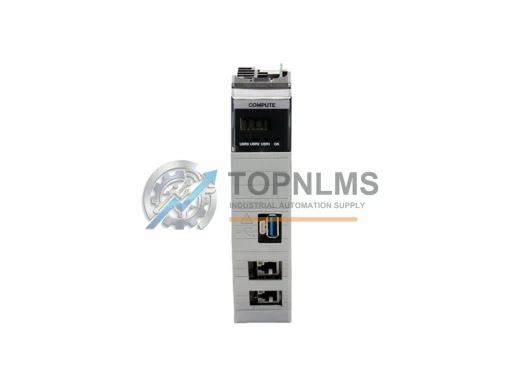
Allen-Bradley 1756-CMS1B1 ControlLogix Compute Module. Ruggedized for harsh environments. 12-month warranty, tested, fast shipping. Buy at TOPNLMS.
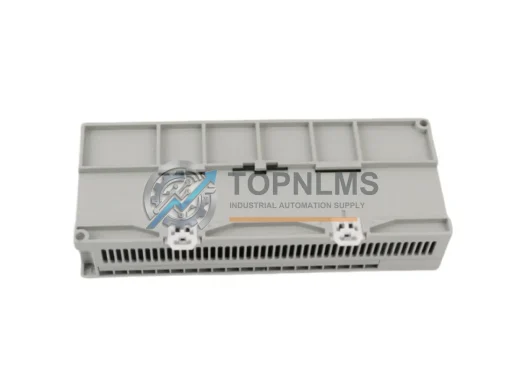
Allen-Bradley 1753-L32BBBM-8A GuardPLC 1800 Safety PLC Controller. Ruggedized for harsh environments. In stock, tested, 12-month warranty. Fast global shipping.
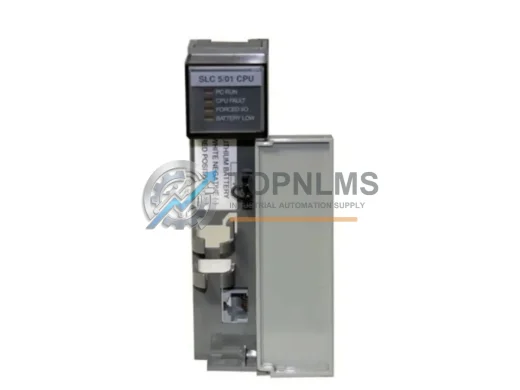
Allen-Bradley 1747OC-EBCBA SLC 500 Open Controller CPU Module. Rugged, EMI-resistant, 12-month warranty. In stock — fast shipping from TOPNLMS.
Click Quote This Model and the Part Number field will auto-fill with 1756-L71.