
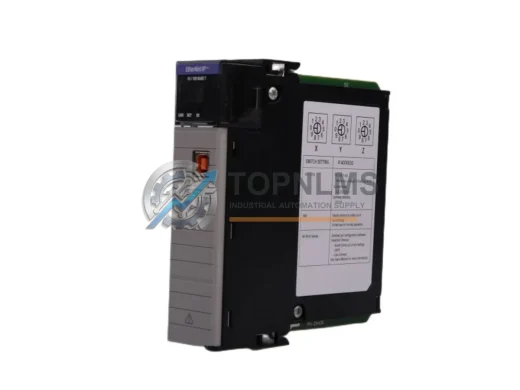
Allen-Bradley
Allen-Bradley 1756-EN2T EtherNet/IP Replacement for ControlLogix
1756-EN2TDrop-in replacement for Allen-Bradley 1756-EN2T ControlLogix EtherNet/IP Bridge Module. Compatible upgrade, 12-month warranty, fast global shipping.
Request availability, condition, lead time and export shipping details for 1756-ENET.
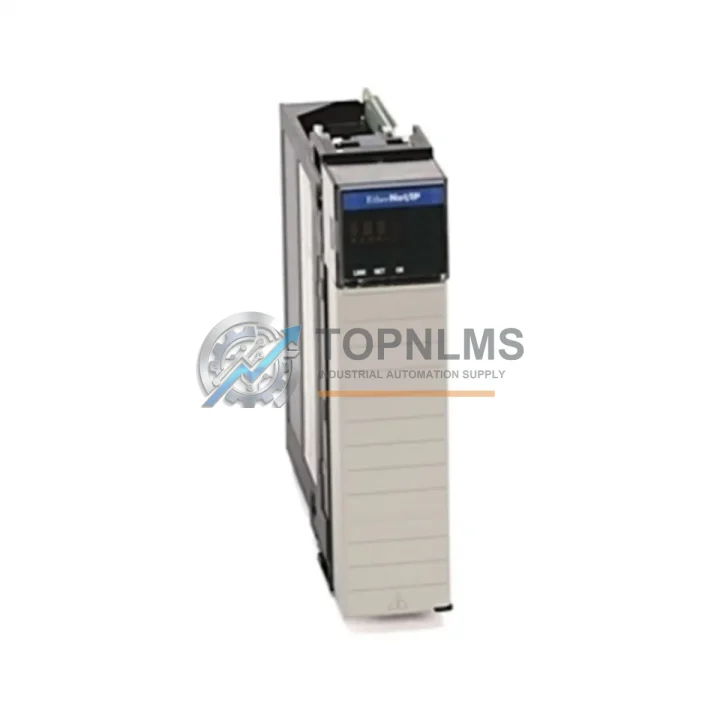
Send this exact part number, quantity and destination country. TOPNLMS will confirm availability, condition and export lead time before quotation.
The Allen-Bradley 1756-ENET is a first-generation EtherNet/IP bridge communication module designed for the ControlLogix 1756 platform. As this module approaches end-of-life and spare-part scarcity increases, many facilities managing legacy PLC architectures are actively seeking a reliable, drop-in replacement or a structured upgrade path that minimizes production downtime. TOPNLMS supplies tested, verified 1756-ENET units and provides full migration guidance for engineers transitioning from older ControlLogix communication infrastructure to current-generation alternatives.
Whether your plant is running a multi-chassis ControlLogix system with a 1756-A17 or 1756-A10 backplane, or a smaller 1756-A4 rack configuration, the 1756-ENET occupies a standard 1756 chassis slot and communicates over 10/100 Mbps Ethernet using the EtherNet/IP protocol. Its RJ-45 port connects directly to your existing plant network switch, and the module’s IP address is configured via RSLinx Classic or Studio 5000 Logix Designer, requiring no physical DIP switch changes. This makes the replacement process straightforward for maintenance teams already familiar with the ControlLogix environment.
For sites upgrading from even older communication architectures — such as systems originally built around the 1756-DHRIO (Data Highway Plus / Remote I/O bridge) or the 1756-CNB (ControlNet bridge module) — the 1756-ENET provides a migration path to a modern, open Ethernet standard. Engineers who previously relied on the 1756-CNB for deterministic ControlNet communication can retain their existing 1756 chassis and power supply (such as the 1756-PA75 or 1756-PB75) while replacing only the communication module, dramatically reducing retrofit scope and capital expenditure.
Wiring compatibility is a key concern during any live-system replacement. The 1756-ENET uses a standard RJ-45 Ethernet connection, meaning existing CAT5e or CAT6 patch cables and managed switches already installed in the control cabinet can be reused without modification. There is no need to re-terminate field wiring or modify the I/O terminal blocks on adjacent 1756-IB16 digital input modules or 1756-OB16 digital output modules in the same rack. The module draws power directly from the 1756 chassis backplane, so no separate 24 VDC field power supply is required for the communication module itself.
From a programming perspective, replacing a failed or end-of-life 1756-ENET does not require changes to the Logix 5000 controller program logic. The replacement module is configured with the same IP address as the original, and the controller’s I/O tree in Studio 5000 recognizes it automatically upon power-up. For sites migrating from a 1756-ENET to the newer 1756-ENBT or 1756-EN2T, a minor I/O tree update is required in Studio 5000, but the ladder logic, function block diagrams, and structured text routines remain unchanged. This significantly reduces commissioning time and the risk of introducing programming errors during the migration window.
System architects planning a broader ControlLogix modernization project often pair the 1756-ENET replacement with upgrades to adjacent modules. Common co-replacement items include the 1756-L55 or 1756-L61 controller (upgrading to a 1756-L71 or 1756-L83E), the 1756-ENBT as a direct functional successor to the 1756-ENET, and the 1756-RM redundancy module for high-availability applications. In distributed I/O architectures, the 1756-ENET communicates with remote 1734 POINT I/O adapters or 1769 CompactLogix systems over EtherNet/IP, and replacing the bridge module has no impact on the remote I/O configuration as long as the IP address and network topology remain consistent.
For facilities operating in process industries — oil & gas, chemical, water treatment — where the ControlLogix system interfaces with a DCS via OPC-DA or OPC-UA, the 1756-ENET serves as the gateway between the Logix controller and the OPC server. Replacing the module with a tested unit from TOPNLMS restores this communication path without requiring reconfiguration of the OPC server tag database, provided the module IP address is preserved. Sites using a 1756-EWEB web server module alongside the 1756-ENET for HMI connectivity should note that both modules can coexist in the same chassis without conflict.
Physical installation is straightforward. The 1756-ENET is a single-slot module that inserts into any available slot in a 1756 series chassis. It does not require a keying change if replacing a like-for-like unit. For chassis with limited available slots — particularly in compact 1756-A4 four-slot racks — slot planning should account for the controller, power supply, communication module, and any 1756-IF8 analog input or 1756-OF8 analog output modules required for process control. TOPNLMS can advise on slot allocation and chassis sizing for retrofit projects upon request.
All 1756-ENET units supplied by TOPNLMS are sourced from verified supply channels, inspected for physical condition, and functionally tested prior to shipment. Units are shipped from Xiamen, China, with standard international express delivery (DHL / FedEx) to most destinations within 3–7 business days. Expedited shipping is available for emergency breakdown situations. Each unit is individually packaged with anti-static protection and includes a test report upon request.
| Parameter | 1756-ENET (Legacy) | 1756-ENBT (Upgrade) | 1756-EN2T (Current Gen) |
|---|---|---|---|
| Protocol | EtherNet/IP | EtherNet/IP | EtherNet/IP |
| Speed | 10/100 Mbps | 10/100 Mbps | 10/100 Mbps |
| Ports | 1 × RJ-45 | 1 × RJ-45 | 2 × RJ-45 (DLR) |
| Chassis Slots | 1 slot | 1 slot | 1 slot |
| Chassis Compatibility | 1756 Series | 1756 Series | 1756 Series |
| Studio 5000 Support | Limited (legacy) | Full | Full |
| Device Level Ring (DLR) | No | No | Yes |
| CIP Motion Support | No | No | Yes |
| Wiring Change Required | — | None (RJ-45) | None (RJ-45) |
| Program Change Required | — | I/O tree update only | I/O tree update only |
| Replacement Recommendation | Current unit | Direct upgrade | Best long-term option |
| Warranty (TOPNLMS) | 12 Months | 12 Months | 12 Months |
A successful 1756-ENET migration rarely involves a single module swap. In practice, the replacement is part of a broader ControlLogix system refresh. Engineers typically address the communication module alongside the controller itself — upgrading from a 1756-L55M13 or 1756-L61 to a 1756-L71 or 1756-L83E provides a significant increase in memory, task capacity, and I/O tree size, while retaining full compatibility with the existing 1756 chassis and backplane. The 1756-PA75 or 1756-PB75 power supply modules are retained in most cases, as they continue to meet the power budget of the refreshed rack.
For distributed architectures, the 1756-ENET communicates with remote 1734-AENT POINT I/O adapter modules over EtherNet/IP. These adapters connect to 1734 series digital and analog I/O modules mounted on DIN rail in remote panels, and they remain fully compatible with the replacement 1756-ENET without any reconfiguration. Similarly, 1769-L30ER or 1769-L33ER CompactLogix controllers acting as subordinate controllers in the same EtherNet/IP network continue to communicate normally after the bridge module is replaced.
Sites that use a 1756-EWEB web server module for thin-client HMI access, or a 1756-DNB DeviceNet bridge for legacy field device connectivity, can retain these modules in adjacent chassis slots. The 1756-ENET replacement does not affect the operation of these co-resident modules. For facilities also upgrading their HMI layer, PanelView Plus 7 terminals communicating via EtherNet/IP are fully compatible with the replacement module and require no driver or communication path changes.
When the retrofit scope includes signal conditioning — for example, replacing legacy 4–20 mA analog loops with HART-enabled instruments — 1756-IF8H analog input modules with HART pass-through can be added to the existing chassis alongside the replacement 1756-ENET, providing a path to intelligent device management without a full system replacement. Signal isolators and terminal blocks in the marshalling cabinet are unaffected by the communication module swap.
Q: Can I replace the 1756-ENET without taking the controller offline?
A: The 1756-ENET can be removed and replaced while the chassis is powered in some configurations, but Rockwell Automation recommends a controlled shutdown for communication module replacement to avoid I/O faults. Plan a brief maintenance window and use the controller’s inhibit function to suppress I/O faults during the swap.
Q: Do I need to change the IP address configuration after replacement?
A: No. Configure the replacement module with the same IP address as the original using RSLinx Classic or the BOOTP/DHCP server utility. The controller’s I/O tree will recognize the module automatically without requiring a program download.
Q: Is the 1756-ENET compatible with Studio 5000 Logix Designer v32 and later?
A: The 1756-ENET is supported in Studio 5000 as a legacy module. For new projects or major revisions, Rockwell recommends migrating to the 1756-EN2T, which offers Device Level Ring support and CIP Motion capability. TOPNLMS supplies both modules.
Q: What is the physical installation procedure?
A: Power down the chassis (or inhibit the slot), remove the existing module by pressing the top and bottom locking tabs, insert the replacement 1756-ENET until it clicks into the backplane connector, and restore power. The module initializes within approximately 30 seconds.
Q: Can the 1756-ENET coexist with a 1756-ENBT in the same chassis?
A: Yes. Multiple communication modules of different types can coexist in the same 1756 chassis, each with a unique IP address. This is common during phased migration projects where one module is being validated before the other is decommissioned.
Q: What communication protocols does the 1756-ENET support?
A: The 1756-ENET supports EtherNet/IP (CIP over Ethernet), including explicit messaging and I/O messaging. It does not support Modbus TCP natively; a protocol converter or gateway would be required for Modbus device integration.
Every 1756-ENET unit supplied by TOPNLMS is covered by a 12-month warranty from the date of shipment. Prior to dispatch, each module undergoes a functional verification process including power-on self-test, communication port integrity check, and backplane connector inspection. Units that do not pass verification are not shipped.
In the event of a warranty claim, TOPNLMS provides a replacement unit or full refund within the warranty period. Our after-sales response time is within 24 hours on business days. Customers are not required to return the defective unit before a replacement is dispatched for emergency breakdown situations — we prioritize minimizing your downtime.
Purchasing from TOPNLMS includes access to pre-sales technical consultation on module compatibility, chassis slot planning, and migration sequencing. We maintain stock of 1756-ENET and related ControlLogix communication modules to support both planned maintenance schedules and unplanned emergency replacements. Bulk purchase pricing and consignment stock arrangements are available for MRO procurement teams and system integrators.
For procurement inquiries, technical questions, or emergency orders, contact us directly:
📧 [email protected] | 📞 +86 18359293191
Drop-in replacement for Allen-Bradley 1756-EN2T ControlLogix EtherNet/IP Bridge Module. Compatible upgrade, 12-month warranty, fast global shipping.
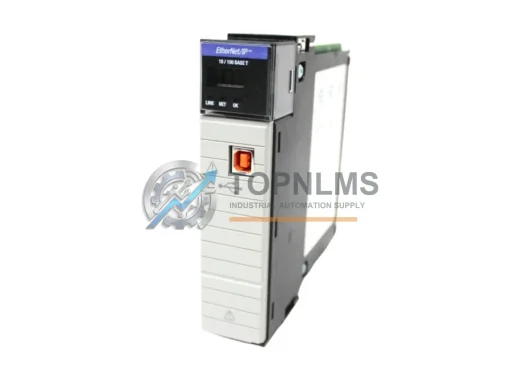
Allen-Bradley 1756-EN2T/C original ControlLogix EtherNet/IP module. Industrial replacement spare, 12-month warranty, tested before shipment. Fast global delivery.
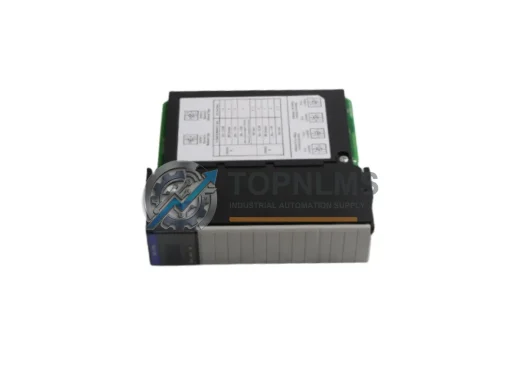
Allen-Bradley 1756-DHRIO ControlLogix DH+/RIO Bridge Scanner Module. Drop-in replacement, upgrade solution, 12-month warranty. Ships from stock. Compatible with 1756 chassis.
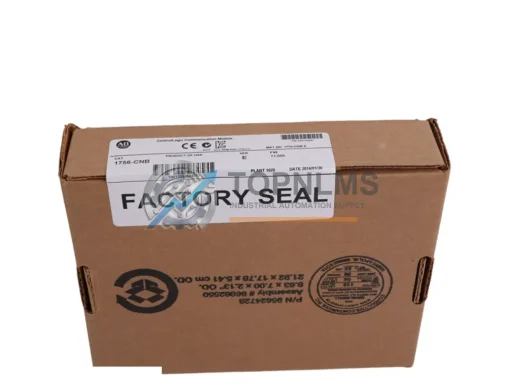
Buy Allen-Bradley 1756-CNB original ControlNet bridge module for ControlLogix systems. Genuine spare, 12-month warranty, fast shipping. SKU: 1756-CNB.
Click Quote This Model and the Part Number field will auto-fill with 1756-ENET.