
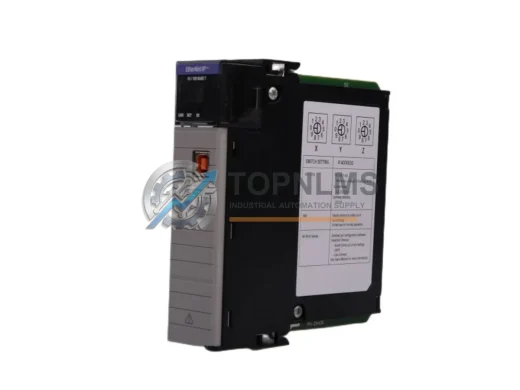
Allen-Bradley
Allen-Bradley 1756-EN2T EtherNet/IP Replacement for ControlLogix
1756-EN2TDrop-in replacement for Allen-Bradley 1756-EN2T ControlLogix EtherNet/IP Bridge Module. Compatible upgrade, 12-month warranty, fast global shipping.
Request availability, condition, lead time and export shipping details for 1756-EN2T/D.
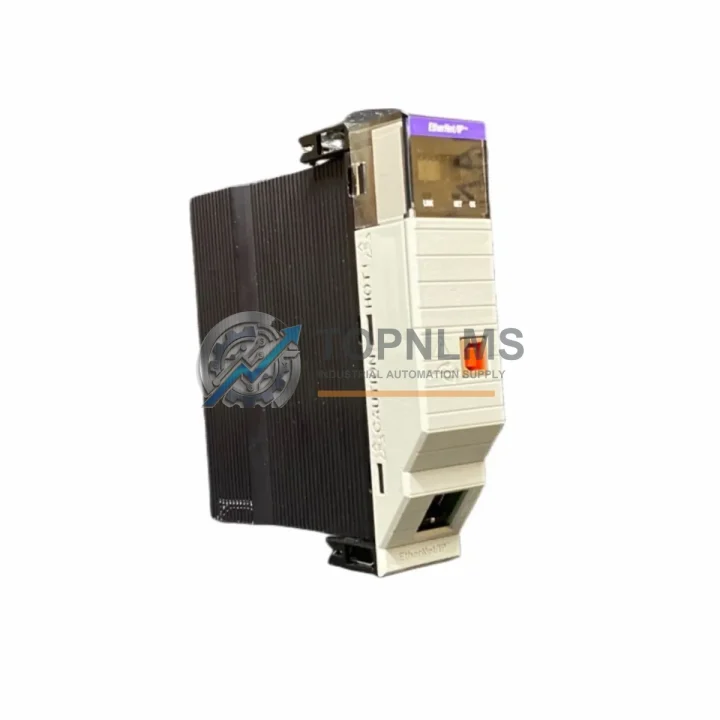
Send this exact part number, quantity and destination country. TOPNLMS will confirm availability, condition and export lead time before quotation.
The Allen-Bradley 1756-EN2T/D is a high-performance EtherNet/IP communication bridge module designed for the ControlLogix platform, Series D revision. As a genuine original spare part, it serves as a critical backbone component in industrial automation networks — enabling reliable, deterministic communication between ControlLogix controllers, remote I/O racks, SCADA systems, and plant-floor devices across standard Ethernet infrastructure.
In modern manufacturing environments, unplanned downtime caused by communication module failure can cascade into significant production losses within minutes. Maintaining a verified, tested 1756-EN2T/D in your spare parts inventory is one of the most cost-effective strategies for protecting system uptime. Whether you operate a continuous process plant, an automotive assembly line, or a discrete manufacturing cell, the 1756-EN2T/D provides the network backbone stability that keeps your ControlLogix system communicating without interruption.
This module supports dual-port EtherNet/IP topology, enabling Device Level Ring (DLR) configurations that provide network-level redundancy — a key advantage in facilities where network resilience is a maintenance priority. Its compatibility with the full ControlLogix 1756 chassis family, including the 1756-A4, 1756-A7, 1756-A10, and 1756-A13 chassis, makes it a versatile replacement candidate across multiple control cabinet configurations.
| Part Number | 1756-EN2T/D |
| Brand | Allen-Bradley (Rockwell Automation) |
| Series / Revision | ControlLogix Series D |
| Module Type | EtherNet/IP Communication Bridge Module |
| Network Protocol | EtherNet/IP (CIP over Ethernet) |
| Port Configuration | Dual RJ-45 Ethernet ports (10/100 Mbps) |
| Topology Support | Linear, Star, Device Level Ring (DLR) |
| Chassis Compatibility | 1756 ControlLogix chassis (all slot counts) |
| Backplane Current Draw | 1.0 A @ 5 VDC; 3.0 mA @ 24 VDC |
| Operating Temperature | 0 °C to 60 °C (32 °F to 140 °F) |
| Storage Temperature | -40 °C to 85 °C |
| Relative Humidity | 5% to 95% non-condensing |
| Certifications | UL, CE, C-Tick, ATEX (Zone 2) |
| Firmware Compatibility | RSLogix 5000 / Studio 5000 Logix Designer |
| Installation | Hot-swappable in ControlLogix chassis |
| Origin | USA |
| Condition | Original / Genuine |
| Pre-shipment Testing | Full functional test performed |
| Warranty | 12-Month Warranty |
A scheduled maintenance approach for ControlLogix-based control systems should treat the 1756-EN2T/D not as an isolated component, but as part of an interconnected communication and power ecosystem. During planned shutdowns or annual cabinet inspections, maintenance teams should simultaneously evaluate the health of the 1756-PA72 or 1756-PB72 power supply modules, as power quality degradation is a leading cause of premature communication module failure. Verifying that the chassis backplane is clean and that the 1756-A10 or 1756-A13 chassis itself shows no signs of corrosion or mechanical stress is equally important.
On the network side, the Ethernet patch cables and industrial-grade managed switches connecting the 1756-EN2T/D to the plant network should be inspected for cable integrity, connector oxidation, and switch port error counters. Many facilities overlook the condition of the 1889-NETCON network connector accessories and structured cabling within the control cabinet, which can introduce intermittent faults that are difficult to diagnose remotely.
For systems using remote I/O expansion, the 1756-EN2TR (DLR-capable variant) and associated 1756-IB16 or 1756-OB16E I/O modules in remote racks should be included in the inspection cycle. A failing remote I/O module can generate spurious communication timeouts that are often misattributed to the bridge module itself. Keeping a tested spare 1756-EN2T/D alongside a spare 1756-IB16 digital input module and a 1756-OB16E digital output module in your MRO inventory significantly reduces mean time to repair (MTTR) during unplanned outages.
For facilities running Logix-based motion or safety systems, the 1756-L73 or 1756-L83E controller modules should also be part of the periodic firmware audit cycle, as controller firmware versions must remain compatible with the communication module’s embedded firmware to maintain network stability. Pairing your 1756-EN2T/D replacement with a firmware verification step for the resident controller is a best practice that prevents post-replacement communication errors.
Finally, for systems with HMI integration, verifying that the PanelView Plus 7 or FactoryTalk View SE server can re-establish communication with the replaced module within the expected timeout window is a critical post-replacement validation step that should be documented in your maintenance records.
The 1756-EN2T/D (Series D) is the direct replacement for earlier Series A, B, and C revisions of the 1756-EN2T. Organizations still operating legacy Series A or B modules face increasing risk as those revisions age beyond their published product lifecycle. Upgrading to Series D provides access to improved DLR support, enhanced diagnostic capabilities via RSLinx Classic and Studio 5000, and better compatibility with modern managed industrial Ethernet switches.
For facilities that cannot immediately migrate to newer ControlLogix L8x controllers or Logix 5000 v32+ firmware, the 1756-EN2T/D provides a drop-in replacement path that preserves the existing I/O tree, tag database, and HMI configuration — eliminating the need for a full system re-commissioning. This makes it the preferred choice for brownfield maintenance scenarios where minimizing change scope is a priority.
In multi-chassis architectures, replacing a failed 1756-EN2T/D with a pre-configured spare — with the IP address and DLR parameters documented in your maintenance records — allows a trained technician to restore network communication in under 30 minutes, compared to hours or days if no spare is available and a new unit must be sourced and configured from scratch. Maintaining at least one tested spare per control room or per production line is the industry-standard recommendation for Tier 1 critical communication modules.
Q1: Is the 1756-EN2T/D compatible with all ControlLogix chassis and controller revisions?
Yes. The 1756-EN2T/D is compatible with all 1756 ControlLogix chassis (1756-A4, A7, A10, A13, A17) and all ControlLogix controllers running RSLogix 5000 v16 and above, including the current Studio 5000 Logix Designer environment. Always verify firmware compatibility between the module and the resident controller before installation.
Q2: What pre-shipment testing is performed on this module?
Each 1756-EN2T/D unit undergoes full functional testing prior to shipment, including backplane communication verification, dual-port Ethernet link validation, and DLR topology handshake testing. A test report is available upon request. All units are shipped with ESD-protective packaging to prevent transit damage.
Q3: How should I manage spare parts inventory for ControlLogix communication modules?
Industry best practice recommends maintaining a minimum of one spare 1756-EN2T/D per production line or control room, with a reorder trigger set at the point of consumption. For facilities with multiple ControlLogix systems, a centralized MRO spare parts cabinet with documented IP address assignments and firmware version records significantly reduces replacement time during unplanned outages.
Q4: What is covered under the 12-month warranty?
The 12-month warranty covers manufacturing defects and functional failures under normal operating conditions. It does not cover damage resulting from incorrect installation, overvoltage events, physical impact, or operation outside the specified environmental parameters. Warranty claims are processed with a replacement or repair turnaround, and our technical support team is available to assist with compatibility verification and installation guidance prior to purchase.
Drop-in replacement for Allen-Bradley 1756-EN2T ControlLogix EtherNet/IP Bridge Module. Compatible upgrade, 12-month warranty, fast global shipping.
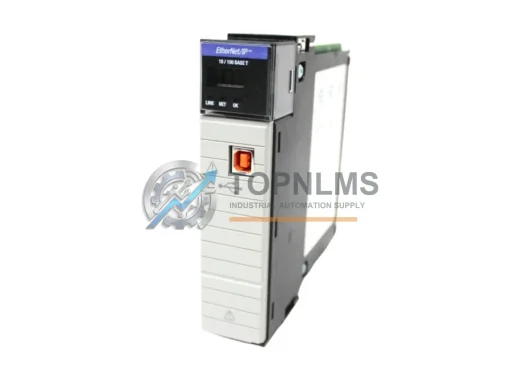
Allen-Bradley 1756-EN2T/C original ControlLogix EtherNet/IP module. Industrial replacement spare, 12-month warranty, tested before shipment. Fast global delivery.
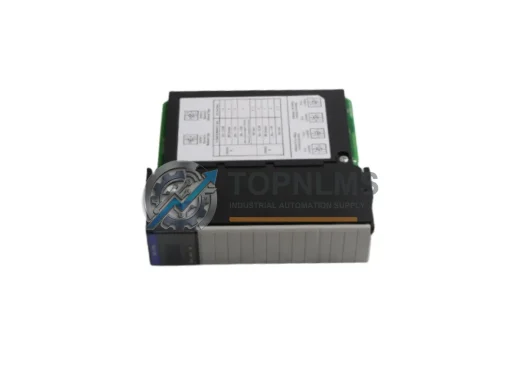
Allen-Bradley 1756-DHRIO ControlLogix DH+/RIO Bridge Scanner Module. Drop-in replacement, upgrade solution, 12-month warranty. Ships from stock. Compatible with 1756 chassis.
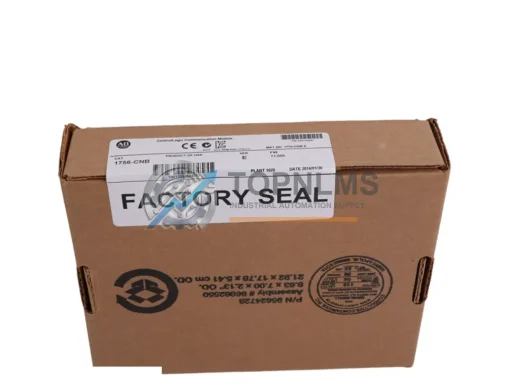
Buy Allen-Bradley 1756-CNB original ControlNet bridge module for ControlLogix systems. Genuine spare, 12-month warranty, fast shipping. SKU: 1756-CNB.
Click Quote This Model and the Part Number field will auto-fill with 1756-EN2T/D.