
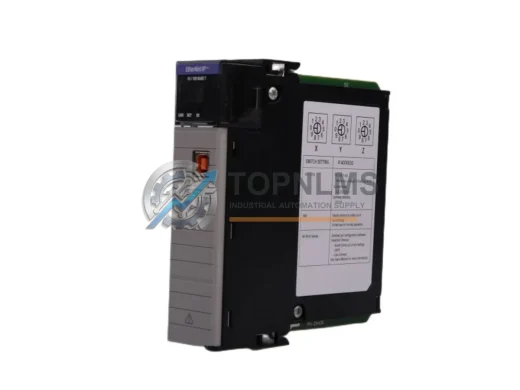
Allen-Bradley
Allen-Bradley 1756-EN2T EtherNet/IP Replacement for ControlLogix
1756-EN2TDrop-in replacement for Allen-Bradley 1756-EN2T ControlLogix EtherNet/IP Bridge Module. Compatible upgrade, 12-month warranty, fast global shipping.
Request availability, condition, lead time and export shipping details for 1756-DHRIO/E.
Send this exact part number, quantity and destination country. TOPNLMS will confirm availability, condition and export lead time before quotation.
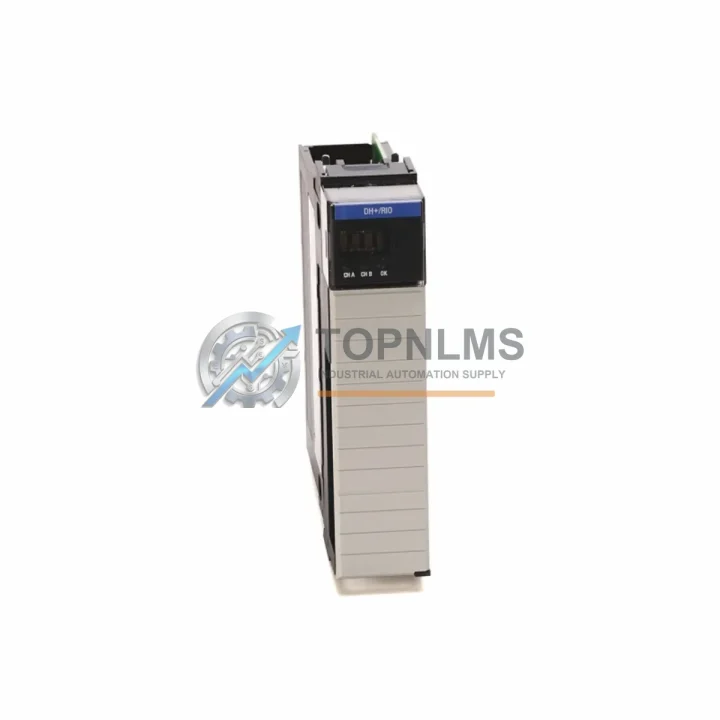
The Allen-Bradley 1756-DHRIO/E is a ControlLogix-platform bridge module that simultaneously supports Data Highway Plus (DH+) and Remote I/O (RIO) communication on a single backplane slot. As Rockwell Automation progressively phases out legacy 1756-series communication modules, many facilities running SLC 500, PLC-5, or early ControlLogix architectures face an urgent need to source verified replacement units before production downtime becomes unavoidable. TOPNLMS maintains ready stock of the 1756-DHRIO/E to support exactly these migration and emergency-replacement scenarios.
Whether your plant is transitioning from a standalone PLC-5/40 or SLC 5/04 controller connected via DH+ to a modern ControlLogix rack, or you are consolidating multiple remote I/O drops under a single 1756-L8x or 1756-L7x processor, the 1756-DHRIO/E provides the communication bridge that preserves your existing field wiring, RIO adapter addressing, and DH+ node topology without requiring a full re-engineering of the network layer.
| Parameter | Legacy / Replaced Module | 1756-DHRIO/E (This Unit) |
|---|---|---|
| Typical Legacy Counterpart | 1771-KGM, 1785-KA5, SLC DH+ Scanner | 1756-DHRIO/E (ControlLogix) |
| Backplane Compatibility | 1771 I/O chassis (PLC-5 era) | 1756 ControlLogix chassis (any slot) |
| DH+ Channel | Single DH+ port, fixed baud | Channel A: DH+ (57.6 / 115.2 / 230.4 kbps) |
| RIO Channel | Dedicated RIO scanner card required | Channel B: RIO (57.6 / 115.2 / 230.4 kbps) |
| Node Addressing | Hardware DIP switch | Software-configured via RSLogix 5000 / Studio 5000 |
| Installation Space | Dedicated 1771 chassis slot | Single 1756 chassis slot |
| Power Supply | 1771 chassis PSU (5 VDC backplane) | 1756 chassis PSU (e.g., 1756-PA72 or 1756-PB72) |
| Programming Software | RSLogix 5 / RSLogix 500 | RSLogix 5000 / Studio 5000 Logix Designer |
| Communication Protocol | DH+ only or RIO only (separate cards) | DH+ and RIO simultaneously on one module |
| Firmware Revision | Fixed / non-upgradeable | Field-upgradeable via ControlFLASH |
| Replacement Recommendation | Direct drop-in for existing 1756-DHRIO/A through /D revisions; wiring pinout identical on Channel A/B terminal blocks | |
| Warranty | — | 12-Month Warranty from TOPNLMS shipment date |
A successful migration from a legacy DH+ or RIO architecture to a modern ControlLogix platform rarely involves a single module swap. In practice, the 1756-DHRIO/E works in concert with several other components that must be verified or replaced simultaneously to ensure system integrity.
On the power side, the 1756-PA72 or 1756-PB72 power supply module must be sized to accommodate the additional backplane current draw of the DHRIO module alongside existing I/O and processor cards. If the existing chassis is already near capacity, a second 1756-A7 or 1756-A13 expansion chassis may be required to house the bridge module without disrupting the primary controller rack.
For the DH+ network side, the existing trunk cable and 1770-CD DH+ cable terminations typically remain reusable, which significantly reduces field rewiring time. However, if the legacy network included a 1785-KA5 PLC-5 communication adapter acting as a DH+ scanner, that adapter’s node address and message routing tables must be replicated in the 1756-DHRIO/E channel configuration within Studio 5000 before cutover.
On the RIO side, existing 1771-ASB remote I/O adapter modules and their associated 1771 I/O chassis remain fully compatible with the RIO channel of the 1756-DHRIO/E, provided the baud rate and rack/group addressing are matched in the module’s configuration. This means field wiring to discrete and analog I/O modules — including 1771-IB input modules and 1771-OB output modules — does not need to change during the migration, dramatically reducing the risk of wiring errors and shortening commissioning time.
For programming and diagnostics, a 1784-U2DHP USB-to-DH+ interface cable is essential for connecting a laptop running Studio 5000 directly to the DH+ network during commissioning, allowing engineers to monitor node traffic, verify message routing, and perform online edits without interrupting production. If the site uses EtherNet/IP as the primary backbone, a 1756-EN2T or 1756-EN2TR Ethernet communication module in the same chassis provides the upstream connectivity to the plant network while the DHRIO module handles the legacy DH+/RIO layer below.
In applications where signal isolation between the legacy RIO field devices and the new ControlLogix backplane is required — particularly in high-noise environments such as variable frequency drive (VFD) panels — inline signal isolators on the RIO trunk cable are recommended before the 1756-DHRIO/E’s Channel B terminal block. Additionally, if the migration scope includes replacing the operator interface, a PanelView Plus 7 HMI communicating via EtherNet/IP to the 1756-L8x processor can replace legacy PanelView 550 or PanelView 900 terminals that previously communicated over DH+, completing the full modernization of the operator layer without touching the field I/O wiring.
Q: Can I reuse my existing DH+ trunk cable when installing the 1756-DHRIO/E?
A: Yes. The 1756-DHRIO/E Channel A DH+ port uses the same Belden 3106A or equivalent shielded twisted-pair cable as legacy PLC-5 and SLC 500 DH+ networks. Existing termination resistors (typically 82 Ω at each end of the trunk) remain valid. Only the node address and baud rate need to be reconfigured in Studio 5000.
Q: Will my existing RIO adapter addressing survive the migration?
A: Yes, provided you replicate the rack number, starting group, and rack size settings from the legacy scanner card into the 1756-DHRIO/E Channel B configuration. The 1771-ASB adapters in the field do not require any hardware changes.
Q: Does the 1756-DHRIO/E require a specific firmware version on the ControlLogix processor?
A: The module is compatible with ControlLogix processors running firmware v16 and above. For Studio 5000 v30 and later, ensure the module’s firmware is updated via ControlFLASH to the latest revision to avoid known communication timeout issues under heavy DH+ traffic loads.
Q: How much backplane current does the 1756-DHRIO/E consume?
A: The module draws approximately 500 mA at 5 VDC from the 1756 backplane. Verify that the installed 1756-PA72 or 1756-PB72 power supply has sufficient remaining capacity before adding the module to an existing chassis.
Q: Can the DH+ and RIO channels operate simultaneously?
A: Yes. The 1756-DHRIO/E supports concurrent operation of Channel A (DH+) and Channel B (RIO) at independently configured baud rates. This is one of its key advantages over legacy single-protocol scanner cards.
Q: What is the physical installation space requirement?
A: The module occupies a single slot in any 1756 ControlLogix chassis (1756-A4, A7, A10, A13, or A17). No adjacent slot clearance is required.
Q: How do I verify the module is communicating correctly after installation?
A: Use RSLinx Classic or Studio 5000 to browse the backplane and confirm the module appears online. The module’s front-panel LEDs (OK, CH A, CH B) provide real-time status. CH A and CH B LEDs should be solid green under normal operation.
Every 1756-DHRIO/E unit shipped by TOPNLMS is covered by a 12-month warranty from the date of shipment. Prior to dispatch, each module undergoes a functional pre-shipment inspection that includes backplane communication verification, channel A/B port integrity checks, and firmware revision confirmation. Units are shipped in anti-static packaging with appropriate cushioning to prevent transit damage.
In the event of a confirmed hardware defect within the warranty period, TOPNLMS will arrange a replacement unit or issue a refund based on the customer’s preference and stock availability. Our after-sales response target is within 24 business hours of a defect report being submitted. Customers are encouraged to retain the original packaging and document the fault condition (LED status, error codes, RSLinx diagnostic screenshots) to expedite the warranty claim process.
For procurement teams requiring documentation, TOPNLMS can provide a certificate of conformity, packing list, and commercial invoice upon request. Bulk orders of 3 or more units may qualify for priority allocation and expedited shipping arrangements. Contact our sales team to discuss lead times, quantity pricing, and consignment stock options for critical spare parts programs.
Stock is maintained in Xiamen, China, with standard international shipping via DHL Express, FedEx International Priority, or UPS Worldwide Expedited. Typical transit time to North America and Europe is 3–5 business days from shipment confirmation.
© 2026 TOPNLMS. All rights reserved.
Original Source: https://topnlms.com
Contact: [email protected] | +86 18359293191
Drop-in replacement for Allen-Bradley 1756-EN2T ControlLogix EtherNet/IP Bridge Module. Compatible upgrade, 12-month warranty, fast global shipping.
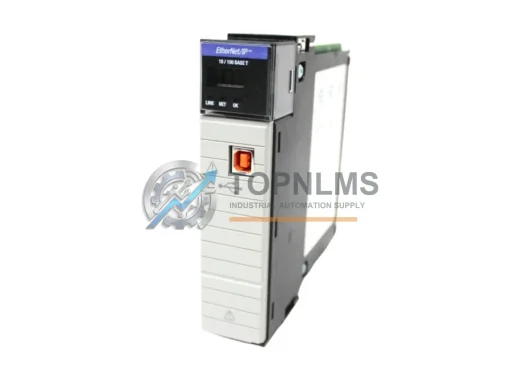
Allen-Bradley 1756-EN2T/C original ControlLogix EtherNet/IP module. Industrial replacement spare, 12-month warranty, tested before shipment. Fast global delivery.
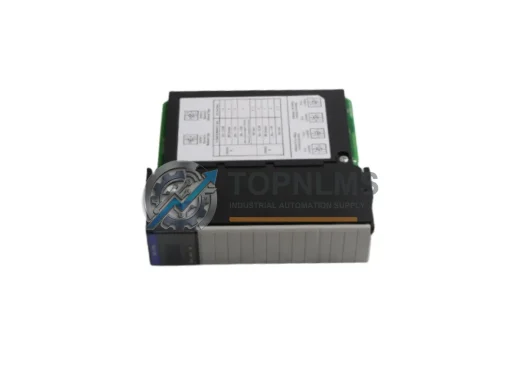
Allen-Bradley 1756-DHRIO ControlLogix DH+/RIO Bridge Scanner Module. Drop-in replacement, upgrade solution, 12-month warranty. Ships from stock. Compatible with 1756 chassis.
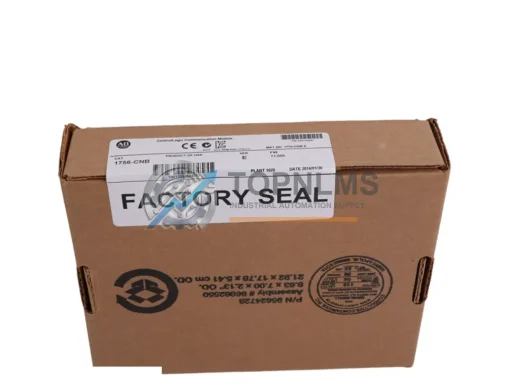
Buy Allen-Bradley 1756-CNB original ControlNet bridge module for ControlLogix systems. Genuine spare, 12-month warranty, fast shipping. SKU: 1756-CNB.
Click Quote This Model and the Part Number field will auto-fill with 1756-DHRIO/E.