
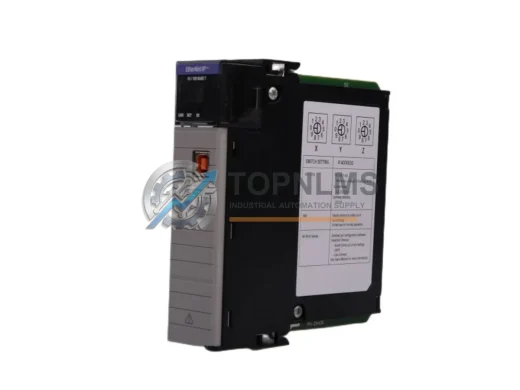
Allen-Bradley
Allen-Bradley 1756-EN2T EtherNet/IP Replacement for ControlLogix
1756-EN2TDrop-in replacement for Allen-Bradley 1756-EN2T ControlLogix EtherNet/IP Bridge Module. Compatible upgrade, 12-month warranty, fast global shipping.
Request availability, condition, lead time and export shipping details for 1756-CN2RXT.
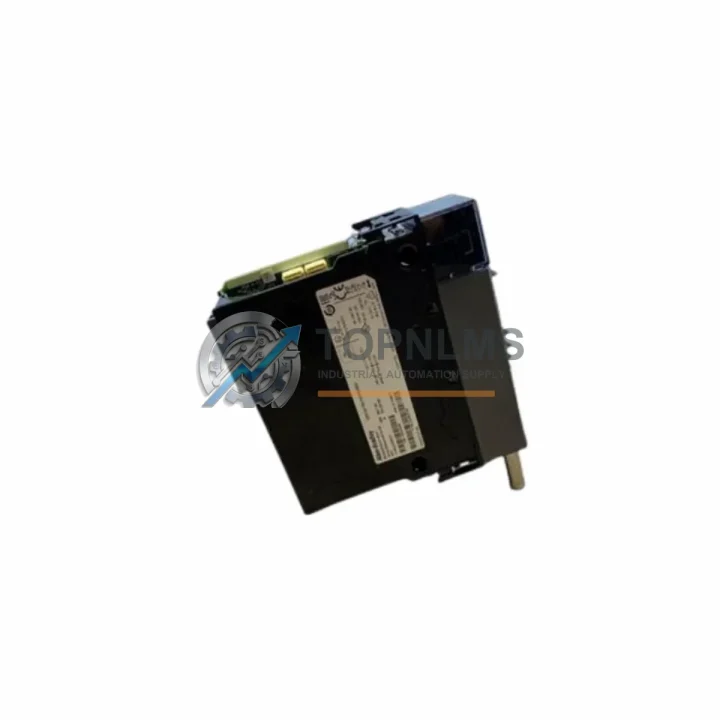
Send this exact part number, quantity and destination country. TOPNLMS will confirm availability, condition and export lead time before quotation.
The Allen-Bradley 1756-CN2RXT is a ControlNet Redundant Bridge Module designed for the ControlLogix XT (Extreme Temperature) platform, Series B. It serves as the critical communication backbone between ControlLogix XT chassis and ControlNet networks in demanding industrial environments — including steel mills, petrochemical plants, offshore platforms, and heavy manufacturing facilities where ambient temperatures exceed standard module ratings. When your existing 1756-CN2R or first-generation 1756-CN2RXT reaches end-of-life or becomes unavailable through standard distribution channels, this module provides a validated, drop-in upgrade path that preserves your existing ControlNet topology, wiring infrastructure, and RSLogix 5000 / Studio 5000 program logic without requiring a full system redesign.
Many facilities running legacy ControlLogix systems originally built around the 1756-CN2 or 1756-CN2R are now facing obsolescence challenges. The 1756-CN2RXT addresses this directly: it slots into the same 1756 XT chassis backplane positions, maintains identical ControlNet port pinouts, and supports the same NUT (Network Update Time) scheduling parameters your existing Logix Designer project already defines. Field engineers report that migration from a 1756-CN2R to the 1756-CN2RXT in a redundant controller pair — typically involving a 1756-L7xS or 1756-L8xS redundant controller module alongside a 1756-RM2 redundancy module — can be completed during a planned maintenance window without reprogramming the ControlNet scheduled connections or unscheduled messaging paths.
| Parameter | Legacy: 1756-CN2R (Standard) | Replacement: 1756-CN2RXT (XT Series B) |
|---|---|---|
| Operating Temperature | 0°C to 60°C | -25°C to 70°C |
| Chassis Compatibility | 1756 Standard Chassis | 1756 XT Chassis (e.g. 1756-A4XT, 1756-A7XT) |
| ControlNet Ports | 2 × BNC (Redundant Media) | 2 × BNC (Redundant Media) |
| Network Data Rate | 5 Mbps | 5 Mbps |
| Backplane Current Draw | 1.0 A @ 5 VDC | 1.0 A @ 5 VDC |
| Redundancy Support | Yes (with 1756-RM) | Yes (with 1756-RM2 / 1756-RM2XT) |
| RSLinx / Studio 5000 | Supported | Supported (same EDS file) |
| Scheduled Connections | Up to 128 | Up to 128 |
| Unscheduled Messaging | Supported | Supported |
| Physical Slot Width | Single slot | Single slot |
| Conformal Coating | No | Yes (XT-grade) |
| Replacement Recommendation | — | Direct upgrade; no wiring changes required |
| Warranty | — | 12-Month Warranty (TOPNLMS) |
A successful migration to the 1756-CN2RXT rarely involves a single module swap in isolation. In most ControlLogix XT redundant architectures, the communication module works in concert with a broader set of components that must be evaluated for compatibility during the upgrade process.
The redundancy pair itself is anchored by the 1756-RM2XT redundancy module, which coordinates switchover between the primary and secondary controller chassis. If your existing system uses the older 1756-RM or 1756-RM2 (standard temperature), upgrading to the XT environment requires confirming that the redundancy module firmware revision aligns with the 1756-CN2RXT’s supported firmware range — a step that can be verified in RSLogix 5000 before any physical hardware change. The controller modules themselves, typically 1756-L73XT or 1756-L74XT Logix5573XT or Logix5574XT processors, remain in place; the 1756-CN2RXT simply replaces the bridge slot without touching the controller’s I/O tree or task configuration.
On the I/O side, facilities often pair the ControlNet bridge with 1756-IB16XT digital input modules and 1756-OB16EIXT digital output modules mounted in the same XT chassis. These modules share the same backplane power budget managed by the 1756-PA75R2XT redundant power supply — a component worth inspecting during any module replacement to ensure the chassis power margin remains within specification after the swap. Signal integrity on the ControlNet trunk itself depends on proper termination; BNC terminators and coaxial tap assemblies on the physical ControlNet cable plant should be inspected and replaced if the network has been in service for more than five years.
For facilities that also run DeviceNet or EtherNet/IP alongside ControlNet, the 1756-ENBT or 1756-EN2T EtherNet/IP bridge modules in adjacent chassis slots are unaffected by the 1756-CN2RXT replacement, but their RSLinx Classic or FactoryTalk Linx browse paths should be re-verified after the chassis is powered back up. Programming cable access during commissioning is typically handled via a 1756-USB or 1784-U2DHP USB-to-DH+ adapter connected to the controller’s serial/USB port, allowing Studio 5000 to go online and verify the ControlNet node address assignments and scheduled connection status without disrupting the live network.
In applications where the ControlNet network bridges to remote I/O racks via 1794-ACN15 FlexLogix ControlNet adapters or 1747-SCNR SLC ControlNet scanner modules in legacy SLC 500 remote racks, the 1756-CN2RXT maintains full backward compatibility with these nodes — no changes to the ControlNet node address table or NUT are required, which is a key advantage when minimizing planned downtime during the retrofit.
Q: Do I need to rewire the ControlNet BNC connections when replacing a 1756-CN2R with the 1756-CN2RXT?
No. The BNC port layout and pinout are identical. Simply disconnect the coaxial cables from the old module, seat the 1756-CN2RXT in the same chassis slot, and reconnect. No cable modifications are required.
Q: Will my existing Studio 5000 / RSLogix 5000 project require changes?
In most cases, no. The 1756-CN2RXT uses the same module profile and EDS file as the 1756-CN2R. If the module catalog number in your I/O tree needs updating, RSLogix 5000 provides a Change Module Type wizard that preserves all scheduled connection parameters and tag mappings.
Q: Is the 1756-CN2RXT compatible with ControlNet networks running mixed NUT values?
Yes. The module supports NUT values from 2 ms to 100 ms and is compatible with mixed-media ControlNet segments using both coaxial and fiber repeaters.
Q: What happens to redundancy switchover behavior after the module swap?
Redundancy switchover behavior is governed by the 1756-RM2XT and the controller firmware, not the bridge module. Switchover times and synchronization parameters are unaffected by replacing the ControlNet bridge module, provided the firmware revision of the 1756-CN2RXT is within the supported range for your redundancy firmware revision.
Q: Can this module be installed in a standard (non-XT) 1756 chassis?
The 1756-CN2RXT is designed and rated for XT chassis environments. While the physical form factor is identical to standard 1756 modules, Rockwell Automation specifies XT modules for use in XT chassis to ensure conformal coating and temperature rating compliance. For standard chassis applications, the 1756-CN2R is the appropriate selection.
Q: How do I verify the ControlNet node address after installation?
Use RSNetWorx for ControlNet to browse the network after powering up the chassis. The node address is set via the rotary switches on the module faceplate before installation and should match the address previously assigned to the replaced module.
Every 1756-CN2RXT shipped by TOPNLMS is covered by a 12-month warranty from the date of shipment. Prior to dispatch, each unit undergoes functional verification including backplane communication checks, ControlNet port integrity testing, and firmware revision confirmation. Units are shipped in anti-static packaging with original labeling intact.
In the event of a confirmed defect within the warranty period, TOPNLMS provides replacement dispatch within 3 business days of fault confirmation, with return shipping costs covered for verified warranty claims. Our technical support team is available to assist with installation queries, firmware compatibility questions, and commissioning guidance throughout the warranty period.
For time-critical plant shutdowns or emergency replacement scenarios, expedited shipping options are available to most destinations in Asia, Europe, the Middle East, and the Americas. Stock availability is confirmed at time of order, and lead times are communicated transparently before payment is processed.
TOPNLMS maintains inventory of complementary ControlLogix XT components to support complete system retrofits from a single source, reducing procurement complexity and ensuring component compatibility across your upgrade bill of materials.
Drop-in replacement for Allen-Bradley 1756-EN2T ControlLogix EtherNet/IP Bridge Module. Compatible upgrade, 12-month warranty, fast global shipping.
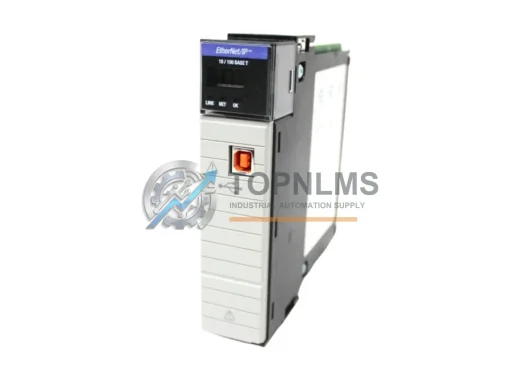
Allen-Bradley 1756-EN2T/C original ControlLogix EtherNet/IP module. Industrial replacement spare, 12-month warranty, tested before shipment. Fast global delivery.
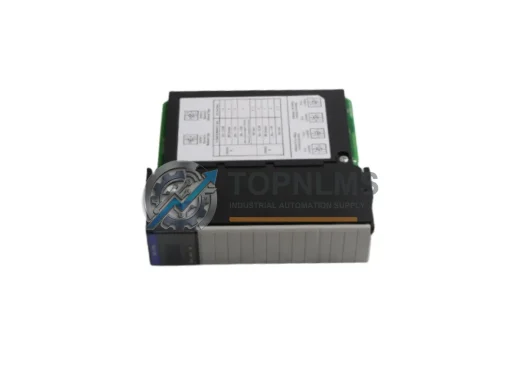
Allen-Bradley 1756-DHRIO ControlLogix DH+/RIO Bridge Scanner Module. Drop-in replacement, upgrade solution, 12-month warranty. Ships from stock. Compatible with 1756 chassis.
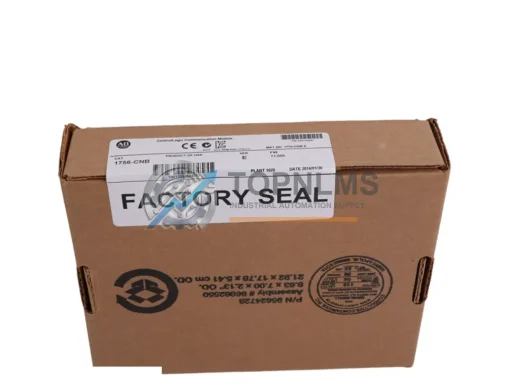
Buy Allen-Bradley 1756-CNB original ControlNet bridge module for ControlLogix systems. Genuine spare, 12-month warranty, fast shipping. SKU: 1756-CNB.
Click Quote This Model and the Part Number field will auto-fill with 1756-CN2RXT.