
Adlink
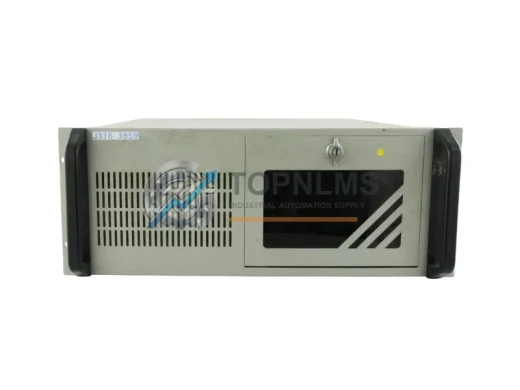
ADLINK HPC1-14S7U Ruggedized Industrial Controller PC
HPC1-14S7UADLINK HPC1-14S7U RK-610 rackmount industrial PC for harsh environments. EMI-resistant, 12-month warranty. In stock — fast global shipping from TOPNLMS.
Request availability, condition, lead time and export shipping details for PCI-9810.
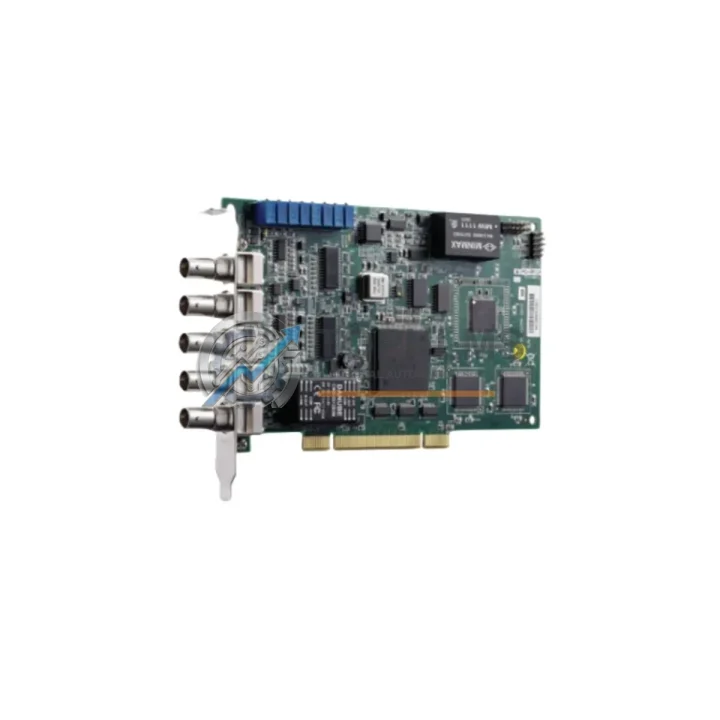
Send this exact part number, quantity and destination country. TOPNLMS will confirm availability, condition and export lead time before quotation.
The ADLINK PCI-9810 is a high-performance multifunction data acquisition card designed for the PCI-9800 Series platform. As legacy DAQ systems age and original hardware becomes increasingly difficult to source, engineering teams across manufacturing, energy, and process control industries are actively seeking verified replacement and upgrade paths that minimize reprogramming effort, preserve existing wiring infrastructure, and reduce system downtime during changeover. The PCI-9810 addresses all of these requirements directly, offering a proven migration target for facilities running aging PCI-9800 Series installations or equivalent third-party DAQ hardware.
Whether your facility is retiring a PCI-9810A, PCI-9812, or PCI-9820 module, or migrating from a competing multifunction DAQ card on the same PCI bus, the PCI-9810 provides a compatible analog input/output architecture, familiar driver stack, and identical form factor that allows engineers to execute a controlled replacement without redesigning the control cabinet or rewriting application software from scratch.
| Parameter | Legacy / Replaced Model | ADLINK PCI-9810 (Replacement) |
|---|---|---|
| Series | PCI-9800 Series (PCI-9810A / PCI-9812 / PCI-9820) | PCI-9800 Series — PCI-9810 |
| Bus Interface | 32-bit PCI | 32-bit PCI (Universal) |
| Analog Input Channels | 16 SE / 8 Diff (varies by model) | 16 SE / 8 Diff, 12-bit resolution |
| Sampling Rate | Up to 1 MS/s (model dependent) | Up to 1 MS/s |
| Digital I/O | 16-bit DI / 16-bit DO | 16-bit DI / 16-bit DO |
| Counter/Timer | 2 × 16-bit (82C54 compatible) | 2 × 16-bit (82C54 compatible) |
| Driver Compatibility | ADLINK DAQPilot / DAQ-LVIEW | ADLINK DAQPilot / DAQ-LVIEW (same SDK) |
| OS Support | Windows XP / 7 / 10 | Windows 7 / 10 / 11 (32 & 64-bit) |
| Connector Type | 68-pin SCSI-II (CN1) | 68-pin SCSI-II (CN1) — same pinout |
| Wiring Compatibility | Existing SCSI-II breakout cables | Direct reuse — no rewiring required |
| Installation Space | Standard PCI slot (half-length) | Standard PCI slot (half-length) |
| Power Supply | +5 V / +12 V from PCI bus | +5 V / +12 V from PCI bus |
| Warranty | — | 12-Month Warranty (TOPNLMS) |
| Replacement Recommendation | Direct drop-in replacement. No hardware modification required for same-series models. | |
A successful PCI-9810 migration rarely involves the DAQ card alone. In practice, field engineers replacing a legacy PCI-9800 Series installation will also evaluate the surrounding signal conditioning and I/O infrastructure. The ADLINK ACL-10168 screw-terminal breakout board is the most common companion accessory, connecting directly to the PCI-9810’s 68-pin SCSI-II interface and preserving all existing field wiring without modification. For applications requiring electrical isolation between field signals and the PC bus, the ADLINK ACL-10168 can be paired with signal isolator modules to protect the host system from ground loops or transient voltages common in industrial environments.
In multi-card configurations where the host PC chassis accommodates several PCI-9800 Series cards simultaneously — for example, combining the PCI-9810 with a PCI-9812A for higher-channel-count analog acquisition — the PCI bus arbitration and shared IRQ allocation must be verified during commissioning. Systems previously running the PCI-9820 for simultaneous sampling applications should note that the PCI-9810 uses sequential multiplexed sampling; if simultaneous multi-channel acquisition is a hard requirement, the PCI-9820 or PCI-9846 should be evaluated instead.
For facilities migrating from older ISA-bus DAQ cards such as the ADLINK ACL-8112 or ACL-8216 to a PCI-based architecture, the PCI-9810 represents the natural upgrade path. The transition from ISA to PCI eliminates IRQ and DMA conflicts that were endemic to legacy ISA DAQ installations, and the ADLINK DAQPilot software provides a unified API layer that simplifies porting existing LabVIEW, Visual Basic, or C++ application code. Engineers who previously relied on the ACL-8112PG for programmable gain amplification will find equivalent functionality in the PCI-9810’s software-selectable input range (±10 V, ±5 V, ±2.5 V, ±1.25 V).
Where the control system architecture includes an ADLINK PCI-7230 isolated digital I/O card or a PCI-7248 96-channel DIO card operating alongside the DAQ module, the PCI-9810 integrates into the same chassis without driver conflicts, sharing the ADLINK unified driver framework. This is particularly relevant for machine tool, semiconductor test, and automated optical inspection (AOI) applications where mixed analog and digital I/O is standard. Similarly, installations that include an ADLINK PCI-8164 or PCI-8254 motion control card benefit from the synchronized trigger architecture available across the PCI-9800 and PCI-8000 Series, enabling coordinated motion-and-measurement workflows without external trigger wiring.
Q: Can I reuse my existing 68-pin SCSI-II cable and breakout board when replacing a PCI-9810A with the PCI-9810?
A: Yes. The PCI-9810 uses an identical 68-pin SCSI-II connector (CN1) with the same signal pinout as the PCI-9810A. Your existing ADLINK ACLS-68P or equivalent third-party SCSI-II cable and screw-terminal breakout board can be reused without modification.
Q: Do I need to reinstall or update my DAQ software after swapping the card?
A: If your host PC is already running ADLINK DAQPilot or the DAQ-LVIEW driver suite, the PCI-9810 will be recognized automatically after a system restart. For Windows 10/11 64-bit environments, ensure you are running DAQPilot v3.5 or later. Existing application code written against the ADLINK API does not require modification for same-series replacements.
Q: Is the PCI-9810 compatible with PCI-Express (PCIe) motherboards?
A: The PCI-9810 requires a physical 32-bit PCI slot. Many modern workstations and industrial PCs retain one or two legacy PCI slots alongside PCIe slots. If your target host PC is PCIe-only, a PCI-to-PCIe bridge card (such as the Adex Electronics PCI-1PEX or equivalent) may be used, though ADLINK does not officially certify bridge-card configurations. For PCIe-native DAQ, consider the ADLINK PCIe-9812A or PCIe-9846 as an alternative upgrade path.
Q: What is the maximum cable length between the PCI-9810 and field sensors?
A: ADLINK recommends keeping analog signal cables to 3 meters or less to minimize noise pickup. For longer runs, use shielded twisted-pair cable and connect the shield to the AGND pin at the breakout board end only. In high-EMI environments (near VFDs, servo drives, or high-current switching equipment), signal isolators are strongly recommended.
Q: Can the PCI-9810 replace a PCI-9812 in a simultaneous-sampling application?
A: The PCI-9812 supports simultaneous sampling across all channels using independent sample-and-hold circuits. The PCI-9810 uses a single ADC with multiplexed input, so channels are sampled sequentially. For applications where phase relationship between channels is critical (e.g., power quality analysis, vibration monitoring), the PCI-9812 or PCI-9820 is the appropriate choice. For general-purpose data logging and control feedback where sequential sampling is acceptable, the PCI-9810 is a cost-effective replacement.
Q: How do I verify the card is functioning correctly after installation?
A: Use the ADLINK DAQPilot Test Panel to perform a loopback test: connect AO0 to AI0 with a short jumper wire, output a known voltage, and verify the analog input reading. For digital I/O, use the DIO Test function to toggle output bits and confirm input readback. All cards shipped by TOPNLMS are pre-tested and include a test report.
Every ADLINK PCI-9810 shipped by TOPNLMS is covered by a 12-month warranty from the date of delivery. Prior to shipment, each unit undergoes functional verification including analog I/O channel testing, digital I/O loopback, counter/timer validation, and PCI bus enumeration confirmation. A test report is available upon request.
In the event of a confirmed hardware defect within the warranty period, TOPNLMS will arrange a replacement unit or issue a full refund, subject to return inspection. Our technical support team responds to warranty claims and application queries within one business day. For urgent production-line replacements, expedited shipping from our Xiamen warehouse is available to minimize system downtime.
Procurement teams can request formal quotations, packing lists, and certificates of conformance for quality management system (QMS) compliance. All export documentation, including commercial invoices and country-of-origin certificates (Taiwan), is prepared in accordance with international trade requirements.
Stock availability is maintained for the PCI-9810 and related PCI-9800 Series accessories. Inquiries regarding bulk orders, consignment stock arrangements, or long-term supply agreements are welcome.
ADLINK HPC1-14S7U RK-610 rackmount industrial PC for harsh environments. EMI-resistant, 12-month warranty. In stock — fast global shipping from TOPNLMS.
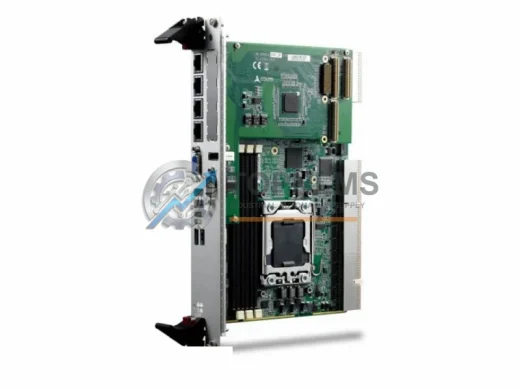
ADLink cPCI-6930D/2418/M6G original industrial spare SBC. cPCI-6930 Series compatible. Fast replacement, 12-month warranty. Reduce downtime — order now.
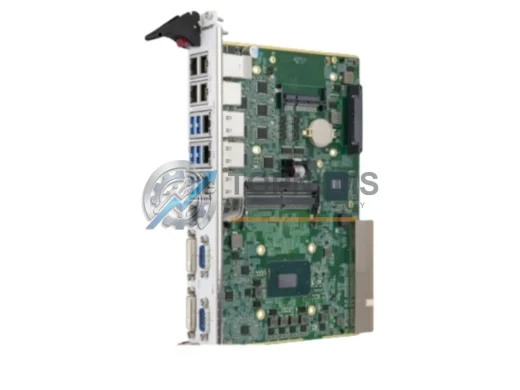
Original Adlink CPCI-6920/S408/M4G(G)-1270 6U CompactPCI Intel Core i7 SBC. Drop-in replacement, 12-month warranty, tested & shipped fast. Industrial spare.
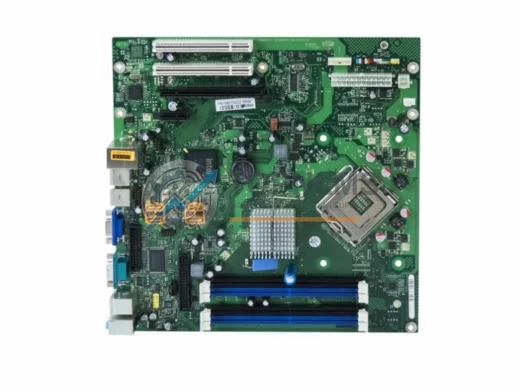
ADLINK cPCI-6210/510E/M4G/TEL drop-in replacement & upgrade solution for cPCI-6210 Series. Compatible wiring, protocols & rack. 12-month warranty. Fast ship.
Click Quote This Model and the Part Number field will auto-fill with PCI-9810.