
ABB
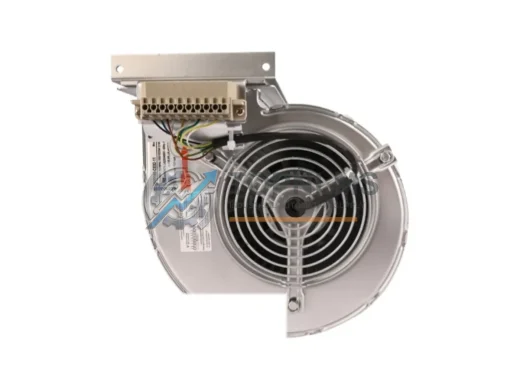
ABB D2D160-CE02-11 Ruggedized AC Centrifugal Fan
D2D160-CE02-11ABB D2D160-CE02-11 ruggedized 160mm AC centrifugal fan for harsh industrial environments. In stock, tested, 12-month warranty. Fast global shipping from TOPNLMS.
Request availability, condition, lead time and export shipping details for RDCU-02C.
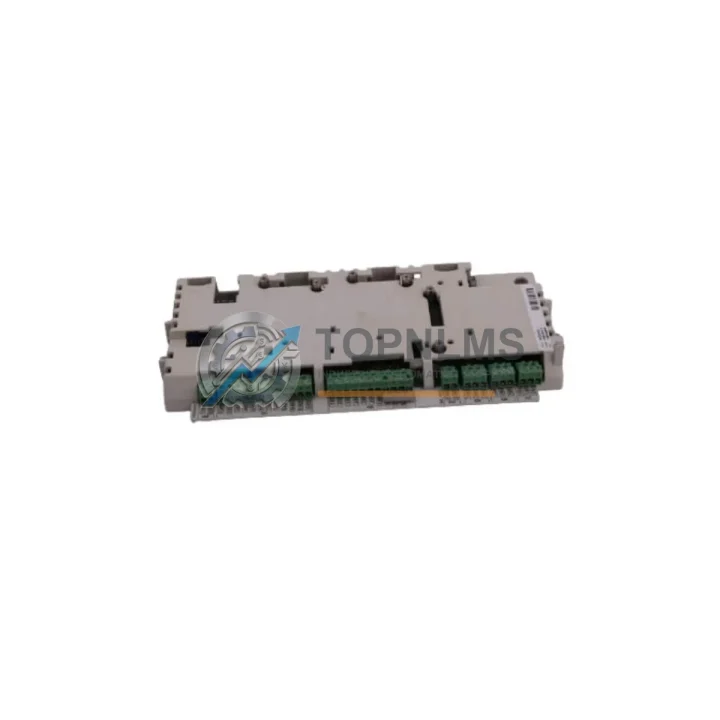
Send this exact part number, quantity and destination country. TOPNLMS will confirm availability, condition and export lead time before quotation.
The ABB RDCU-02C is the dedicated drive control unit (DCU) for ABB’s ACS800 and ACS600 variable frequency drive platforms — two of the most widely deployed industrial drive series in process automation, material handling, marine propulsion, and heavy manufacturing. As these platforms age and original RDCU-02C boards reach end-of-life or suffer field failures, sourcing a verified replacement becomes a critical priority for maintenance engineers and procurement teams alike.
TOPNLMS supplies the ABB RDCU-02C as a direct replacement and upgrade solution, fully tested, serialized, and backed by a 12-month warranty. Whether you are replacing a failed board in an ACS800-01, ACS800-04, ACS800-07, or ACS800-11 drive cabinet, or migrating from an older ACS600 installation, this unit is engineered to restore full drive functionality with minimal downtime and zero reprogramming of your existing drive parameters.
| Parameter | Legacy / Outgoing Unit | ABB RDCU-02C (Replacement) |
|---|---|---|
| Compatible Drive Series | ACS600, ACS800 (early DCU variants) | ACS800-01/04/07/11/17/31/37, ACS600 (with adapter) |
| Communication Interface | DDCS fiber optic (CH0/CH1/CH2/CH3) | DDCS fiber optic (CH0/CH1/CH2/CH3) — fully compatible |
| Fieldbus Protocol Support | PROFIBUS-DP, Modbus RTU, DeviceNet (via adapter) | PROFIBUS-DP, Modbus RTU, DeviceNet, CANopen (via RCAN-01/RPBA-01/RMBA-01) |
| Mounting / Form Factor | Standard ACS800 DCU slot (DIN rail or panel mount) | Direct drop-in — identical mechanical footprint |
| Power Supply Requirement | 24 VDC internal bus from AINT/AINT-02C board | 24 VDC internal bus — no external PSU modification required |
| Parameter Retention | Stored on RDCU flash / external memory unit (RMIO) | Parameters restored via DriveWindow Light 2 or panel upload |
| I/O Expansion | RAIO-01, RDIO-01 option modules | Full compatibility with RAIO-01, RDIO-01, RTAC-01 option slots |
| Encoder / Pulse Interface | RTAC-01 or RTAC-02 pulse encoder interface | Compatible — RTAC-01/02 mounts directly to RDCU-02C option slot |
| Warranty | OEM warranty expired (EOL product) | 12-Month TOPNLMS Warranty — replacement or repair |
| Replacement Recommendation | Direct swap — no hardware modification required | ✔ Confirmed drop-in replacement |
A successful RDCU-02C replacement rarely involves the control board alone. In most ACS800 and ACS600 retrofit projects, the drive control unit works in close coordination with several other components that may also require inspection, upgrade, or simultaneous replacement.
The AINT-02C inverter control board is the most common companion unit — it handles the gate drive signals and interfaces directly with the RDCU-02C over the internal DDCS fiber link. If the AINT-02C shows fault history or thermal stress, replacing both boards together eliminates the risk of a secondary failure after the RDCU-02C swap. Similarly, the APOW-01 power supply board provides the 24 VDC rail that feeds the RDCU-02C; a degraded APOW-01 can cause intermittent RDCU resets that mimic a faulty control board.
For sites running PROFIBUS-DP networks, the RPBA-01 PROFIBUS adapter module mounts directly onto the RDCU-02C option slot and must be re-seated and re-addressed after any DCU replacement. Installations using Modbus RTU will rely on the RMBA-01 Modbus adapter in the same slot position. Both adapters retain their node address and baud rate settings in onboard flash, so no PLC-side reconfiguration is typically required after a clean board swap.
Sites with closed-loop speed control using incremental encoders will need to verify the RTAC-01 pulse encoder interface module is correctly re-seated in its dedicated slot on the new RDCU-02C. The encoder wiring — typically a 5 VDC differential signal on the RTAC terminal block — does not change between board generations. For analog I/O expansion, the RAIO-01 analog I/O extension module and RDIO-01 digital I/O extension module plug directly into the RDCU-02C option board connectors and require no re-wiring.
Parameter backup and restoration is handled via the ACS800 CDP control panel (or the DriveWindow Light 2 PC tool connected through an RUSB-02 USB-to-DDCS adapter). Uploading a saved parameter set from the CDP panel to the new RDCU-02C takes under five minutes and eliminates manual re-entry of hundreds of drive parameters — a critical time-saver during planned maintenance windows or emergency shutdowns.
For installations where the ACS800 drive cabinet also houses an AIMA-01 master/follower communication module for multi-drive synchronization, the RDCU-02C replacement must be followed by a re-initialization of the master/follower link on CH2 of the DDCS network. This is a standard commissioning step documented in ABB’s ACS800 Firmware Manual and does not require any hardware changes to the fiber optic cabling between drives.
Q: Can I replace the RDCU-02C without losing my drive parameters?
A: Yes. Back up all parameters to the CDP control panel or via DriveWindow Light 2 before removing the old board. After installing the RDCU-02C replacement, upload the saved parameter set. The drive will resume operation with all tuned values intact, including motor data, PID settings, and fault response configurations.
Q: Do I need to re-configure my PROFIBUS or Modbus fieldbus node after the swap?
A: The RPBA-01 or RMBA-01 adapter module retains its node address and communication settings in its own flash memory. Re-seat the adapter on the new RDCU-02C, power up the drive, and verify the fieldbus status LED. In most cases, the PLC or DCS host will re-establish communication automatically within one bus scan cycle.
Q: Is the RDCU-02C physically identical to earlier ACS800 DCU variants?
A: Yes. The RDCU-02C uses the same mechanical footprint, connector positions, and mounting holes as earlier ACS800 drive control units. No cabinet modifications, bracket changes, or cable extensions are required for a direct swap.
Q: What about encoder wiring — do I need to re-terminate the RTAC-01?
A: No re-termination is needed. The RTAC-01 module and its terminal block remain in place. Simply re-seat the RTAC-01 onto the new RDCU-02C option slot connector and verify the encoder feedback signal in parameter group 50 (Speed Measurement) after power-up.
Q: Can the RDCU-02C be used in ACS600 drives?
A: The RDCU-02C is natively designed for the ACS800 platform. ACS600 installations use a different DCU architecture (NAMC/NIOC boards). However, in some ACS600-to-ACS800 migration projects, the ACS800 drive chassis with RDCU-02C is used as the replacement platform, with new wiring to the existing motor and field I/O. Consult the ABB ACS600/ACS800 migration guide for your specific power rating and cabinet configuration.
Q: How long does commissioning take after a board swap?
A: For a like-for-like RDCU-02C replacement with a saved parameter backup, experienced engineers typically complete the swap, parameter upload, and functional test in 1–3 hours. First-time installations without a parameter backup may require 4–8 hours for full motor identification and PID re-tuning.
Every ABB RDCU-02C unit supplied by TOPNLMS is covered by a 12-month warranty from the date of shipment. Prior to dispatch, each board undergoes a multi-point functional test including power-on self-test, DDCS fiber port verification, option slot connector integrity check, and visual inspection for component damage or counterfeit indicators.
If a unit develops a fault within the warranty period, TOPNLMS will provide a replacement board or full repair at no additional cost. Our after-sales response target is 24 hours for warranty claims, with replacement units dispatched within 3–5 business days for standard destinations. Expedited shipping is available for critical production environments.
All units are shipped in anti-static packaging with individual serial number documentation. A test report is available upon request for quality-controlled procurement processes. We support purchase orders, proforma invoices, and third-party inspection for enterprise and government procurement channels.
Stock is maintained in Xiamen, China, with regular replenishment cycles to ensure consistent availability. Lead times for in-stock units are typically 3–7 business days to major global destinations via DHL Express, FedEx, or UPS.
ABB D2D160-CE02-11 ruggedized 160mm AC centrifugal fan for harsh industrial environments. In stock, tested, 12-month warranty. Fast global shipping from TOPNLMS.
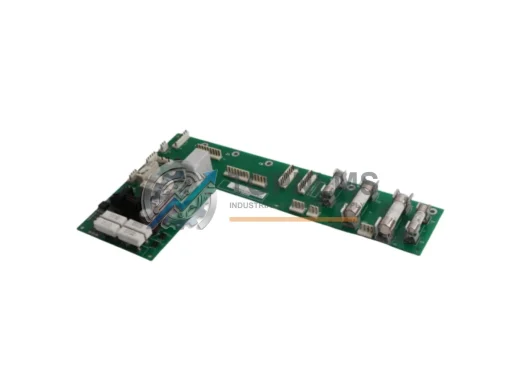
ABB CMRB-11C 3AUA0000054682 ACS800 ruggedized drive control board. Tested, 12-month warranty, fast global shipping. Industrial-grade reliability for harsh environments.
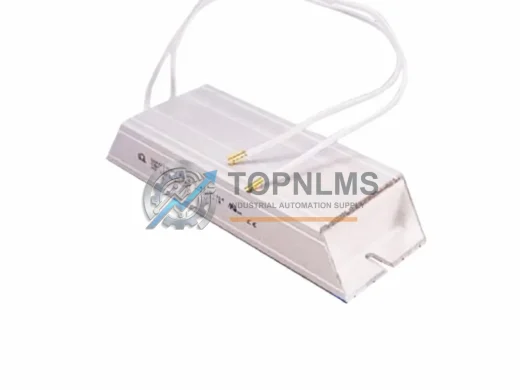
ABB CBHX165C 5R 414 original DC bus pre-charge resistor for ACS800 drives. Tested, 12-month warranty, fast worldwide shipping. Industrial replacement spare.
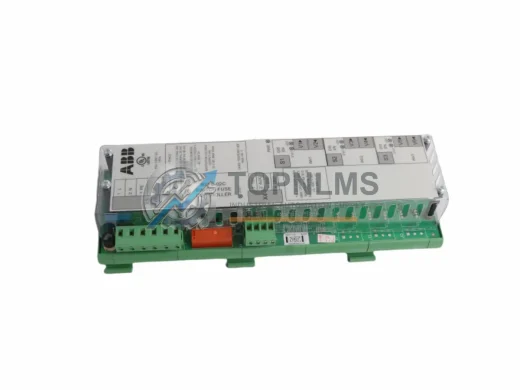
ABB BSFC-02C (3AXD50000011461) brake sequence control panel for ACS880 drives. Drop-in replacement, wiring-compatible, 12-month warranty. Ships from stock.
Click Quote This Model and the Part Number field will auto-fill with RDCU-02C.