
ABB
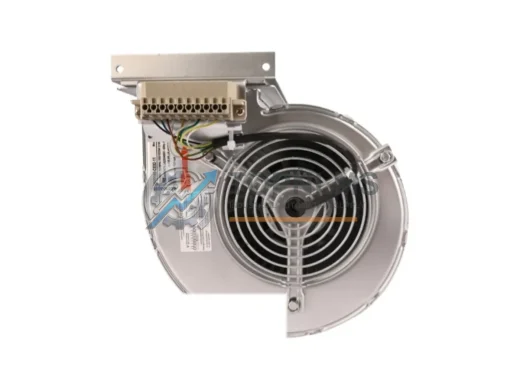
ABB D2D160-CE02-11 Ruggedized AC Centrifugal Fan
D2D160-CE02-11ABB D2D160-CE02-11 ruggedized 160mm AC centrifugal fan for harsh industrial environments. In stock, tested, 12-month warranty. Fast global shipping from TOPNLMS.
Request availability, condition, lead time and export shipping details for RDCO-01C.
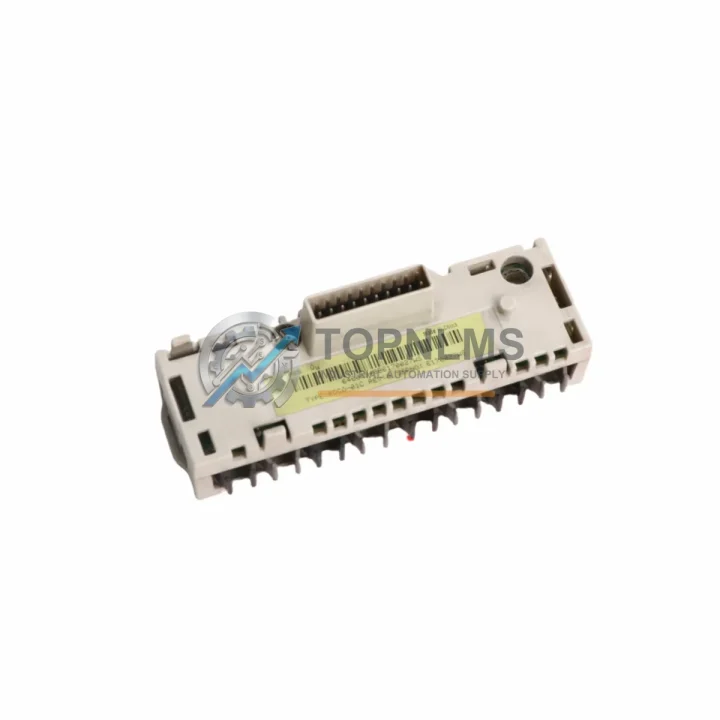
Send this exact part number, quantity and destination country. TOPNLMS will confirm availability, condition and export lead time before quotation.
The ABB RDCO-01C is a factory-engineered DDCS (Distributed Drives Communication System) fiber-optic communication option module designed for integration with ABB ACS800 series variable frequency drives. Built to ABB’s industrial-grade standards, this module delivers deterministic, noise-immune data transmission across high-demand production environments where electromagnetic interference, vibration, thermal cycling, and airborne contaminants routinely compromise conventional copper-based communication links.
In heavy industrial settings — including steel mills, petrochemical refineries, offshore platforms, underground mining operations, and continuous paper or cement production lines — the integrity of drive-to-controller communication is non-negotiable. The RDCO-01C addresses this challenge by converting electrical signals to optical pulses transmitted through fiber-optic cables, achieving complete galvanic isolation between the ACS800 drive and the upstream control system. This architecture eliminates ground loop interference and renders the communication channel immune to the high-frequency EMI generated by large motor loads, thyristor converters, and adjacent power distribution equipment.
The module mounts directly into the option slot of compatible ACS800 drive units and establishes a DDCS ring or star topology with ABB master controllers such as the AC80 application controller or external PLC systems equipped with DDCS master adapters. Cycle times as low as 2 ms enable real-time torque, speed, and status data exchange, supporting closed-loop process control in applications where latency directly affects product quality or safety margins.
| Parameter | Specification |
|---|---|
| Model / SKU | RDCO-01C |
| Brand | ABB |
| Series | ACS800 / DDCS |
| Product Type | Fiber-Optic Communication Option Module |
| Communication Protocol | DDCS (Distributed Drives Communication System) |
| Interface | Fiber-optic (plastic optical fiber, POF) |
| Topology Support | Ring / Star |
| Minimum Cycle Time | 2 ms |
| Galvanic Isolation | Yes — full optical isolation |
| EMI Immunity | High — immune to conducted and radiated interference |
| Operating Temperature | 0°C to +55°C (drive ambient) |
| Storage Temperature | -40°C to +70°C |
| Humidity | 5–95% RH, non-condensing |
| Vibration Resistance | Per IEC 60068-2-6 (sinusoidal) |
| Shock Resistance | Per IEC 60068-2-27 |
| Protection Class | IP20 (module); drive enclosure provides additional protection |
| Compatible Drives | ABB ACS800 series (single drive and multi-drive units) |
| Compatible Controllers | ABB AC80, NAMC boards, external PLC with DDCS master |
| Origin | Finland |
| Weight | Approx. 40 g |
| Warranty | 12 Months — TOPNLMS Quality Guarantee |
The RDCO-01C does not operate in isolation — it is a critical link in a broader ABB drive and control architecture. In a typical ACS800 multi-drive installation, the RDCO-01C module connects the drive’s internal DDCS port to an ABB RDCO-02 or RDCO-04 master adapter installed in the AC80 application controller, forming a deterministic fiber ring that carries speed references, torque commands, and diagnostic data simultaneously across multiple drive units. This ring architecture ensures that a single cable fault does not collapse the entire communication network, a key resilience feature for continuous production lines in pulp and paper or metals processing.
Within the same control cabinet, the ACS800 drive equipped with the RDCO-01C typically operates alongside ABB RINT-5611C or RINT-5514C rectifier interface boards, ABB APBU-44C branching units for multi-drive DDCS distribution, and ABB AIMA-01 or AIMA-02 I/O extension modules that provide additional digital and analog I/O capacity without burdening the main drive CPU. For applications requiring functional safety, the ABB FSIO-21 safety I/O module or FTIO-01 safe torque-off interface can be integrated into the same ACS800 chassis, with the RDCO-01C maintaining the high-speed communication backbone that allows the safety controller to monitor drive state in real time.
In distributed architectures where the ACS800 drives are geographically separated — common in water treatment pump stations, mining conveyor systems, or offshore drilling rigs — the RDCO-01C’s fiber-optic medium supports cable runs of up to 30 meters per segment using standard plastic optical fiber, with extended distances achievable through glass fiber variants. This makes it straightforward to route communication cabling through cable trays shared with high-voltage power conductors without signal degradation, a practical advantage that copper-based fieldbus solutions such as Profibus DP or Modbus RTU cannot match in the same EMI-dense environments.
For sites standardized on ABB’s broader automation ecosystem, the RDCO-01C integrates naturally with ABB AC500 PLC systems via DDCS master modules, and with ABB System 800xA distributed control systems through DDCS gateway interfaces. This allows the ACS800 drive to appear as a fully transparent node within the plant-wide control network, with all drive parameters, fault codes, and process values accessible from the DCS operator station without additional protocol conversion hardware.
The RDCO-01C has established a strong service record across the most demanding segments of global heavy industry. In oil and gas processing facilities, ACS800 drives fitted with RDCO-01C modules control compressor trains, pipeline booster pumps, and wellhead injection pumps in classified hazardous areas, where the fiber-optic communication link’s inherent electrical isolation provides an additional layer of intrinsic safety by preventing ignition-capable energy from propagating along the communication path into Zone 1 or Zone 2 areas.
In metallurgical plants — including hot rolling mills, electric arc furnace auxiliaries, and continuous casting lines — the RDCO-01C sustains reliable drive communication despite the intense electromagnetic fields generated by large induction furnaces and thyristor-controlled DC drives operating in the same facility. The module’s optical isolation prevents the common-mode voltage transients that routinely corrupt data on copper fieldbus segments in these environments, reducing nuisance drive trips and the associated production losses that can cost thousands of dollars per minute on a continuous casting line.
Water and wastewater treatment authorities operating large pumping stations rely on ACS800 drives with RDCO-01C modules for variable-speed control of submersible and vertical turbine pumps, where the drives may be installed in outdoor switchgear enclosures subject to wide temperature swings, condensation, and insect ingress. The fiber-optic communication link remains unaffected by the moisture and temperature cycling that degrades copper connector contacts over multi-year service intervals, reducing maintenance callouts and extending mean time between failures for the communication infrastructure.
Mining operations — both surface and underground — present perhaps the most severe combination of environmental stressors: coal dust or silica dust accumulation, methane or other explosive atmospheres in underground headings, continuous mechanical vibration from blasting and heavy haulage, and wide ambient temperature ranges. ACS800 drives controlling conveyor drives, hoist systems, and ventilation fans in these environments depend on the RDCO-01C’s vibration-rated construction and optical isolation to maintain communication integrity through shift changes, blasting cycles, and seasonal temperature extremes.
Q1: What warranty coverage does TOPNLMS provide for the RDCO-01C?
Every RDCO-01C unit shipped by TOPNLMS carries a 12-month warranty covering manufacturing defects and functional failures under normal operating conditions. If a unit fails within the warranty period, TOPNLMS will arrange replacement or repair at no additional cost to the customer. Warranty claims are processed promptly, with replacement units dispatched from our Xiamen warehouse typically within 1–3 business days of fault confirmation.
Q2: How is each unit tested before shipment?
All RDCO-01C modules undergo pre-shipment functional verification including optical port continuity checks, DDCS communication handshake testing with compatible ACS800 hardware, and visual inspection for physical damage, connector integrity, and correct firmware labeling. Units that do not pass all test criteria are quarantined and not offered for sale. A test record is available upon request for customers with quality management system requirements.
Q3: Is the RDCO-01C compatible with all ACS800 variants?
The RDCO-01C is compatible with the standard option slot present in ACS800 single drive units (ACS800-01, -02, -04, -07, -11) and multi-drive inverter modules. Compatibility with specific firmware versions and hardware revisions of the ACS800 should be confirmed against ABB’s option module compatibility matrix, which TOPNLMS technical staff can assist with prior to order confirmation. The module is not interchangeable with RDCO-02 or RDCO-04 master adapters, which serve a different role in the DDCS topology.
Q4: Can TOPNLMS support long-term or repeat procurement of the RDCO-01C?
Yes. TOPNLMS maintains standing inventory of high-demand ABB ACS800 option modules including the RDCO-01C, and can support blanket purchase orders, scheduled releases, and emergency spot procurement for maintenance and capital project requirements. Customers managing aging ACS800 fleets facing ABB end-of-life notices are encouraged to contact our team to discuss strategic sparing plans that protect production continuity without excessive capital commitment.
ABB D2D160-CE02-11 ruggedized 160mm AC centrifugal fan for harsh industrial environments. In stock, tested, 12-month warranty. Fast global shipping from TOPNLMS.
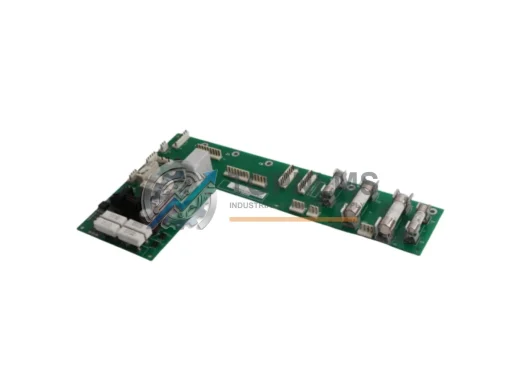
ABB CMRB-11C 3AUA0000054682 ACS800 ruggedized drive control board. Tested, 12-month warranty, fast global shipping. Industrial-grade reliability for harsh environments.
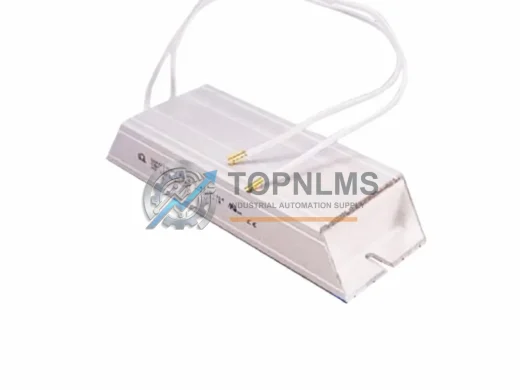
ABB CBHX165C 5R 414 original DC bus pre-charge resistor for ACS800 drives. Tested, 12-month warranty, fast worldwide shipping. Industrial replacement spare.
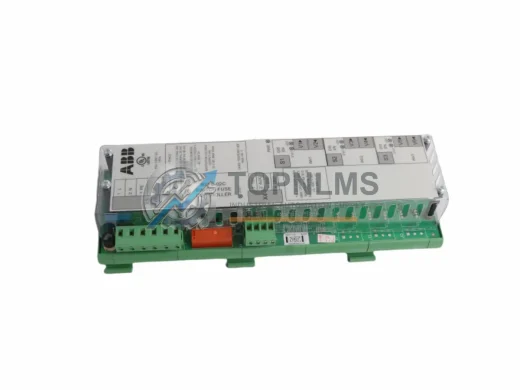
ABB BSFC-02C (3AXD50000011461) brake sequence control panel for ACS880 drives. Drop-in replacement, wiring-compatible, 12-month warranty. Ships from stock.
Click Quote This Model and the Part Number field will auto-fill with RDCO-01C.