
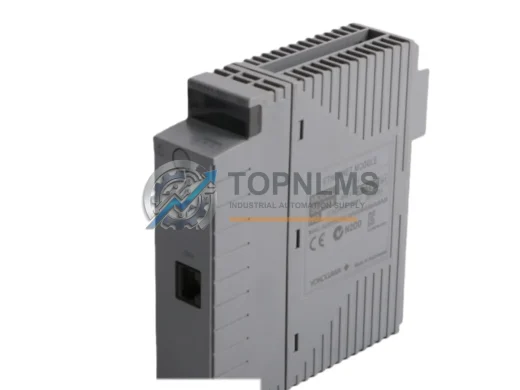
Yokogawa
Yokogawa ALE111-S51 Replacement for CENTUM VP Series
ALE111-S51Drop-in ALE111-S51 replacement for Yokogawa CENTUM VP. Compatible upgrade, Ethernet communication, 12-month warranty. Ready to ship from stock.
Request availability, condition, lead time and export shipping details for VI451-11 S3.
Send this exact part number, quantity and destination country. TOPNLMS will confirm availability, condition and export lead time before quotation.
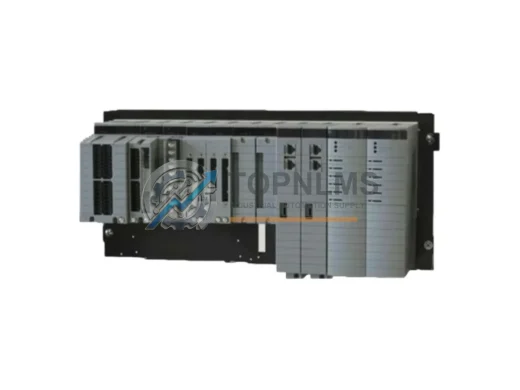
The Yokogawa VI451-11 S3 is an original serial communication interface module designed for the CENTUM VP Distributed Control System platform — one of the most widely deployed DCS architectures in process industries including petrochemical, power generation, pulp and paper, and pharmaceutical manufacturing. As a critical communication bridge within the CENTUM VP control network, the VI451-11 S3 manages serial data exchange between field devices, subsystems, and the central controller, making it an indispensable component for maintaining continuous process visibility and control loop integrity.
For maintenance engineers and procurement teams managing aging CENTUM VP installations, securing a verified original VI451-11 S3 spare is not merely a convenience — it is a risk mitigation strategy. Serial communication failures in DCS environments can cascade rapidly: a single degraded module can disrupt data acquisition from dozens of field instruments, trigger false alarms, and in worst-case scenarios, force an unplanned plant shutdown. Stocking a pre-tested, ready-to-deploy VI451-11 S3 eliminates the critical lead-time gap that often extends unplanned downtime from hours into days.
| Parameter | Specification |
|---|---|
| Part Number | VI451-11 S3 |
| Manufacturer | Yokogawa Electric Corporation |
| Compatible Platform | CENTUM VP DCS (CS3000 legacy compatible) |
| Module Function | Serial Communication Interface (RS-232C / RS-422 / RS-485) |
| Communication Ports | Multi-port serial interface for subsystem integration |
| Power Supply | Supplied via CENTUM VP field control station backplane |
| Operating Temperature | 0°C to 55°C (32°F to 131°F) |
| Storage Temperature | -20°C to 70°C |
| Humidity | 5% to 95% RH (non-condensing) |
| Country of Origin | Japan |
| Installation | Hot-swap capable within CENTUM VP FCS node slot |
| Compatibility | CENTUM VP R4.x / R5.x / R6.x; CS3000 with engineering review |
| Condition | Original, fully tested prior to shipment |
| Warranty | 12 Months from date of shipment |
Experienced DCS maintenance teams understand that the VI451-11 S3 does not operate in isolation. It sits within a tightly integrated CENTUM VP Field Control Station (FCS) node, sharing backplane power, network infrastructure, and engineering configuration with a range of interdependent modules. A disciplined preventive maintenance program should treat the VI451-11 S3 as part of a broader inspection and sparing strategy.
During scheduled outages or annual turnarounds, while replacing or inspecting the VI451-11 S3, maintenance personnel should simultaneously verify the condition of the Yokogawa CP451 Central Processing Unit — the FCS controller that manages all module communication and process execution. A degraded CP451 can mask or mimic serial communication faults, leading to misdiagnosis. Similarly, the Yokogawa PW481 Power Supply Module should be inspected for output voltage stability, as backplane power fluctuations are a leading cause of premature communication module failure.
The Yokogawa EB401 ESB Bus Interface Module and EB501 ESB Bus Coupler govern the internal data bus connecting all FCS modules; worn or corroded bus connectors can introduce intermittent communication errors that are frequently misattributed to the VI451-11 S3 itself. Inspecting and, where necessary, replacing these bus interface components during the same maintenance window significantly reduces repeat call-outs.
On the field side, the serial devices connected through the VI451-11 S3 — such as Yokogawa ADMAG AXF magnetic flowmeters, EJA-series differential pressure transmitters, or third-party analyzers communicating via Modbus RTU — should have their wiring terminations, cable shielding, and grounding verified. Degraded RS-485 cable runs or improperly terminated serial loops are a common source of communication instability that places undue stress on the interface module.
For sites running CENTUM VP with redundant FCS configurations, it is best practice to maintain a matched spare set: one VI451-11 S3 per redundant node pair. Additionally, procurement teams should consider stocking the Yokogawa ALR111 Alarm Annunciator Module and relevant AAI141 / AAI841 Analog I/O Modules, as these are frequently co-located in the same FCS cabinet and share the same maintenance cycle. Ensuring the Yokogawa AIP588 Intrinsic Safety Barrier units in the same loop are within calibration tolerance further protects the integrity of signals feeding into the serial communication network.
A complete cabinet inspection should also include checking the condition of terminal blocks and DIN rail wiring harnesses within the FCS enclosure, verifying that all module locking levers are fully engaged, and confirming that the engineering workstation running Yokogawa CENTUM VP Builder has the correct module configuration loaded and backed up. Proactive firmware version alignment across all FCS modules — particularly after a CENTUM VP software revision — prevents compatibility drift that can silently degrade serial communication performance.
The VI451-11 S3 addresses one of the most persistent challenges in long-lifecycle DCS environments: maintaining serial communication capability in systems that were engineered and commissioned a decade or more ago. Yokogawa’s CENTUM VP platform is renowned for its backward compatibility, and the VI451-11 S3 is designed to slot directly into existing FCS node positions without requiring re-engineering of the control strategy, I/O mapping, or HMI tag database.
For plants transitioning from the earlier CS3000 platform, the VI451-11 S3 — with appropriate engineering review — can serve as a functional replacement for legacy serial interface modules, extending the operational life of the control system without the capital expenditure of a full DCS migration. This makes it particularly valuable for facilities operating on extended asset life cycles, where the business case for a full system replacement cannot yet be justified but communication reliability must be maintained.
Replacement of a failed VI451-11 S3 in a live CENTUM VP environment is a structured process: the module is identified via the CENTUM VP System View diagnostic tool, the FCS node is placed in a safe state per site procedures, the module is extracted and the replacement inserted into the same slot, and the system automatically re-initializes the module configuration from the FCS database — typically restoring full communication within minutes. This rapid restoration capability is a key reason why maintaining a pre-tested spare on-site is the preferred strategy over relying on emergency procurement, which can introduce lead times of days to weeks depending on regional availability.
By sourcing the VI451-11 S3 through TOPNLMS, customers receive a fully tested original module with documented pre-shipment inspection, ensuring that the replacement unit performs to Yokogawa factory specifications from the moment it is installed. This eliminates the risk associated with untested or refurbished modules, which can introduce new failure modes into a previously stable control system.
Q1: Is the VI451-11 S3 compatible with both CENTUM VP and the older CS3000 platform?
The VI451-11 S3 is natively designed for CENTUM VP. Compatibility with CS3000 depends on the specific FCS hardware revision and software version in use. We recommend providing your FCS model number and CENTUM VP/CS3000 software revision for a compatibility confirmation before ordering. Our technical team can assist with this assessment.
Q2: What pre-shipment testing is performed on the VI451-11 S3?
Every VI451-11 S3 unit shipped by TOPNLMS undergoes functional power-on verification and communication port integrity testing prior to dispatch. Units are inspected for physical condition, connector integrity, and firmware version. A test report is available upon request. All units are covered by a 12-month warranty from the date of shipment.
Q3: How quickly can a VI451-11 S3 be replaced in the field during an unplanned shutdown?
Physical module swap in a CENTUM VP FCS node typically takes under 15 minutes for a trained technician. The CENTUM VP system automatically reloads the module configuration from the FCS database upon reinsertion, eliminating the need for manual re-parameterization in most cases. Having a pre-tested spare on-site is the single most effective way to minimize mean time to repair (MTTR) for serial communication faults.
Q4: What is the recommended spare inventory strategy for the VI451-11 S3?
For plants with a single FCS node using the VI451-11 S3, a minimum of one spare unit is recommended. For multi-node or redundant FCS configurations, one spare per two nodes is a common industry practice. Given the long procurement lead times for original Yokogawa DCS modules through standard distribution channels, maintaining at least one on-shelf spare significantly reduces exposure to extended unplanned downtime. TOPNLMS maintains stock for rapid dispatch to support emergency and planned maintenance requirements.
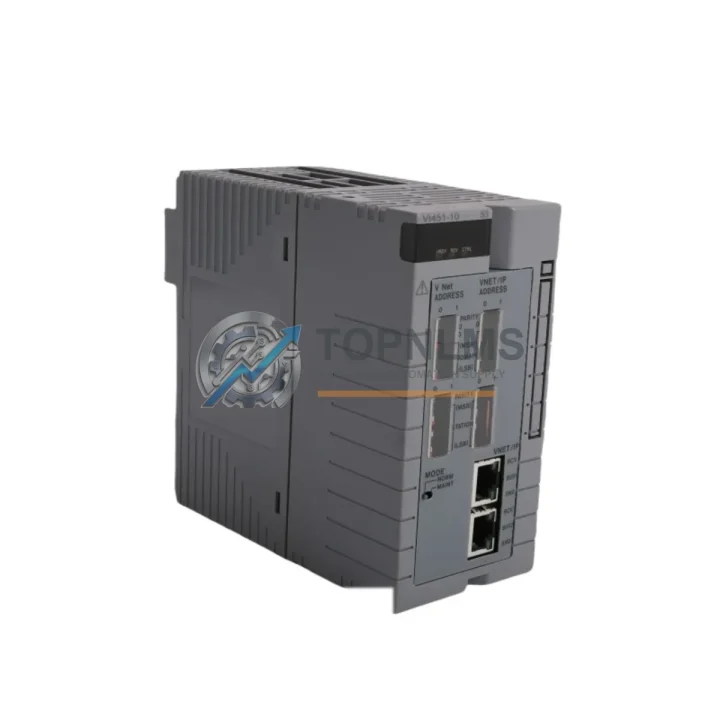
Drop-in ALE111-S51 replacement for Yokogawa CENTUM VP. Compatible upgrade, Ethernet communication, 12-month warranty. Ready to ship from stock.
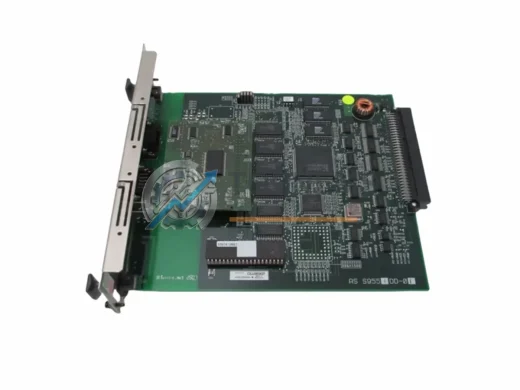
YOKOGAWA ACP71 S1 original DCS communication module for CENTUM VP systems. Industrial replacement spare, 12-month warranty, tested before shipment.
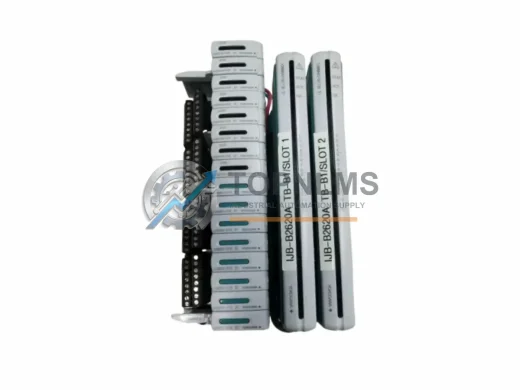
Yokogawa A2MMM843 original CENTUM VP DCS communication module. Industrial spare for I/O & bus systems. 12-month warranty. Fast global shipping.
YOKOGAWA YCB149 ruggedized V-net converter connector for CENTUM DCS. In stock, tested, 12-month warranty. Fast shipping. Contact: [email protected]
Click Quote This Model and the Part Number field will auto-fill with VI451-11 S3.