
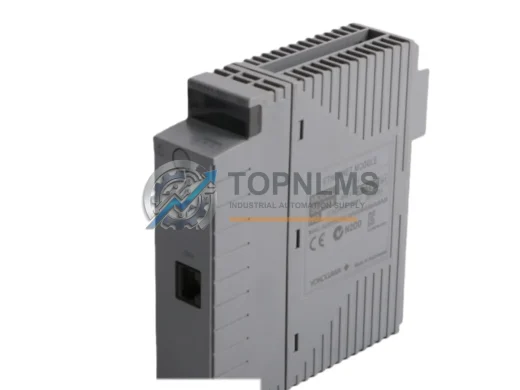
Yokogawa
Yokogawa ALE111-S51 Replacement for CENTUM VP Series
ALE111-S51Drop-in ALE111-S51 replacement for Yokogawa CENTUM VP. Compatible upgrade, Ethernet communication, 12-month warranty. Ready to ship from stock.
Request availability, condition, lead time and export shipping details for SNT501-E3.
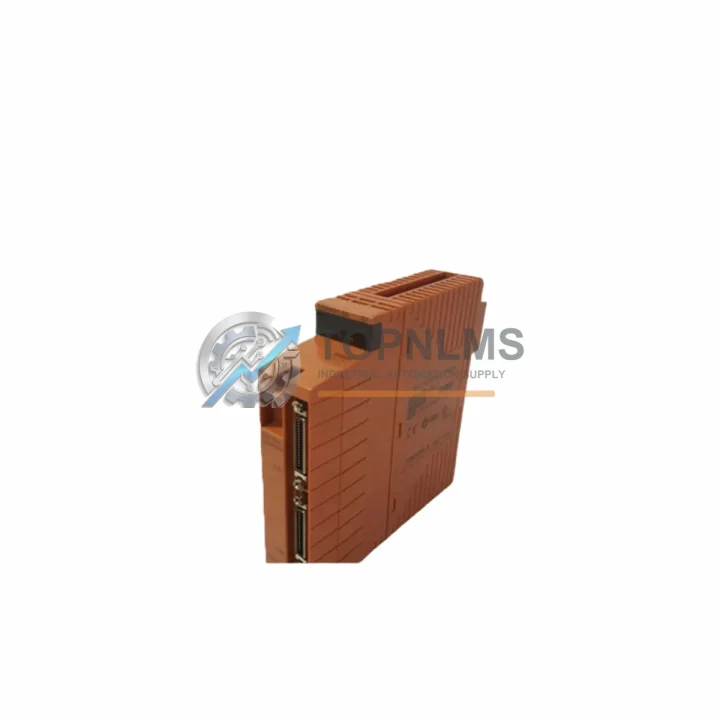
Send this exact part number, quantity and destination country. TOPNLMS will confirm availability, condition and export lead time before quotation.
The YOKOGAWA SNT501-E3 is a Vnet/IP Bus Repeater Slave Module designed for use within the CENTUM VP Distributed Control System (DCS) platform. As industrial facilities worldwide accelerate the retirement of aging CENTUM CS 3000 and CENTUM VP legacy architectures, the SNT501-E3 plays a critical role in extending network reach, bridging Vnet/IP segments, and maintaining real-time communication integrity across large-scale process control environments. Whether you are executing a phased migration from an older CENTUM CS 3000 system or replacing a failed bus repeater in an active CENTUM VP installation, the SNT501-E3 provides the electrical isolation, signal regeneration, and protocol compatibility required for a smooth, low-risk transition.
At TOPNLMS, we stock the SNT501-E3 as a ready-to-ship replacement module, fully tested and verified against YOKOGAWA’s original factory specifications. Our inventory supports urgent breakdown replacements as well as planned retrofit projects, with same-week dispatch from our Xiamen warehouse to destinations across Asia, the Middle East, Europe, and the Americas.
| Parameter | SNT501-E3 (This Module) | Legacy / Predecessor Models |
|---|---|---|
| Communication Protocol | Vnet/IP (Ethernet-based, 100 Mbps) | Vnet (coaxial), ESB Bus (CENTUM CS 3000) |
| Compatible DCS Platform | CENTUM VP (all revisions) | CENTUM CS 3000 (requires protocol bridge) |
| Module Role | Vnet/IP Bus Repeater Slave | SNT501-E1 / SNT501-E2 (earlier revisions) |
| Physical Interface | RJ-45 Ethernet ports (dual) | BNC coaxial / proprietary bus connectors |
| Rack / Chassis Compatibility | CENTUM VP standard I/O nest (ANB10D, ANB11D) | CS 3000 nest — requires nest adapter or replacement |
| Power Supply Requirement | 24 VDC via backplane (nest-supplied) | Same — backplane-powered; no external PSU change needed |
| Installation Space | Single slot, standard CENTUM VP module form factor | Same slot width; direct physical replacement in VP nests |
| Firmware / Configuration | Configured via CENTUM VP Engineering Environment (ENG) | CS 3000 used separate SENG tool — migration requires re-engineering |
| Replacement Recommendation | Direct drop-in for SNT501-E1/E2 in CENTUM VP nests | CS 3000 users: pair with SCP451 or SCU1 controller upgrade |
| Warranty | 12 Months (TOPNLMS) | OEM warranty expired on discontinued models |
A successful migration from a legacy CENTUM CS 3000 or aging CENTUM VP installation to a modernized architecture rarely involves a single module swap. In practice, field engineers encounter a cascade of interdependent components that must be evaluated, tested, and replaced in a coordinated sequence to minimize process downtime and avoid communication faults.
When replacing the SNT501-E3 bus repeater slave, the upstream Vnet/IP Bus Repeater Master — typically an SNT501-E2 or the master-role variant of the SNT501 series — must be verified for firmware compatibility and port configuration. In many aging installations, the Vnet/IP segment also relies on an AFV10D or AFV30D field control station, which houses the SCP451 or SCP461 sequence control processor. If the control processor has reached end-of-life, it is common practice to replace the SCP module simultaneously with the bus repeater to avoid a second planned outage within a short window.
On the I/O side, the migration often surfaces the need to audit AAI141-S00 analog input modules and AAI841-S00 analog output modules installed in the same nest as the SNT501-E3. These modules share the Vnet/IP communication backbone, and any degraded module in the nest can introduce latency or CRC errors that are misdiagnosed as bus repeater faults. Replacing the SNT501-E3 without auditing adjacent I/O modules is a common source of post-maintenance callbacks.
For facilities migrating from CENTUM CS 3000 to CENTUM VP, the transition also requires replacing the engineering workstation connection. The CS 3000 environment used a dedicated SENG (System Engineering) PC connected via a proprietary bus interface card, whereas CENTUM VP uses a standard Ethernet connection to the Vnet/IP domain. This means the engineering cable and interface — often a BCV-type bus converter — must be retired and replaced with a standard CAT6 Ethernet connection to the HIS (Human Interface Station) or ENG server running the CENTUM VP Engineering Environment.
In control cabinet environments where space is constrained, the SNT501-E3’s single-slot form factor is a significant advantage. However, if the cabinet also houses an older ACM12 or ACM22 communication module for Modbus or HART field device integration, these should be evaluated for replacement with current-generation ALR111 or ALE111 modules that support both legacy field protocols and modern FOUNDATION Fieldbus or HART 7 communication — reducing the number of gateway devices and simplifying cabinet wiring.
Finally, for sites that operate YOKOGAWA STARDOM FCN/FCJ remote I/O nodes connected to the CENTUM VP domain via Vnet/IP, the SNT501-E3 bus repeater is often the critical link between the central DCS nest and the remote field cabinet. Ensuring the repeater module is current-revision and properly configured for the Vnet/IP domain address is essential before commissioning any new FCN node or expanding the remote I/O network.
Q: Can the SNT501-E3 be installed in a CENTUM CS 3000 nest without modification?
A: No. The SNT501-E3 is designed for CENTUM VP standard nests (ANB10D, ANB11D series). CS 3000 nests use a different backplane connector and bus architecture. A nest replacement or adapter is required before the SNT501-E3 can be physically installed.
Q: Does replacing the SNT501-E3 require changes to the Vnet/IP domain configuration?
A: In most cases, no. If the replacement module is the same revision (E3), the domain address and port configuration are retained in the CENTUM VP Engineering Environment database. A hot-standby system can perform the swap without a full domain restart, though a controlled restart is recommended for verification.
Q: Is the SNT501-E3 compatible with both 100 Mbps and Gigabit Ethernet switches on the Vnet/IP network?
A: The SNT501-E3 operates at 100 Mbps. It is compatible with Gigabit switches that support auto-negotiation and 100BASE-TX, which is standard on all modern managed switches. No switch replacement is required in most retrofit scenarios.
Q: What programming changes are needed when replacing a failed SNT501-E3?
A: If the replacement is a like-for-like swap (same SKU, same revision), no programming changes are required. The module inherits its configuration from the CENTUM VP Engineering Environment upon restart. If upgrading from an earlier revision (E1 or E2), a minor re-engineering step in the ENG environment is required to update the module definition.
Q: How is physical installation space managed in a densely populated CENTUM VP nest?
A: The SNT501-E3 occupies a single module slot in the CENTUM VP nest. If the nest is fully populated, one adjacent module must be temporarily removed during installation. YOKOGAWA recommends using a module extender tool during commissioning to allow the module to be powered and configured before final seating.
Q: What communication protocols does the SNT501-E3 support beyond Vnet/IP?
A: The SNT501-E3 is a Vnet/IP-specific bus repeater and does not natively support Modbus, PROFIBUS, or FOUNDATION Fieldbus. For multi-protocol field device integration, a separate ALR111 or ALE111 communication module is required in the same or adjacent nest.
Every YOKOGAWA SNT501-E3 module shipped by TOPNLMS is covered by a 12-month warranty from the date of delivery. Prior to dispatch, each unit undergoes a multi-point functional inspection that includes power-on verification, Vnet/IP port continuity testing, backplane connector inspection, and firmware revision confirmation. Modules that do not pass our outgoing quality check are quarantined and not offered for sale.
In the event of a warranty claim, TOPNLMS provides a replacement unit dispatch within 3 business days of fault confirmation, with no requirement to return the defective module before the replacement is shipped — minimizing the impact on your production schedule. Our after-sales team is reachable via email and phone during business hours (UTC+8), and emergency breakdown support is available for customers with active supply agreements.
For procurement teams, we provide a certificate of conformance, packing list, and commercial invoice with each shipment. Export documentation for customs clearance, including HS code 853710 classification, is prepared as standard for all international orders. Lead time for in-stock units is 3–5 business days to most destinations; expedited air freight is available on request.
We maintain a standing inventory of CENTUM VP DCS modules to support both emergency breakdown replacements and planned maintenance shutdowns. Bulk purchase pricing and consignment stocking arrangements are available for EPC contractors and system integrators managing multi-site YOKOGAWA installations.
Drop-in ALE111-S51 replacement for Yokogawa CENTUM VP. Compatible upgrade, Ethernet communication, 12-month warranty. Ready to ship from stock.
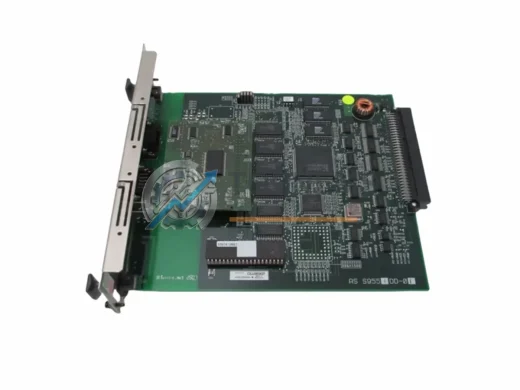
YOKOGAWA ACP71 S1 original DCS communication module for CENTUM VP systems. Industrial replacement spare, 12-month warranty, tested before shipment.
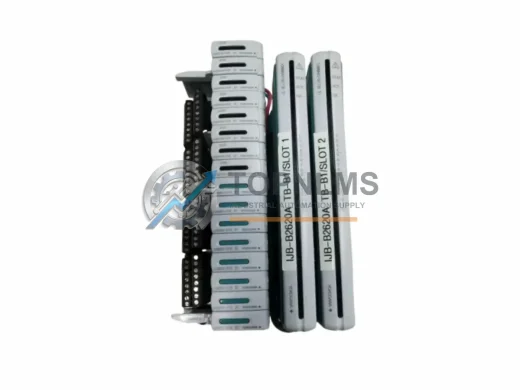
Yokogawa A2MMM843 original CENTUM VP DCS communication module. Industrial spare for I/O & bus systems. 12-month warranty. Fast global shipping.
YOKOGAWA YCB149 ruggedized V-net converter connector for CENTUM DCS. In stock, tested, 12-month warranty. Fast shipping. Contact: [email protected]
Click Quote This Model and the Part Number field will auto-fill with SNT501-E3.