
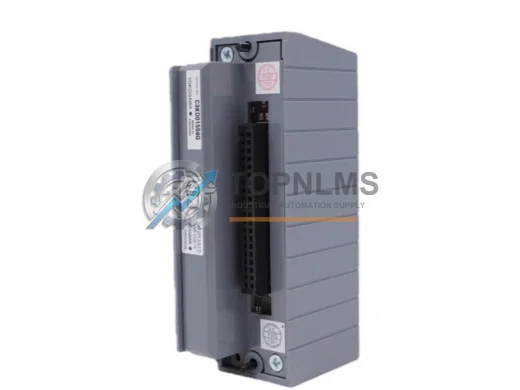
Yokogawa
Yokogawa ATA4S-10S2 Replacement for CENTUM VP DCS
ATA4S-10S2Yokogawa ATA4S-10S2 analog input module replacement for CENTUM VP DCS. Compatible upgrade, 12-month warranty, fast global shipping from stock.
Request availability, condition, lead time and export shipping details for SDV144-S63 S4.
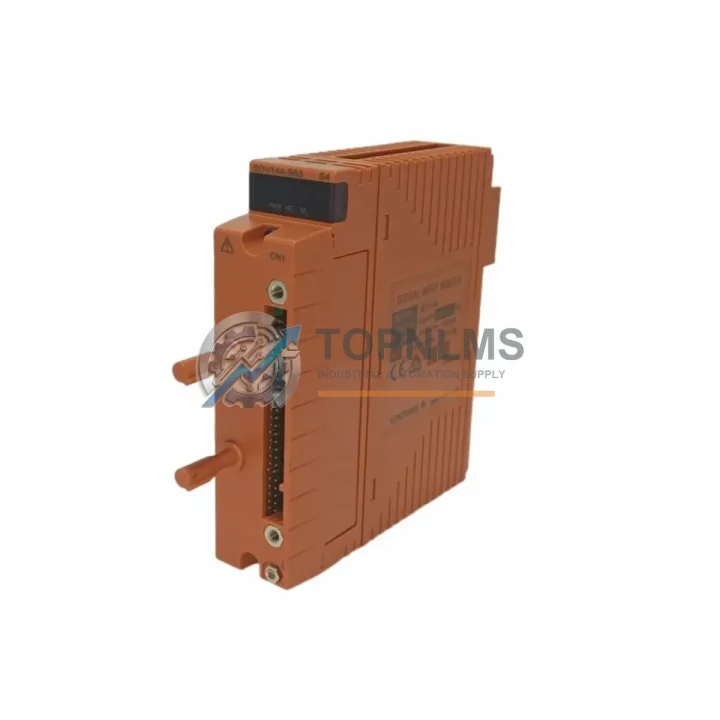
Send this exact part number, quantity and destination country. TOPNLMS will confirm availability, condition and export lead time before quotation.
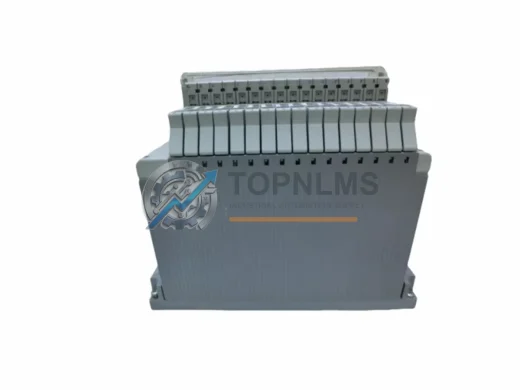
In process-critical industries — petrochemical, power generation, pharmaceutical, and heavy manufacturing — the reliability of every I/O module in a DCS cabinet is non-negotiable. The Yokogawa SDV144-S63 S4 is an original digital input module designed for the CENTUM VP distributed control system, one of the most widely deployed DCS platforms in global industrial automation. Maintaining an available stock of this module is a cornerstone of any serious preventive maintenance and spare parts strategy for facilities running CENTUM VP-based control architectures.
When a digital input module fails in a live process environment, the consequences extend far beyond a single I/O point. Upstream signal loss can cascade into incorrect process readings, safety interlock failures, and unplanned shutdowns. The SDV144-S63 S4 provides 16-channel digital input capability with high noise immunity and direct compatibility with CENTUM VP field control stations, making it a direct, plug-compatible replacement that requires no reconfiguration of the host controller or engineering workstation.
Every unit supplied by TOPNLMS is sourced as an original Yokogawa component, inspected, and function-tested prior to shipment. A 12-month warranty is included with every order, covering manufacturing defects and operational failures under normal industrial use conditions.
| Parameter | Specification |
|---|---|
| Model | SDV144-S63 S4 |
| Manufacturer | YOKOGAWA Electric Corporation |
| Compatible System | CENTUM VP Distributed Control System |
| Module Type | Digital Input (DI) Module |
| Input Channels | 16 channels |
| Input Signal Type | Dry contact / Voltage input (24 VDC nominal) |
| Isolation | Optical isolation per channel group |
| Communication Interface | Internal CENTUM VP I/O bus |
| Mounting | Direct slot insertion into CENTUM VP I/O nest / field control station |
| Operating Temperature | 0°C to 55°C |
| Humidity | 5% to 95% RH (non-condensing) |
| Origin | Japan |
| Weight | Approx. 400 g |
| Condition | Original, tested before shipment |
| Warranty | 12 months from date of shipment |
| Application Environment | Process industries: petrochemical, power, pharmaceutical, pulp & paper |
| Maintenance Recommendation | Inspect every 24–36 months; replace proactively if module age exceeds 10 years |
A structured preventive maintenance program for a CENTUM VP installation goes well beyond replacing a single digital input module. The SDV144-S63 S4 typically resides in a field control station (FCS) alongside a range of interdependent components, and a thorough inspection or planned shutdown should address the entire I/O nest and associated electrical infrastructure.
When replacing or inspecting the SDV144-S63 S4, maintenance engineers should simultaneously verify the condition of the SDV144 series analog input modules installed in adjacent slots — particularly any AAI141 or AAI143 analog input cards that share the same I/O nest and power rail. Degraded analog input modules often exhibit intermittent signal drift before complete failure, and a planned shutdown is the optimal window to address these proactively.
The power supply modules feeding the FCS — commonly the PW481 or PW482 series in CENTUM VP installations — should be load-tested and inspected for capacitor aging. A failing power supply is one of the most common root causes of unexplained I/O module faults and should always be evaluated when a digital input module shows erratic behavior. Keeping a spare power supply module on hand alongside the SDV144-S63 S4 is strongly recommended for facilities with extended maintenance intervals.
Terminal blocks and field wiring termination assemblies connected to the SDV144-S63 S4’s input channels are another critical inspection point. Over time, vibration and thermal cycling loosen terminal connections, increasing contact resistance and introducing false input signals. Inspecting and re-torquing all field terminal connections during a module replacement significantly reduces the risk of nuisance trips after recommissioning.
For facilities managing older CENTUM VP or legacy CENTUM CS 3000 installations, the communication bus modules and ESB bus interface cards that link the FCS to the engineering workstation and operator stations deserve particular attention. These modules carry all I/O data upstream and are often overlooked in routine maintenance cycles. A faulty bus interface card can cause an entire I/O nest to appear offline, mimicking individual module failures.
Relay output modules — such as the SDV541 or equivalent digital output cards — installed in the same control cabinet should be inspected for contact wear, especially in applications with high-frequency switching cycles. Pairing a digital input module replacement with a relay output module inspection ensures the full digital I/O loop is validated before the system is returned to service.
Signal isolators and barriers installed between field instruments and the DCS I/O cards are another component category that benefits from concurrent inspection. Zener barriers and galvanic isolators protecting the SDV144-S63 S4’s input channels from field-side transients should be tested for isolation integrity, particularly in installations located near variable frequency drives or high-current motor starters.
Finally, for facilities planning a broader spare parts inventory review, it is advisable to maintain buffer stock of the SDV144-S63 S4 alongside related modules such as the AAI835 (analog output), SDV541 (digital output), and the relevant FCS processor module for your specific CENTUM VP generation. This multi-module buffer strategy ensures that any single-point failure in the I/O architecture can be resolved within one maintenance shift, without waiting for international procurement lead times.
The SDV144-S63 S4 is a direct replacement for earlier CENTUM VP digital input modules of the same channel count and form factor. Facilities migrating from CENTUM CS 3000 to CENTUM VP will find that the SDV144 series maintains backward-compatible I/O addressing conventions, simplifying the engineering effort required during system upgrades. This compatibility allows maintenance teams to standardize their spare parts inventory across multiple DCS generations, reducing the total number of unique part numbers held in stock.
For aging CENTUM VP installations where original Yokogawa modules are becoming harder to source through standard distribution channels, TOPNLMS provides direct access to original components with verified provenance. Each module is inspected against Yokogawa’s published specifications before shipment, and full documentation is available upon request to support site acceptance testing and maintenance record-keeping.
Replacing a failed digital input module with an original SDV144-S63 S4 — rather than attempting field repair or substituting a non-original component — preserves the system’s functional safety certification status and ensures full compatibility with CENTUM VP’s self-diagnostic routines. This is particularly important for installations operating under IEC 61511 or ISA-84 functional safety requirements, where the use of non-original components may require a formal management of change review.
Typical field replacement time for the SDV144-S63 S4 is under 30 minutes for a trained DCS technician, including module swap, I/O verification, and loop check confirmation on the engineering workstation. Having a pre-tested spare on the shelf eliminates procurement lead time from the critical path of any unplanned shutdown recovery.
Q1: What is the recommended spare parts holding strategy for the SDV144-S63 S4?
For facilities with 10 or more SDV144-series modules installed, a minimum buffer of 2 spare units is recommended. Larger installations or those with extended procurement lead times (remote sites, international shipping) should maintain 3–5 units. The 12-month warranty period begins from the date of shipment, so rotating stock annually ensures warranty coverage is always active on held spares.
Q2: Is the SDV144-S63 S4 compatible with both CENTUM VP and CENTUM CS 3000 systems?
The SDV144-S63 S4 is designed and specified for CENTUM VP. Compatibility with CENTUM CS 3000 depends on the specific FCS generation and I/O nest configuration. We recommend confirming the target system’s I/O nest model and FCS firmware version before ordering. Our technical team can assist with compatibility verification upon request.
Q3: What pre-shipment testing is performed on each unit?
Every SDV144-S63 S4 supplied by TOPNLMS undergoes functional verification prior to shipment, including power-on self-test, channel continuity check, and isolation resistance measurement. Units that do not meet Yokogawa’s published specifications are quarantined and not shipped. A test report is available upon request for quality-critical procurement processes.
Q4: What does the 12-month warranty cover, and how is a warranty claim processed?
The 12-month warranty covers manufacturing defects and operational failures under normal industrial use conditions. It does not cover damage resulting from incorrect installation, overvoltage events, or physical impact. To initiate a warranty claim, contact TOPNLMS with the order reference number and a description of the failure mode. Replacement units are dispatched upon confirmation of the defect, and failed units are returned for analysis at our cost.
© 2026 TOPNLMS. All rights reserved.
Original Source: https://topnlms.com
Contact: [email protected] | +86 18359293191
Yokogawa ATA4S-10S2 analog input module replacement for CENTUM VP DCS. Compatible upgrade, 12-month warranty, fast global shipping from stock.
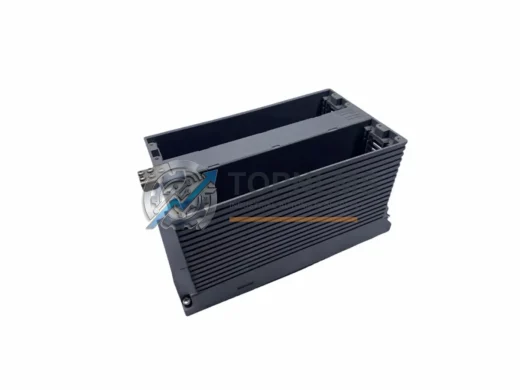
YOKOGAWA AMN32 S1 original DCS I/O module for CENTUM VP systems. Verified spare, 12-month warranty, fast global shipping. Reduce downtime now.
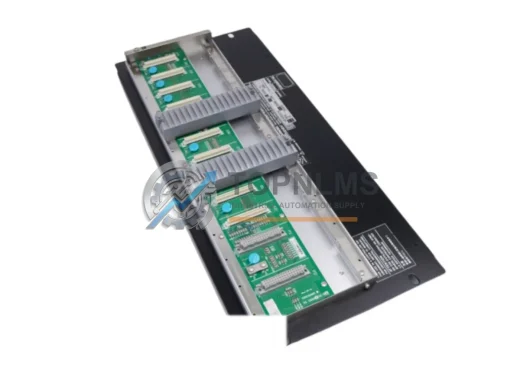
Yokogawa ANB10D-421 original 4-ch 4–20mA analog output module for CENTUM VP & CS 3000. Industrial spare, 12-month warranty, tested before shipment.
YOKOGAWA AMN21 replacement & upgrade solution for CENTUM CS3000/VP DCS. Compatible wiring, 12-month warranty, fast shipping. Contact: [email protected]
Click Quote This Model and the Part Number field will auto-fill with SDV144-S63 S4.