
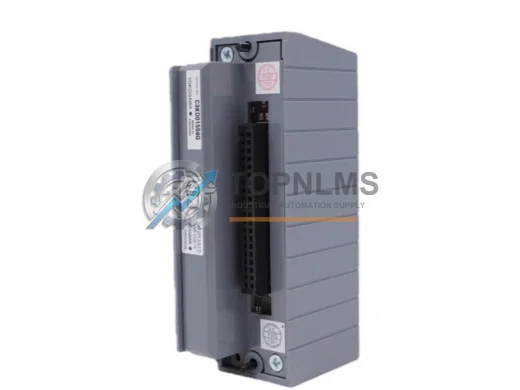
Yokogawa
Yokogawa ATA4S-10S2 Replacement for CENTUM VP DCS
ATA4S-10S2Yokogawa ATA4S-10S2 analog input module replacement for CENTUM VP DCS. Compatible upgrade, 12-month warranty, fast global shipping from stock.
Request availability, condition, lead time and export shipping details for SDV144-S53 S4.
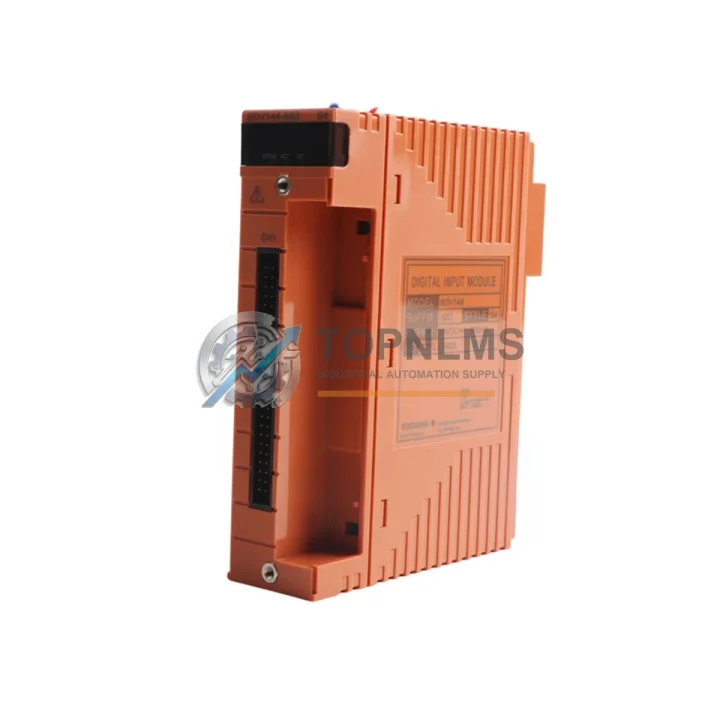
Send this exact part number, quantity and destination country. TOPNLMS will confirm availability, condition and export lead time before quotation.
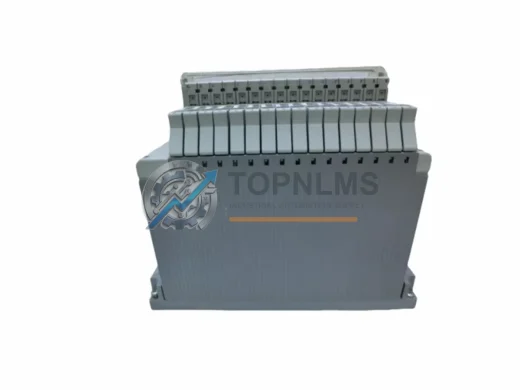
The YOKOGAWA SDV144-S53 S4 is an original digital input module engineered for deployment within YOKOGAWA CENTUM VP and CS 3000 distributed control systems. In process industries where continuous uptime is non-negotiable — petrochemical refining, power generation, pulp and paper, pharmaceutical manufacturing, and water treatment — the integrity of every I/O module in the control cabinet directly determines whether production runs or halts. Sourcing a genuine, tested SDV144-S53 S4 replacement is not merely a procurement decision; it is a risk management strategy that protects both capital assets and operational continuity.
The SDV144-S53 S4 occupies a foundational role in the field signal acquisition layer of the CENTUM VP architecture. It receives discrete on/off signals from field instruments — limit switches, proximity sensors, valve position feedback, motor run status contacts, and emergency shutdown logic inputs — and transmits that data reliably to the controller for real-time process decision-making. When this module degrades or fails, the controller loses visibility into critical field states, triggering alarms, forcing manual overrides, or in worst-case scenarios, initiating unplanned shutdowns. Maintaining a verified spare on the shelf is the single most effective measure a maintenance team can take to compress mean time to repair (MTTR) for this failure mode.
| Parameter | Specification |
|---|---|
| Part Number | SDV144-S53 S4 |
| Manufacturer | YOKOGAWA Electric Corporation |
| Module Type | DCS Digital Input (DI) Module |
| Compatible Systems | CENTUM VP, CENTUM CS 3000 |
| Signal Type | Discrete / Digital Input (dry contact / wet contact) |
| Input Channels | 16 channels (typical for SDV144 series) |
| Input Voltage Range | 24 VDC nominal (field-side) |
| Isolation | Optical isolation between field and system bus |
| Communication Bus | CENTUM VP internal V-net / ESB bus |
| Mounting | Nest-mount on CENTUM VP I/O unit (ANB10D / ANB11D compatible) |
| Operating Temperature | 0°C to 55°C |
| Humidity | 10% to 90% RH (non-condensing) |
| Country of Origin | Japan |
| Product Weight | 340 g |
| Condition | Original / Genuine — not refurbished |
| Pre-shipment Testing | Function-verified before dispatch |
| Warranty | 12 Months from date of shipment |
A scheduled DCS cabinet inspection that surfaces the need to replace an SDV144-S53 S4 digital input module rarely occurs in isolation. Experienced maintenance engineers understand that by the time one I/O module shows signs of degradation — intermittent channel faults, diagnostic LED anomalies, or communication timeouts reported in the CENTUM VP HIS (Human Interface Station) — adjacent modules and supporting infrastructure in the same nest or cabinet section deserve equal scrutiny.
During the same maintenance window, it is prudent to inspect the SDV144-S03 and SDV144-S13 variants installed in neighboring slots, as they share the same nest backplane and power distribution rail. A failing backplane connector or corroded terminal block can cause cascading faults across multiple DI modules simultaneously. Replacing the SDV144-S53 S4 while leaving a marginal SDV144-S03 in place risks a repeat callout within weeks.
The PW481 or PW482 power supply modules feeding the I/O nest should be load-tested during the same outage. Digital input modules are sensitive to supply voltage ripple; a degraded power supply that still passes basic voltage checks may introduce noise that manifests as spurious input transitions. Pairing a new SDV144-S53 S4 with a verified or freshly replaced power supply eliminates this variable from future fault investigations.
The ANB10D or ANB11D I/O unit nest itself warrants visual inspection for oxidation on the module guide rails and backplane connector pins. Compressed air cleaning and contact treatment at this stage prevents the new module from inheriting the same contact resistance issues that may have contributed to the original failure. If the nest shows physical damage or pin deformation, replacing the nest assembly alongside the module is the correct call.
Field wiring terminating at the terminal block assemblies (TB series) connected to the SDV144-S53 S4 should be torque-checked and inspected for insulation breakdown, particularly in high-vibration or high-humidity environments. Loose terminations are a leading cause of intermittent DI faults that are misdiagnosed as module failures. While the cabinet is open, inspect the signal cable harnesses routing field instrument signals to the marshalling panel — chafed insulation or corroded connectors here will defeat even a brand-new input module.
For plants running CENTUM VP with FCS (Field Control Station) controllers such as the AFV10D or AFV30D, verifying controller firmware revision compatibility with the S4 suffix variant of the SDV144 is a mandatory pre-installation step. Mismatched firmware can prevent the module from being recognized on the ESB bus. Keeping a record of the FCS firmware version in the maintenance log simplifies this check for future replacements.
Finally, if the plant’s safety instrumented system (SIS) interfaces with the CENTUM VP DCS via ProSafe-RS safety I/O modules, the maintenance window is an appropriate time to verify that the SIS-DCS data highway communication links are healthy and that no latent faults exist in the safety I/O layer that could be masked by the DCS-side alarm suppression active during the maintenance period.
The SDV144-S53 S4 is a mature module within the CENTUM VP product lifecycle. YOKOGAWA’s long-term parts support policy means that genuine modules remain available, but lead times from the OEM channel can extend to 8–16 weeks for certain suffix variants, particularly during periods of global component scarcity. Facilities that operate on just-in-time spare parts strategies are disproportionately exposed to extended downtime when a critical DI module fails without a shelf spare available.
Procuring the SDV144-S53 S4 through TOPNLMS provides an alternative supply path with significantly compressed lead times. Each unit is sourced as original YOKOGAWA hardware — not cloned, not refurbished without disclosure — and undergoes functional verification prior to shipment. The 12-month warranty covers manufacturing defects and provides a documented quality assurance baseline that satisfies most plant maintenance audit requirements.
For facilities managing the transition from CENTUM CS 3000 to CENTUM VP, the SDV144-S53 S4 offers backward-compatible operation in CS 3000 nests, making it a dual-purpose spare that reduces the total number of unique part numbers a maintenance team must stock. This cross-generation compatibility is a meaningful inventory consolidation opportunity for plants running mixed-generation DCS hardware during phased migration projects.
Plants operating legacy CENTUM XL or μXL systems that have not yet migrated to CENTUM VP should note that the SDV144 series is not directly compatible with those older architectures. However, the migration path to CENTUM VP — which does support the SDV144-S53 S4 — is well-documented by YOKOGAWA and represents a proven route to extending control system life by 15–20 years while preserving existing field wiring infrastructure.
Q1: Is the SDV144-S53 S4 compatible with both CENTUM VP and CENTUM CS 3000 systems?
Yes. The SDV144-S53 S4 is designed for CENTUM VP and is also compatible with CENTUM CS 3000 I/O nests. Always verify the nest type (ANB10D / ANB11D) and FCS firmware revision before installation to confirm full compatibility with your specific system configuration.
Q2: What pre-shipment testing is performed on each unit?
Every SDV144-S53 S4 dispatched from TOPNLMS undergoes functional verification to confirm channel integrity, bus communication, and LED diagnostic behavior prior to packaging. A test record is available upon request. The unit ships with a 12-month warranty covering manufacturing defects from the date of shipment.
Q3: How should I manage spare parts inventory for DCS digital input modules?
Industry best practice for critical DCS I/O modules is to maintain a minimum of one-for-one hot spares for modules installed in single-redundant configurations, and at least one spare per module type for redundant configurations. Given the SDV144-S53 S4’s role in field signal acquisition, a shelf spare eliminates the primary risk factor in MTTR for this failure mode. Annual inventory audits should verify that shelf spares have not exceeded their recommended storage life (typically 5–7 years in climate-controlled conditions).
Q4: What information should I have ready when placing an order?
Please have the full part number (SDV144-S53 S4), your DCS system type (CENTUM VP or CS 3000), FCS model, and nest type available. For urgent requirements, contact us directly to confirm stock availability and expedited shipping options. Our team can also assist with compatibility verification if you are unsure whether the S4 suffix variant is the correct replacement for your installed module.
Yokogawa ATA4S-10S2 analog input module replacement for CENTUM VP DCS. Compatible upgrade, 12-month warranty, fast global shipping from stock.
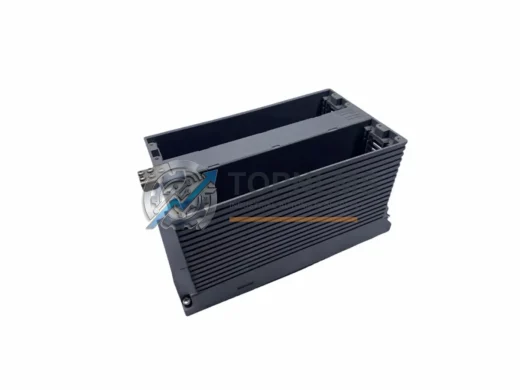
YOKOGAWA AMN32 S1 original DCS I/O module for CENTUM VP systems. Verified spare, 12-month warranty, fast global shipping. Reduce downtime now.
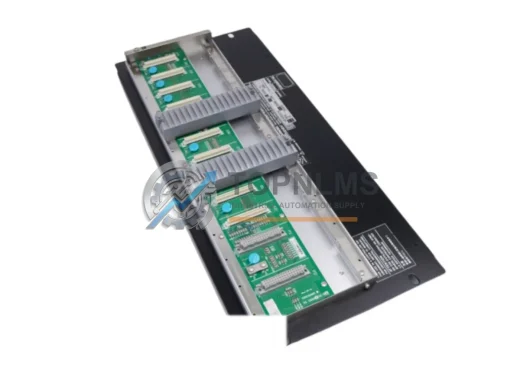
Yokogawa ANB10D-421 original 4-ch 4–20mA analog output module for CENTUM VP & CS 3000. Industrial spare, 12-month warranty, tested before shipment.
YOKOGAWA AMN21 replacement & upgrade solution for CENTUM CS3000/VP DCS. Compatible wiring, 12-month warranty, fast shipping. Contact: [email protected]
Click Quote This Model and the Part Number field will auto-fill with SDV144-S53 S4.