
Yokogawa
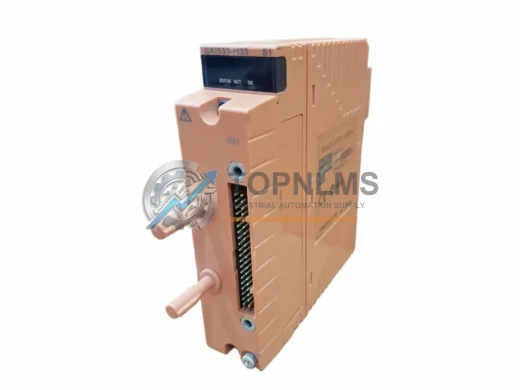
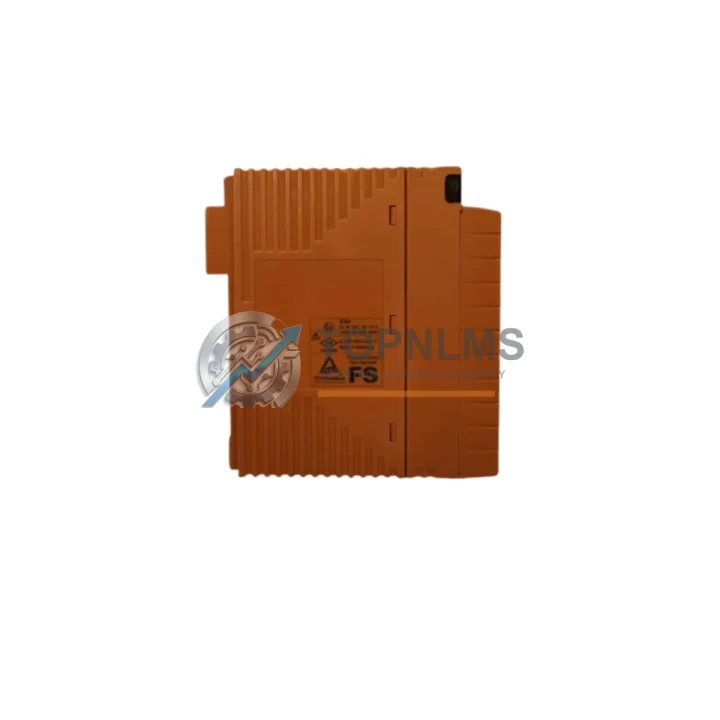
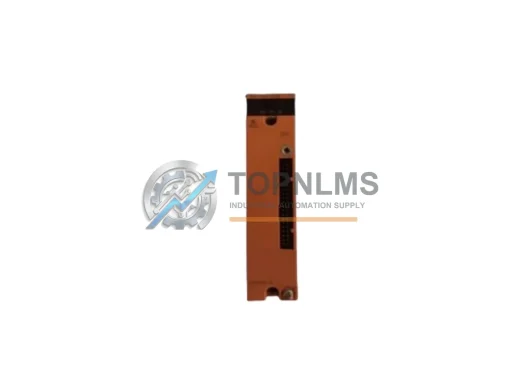
YOKOGAWA SAI533-H33/PRP S1 Ruggedized Analog Output Module
SAI533-H33/PRP S1YOKOGAWA SAI533-H33/PRP S1 ruggedized analog output module for CENTUM VP DCS. Harsh-environment rated, 12-month warranty, tested & fast-shipped from stock.
Request availability, condition, lead time and export shipping details for SAI533-H33.
Send this exact part number, quantity and destination country. TOPNLMS will confirm availability, condition and export lead time before quotation.
The Yokogawa SAI533-H33 is a 16-channel analog output I/O module engineered for the CENTUM CS3000 Distributed Control System (DCS). In process industries — refining, petrochemical, power generation, pulp and paper, and pharmaceutical manufacturing — the analog output layer is the final command interface between the control system and field actuators such as control valves, variable-speed drives, and positioners. A failed or degraded SAI533-H33 module directly translates to loss of loop control, unplanned process deviation, and costly production downtime. Maintaining a verified spare of this module is not optional for any facility running CENTUM CS3000 as its primary control backbone.
The SAI533-H33 outputs 4–20 mA signals across 16 independent channels, each individually configurable and isolated to prevent ground-loop interference across the field wiring network. Its plug-and-play compatibility with the CENTUM CS3000 field control station (FCS) cabinet means replacement can be completed during a scheduled maintenance window without requiring software reconfiguration, provided the replacement module carries the same hardware revision suffix (-H33). This hardware-level interchangeability is a critical advantage when managing aging DCS infrastructure where minimizing intervention time is paramount.
| Parameter | Specification |
|---|---|
| Model | SAI533-H33 |
| Brand | Yokogawa Electric Corporation |
| Series / Platform | CENTUM CS3000 / CENTUM VP (compatible) |
| Module Type | 16-Channel Analog Output I/O Module |
| Output Signal | 4–20 mA DC (current output) |
| Channel Count | 16 channels, individually isolated |
| Resolution | 13-bit (1 in 8000) |
| Load Resistance | Max 750 Ω per channel |
| Power Supply | Supplied via FCS backplane (24 VDC bus) |
| Communication | Internal V-net / ESB bus (CENTUM native) |
| Mounting | Slide-in module, CENTUM CS3000 FCS nest |
| Operating Temperature | 0°C to 55°C |
| Humidity | 10% to 90% RH (non-condensing) |
| Country of Origin | Japan |
| Compatibility | CENTUM CS3000 R3.x, CENTUM VP R4.x–R6.x (verify FCS firmware) |
| Warranty | 12 Months from date of shipment |
| Pre-shipment Testing | Functional power-on test performed on every unit |
Experienced DCS maintenance engineers know that analog output module failures rarely occur in isolation. The SAI533-H33 operates within a tightly coupled field control station where adjacent modules share the same backplane power bus, ESB communication ring, and cabinet thermal environment. When scheduling a replacement or inspection of the SAI533-H33, a disciplined maintenance team will simultaneously audit the surrounding infrastructure to prevent repeat call-outs.
Begin with the SAI143-H or SAI533-series analog input modules installed in the same FCS nest — input and output modules in the same control loop are subject to identical environmental stressors and often degrade in parallel. If the SAI533-H33 shows drift or channel failure, the corresponding analog input module feeding the PID controller should be recalibrated or replaced proactively. Similarly, inspect the SDV144 or SDV541 digital output modules in the same cabinet; digital output channels driving solenoid valves and motor starters share the same 24 VDC distribution rail as the analog output modules, and a failing power distribution fuse module can cause intermittent faults across both module types.
The FCS power supply unit (typically the PW481 or PW482 redundant power module) should be load-tested during any SAI533-H33 replacement. A degraded power supply operating near its rated capacity will cause subtle output accuracy errors on 4–20 mA channels long before triggering a hard fault alarm. Replacing the analog output module without verifying power supply health is a common source of repeat failures within 6–12 months.
The ESB bus coupler module and V-net interface card within the FCS should also be inspected for connector oxidation and firmware currency. Communication errors on the internal bus manifest as sporadic channel write failures that are frequently misdiagnosed as analog output module faults. Cleaning the backplane connector contacts and verifying bus termination resistance takes less than 30 minutes and can eliminate a significant proportion of apparent SAI533-H33 failures without any module replacement at all.
For facilities running CENTUM CS3000 in a redundant FCS configuration, the CP345 or CP451 field control unit processor module should be included in the annual spare parts audit. The processor module governs the scan cycle and output refresh rate for all I/O modules in the nest; a processor nearing end-of-life will introduce latency in analog output updates that is difficult to distinguish from module-level degradation. Stocking a verified spare processor alongside the SAI533-H33 ensures that any FCS-level fault can be resolved within a single maintenance window.
Finally, review the terminal unit (TU) and field wiring termination assemblies connected to the SAI533-H33 output channels. Corroded terminal blocks, loose field wiring, and degraded cable shielding are the most common root causes of 4–20 mA signal errors attributed to the module itself. A complete loop check — from the module output terminal through the marshalling cabinet, cable tray, and field junction box to the actuator — should accompany every analog output module replacement to confirm the fault is resolved and the loop is performing within specification.
The SAI533-H33 has been in service across CENTUM CS3000 installations worldwide since the early 2000s. Many of these systems are now operating beyond their original design life, and Yokogawa’s official support for CS3000 hardware has transitioned to a limited-availability basis. This creates a procurement challenge: the module is no longer manufactured in volume, yet the installed base remains large and the cost of migrating to CENTUM VP or a third-party DCS is prohibitive for most facilities on a 5–10 year capital planning horizon.
The strategic answer is verified original spare inventory. An original SAI533-H33 sourced from a reputable industrial spare parts supplier — tested, serialized, and shipped with documentation — eliminates the compatibility risk associated with counterfeit or refurbished modules. Unlike third-party analog output cards marketed as compatible replacements, the original Yokogawa module requires no firmware patch, no I/O builder reconfiguration, and no FCS restart beyond the standard hot-swap procedure supported by the CENTUM CS3000 architecture. This means replacement can be completed during a brief process hold rather than a full plant shutdown, directly reducing the financial impact of the maintenance event.
For facilities managing multiple FCS cabinets, a tiered spare parts strategy is recommended: one SAI533-H33 per FCS as a critical-path spare, with a shared pool of two to three additional modules at the site level for multi-unit plants. This inventory posture, combined with a documented replacement procedure and trained maintenance personnel, reduces mean time to repair (MTTR) for analog output faults from hours to under 30 minutes — a measurable contribution to overall equipment effectiveness (OEE).
Q1: Is the SAI533-H33 compatible with CENTUM VP as well as CS3000?
The SAI533-H33 is natively designed for CENTUM CS3000 FCS hardware. Compatibility with CENTUM VP depends on the specific VP release and FCS hardware generation. In many VP installations that use CS3000-generation FCS hardware (AFV10, AFV30), the SAI533-H33 is physically and electrically compatible. We recommend verifying the FCS model and firmware revision against Yokogawa’s hardware compatibility matrix before ordering for a VP system.
Q2: What pre-shipment testing is performed on each unit?
Every SAI533-H33 unit undergoes a functional power-on test prior to dispatch. This includes verification of module initialization, channel output continuity, and communication handshake with a CENTUM-compatible test fixture. Units that fail any test parameter are quarantined and not shipped. A test record is available upon request for quality-assurance documentation purposes.
Q3: What does the 12-month warranty cover?
The 12-month warranty covers manufacturing defects and functional failures under normal operating conditions from the date of shipment. It does not cover damage resulting from incorrect installation, overvoltage events, physical impact, or operation outside the specified environmental range. Warranty claims are processed by contacting our support team with the order reference and a description of the fault; we will arrange return, inspection, and replacement or refund as appropriate.
Q4: Can I install the SAI533-H33 as a hot-swap replacement without shutting down the FCS?
Yes, the CENTUM CS3000 architecture supports hot-swap replacement of I/O modules in non-redundant FCS configurations with the affected channels placed in manual mode prior to removal. In redundant FCS configurations, the standby FCS maintains loop control during the swap. Always follow Yokogawa’s documented hot-swap procedure and confirm that the replacement module’s hardware revision matches the installed revision to avoid initialization errors. If in doubt, consult the FCS engineering documentation or contact our technical support team before proceeding.
YOKOGAWA SAI533-H33/PRP S1 ruggedized analog output module for CENTUM VP DCS. Harsh-environment rated, 12-month warranty, tested & fast-shipped from stock.
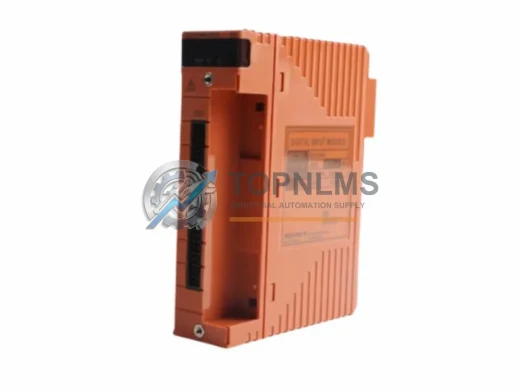
Buy YOKOGAWA SAI143-S63 original analog current input module for CENTUM VP & CS 3000 DCS. Tested, 12-month warranty, fast global shipping. Industrial spare.
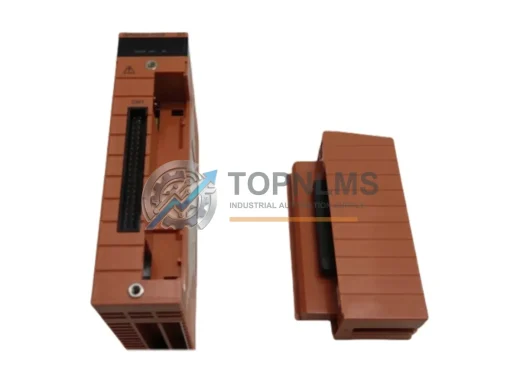
YOKOGAWA SAI533-H03 analog input module — direct CENTUM VP DCS replacement. Wiring-compatible, 12-month warranty. Fast global shipping from stock.
YOKOGAWA SAI143-S03 original analog input module for CENTUM VP DCS. Verified spare, 12-month warranty, fast worldwide shipping. Reduce downtime now.
Click Quote This Model and the Part Number field will auto-fill with SAI533-H33.