
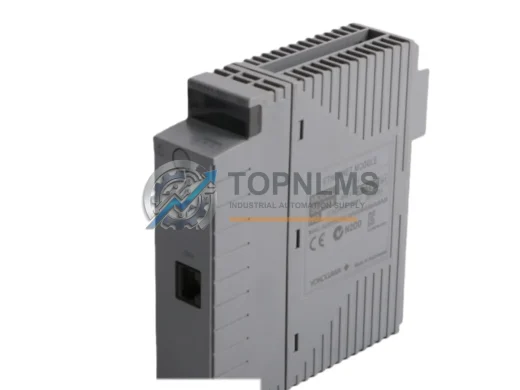
Yokogawa
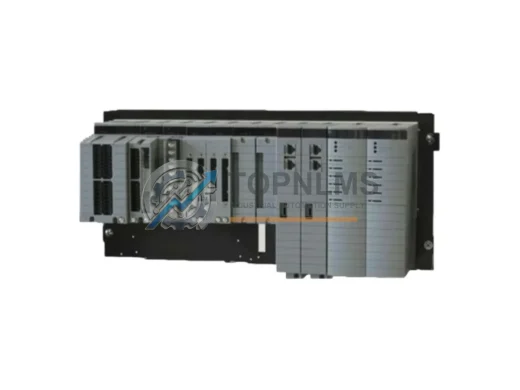
Yokogawa ALE111-S51 Replacement for CENTUM VP Series
ALE111-S51Drop-in ALE111-S51 replacement for Yokogawa CENTUM VP. Compatible upgrade, Ethernet communication, 12-month warranty. Ready to ship from stock.
Request availability, condition, lead time and export shipping details for NFLR121-S00 S1.
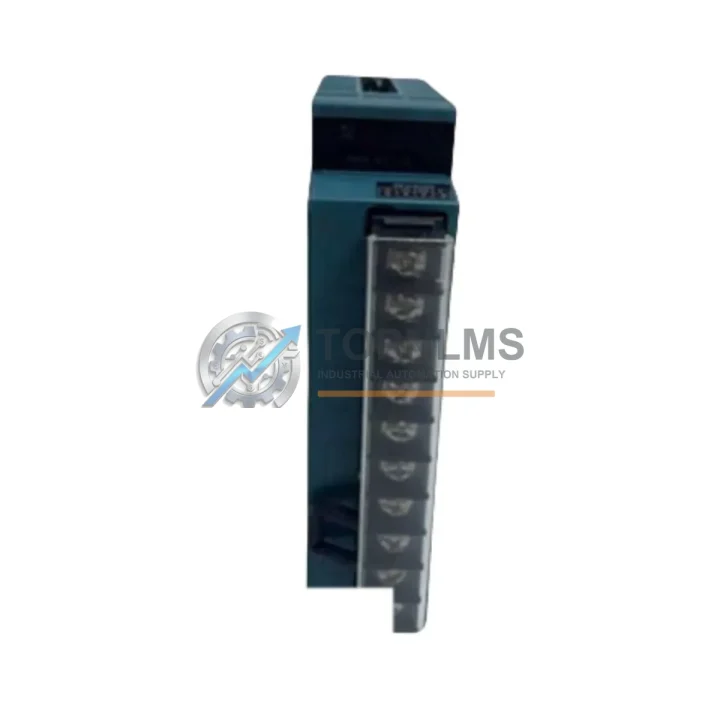
Send this exact part number, quantity and destination country. TOPNLMS will confirm availability, condition and export lead time before quotation.
The YOKOGAWA NFLR121-S00 S1 is an original serial communication interface module designed for the CENTUM VP Field Control Station (FCS) platform — one of the most widely deployed distributed control systems in petrochemical, power generation, pharmaceutical, and heavy manufacturing environments. When a serial communication link fails in a CENTUM VP cabinet, the consequences extend far beyond a single I/O point: entire process loops can go blind, operator visibility is lost, and unplanned shutdowns become unavoidable. Stocking a verified original NFLR121-S00 S1 is not a luxury — it is a fundamental element of any responsible maintenance strategy for facilities running YOKOGAWA CENTUM VP.
This module handles serial data exchange between the FCS and field devices or subsystems, supporting RS-232C and RS-422/485 communication protocols. It is engineered to YOKOGAWA’s exacting tolerances for noise immunity, signal integrity, and thermal stability — qualities that generic or counterfeit alternatives cannot reliably replicate. For maintenance engineers managing aging CENTUM VP systems, sourcing an original NFLR121-S00 S1 ensures that the replacement module integrates without reconfiguration, firmware conflicts, or diagnostic alarms.
| Parameter | Specification |
|---|---|
| Part Number | NFLR121-S00 S1 |
| Manufacturer | YOKOGAWA Electric Corporation |
| Compatible Platform | CENTUM VP Field Control Station (FCS) |
| Module Type | Serial Communication Interface Module |
| Communication Protocols | RS-232C, RS-422, RS-485 |
| Series | CENTUM VP / NFLR Series |
| Installation | Hot-swap capable in FCS node unit; DIN-rail compatible chassis |
| Operating Temperature | 0°C to 55°C (32°F to 131°F) |
| Storage Temperature | -25°C to 70°C |
| Humidity | 5% to 95% RH (non-condensing) |
| Power Supply | Supplied via FCS backplane bus |
| Country of Origin | Japan |
| Condition | Original, New / Refurbished-Tested |
| Pre-shipment Testing | Full functional and communication verification |
| Warranty | 12 Months |
Serial communication failures in CENTUM VP systems rarely occur in isolation. When the NFLR121-S00 S1 is flagged during a routine inspection or after an unplanned trip, experienced maintenance teams know to treat it as a signal to audit the broader communication architecture of the FCS node. A comprehensive inspection should begin at the power supply level: the YOKOGAWA NFCP100 or NFCP101 power supply modules that feed the FCS node should be checked for output voltage stability and capacitor aging, as degraded power rails are a leading cause of intermittent serial communication errors that are often misattributed to the interface module itself.
Moving along the signal path, the communication cables connecting the NFLR121-S00 S1 to field devices — typically shielded twisted-pair RS-485 cables — should be inspected for insulation damage, connector corrosion, and improper termination resistors. Faulty cable shielding in high-EMI environments such as motor control centers or variable frequency drive (VFD) panels is a frequent source of serial data corruption. At the same time, the NFAI141 or NFAI135 analog input modules sharing the same FCS node should be verified for correct operation, since a failing serial module can sometimes generate backplane noise that affects adjacent I/O cards.
For facilities running YOKOGAWA CENTUM VP with Fieldbus or HART integration, the NFCP701 communication module and associated HART multiplexers should be included in the inspection cycle whenever serial interface maintenance is performed. These components share the same maintenance window and their failure modes often overlap. Similarly, the NFSV111 or NFSV121 sequence of events modules installed in the same cabinet should be tested for timestamp accuracy and event logging integrity, as serial communication degradation can corrupt SOE records.
Relay output modules such as the NFDV141 and terminal blocks or marshalling panels connected to the FCS node should also be physically inspected during any serial module replacement. Loose terminal connections and oxidized relay contacts are common in facilities with high ambient humidity or temperature cycling. Proactive replacement of aging relay modules during a planned maintenance window — rather than waiting for a field failure — significantly reduces the risk of cascading faults.
Finally, the FCS node backplane itself should be visually inspected for dust accumulation, connector pin damage, and signs of thermal stress. In facilities where the CENTUM VP system has been in service for more than ten years, maintaining a small buffer stock of critical modules — including the NFLR121-S00 S1, a spare power supply module, and at least one analog I/O module — is the single most effective measure for reducing mean time to repair (MTTR) and protecting production continuity.
The NFLR121-S00 S1 is a direct original replacement for aging or failed serial interface modules within the CENTUM VP FCS platform. Unlike third-party alternatives that may require firmware patching, custom configuration files, or hardware jumper changes, the original YOKOGAWA module installs into the existing slot and is recognized immediately by the CENTUM VP engineering station without additional commissioning steps. This plug-and-restore capability is critical in emergency maintenance scenarios where minimizing downtime is the primary objective.
For facilities managing the transition from older CENTUM CS 3000 systems to CENTUM VP, the NFLR121-S00 S1 supports migration strategies that preserve existing serial device networks — including legacy analyzers, flow computers, and third-party PLCs connected via Modbus RTU — without requiring rewiring or protocol conversion hardware. This extends the operational life of the broader control system and defers capital expenditure on full system upgrades.
Procurement teams should note that YOKOGAWA’s CENTUM VP platform has a published long-term support roadmap, but individual module availability from the OEM can become constrained as production shifts to newer hardware generations. Securing original NFLR121-S00 S1 units through verified industrial spare parts channels ensures supply continuity for facilities committed to maintaining CENTUM VP systems through their full operational lifecycle.
Q1: Is the NFLR121-S00 S1 compatible with both CENTUM VP R5 and R6 software versions?
A: Yes. The NFLR121-S00 S1 is compatible across CENTUM VP R5.xx and R6.xx engineering environments. No firmware modification is required for standard serial communication configurations. Always verify the FCS node hardware revision against YOKOGAWA’s compatibility matrix for your specific software release.
Q2: What pre-shipment testing is performed on each unit?
A: Every NFLR121-S00 S1 unit undergoes full functional verification prior to shipment, including communication protocol testing on RS-232C and RS-485 interfaces, backplane connector inspection, and visual quality control. A test report is available upon request. All units are shipped with a 12-month warranty covering manufacturing defects and functional failures under normal operating conditions.
Q3: How should I verify compatibility before installing a replacement module on-site?
A: Confirm the FCS node model, slot assignment, and existing module suffix (S1) against your CENTUM VP hardware configuration documentation. The S1 suffix denotes the hardware revision; installing a mismatched revision may generate a hardware mismatch alarm in the engineering station. Contact our technical team with your FCS node model number for pre-installation compatibility confirmation.
Q4: What is the recommended inventory strategy for NFLR121-S00 S1 in a multi-FCS facility?
A: For facilities operating three or more CENTUM VP FCS nodes with serial communication requirements, maintaining a minimum of two NFLR121-S00 S1 units in local spare stock is recommended. This buffer supports immediate replacement during unplanned outages while a replenishment order is processed. For facilities in remote locations or with extended lead-time constraints, a stock of three to five units is advisable to cover concurrent failure scenarios during peak production periods.
Drop-in ALE111-S51 replacement for Yokogawa CENTUM VP. Compatible upgrade, Ethernet communication, 12-month warranty. Ready to ship from stock.
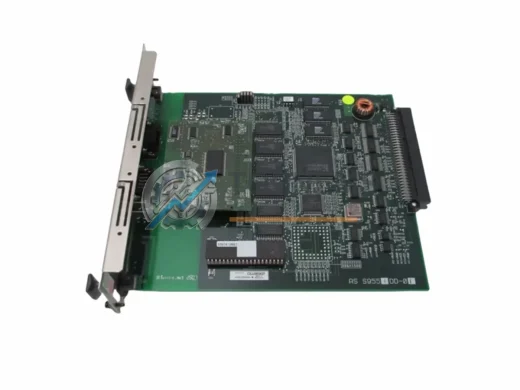
YOKOGAWA ACP71 S1 original DCS communication module for CENTUM VP systems. Industrial replacement spare, 12-month warranty, tested before shipment.
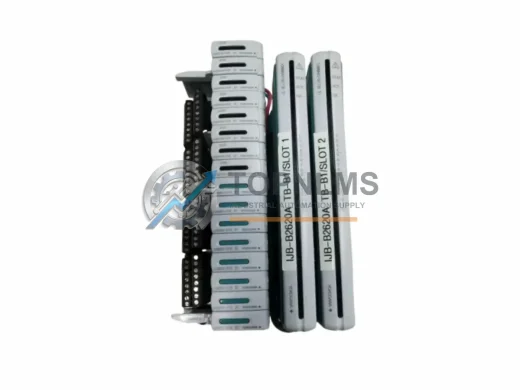
Yokogawa A2MMM843 original CENTUM VP DCS communication module. Industrial spare for I/O & bus systems. 12-month warranty. Fast global shipping.
YOKOGAWA YCB149 ruggedized V-net converter connector for CENTUM DCS. In stock, tested, 12-month warranty. Fast shipping. Contact: [email protected]
Click Quote This Model and the Part Number field will auto-fill with NFLR121-S00 S1.