
Yokogawa
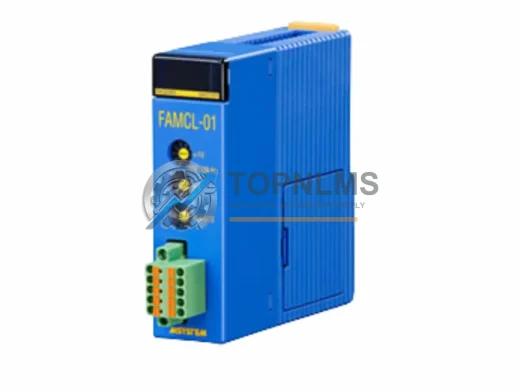
YOKOGAWA S9610AT-01 Replacement for STARDOM FCN/FCJ
S9610AT-01YOKOGAWA S9610AT-01 CC-Link Master Module replacement for STARDOM FCN/FCJ. Compatible upgrade, 12-month warranty, fast global shipping from stock.
Request availability, condition, lead time and export shipping details for EC402-50.
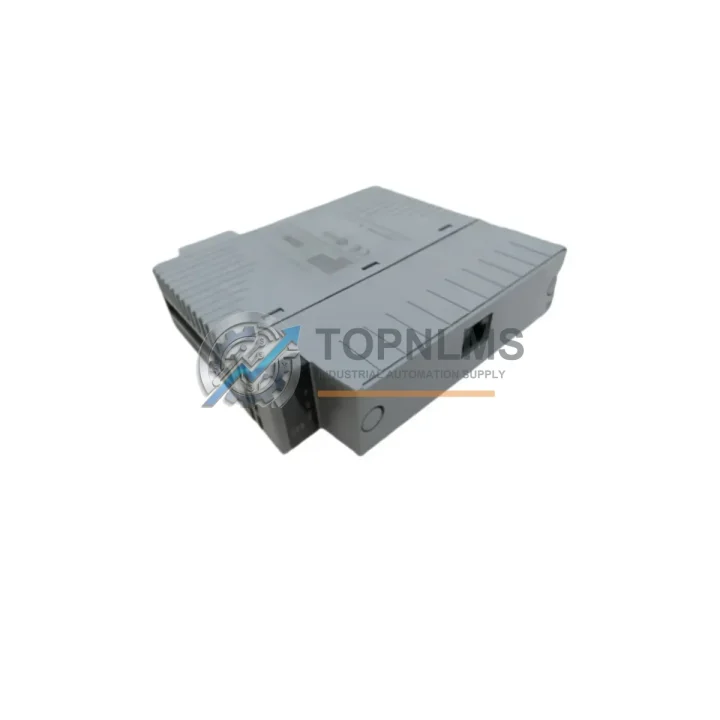
Send this exact part number, quantity and destination country. TOPNLMS will confirm availability, condition and export lead time before quotation.
The YOKOGAWA EC402-50 ESB Bus Coupler is a critical communication backbone component within the CENTUM VP and CS3000 Distributed Control System (DCS) architecture. Designed for high-reliability industrial environments — including petrochemical plants, power generation facilities, pulp and paper mills, and large-scale process manufacturing — this module ensures seamless data exchange between field I/O stations and the engineering/operator stations via the ESB (Enhanced Signal Bus) highway. Sourcing a verified original EC402-50 is not merely a procurement decision; it is a system integrity decision that directly impacts uptime, safety, and long-term operational continuity.
Every EC402-50 unit supplied by TOPNLMS undergoes pre-shipment functional verification, including bus communication handshake testing, power rail integrity checks, and visual inspection for connector wear or board-level damage. Units are shipped in anti-static packaging with full documentation. A 12-month warranty is included as standard, covering manufacturing defects and functional failures under normal operating conditions.
| Part Number | EC402-50 |
| Manufacturer | YOKOGAWA Electric Corporation |
| Module Type | ESB Bus Coupler |
| Compatible Systems | CENTUM VP, CENTUM CS3000, CENTUM CS 3000 R3 |
| Bus Interface | ESB (Enhanced Signal Bus) Highway |
| Communication Protocol | YOKOGAWA Proprietary ESB Protocol |
| Power Supply | 24 VDC (supplied via field control station backplane) |
| Operating Temperature | 0°C to 60°C |
| Humidity | 10% to 90% RH (non-condensing) |
| Mounting | DIN rail / Field Control Station (FCS) nest |
| Weight | Approx. 240 g |
| Country of Origin | Japan |
| Condition | Original, New or Tested Surplus |
| Warranty | 12 Months |
| Shipping | Worldwide — DHL / FedEx / EMS with tracking |
In a CENTUM VP or CS3000 installation, the EC402-50 ESB Bus Coupler does not operate in isolation. It is the communication hub that ties together the entire field control station nest. A disciplined preventive maintenance program should treat the EC402-50 as part of a broader inspection cycle that encompasses all modules sharing the same ESB highway segment.
During scheduled shutdowns or annual turnarounds, maintenance teams should simultaneously inspect the YOKOGAWA EC401 ESB Bus Coupler (the companion coupler used in redundant configurations) to ensure both primary and secondary communication paths are fully operational. The YOKOGAWA EB401 ESB Interface Module, which bridges the ESB highway to the field control station backplane, should also be checked for connector oxidation and firmware version alignment with the EC402-50.
Power integrity is foundational to bus coupler reliability. The YOKOGAWA PW481 and PW482 power supply modules feeding the FCS nest should be load-tested during the same maintenance window. A degraded power supply is one of the most common root causes of intermittent bus coupler faults that are misdiagnosed as module failures. Replacing the EC402-50 without verifying power rail quality is a common and costly maintenance error.
I/O module health is equally important. The YOKOGAWA AAI141 analog input module and AAI543 analog I/O module, which typically share the same FCS nest as the EC402-50, should be inspected for channel drift, terminal block corrosion, and wiring integrity. Similarly, the ADV151 digital input module and ADV551 digital output module should be tested for contact resistance and response time. Any degraded I/O module can generate spurious bus traffic that accelerates wear on the bus coupler itself.
For plants running legacy CS3000 systems being extended rather than replaced, the YOKOGAWA CP345 Field Control Unit processor and its associated EB501 ESB Interface should be included in the inspection scope. These components define the processing capacity and bus arbitration logic that the EC402-50 depends on. Ensuring firmware compatibility between the CP345 and the EC402-50 is a prerequisite for stable long-term operation.
Finally, the physical ESB highway cable assemblies and termination resistors connecting multiple FCS nests should be inspected for insulation integrity and connector seating. A loose or degraded ESB cable is often the silent cause of bus coupler errors that appear as module faults in the system alarm log.
The EC402-50 has been in service across CENTUM CS3000 and CENTUM VP installations for over two decades. Many plants operating these systems have no near-term plans to migrate to CENTUM VP R6 or newer architectures — the capital cost and process risk of a full DCS migration far outweigh the benefits for stable, well-maintained legacy systems. In this context, securing a reliable supply of original EC402-50 units is a strategic priority, not a reactive maintenance task.
TOPNLMS maintains stock of the EC402-50 specifically to support plants in this position. Unlike grey-market suppliers who offer untested surplus at low prices, every unit we supply is functionally verified before shipment. This matters because a failed bus coupler during startup after a planned shutdown can extend downtime by days — the cost of a single extended outage in a process plant typically exceeds the annual spare parts budget for an entire control system.
For plants managing the transition from CS3000 to CENTUM VP, the EC402-50 is fully compatible with both platforms, making it an ideal bridge component that does not need to be replaced during a phased migration. This compatibility preserves existing wiring, I/O configurations, and FCS nest layouts, significantly reducing migration engineering costs and commissioning risk.
Maintenance managers responsible for aging YOKOGAWA DCS installations are encouraged to establish a minimum stock level of two EC402-50 units per ESB highway segment as part of their critical spare parts inventory policy. Given the long lead times associated with OEM procurement channels and the increasing scarcity of original new-old-stock units, proactive inventory management is the most effective risk mitigation strategy available.
Q1: Is the EC402-50 compatible with both CENTUM CS3000 and CENTUM VP systems?
Yes. The EC402-50 ESB Bus Coupler is designed for use across the CENTUM CS3000 (including R3 revisions) and CENTUM VP platforms. It operates on the same ESB highway protocol used by both systems, making it a direct drop-in replacement without requiring configuration changes or firmware updates in most installations. Always verify the FCS firmware version against YOKOGAWA’s compatibility matrix before installation in a live system.
Q2: What pre-shipment testing does TOPNLMS perform on the EC402-50?
Each EC402-50 unit undergoes a multi-point inspection covering: power rail continuity, ESB bus communication handshake verification, visual inspection of PCB, connectors, and housing, and functional test under simulated load conditions where test equipment permits. Units that do not pass all inspection criteria are not shipped. A test report summary is available upon request for critical procurement applications.
Q3: What does the 12-month warranty cover, and how is a warranty claim processed?
The 12-month warranty covers manufacturing defects and functional failures under normal operating conditions as defined by YOKOGAWA’s published environmental and electrical specifications. It does not cover damage resulting from incorrect installation, overvoltage events, or physical mishandling. To initiate a warranty claim, contact TOPNLMS at [email protected] with the order reference, a description of the failure mode, and photographic evidence. Replacement units are dispatched upon claim verification, typically within 3–5 business days.
Q4: How should the EC402-50 be stored if purchased as a strategic spare?
Store the EC402-50 in its original anti-static packaging in a climate-controlled environment: temperature 15°C to 35°C, relative humidity below 60% non-condensing, away from direct sunlight and electromagnetic interference sources. Inspect the unit annually for any signs of connector oxidation or packaging degradation. Properly stored, original YOKOGAWA modules maintain full functional integrity for 5–10 years in storage, making advance procurement a sound long-term strategy.
YOKOGAWA S9610AT-01 CC-Link Master Module replacement for STARDOM FCN/FCJ. Compatible upgrade, 12-month warranty, fast global shipping from stock.
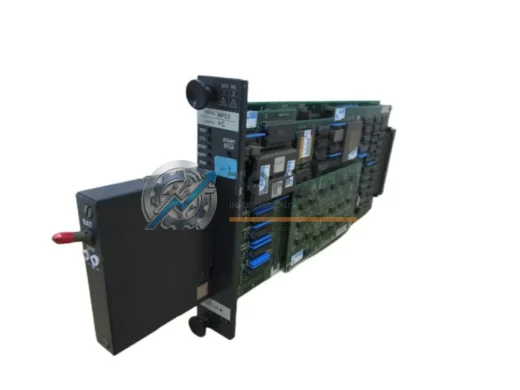
YOKOGAWA NP53*C original CENTUM DCS multi-function control processor. Verified spare, fast dispatch, 12-month warranty. Compatible industrial replacement.
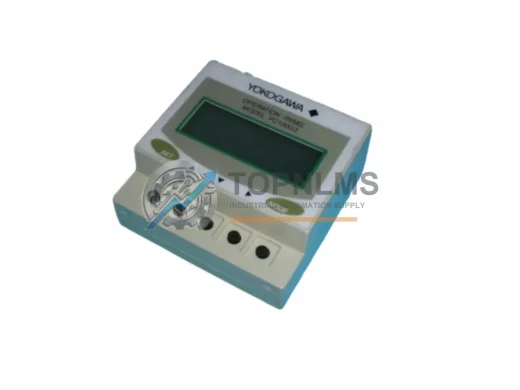
YOKOGAWA PC100G3-S1 ruggedized HIS Operation Panel for CENTUM VP DCS. Tested, 12-month warranty, in stock. Harsh-environment industrial safety control.
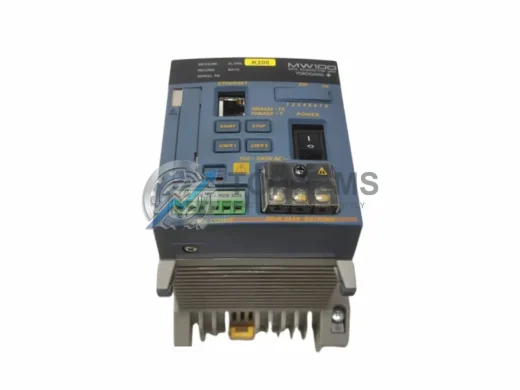
Yokogawa MW100-E-1D original Ethernet DAQ unit for DARWIN MW100 Series. Industrial replacement spare, 12-month warranty, tested before shipment. Fast worldwide delivery.
Click Quote This Model and the Part Number field will auto-fill with EC402-50.