
Yokogawa
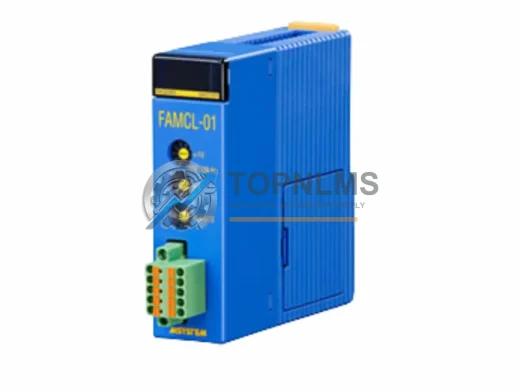
YOKOGAWA S9610AT-01 Replacement for STARDOM FCN/FCJ
S9610AT-01YOKOGAWA S9610AT-01 CC-Link Master Module replacement for STARDOM FCN/FCJ. Compatible upgrade, 12-month warranty, fast global shipping from stock.
Request availability, condition, lead time and export shipping details for NP53*C.
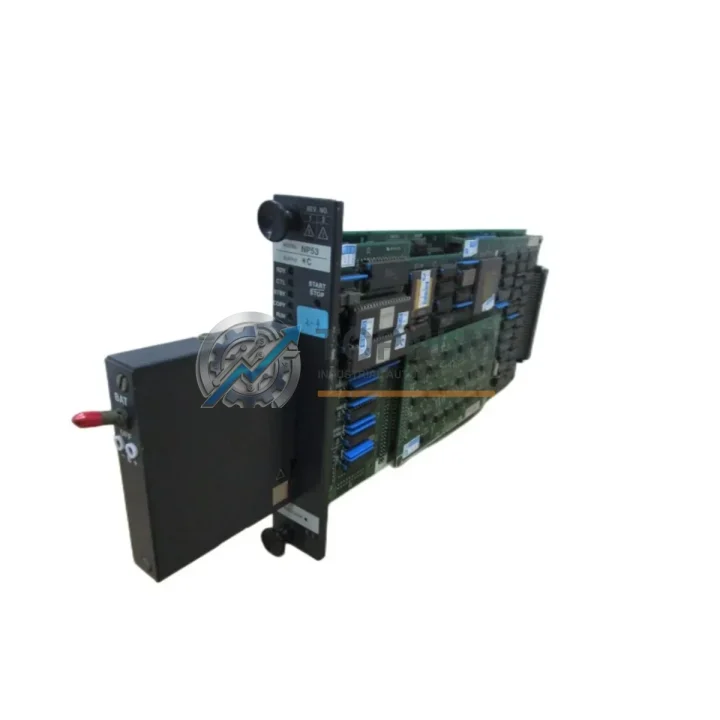
Send this exact part number, quantity and destination country. TOPNLMS will confirm availability, condition and export lead time before quotation.
The YOKOGAWA NP53*C is a multi-function control processor module designed for the CENTUM series Distributed Control System (DCS). In process industries — including petrochemical, power generation, pulp and paper, and pharmaceutical manufacturing — the NP53*C serves as a core computational node within the field control station (FCS), executing control algorithms, managing I/O communication, and maintaining real-time process data integrity. When this module fails or degrades, the consequences extend far beyond a single loop: entire process units can be forced offline, triggering costly unplanned shutdowns. Maintaining a verified original spare of the NP53*C in your on-site inventory is one of the most effective risk-mitigation strategies available to DCS maintenance teams.
| Parameter | Specification |
|---|---|
| Model / SKU | NP53*C |
| Brand | YOKOGAWA |
| Series | CENTUM (CS 3000 / VP compatible) |
| Module Type | Multi-Function Control Processor |
| Application | Field Control Station (FCS) — DCS process control |
| Communication | V-net / Vnet/IP (CENTUM VP) fieldbus backbone |
| Mounting | CENTUM FCS nest / control unit backplane |
| Power Supply | Supplied via FCS nest backplane (24 VDC internal bus) |
| Operating Temperature | 0 °C to 55 °C (non-condensing) |
| Storage Temperature | -20 °C to 70 °C |
| Humidity | 5% to 95% RH, non-condensing |
| Country of Origin | Japan |
| Compatibility | CENTUM CS 3000, CENTUM VP field control stations |
| Maintenance Recommendation | Inspect every 12–24 months; replace on first sign of processor fault alarm |
| Warranty | 12 Months — covers manufacturing defects and functional failure |
A scheduled maintenance inspection of a CENTUM FCS cabinet should never be limited to the NP53*C processor alone. The processor module operates in close interdependence with the surrounding hardware ecosystem, and a fault in any adjacent component can mask or accelerate processor degradation. During planned shutdowns or annual turnarounds, maintenance engineers should treat the NP53*C replacement as the anchor of a broader cabinet audit.
Begin with the FCS nest backplane and verify that all connector pins are clean and free of oxidation — a corroded backplane slot can cause intermittent processor faults that are difficult to distinguish from a genuine NP53*C failure. Next, inspect the power supply module (PW481 or equivalent CENTUM FCS PSU): an aging or under-spec power supply is one of the leading causes of premature processor module failure, and replacing the NP53*C without addressing a marginal PSU will result in repeat failures. Check the communication coupler module that interfaces the FCS to the V-net or Vnet/IP backbone — signal integrity issues at the coupler level can generate false processor alarms and should be ruled out before condemning the NP53*C.
I/O module health is equally critical. The NP53*C manages data exchange with all analog input modules (AAI141-S, AAI143-S) and analog output modules (AAO141-S) installed in the same FCS nest. A failed or drifting I/O module can generate excessive interrupt traffic that degrades processor performance. During the same maintenance window, verify the calibration status of all analog I/O channels and replace any modules showing out-of-tolerance readings. Digital input/output modules (ADV151-P, ADV161-P) should also be inspected for contact wear and proper termination at the terminal board assemblies — loose field wiring at the terminal block is a common source of spurious DI signals that burden the processor.
For sites running CENTUM VP with FOUNDATION Fieldbus or HART integration, the fieldbus communication module (ALF111) should be checked for firmware currency and communication error counters. Elevated error rates on the fieldbus segment often precede processor overload conditions. Similarly, if the FCS communicates with a remote I/O unit (RIO) over a fiber-optic link, inspect the optical coupler modules and fiber connectors for contamination or bend-radius violations.
Finally, review the CENTUM VP HIS (Human Interface Station) alarm history for any recurring processor-related alarms over the past 6–12 months. Patterns of intermittent FCS communication loss, watchdog resets, or control loop deviation alarms are early indicators that the NP53*C is approaching end of reliable service life. Proactive replacement during a planned outage — rather than reactive replacement during an emergency shutdown — can reduce total downtime by 60–80% and eliminates the risk of a forced production halt.
The NP53*C is a mature module within the CENTUM product family. YOKOGAWA has maintained strong backward compatibility across CENTUM CS 3000 and CENTUM VP generations, meaning a verified original NP53*C spare can be installed into an existing FCS nest without requiring software reconfiguration in most standard applications. This plug-and-play compatibility is a significant operational advantage for plants that cannot afford extended reconfiguration windows during unplanned outages.
For facilities managing aging CENTUM CS 3000 installations, the NP53*C represents a cost-effective alternative to full FCS hardware migration. Rather than investing in a complete system upgrade — which requires extensive engineering, FAT/SAT testing, and production freeze periods — maintaining a stock of original spare processor modules extends the operational life of the existing DCS infrastructure by 5–10 years at a fraction of the capital cost. This strategy is particularly valuable in industries with long asset depreciation cycles, such as refining, chemicals, and power generation, where DCS replacement projects are typically deferred until major plant turnarounds.
When sourcing replacement NP53*C modules, procurement teams should prioritize verified original units over third-party remanufactured alternatives. Original YOKOGAWA modules carry factory-calibrated firmware, full traceability documentation, and predictable MTBF characteristics. Each unit supplied by TOPNLMS is functionally tested prior to dispatch and ships with a 12-month warranty covering manufacturing defects and operational failure under normal service conditions.
Q1: What is the expected service life of the NP53*C, and when should I plan for replacement?
YOKOGAWA CENTUM processor modules are designed for long-term industrial service, typically 10–15 years under normal operating conditions. However, capacitor aging, firmware obsolescence, and accumulated thermal cycling mean that modules in continuous service beyond 8–10 years should be flagged for proactive replacement. We recommend maintaining at least one verified spare NP53*C on-site for any FCS that has been in service for more than 5 years.
Q2: Is the NP53*C compatible with both CENTUM CS 3000 and CENTUM VP systems?
The NP53*C is designed for the CENTUM series FCS hardware platform. Compatibility with a specific FCS generation (CS 3000 vs. VP) depends on the nest hardware revision and installed firmware. We recommend confirming your FCS model and nest revision number before ordering. Our technical team can assist with compatibility verification based on your system documentation.
Q3: What pre-shipment testing is performed on each NP53*C unit?
Every NP53*C unit is functionally tested on a compatible CENTUM FCS test bench prior to dispatch. Testing covers power-on initialization, communication bus response, and processor self-diagnostic routines. Units that fail any test stage are quarantined and not shipped. A test report is available upon request for quality-critical procurement processes.
Q4: What does the 12-month warranty cover, and how is a warranty claim processed?
The 12-month warranty covers functional failure and manufacturing defects under normal operating conditions. It does not cover damage resulting from incorrect installation, overvoltage events, or physical mishandling. To initiate a warranty claim, contact us at [email protected] with your order number, a description of the fault symptom, and any available alarm or diagnostic data from your DCS. We will arrange return logistics and provide a replacement or refund within the agreed service timeline.
YOKOGAWA S9610AT-01 CC-Link Master Module replacement for STARDOM FCN/FCJ. Compatible upgrade, 12-month warranty, fast global shipping from stock.
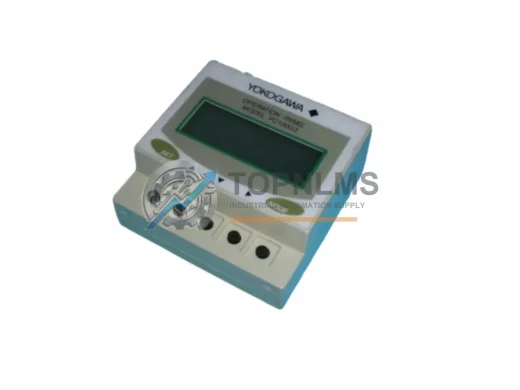
YOKOGAWA PC100G3-S1 ruggedized HIS Operation Panel for CENTUM VP DCS. Tested, 12-month warranty, in stock. Harsh-environment industrial safety control.

YOKOGAWA F3YP18-0N original FA-M3 series conversion module. Genuine industrial spare for replacement & preventive maintenance. 12-month warranty, fast shipping.
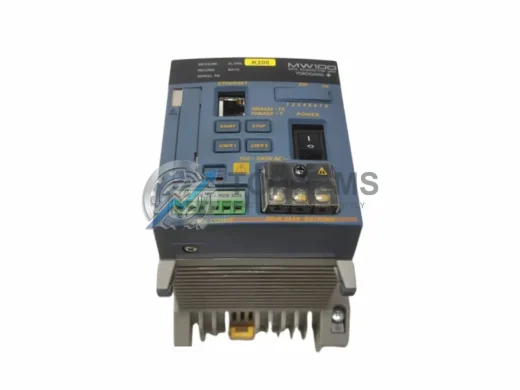
Yokogawa MW100-E-1D original Ethernet DAQ unit for DARWIN MW100 Series. Industrial replacement spare, 12-month warranty, tested before shipment. Fast worldwide delivery.
Click Quote This Model and the Part Number field will auto-fill with NP53*C.