
Yokogawa
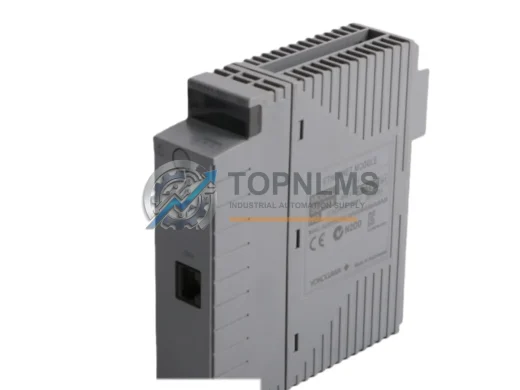
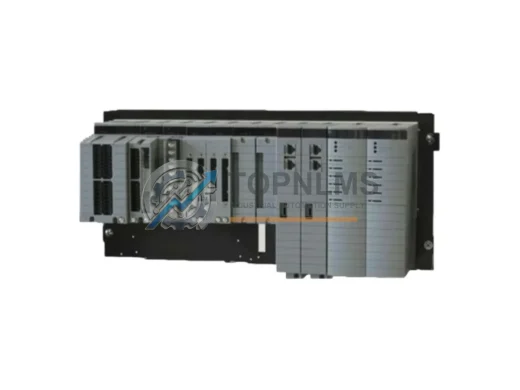
Yokogawa ALE111-S51 Replacement for CENTUM VP Series
ALE111-S51Drop-in ALE111-S51 replacement for Yokogawa CENTUM VP. Compatible upgrade, Ethernet communication, 12-month warranty. Ready to ship from stock.
Request availability, condition, lead time and export shipping details for EB501-10 S2.
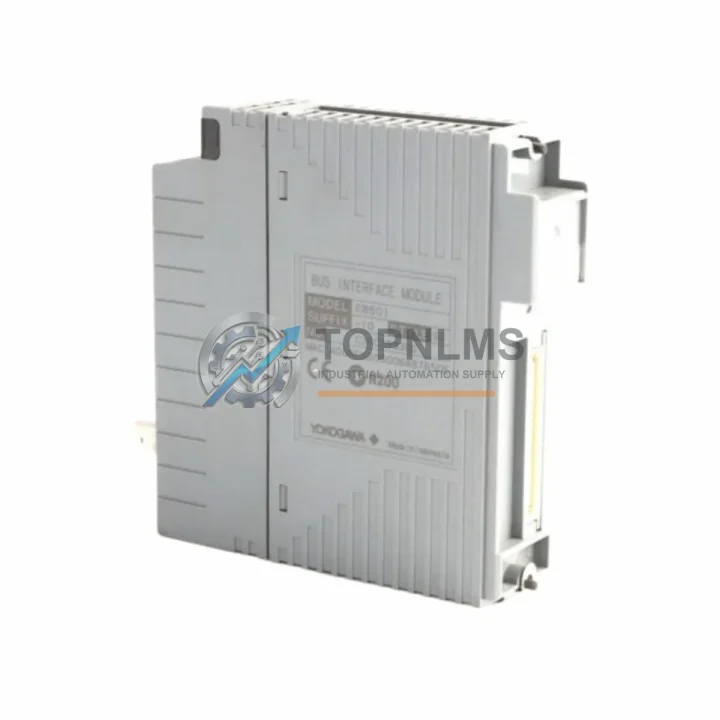
Send this exact part number, quantity and destination country. TOPNLMS will confirm availability, condition and export lead time before quotation.
The Yokogawa EB501-10 S2 is an original ESB (Enhanced Signal Bus) Bus Interface Module designed for use within Yokogawa’s CENTUM VP and CS 3000 Distributed Control Systems (DCS). As a critical communication bridge between field control stations and the ESB highway, this module plays a foundational role in maintaining real-time data exchange, process loop integrity, and overall plant automation reliability. For maintenance engineers and procurement teams managing aging DCS infrastructure, securing a verified original EB501-10 S2 spare is not merely a precaution — it is a strategic imperative.
Industrial facilities operating CENTUM VP or CS 3000 platforms understand that unplanned downtime caused by a failed bus interface module can cascade into production losses far exceeding the cost of the spare itself. The EB501-10 S2 is a high-demand replacement component precisely because it sits at the intersection of communication architecture and field I/O management. Facilities that maintain at least one verified spare on the shelf consistently report faster mean-time-to-repair (MTTR) and reduced dependency on emergency procurement channels.
| Parameter | Specification |
|---|---|
| Model / SKU | EB501-10 S2 |
| Manufacturer | Yokogawa Electric Corporation |
| Module Type | ESB Bus Interface Module |
| Compatible Systems | CENTUM VP, CENTUM CS 3000 |
| Bus Type | ESB (Enhanced Signal Bus) |
| Communication Role | Field Control Station ↔ ESB Highway Interface |
| Installation | Rack-mount, compatible with Yokogawa FCS/BCV node units |
| Power Supply | Supplied via backplane (rack-integrated) |
| Operating Temperature | 0°C to 55°C (standard industrial environment) |
| Humidity | 10% to 90% RH, non-condensing |
| Country of Origin | Japan |
| Condition | Original, tested before shipment |
| Warranty | 12 Months from date of shipment |
| Certifications | CE, UL (per Yokogawa standard product certification) |
| Maintenance Recommendation | Inspect bus connectors and firmware version every 12–18 months; replace if communication errors exceed threshold |
A disciplined preventive maintenance program for CENTUM VP and CS 3000 systems extends well beyond replacing a single module. When scheduling a planned shutdown or responding to an ESB communication fault, maintenance teams should treat the EB501-10 S2 replacement as the starting point of a broader inspection cycle — not the endpoint.
During the same maintenance window, engineers should verify the condition of the Yokogawa EB401 ESB coupler modules, which work in tandem with the EB501-10 S2 to maintain bus segment integrity. A degraded coupler can cause intermittent communication faults that are frequently misdiagnosed as interface module failures. Similarly, the Yokogawa CP451 or CP461 Field Control Station processor cards should be inspected for firmware currency and connector wear, as processor-bus handshake errors often originate at the FCS level rather than the interface module itself.
Power supply stability is another critical variable. The Yokogawa PW481 or PW484 power supply modules feeding the FCS node should be load-tested during any planned outage. A marginal power supply operating near its rated capacity is a common root cause of intermittent bus communication errors that appear to implicate the EB501-10 S2. Replacing the interface module without addressing an aging power supply unit will not resolve the underlying fault.
I/O module integrity should also be assessed during the same inspection cycle. The Yokogawa AAI141 analog input modules and AAI543 analog I/O modules connected downstream of the ESB bus are subject to signal drift and connector oxidation over time, particularly in high-humidity or chemically aggressive environments. Confirming their calibration status and physical condition during a bus interface replacement reduces the risk of a secondary fault event shortly after the primary repair.
For facilities running redundant ESB configurations, the Yokogawa EB501-10 (non-S2 variant) may be present in legacy node positions. Maintaining cross-compatible spares and documenting which node positions use S2 versus standard variants is essential for accurate spare parts inventory management. Additionally, terminal blocks and field wiring connectors — particularly Yokogawa TB805 or equivalent terminal assemblies — should be inspected for torque compliance and insulation integrity whenever the control cabinet is opened for module replacement.
Communication modules such as the Yokogawa CP703 Vnet/IP interface or legacy BCV node communication cards should be included in the inspection checklist when the ESB bus is taken offline. Bringing the bus back online without verifying the communication stack end-to-end risks masking latent faults that will surface under production load. A complete inspection — covering the EB501-10 S2, associated couplers, FCS processors, power supplies, I/O modules, and communication cards — transforms a reactive repair into a proactive reliability event.
The Yokogawa EB501-10 S2 is a direct replacement for earlier ESB bus interface revisions used in CS 3000 installations. Facilities that have not yet migrated to CENTUM VP but continue to operate CS 3000 field control stations benefit significantly from maintaining verified EB501-10 S2 spares, as Yokogawa’s official support lifecycle for CS 3000 hardware has entered its extended phase. Sourcing original modules through verified industrial spare parts channels — rather than relying on spot-market availability during an emergency — is the most cost-effective strategy for sustaining legacy system uptime.
For CENTUM VP installations, the EB501-10 S2 maintains full backward compatibility with existing ESB highway wiring and rack infrastructure, eliminating the need for rewiring or rack modification during replacement. This plug-and-replace compatibility is a key procurement advantage: maintenance teams can execute a module swap within a single shift, minimizing production impact and avoiding the extended downtime associated with system reconfiguration.
Facilities managing multi-site DCS infrastructure should consider establishing a centralized spare parts pool that includes the EB501-10 S2 alongside complementary modules. A pooled inventory strategy reduces per-site carrying costs while ensuring that any site experiencing a bus interface fault can receive a verified spare within hours rather than days. Each unit shipped from TOPNLMS is tested prior to dispatch and covered by a 12-month warranty, providing procurement teams with the documentation and assurance required for maintenance record compliance.
Q1: Is the Yokogawa EB501-10 S2 compatible with both CENTUM VP and CS 3000 systems?
Yes. The EB501-10 S2 is designed for use across Yokogawa’s ESB-based DCS platforms, including CENTUM VP and CENTUM CS 3000. It is compatible with standard FCS node rack configurations in both systems. If you are uncertain about compatibility with a specific node revision or firmware version, contact our technical team with your system configuration details before ordering.
Q2: What testing is performed before shipment?
Each EB501-10 S2 unit undergoes functional verification prior to shipment, including bus communication interface checks and visual inspection for connector and board integrity. A test report is available upon request. All units are shipped with anti-static packaging and are covered by a 12-month warranty from the date of shipment.
Q3: How should I manage spare parts inventory for aging CENTUM CS 3000 systems?
For CS 3000 systems in the extended support phase, we recommend maintaining a minimum of one EB501-10 S2 per ESB node segment as a cold standby spare. Given the increasing lead times for legacy DCS components through OEM channels, proactive procurement from verified industrial spare parts suppliers is the most reliable strategy for sustaining uptime. Pairing the EB501-10 S2 with spares for associated power supply and FCS processor modules provides comprehensive coverage for the most common failure modes.
Q4: What is the warranty coverage and what does it include?
All units sold by TOPNLMS carry a 12-month warranty covering manufacturing defects and functional failures under normal operating conditions. The warranty period begins on the date of shipment. In the event of a warranty claim, TOPNLMS will provide a replacement unit or issue a credit at our discretion. Warranty claims must be accompanied by a description of the fault condition and, where possible, a fault log or system alarm record to facilitate root cause assessment.
© 2026 TOPNLMS. All rights reserved.
Original Source: https://topnlms.com
Contact: [email protected] | +86 18359293191
Drop-in ALE111-S51 replacement for Yokogawa CENTUM VP. Compatible upgrade, Ethernet communication, 12-month warranty. Ready to ship from stock.
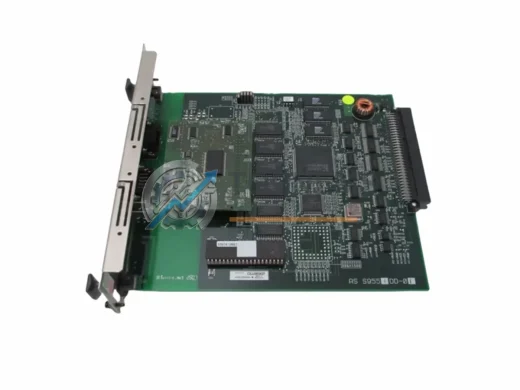
YOKOGAWA ACP71 S1 original DCS communication module for CENTUM VP systems. Industrial replacement spare, 12-month warranty, tested before shipment.
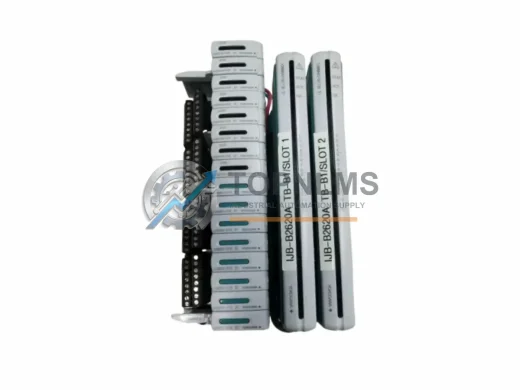
Yokogawa A2MMM843 original CENTUM VP DCS communication module. Industrial spare for I/O & bus systems. 12-month warranty. Fast global shipping.
YOKOGAWA YCB149 ruggedized V-net converter connector for CENTUM DCS. In stock, tested, 12-month warranty. Fast shipping. Contact: [email protected]
Click Quote This Model and the Part Number field will auto-fill with EB501-10 S2.