
Yokogawa
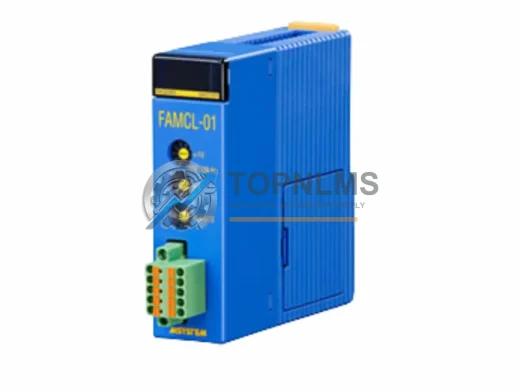
YOKOGAWA S9610AT-01 Replacement for STARDOM FCN/FCJ
S9610AT-01YOKOGAWA S9610AT-01 CC-Link Master Module replacement for STARDOM FCN/FCJ. Compatible upgrade, 12-month warranty, fast global shipping from stock.
Request availability, condition, lead time and export shipping details for CP471-00 S1.
Send this exact part number, quantity and destination country. TOPNLMS will confirm availability, condition and export lead time before quotation.
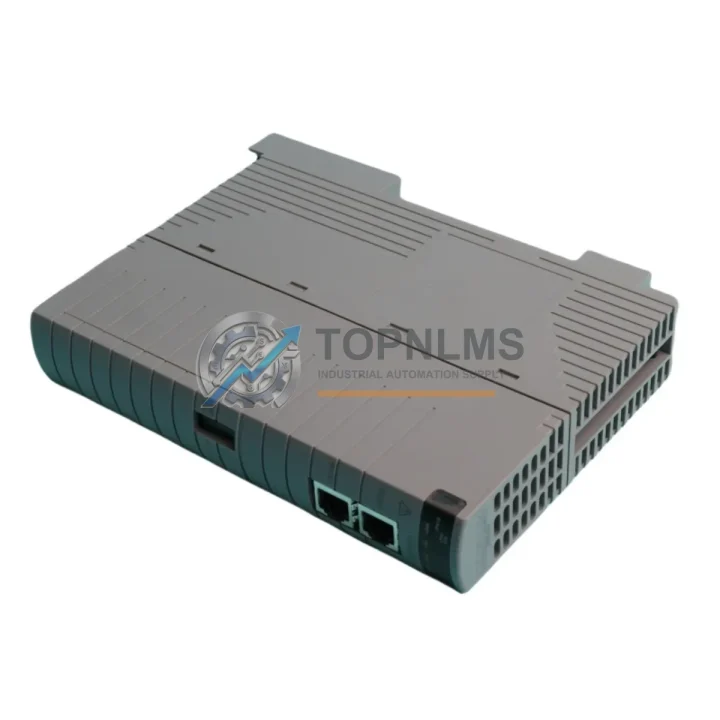
The Yokogawa CP471-00 S1 is an original field controller module designed for the CENTUM CS3000 distributed control system — one of the most widely deployed DCS platforms in the petrochemical, power generation, pulp and paper, and pharmaceutical industries. As a CPU-class field controller, the CP471-00 S1 manages real-time process control loops, handles I/O communication with field devices, and maintains deterministic scan cycles critical to plant safety and production continuity. Sourced directly from Yokogawa’s manufacturing line, this module carries full OEM specifications and is not a third-party substitute or remanufactured unit.
For maintenance engineers and procurement teams managing aging CENTUM CS3000 installations, securing a verified original CP471-00 S1 spare is a foundational step in any lifecycle extension strategy. Plants that have operated CS3000 systems for 10 to 20 years face increasing pressure from component obsolescence, extended lead times, and the risk of unplanned downtime caused by controller failure. A single field controller fault can cascade into a full process shutdown, with recovery times measured in hours or days depending on spare availability. Stocking a tested, warranty-backed CP471-00 S1 eliminates that exposure.
Every unit shipped from TOPNLMS undergoes pre-shipment functional verification, is packaged in anti-static protective materials, and is covered by a 12-month warranty from the date of delivery. We maintain inventory across multiple procurement cycles to support both emergency replacement orders and planned maintenance schedules.
| Part Number | CP471-00 S1 |
| Manufacturer | Yokogawa Electric Corporation |
| Compatible System | CENTUM CS3000 Distributed Control System |
| Module Function | Field Control Station (FCS) CPU / Field Controller |
| Communication Bus | V-net (Vnet/IP compatible environment) |
| Processor Type | Dedicated real-time control processor |
| Control Scan Cycle | Configurable; typically 100ms–1000ms per application |
| I/O Capacity | Supports multiple I/O nest expansion via ESB bus |
| Power Supply Requirement | 24 VDC (supplied via FCS power module) |
| Operating Temperature | 0°C to 55°C |
| Humidity | 10% to 90% RH (non-condensing) |
| Country of Origin | Japan |
| Unit Weight | 320 g |
| Installation | DIN rail / FCS nest slot mounting |
| Application Environment | Process industries: petrochemical, power, pharmaceutical, pulp & paper |
| Maintenance Note | Hot-swap capable in redundant FCS configurations; verify firmware revision before replacement |
| Warranty | 12 Months from date of delivery |
A field controller replacement is rarely an isolated event. When a CP471-00 S1 is flagged for replacement — whether due to a diagnostic alarm, a scheduled lifecycle review, or an unplanned failure — experienced maintenance teams use the opportunity to audit the entire Field Control Station cabinet and associated electrical circuits. This approach minimizes repeat interventions and reduces the probability of secondary failures in the weeks following a controller swap.
Begin with the power supply module feeding the FCS nest. Yokogawa PW481 or PW482 power supply modules that have been in service for more than five years should be inspected for capacitor aging and output voltage drift. A degraded power supply is a common root cause of intermittent controller faults that are misdiagnosed as CPU failures. While the cabinet is open, inspect the ESB bus cables connecting the controller nest to I/O nests — connector oxidation and cable fatigue at bend points are frequent sources of communication errors in older CS3000 installations.
Next, review the I/O modules installed in the associated nests. Analog input modules such as the AAI141 or AAI143, and analog output modules such as the AAO141, should be checked for channel drift and calibration status. Digital I/O modules including the ADV151 and ADV161 warrant inspection of their terminal block connections and relay contact wear. If the plant uses HART-enabled field instruments, verify that the HART communication function of the relevant I/O modules is still operating correctly, as HART pass-through failures are often silent until a calibration event exposes them.
For plants running redundant FCS configurations, the CP471-00 S1 replacement should be coordinated with a switchover test of the redundant controller pair. This is also the right moment to verify the status of the communication module — such as the CP451 or CP461 series — in adjacent FCS units sharing the same V-net segment. A failing communication module in a neighboring station can introduce latency or packet loss that destabilizes the entire control network even after the primary controller is replaced.
Signal isolators and safety barriers installed between the FCS I/O modules and field instruments should be included in the inspection scope. Zener barriers and galvanic isolators in hazardous-area loops degrade over time and can introduce ground loops or signal offset errors that are difficult to trace without systematic testing. Fuse modules protecting individual I/O channels should also be verified — blown fuses on analog output channels are sometimes masked by the controller’s fault-tolerant architecture and go undetected until a process upset occurs.
Finally, if the plant’s CS3000 system includes an HMI station running CENTUM CS3000 R3 or later software, confirm that the engineering database backup is current before performing the controller replacement. A synchronized backup ensures that any configuration data stored on the CP471-00 S1 can be restored immediately if the replacement module requires re-initialization.
The CP471-00 S1 addresses one of the most common challenges in legacy DCS lifecycle management: maintaining a fully functional CENTUM CS3000 system beyond the original hardware support window. Yokogawa has progressively migrated its DCS platform toward CENTUM VP, and while migration projects offer long-term benefits, they require capital investment, engineering resources, and planned outages that many facilities cannot accommodate in the near term. The CP471-00 S1 provides a direct, specification-matched replacement that extends the operational life of existing CS3000 installations without requiring any software reconfiguration, I/O rewiring, or control logic modification.
Because the CP471-00 S1 is an original Yokogawa module — not a compatible substitute or reverse-engineered alternative — it maintains full interoperability with all CS3000 system components, including the HIS (Human Interface Station), the BCV (Bus Converter), and the existing V-net communication infrastructure. Replacement is a slot-for-slot swap in the FCS nest, with firmware loaded from the engineering station following standard Yokogawa commissioning procedures. For plants operating redundant FCS pairs, the replacement can be performed online with zero process interruption when proper switchover protocols are followed.
Procurement teams sourcing CP471-00 S1 modules for multi-site operations or long-term maintenance contracts are encouraged to discuss volume pricing and reserved inventory arrangements with TOPNLMS. We support scheduled delivery programs that align spare parts availability with planned maintenance windows, reducing the administrative burden of emergency procurement and ensuring that critical spares are on-site before they are needed.
Q1: Is the CP471-00 S1 compatible with all CENTUM CS3000 revisions?
The CP471-00 S1 is designed for the CENTUM CS3000 platform. Compatibility with specific system revisions (R2, R3, R3.08, etc.) depends on the firmware version loaded on the module and the engineering station software version. We recommend confirming your system revision with our technical team before ordering to ensure the correct firmware baseline is supplied.
Q2: What pre-shipment testing is performed on each unit?
Each CP471-00 S1 is functionally tested prior to shipment to verify power-on initialization, communication bus response, and module self-diagnostics. Units are inspected for physical integrity, connector condition, and firmware integrity. A test report is available upon request for quality-critical procurement processes.
Q3: How should the CP471-00 S1 be stored if purchased as a long-term spare?
Store the module in its original anti-static packaging in a climate-controlled environment: temperature 15°C to 35°C, humidity 20% to 70% RH non-condensing. Avoid storage near strong electromagnetic fields or corrosive atmospheres. Periodic power-on verification every 12 to 18 months is recommended for modules held in long-term inventory to confirm continued operability.
Q4: What does the 12-month warranty cover?
The 12-month warranty covers manufacturing defects and functional failures under normal operating conditions from the date of delivery. It does not cover damage resulting from incorrect installation, overvoltage events, physical impact, or use outside the specified environmental parameters. Warranty claims are processed with a replacement unit dispatched upon confirmation of the defect.
YOKOGAWA S9610AT-01 CC-Link Master Module replacement for STARDOM FCN/FCJ. Compatible upgrade, 12-month warranty, fast global shipping from stock.
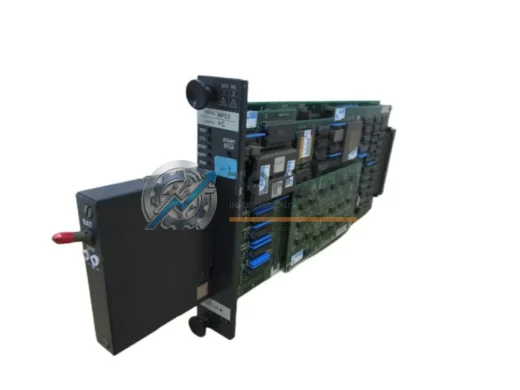
YOKOGAWA NP53*C original CENTUM DCS multi-function control processor. Verified spare, fast dispatch, 12-month warranty. Compatible industrial replacement.
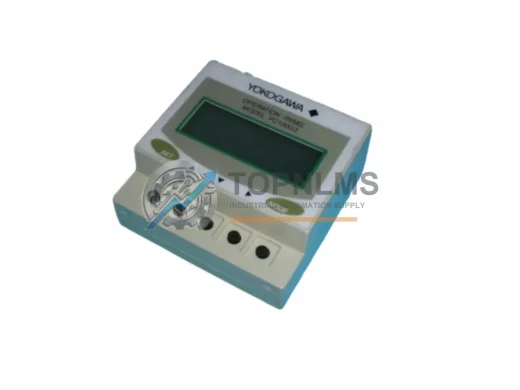
YOKOGAWA PC100G3-S1 ruggedized HIS Operation Panel for CENTUM VP DCS. Tested, 12-month warranty, in stock. Harsh-environment industrial safety control.
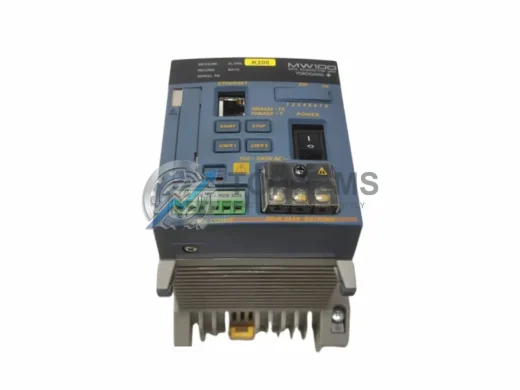
Yokogawa MW100-E-1D original Ethernet DAQ unit for DARWIN MW100 Series. Industrial replacement spare, 12-month warranty, tested before shipment. Fast worldwide delivery.
Click Quote This Model and the Part Number field will auto-fill with CP471-00 S1.