
Yokogawa
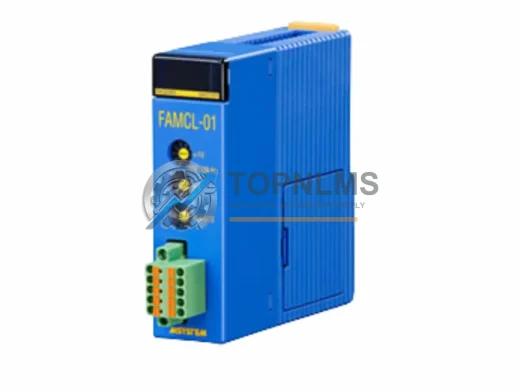
YOKOGAWA S9610AT-01 Replacement for STARDOM FCN/FCJ
S9610AT-01YOKOGAWA S9610AT-01 CC-Link Master Module replacement for STARDOM FCN/FCJ. Compatible upgrade, 12-month warranty, fast global shipping from stock.
Request availability, condition, lead time and export shipping details for CP461-51-S2.
Send this exact part number, quantity and destination country. TOPNLMS will confirm availability, condition and export lead time before quotation.
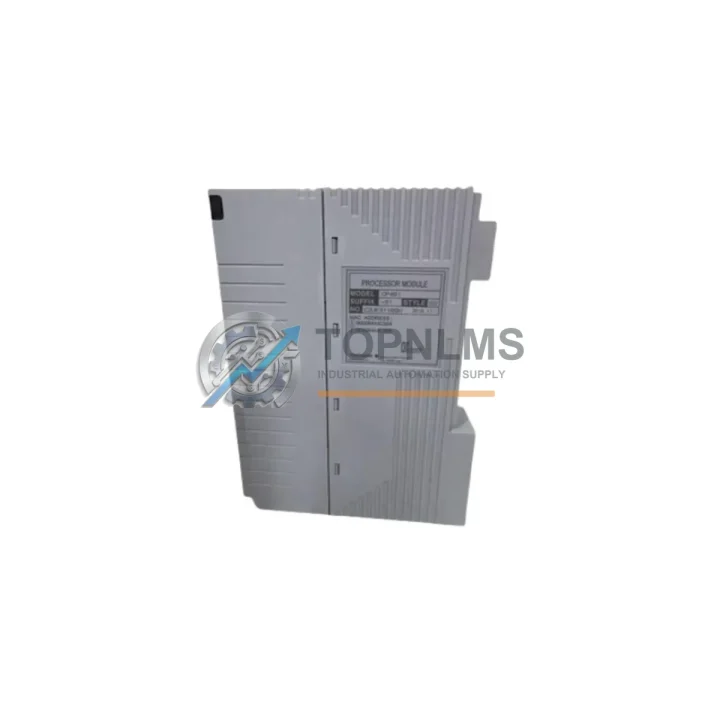
The YOKOGAWA CP461-51-S2 is an original DCS processor module engineered for the CENTUM CS 3000 Field Control Station (FCS). In process-critical environments — petrochemical plants, power generation facilities, pharmaceutical production lines, and large-scale manufacturing operations — the CP461-51-S2 serves as the computational core of the FCS, executing control logic, managing I/O communication, and maintaining real-time process stability. Sourcing a verified original spare is not merely a procurement decision; it is a risk management strategy that directly determines how quickly your facility can recover from an unplanned shutdown.
When a processor module fails in a CENTUM CS 3000 system, the entire Field Control Station goes offline. Every minute of downtime in a continuous process plant carries measurable financial and safety consequences. Maintaining at least one CP461-51-S2 in your on-site spare parts inventory is the single most effective measure to cap your maximum recovery time. Our units are sourced from original YOKOGAWA supply channels, inspected prior to dispatch, and shipped with a 12-month warranty covering manufacturing defects and functional failure under normal operating conditions.
| Parameter | Specification |
|---|---|
| Part Number / SKU | CP461-51-S2 |
| Manufacturer | YOKOGAWA Electric Corporation |
| Compatible System | CENTUM CS 3000 Field Control Station (FCS) |
| Module Type | DCS Processor Module (CPU) |
| Series | CENTUM CS 3000 |
| Processor Role | FCS Control Computation & I/O Bus Management |
| Communication Interface | V-net / Vnet/IP (system bus) |
| Redundancy Support | Dual-redundant CPU configuration supported |
| Operating Voltage | 24 VDC (supplied via FCS backplane) |
| Operating Temperature | 0°C to 55°C |
| Storage Temperature | -20°C to 70°C |
| Humidity | 5% to 95% RH (non-condensing) |
| Mounting | FCS Nest / Backplane slot installation |
| Country of Origin | Japan |
| Condition | Original / New-surplus / Tested |
| Warranty | 12 Months from date of shipment |
| Application Environment | Process automation, DCS control loops, continuous manufacturing |
| Maintenance Recommendation | Inspect every 24 months; replace at first sign of CPU fault alarm or communication timeout |
A CP461-51-S2 replacement should never be performed in isolation. The CENTUM CS 3000 FCS is an integrated system, and a processor fault is frequently a symptom of broader electrical stress, power quality degradation, or aging in adjacent modules. Experienced maintenance engineers treat a CPU module replacement as a trigger for a comprehensive FCS health audit.
Begin with the power supply module — the PW481 or equivalent FCS power unit — since voltage ripple and transient spikes are a leading cause of premature processor failure. Verify output voltage stability under load before reinstalling the new CP461-51-S2. Next, inspect the I/O modules seated in the same FCS nest: AAI141 analog input modules and AAI543 analog output modules should be checked for channel drift and calibration status, as a failing I/O module can generate abnormal bus traffic that stresses the processor.
Communication integrity is equally critical. The ESB bus coupler module and the Vnet/IP communication module connecting the FCS to the HIS (Human Interface Station) should be tested for packet loss and latency. A degraded network link can cause the CP461-51-S2 to log spurious communication errors that are misdiagnosed as processor faults. While the cabinet is open, inspect the terminal blocks and field wiring connectors for corrosion, loose terminations, and insulation degradation — these are common in high-humidity or chemically aggressive environments.
For facilities running redundant FCS configurations, the redundant CP461-51-S2 module should be exercised periodically by performing a controlled switchover test. This confirms that the standby processor can assume control within the specified bumpless transfer window. If your facility has not performed a redundancy switchover test in the past 12 months, schedule one during the next planned maintenance window. At the same time, verify the status of the RIO (Remote I/O) bus modules and any signal isolator units in the field junction boxes — these components operate continuously under field conditions and have finite service lives.
Finally, review the battery backup status on the FCS. The CENTUM CS 3000 uses battery-backed SRAM to retain control logic during power interruptions. A depleted or failing battery will cause configuration loss on power restoration, which can be misattributed to a processor fault. Replacing the battery on a defined schedule — typically every 3 to 5 years — is a low-cost measure that prevents high-consequence failures.
The CP461-51-S2 is a mature module in the CENTUM CS 3000 product lifecycle. YOKOGAWA has progressively migrated its DCS platform toward the CENTUM VP series, and while CENTUM CS 3000 systems remain fully operational and supportable, original spare modules are increasingly sourced from the secondary market rather than direct factory channels. This makes verified original inventory — such as the units we supply — strategically valuable for facilities committed to maintaining their existing CS 3000 infrastructure without undertaking a full system migration.
For plants that have already begun a phased migration toward CENTUM VP, the CP461-51-S2 can serve as a bridge solution: maintaining FCS stability in legacy sections of the plant while newer VP-series controllers are commissioned in parallel. This approach avoids the capital expenditure and operational risk of a simultaneous full-plant cutover, allowing engineering teams to validate the new system under live conditions before decommissioning the CS 3000 nodes.
Replacement of the CP461-51-S2 in the field requires no special tooling beyond standard ESD precautions. The module is hot-swappable in redundant configurations, meaning the standby processor can be replaced while the primary remains in control — eliminating the need for a process shutdown in properly configured redundant systems. For non-redundant FCS installations, replacement requires a planned shutdown window, typically 30 to 60 minutes including functional verification and loop checkout.
All units supplied by TOPNLMS are tested for basic communication and power-on functionality prior to shipment. Each module is packaged in anti-static ESD shielding with physical protection for connector pins. Documentation including the test record and warranty certificate is included with every shipment.
Q1: Is the CP461-51-S2 compatible with all CENTUM CS 3000 FCS configurations?
The CP461-51-S2 is designed for use within the CENTUM CS 3000 Field Control Station nest. Compatibility depends on your specific FCS hardware revision and software release. We recommend verifying your FCS nest model and CENTUM CS 3000 software version (R3.xx or later) before ordering. Our technical team can assist with compatibility verification if you provide your FCS model number and system revision.
Q2: What does the 12-month warranty cover, and what is the claims process?
The 12-month warranty covers manufacturing defects and functional failure under normal operating conditions from the date of shipment. It does not cover damage resulting from incorrect installation, overvoltage events, physical impact, or use outside specified environmental parameters. To initiate a warranty claim, contact us at [email protected] with your order number, a description of the fault, and any available diagnostic logs from the CENTUM CS 3000 system. We will arrange return shipping and either repair or replace the unit within the warranty period.
Q3: How should the CP461-51-S2 be stored if purchased as a long-term spare?
Store the module in its original ESD packaging in a climate-controlled environment: temperature 15°C to 35°C, humidity 30% to 70% RH non-condensing, away from direct sunlight and electromagnetic interference sources. Avoid storing near solvents, acids, or other corrosive materials. For long-term storage exceeding 24 months, we recommend a periodic power-on functional check to verify module health before deployment.
Q4: Can TOPNLMS supply multiple CP461-51-S2 units for a plant-wide spare parts standardization program?
Yes. We support bulk procurement for maintenance departments building standardized spare parts inventories across multiple FCS nodes. Volume pricing is available for orders of 3 or more units. Contact [email protected] with your quantity requirement and delivery schedule for a formal quotation. We can also assist with sourcing complementary CENTUM CS 3000 spare modules to support a comprehensive FCS maintenance kit.
YOKOGAWA S9610AT-01 CC-Link Master Module replacement for STARDOM FCN/FCJ. Compatible upgrade, 12-month warranty, fast global shipping from stock.
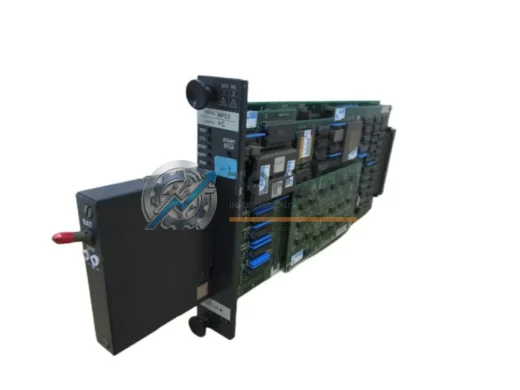
YOKOGAWA NP53*C original CENTUM DCS multi-function control processor. Verified spare, fast dispatch, 12-month warranty. Compatible industrial replacement.
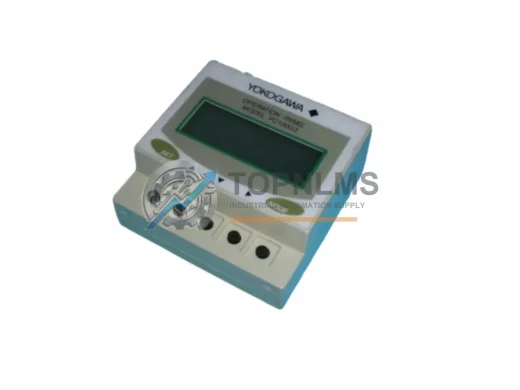
YOKOGAWA PC100G3-S1 ruggedized HIS Operation Panel for CENTUM VP DCS. Tested, 12-month warranty, in stock. Harsh-environment industrial safety control.
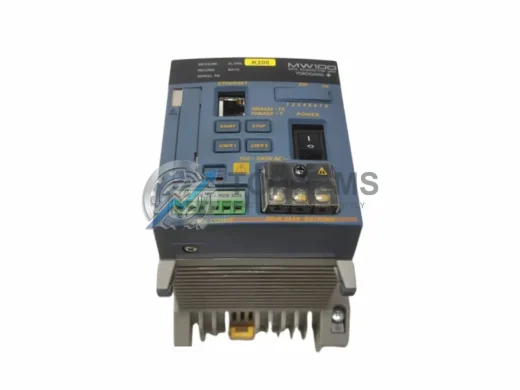
Yokogawa MW100-E-1D original Ethernet DAQ unit for DARWIN MW100 Series. Industrial replacement spare, 12-month warranty, tested before shipment. Fast worldwide delivery.
Click Quote This Model and the Part Number field will auto-fill with CP461-51-S2.