
Yokogawa
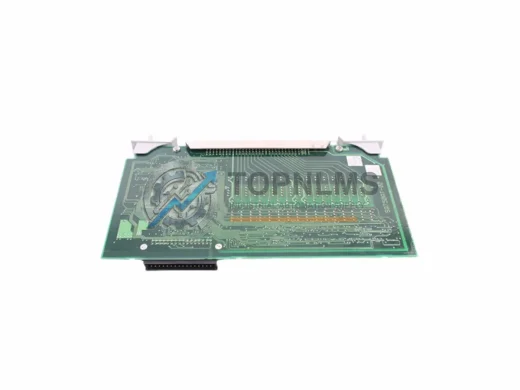
YOKOGAWA ADM12 S1 Replacement/Upgrade Solution for ADM Series
ADM12 S1YOKOGAWA ADM12 S1 Servo Add-On Module replacement & upgrade solution. Compatible with ADM Series. Drop-in fit, 12-month warranty, fast global shipping from Xiamen.
Request availability, condition, lead time and export shipping details for CP133E-16-S1.
Send this exact part number, quantity and destination country. TOPNLMS will confirm availability, condition and export lead time before quotation.
When your CENTUM VP control system relies on the YOKOGAWA CP133E-16-S1 frequency converter module and the original unit reaches end-of-life or becomes unavailable through standard supply channels, unplanned downtime is the most immediate risk. TOPNLMS supplies verified CP133E-16-S1 units — original YOKOGAWA manufacture — specifically sourced to support retrofit, replacement, and system modernization projects across process industries including petrochemical, power generation, pulp & paper, and water treatment.
The CP133E-16-S1 is a 16-channel frequency input module designed for the CENTUM VP distributed control system platform. It accepts pulse and frequency signals from field instruments such as turbine flow meters, magnetic flow transmitters, and rotary encoders, converting them into engineering-unit values for the CENTUM VP controller. Replacing a failed or aging CP133E-16-S1 does not require reprogramming the control strategy when the replacement unit is correctly configured — the module’s channel parameters, scaling factors, and tag assignments are retained in the CENTUM VP engineering database and are re-downloaded to the replacement module during commissioning.
For sites migrating from earlier CENTUM CS 3000 or CENTUM CS architectures, the CP133E-16-S1 represents a direct upgrade path. The physical form factor is compatible with the standard CENTUM VP field control station (FCS) node unit and fits the same I/O card slot without mechanical modification. Field wiring connected to the existing terminal assembly — typically a TB801 or equivalent terminal board — can be retained without re-termination, significantly reducing the labor cost and risk associated with field wiring changes during a live plant turnaround.
Communication between the CP133E-16-S1 and the CENTUM VP FCS processor — such as the CP461-50 or CP451-10 controller card — uses the internal V-net/IP or Vnet bus architecture native to the CENTUM VP platform. No additional communication configuration is required at the module level; the FCS automatically recognizes the replacement module upon power-up and re-establishes the I/O mapping defined in the engineering database. Sites running CENTUM VP R5 or R6 software revisions should verify firmware compatibility with the replacement unit prior to installation, which TOPNLMS can confirm at the time of order.
| Parameter | CP133E-16-S1 (Replacement) | Legacy / Predecessor Units |
|---|---|---|
| Platform Compatibility | CENTUM VP (all revisions) | CENTUM CS 3000, CENTUM CS |
| Input Channels | 16 channels, frequency/pulse input | Varies by legacy model (8–16 ch) |
| Field Wiring Interface | TB801 / standard terminal board | Same terminal board (no re-wiring) |
| Internal Bus Protocol | V-net/IP (CENTUM VP native) | Vnet (CS 3000) — adapter may apply |
| Card Slot Form Factor | Standard CENTUM VP I/O slot | Compatible with same FCS node unit |
| Engineering Tool | CENTUM VP Builder (R5/R6) | CS 3000 Builder (migration export) |
| Replacement Approach | Hot-swap capable (FCS dependent) | Cold-swap for legacy FCS nodes |
| Warranty | 12 Months — TOPNLMS | OEM warranty expired (EOL units) |
A successful CP133E-16-S1 replacement is rarely a single-module exercise. In most CENTUM VP retrofit projects, the frequency converter module is one component within a broader I/O upgrade or FCS node refresh. TOPNLMS maintains stock of the complementary modules most commonly required alongside the CP133E-16-S1.
For sites replacing multiple I/O types simultaneously, the AAI141-S00 analog input module (4–20 mA, 16-channel) and the AAI841-S00 analog output module are frequently ordered together with the CP133E-16-S1 to complete a full FCS I/O card set refresh. Where digital I/O is also being upgraded, the ADV151-P00 digital input module and ADV551-P00 digital output module cover the discrete signal requirements within the same node unit chassis.
Sites that are also modernizing their FCS processor should consider the CP461-50 field control unit processor card, which provides the computational backbone for the CENTUM VP FCS and is the controller most commonly paired with CP133E-16-S1 I/O modules in mid-to-large process units. For communication-intensive applications — particularly those integrating FOUNDATION Fieldbus or PROFIBUS PA field devices — the ALF111 Fieldbus communication module provides the gateway function within the same FCS chassis, eliminating the need for external Fieldbus linking devices.
Power supply integrity is critical during any I/O module replacement. The PW481 power supply unit for CENTUM VP node units should be inspected and, if approaching end-of-life, replaced concurrently with the CP133E-16-S1 to avoid a secondary failure shortly after the primary retrofit is complete. For sites where the control room HMI is also being refreshed, YOKOGAWA’s FAST/TOOLS SCADA platform or the Exaopc OPC server interface can be configured to maintain historian continuity across the module replacement without loss of process data.
Where field signal isolation is required — particularly in older plants where ground loops or signal interference have been identified — inline signal isolators compatible with the CP133E-16-S1’s frequency input range should be installed at the terminal board level. TOPNLMS can advise on appropriate isolator specifications based on your field instrument output characteristics and cable run distances.
Q: Will the CP133E-16-S1 replacement require re-wiring at the field terminal board?
A: In most cases, no. The CP133E-16-S1 connects to the field via a standard CENTUM VP terminal board (e.g., TB801). If the existing terminal board is in good condition and correctly wired, the replacement module plugs into the same I/O slot and the field wiring remains undisturbed. This is one of the primary advantages of a like-for-like replacement versus a cross-platform migration.
Q: Do I need to modify the CENTUM VP control program after replacing the module?
A: No control strategy modification is required for a like-for-like CP133E-16-S1 replacement. The FCS engineering database retains all channel configurations, tag assignments, and scaling parameters. After physical installation, the CENTUM VP Builder is used to download the existing configuration to the new module. No function block logic changes are necessary unless the replacement is part of a broader system upgrade.
Q: Is the CP133E-16-S1 compatible with CENTUM CS 3000 systems?
A: The CP133E-16-S1 is a CENTUM VP native module. Direct installation into a CENTUM CS 3000 FCS node is not supported without a platform migration. For CS 3000 sites, TOPNLMS can advise on the appropriate CS 3000 equivalent module or assist with planning a phased migration to CENTUM VP.
Q: What communication protocols does the CP133E-16-S1 support?
A: The CP133E-16-S1 communicates with the CENTUM VP FCS processor via the internal V-net/IP bus — this is not a field-level protocol but an internal backplane communication standard. Field instruments connect via hardwired frequency/pulse signal cables, not via digital fieldbus. For FOUNDATION Fieldbus or HART-enabled field devices, a different I/O module type (e.g., ALF111 or AAI141-H) would be required.
Q: How long does installation and commissioning typically take?
A: For an experienced CENTUM VP system integrator, a single CP133E-16-S1 module replacement — including physical swap, configuration download, loop check, and return-to-service — typically takes 2–4 hours per module during a planned maintenance window. TOPNLMS recommends having a spare unit on-site before scheduling the maintenance window to eliminate lead-time risk.
Every CP133E-16-S1 unit supplied by TOPNLMS is covered by a 12-month warranty from the date of shipment. Prior to dispatch, each unit undergoes a functional verification check including power-on self-test confirmation and visual inspection for physical integrity. Units that do not pass pre-shipment inspection are not dispatched.
In the event of a warranty claim, TOPNLMS provides a replacement unit or full refund depending on the nature of the defect and the customer’s operational requirements. Warranty claims are processed within 3 business days of receipt of the returned unit. For customers with critical sparing requirements, TOPNLMS can discuss priority replacement arrangements at the time of purchase.
TOPNLMS ships from Xiamen, China, with DHL Express, FedEx International Priority, and sea freight options available depending on order volume and urgency. Export documentation including commercial invoice, packing list, and certificate of origin is provided with every shipment. For customers requiring YOKOGAWA factory certificates or third-party inspection reports, please contact us at the time of order to discuss availability.
For procurement inquiries, technical compatibility questions, or urgent replacement requirements, contact the TOPNLMS team directly:
YOKOGAWA ADM12 S1 Servo Add-On Module replacement & upgrade solution. Compatible with ADM Series. Drop-in fit, 12-month warranty, fast global shipping from Xiamen.
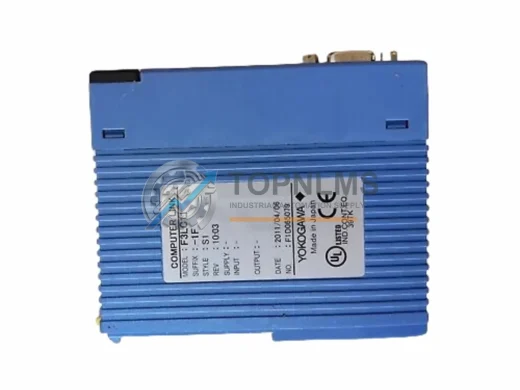
YOKOGAWA F3NC02-ON-Z01 Servo Control Module for STARDOM FCN/FCJ. Rugged, EMI-resistant, 12-month warranty. In stock. Fast shipping. [email protected]
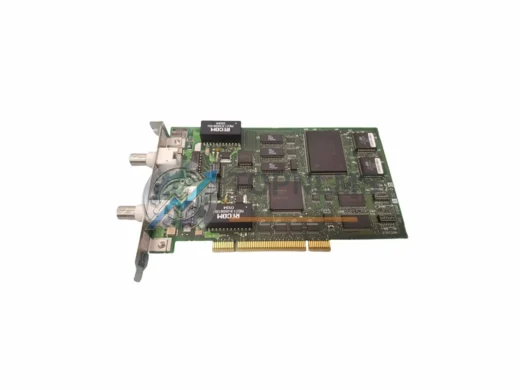
YOKOGAWA VF701-S3 / VF701-S1 PROFIBUS & Modbus communication card replacement for VF700 series drives. Compatible upgrade, 12-month warranty, fast global shipping.
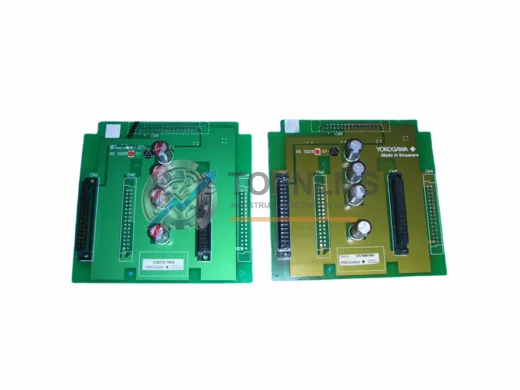
YOKOGAWA ASS9262AT-1 DCS communication board replacement for CENTUM CS3000. Compatible upgrade solution. 12-month warranty. Fast global shipping from stock.
Click Quote This Model and the Part Number field will auto-fill with CP133E-16-S1.