
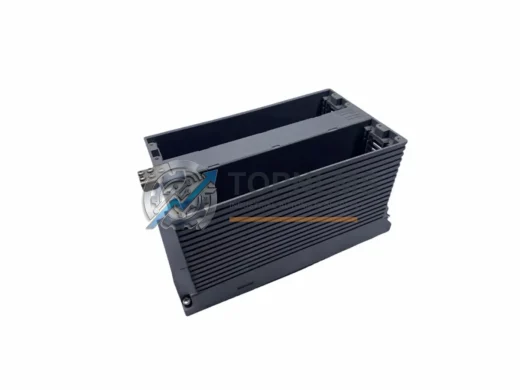
Yokogawa
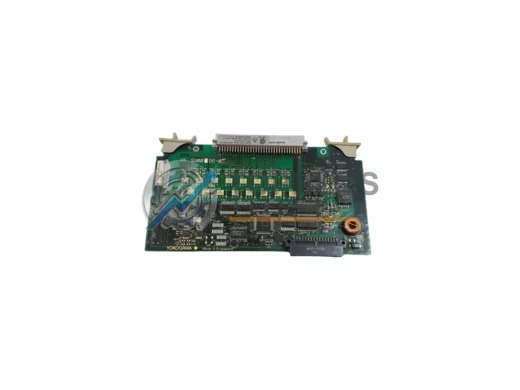
YOKOGAWA AMN32 S1 Original Industrial Spare CENTUM VP Compatible
AMN32 S1YOKOGAWA AMN32 S1 original DCS I/O module for CENTUM VP systems. Verified spare, 12-month warranty, fast global shipping. Reduce downtime now.
Request availability, condition, lead time and export shipping details for ADV151-P60.
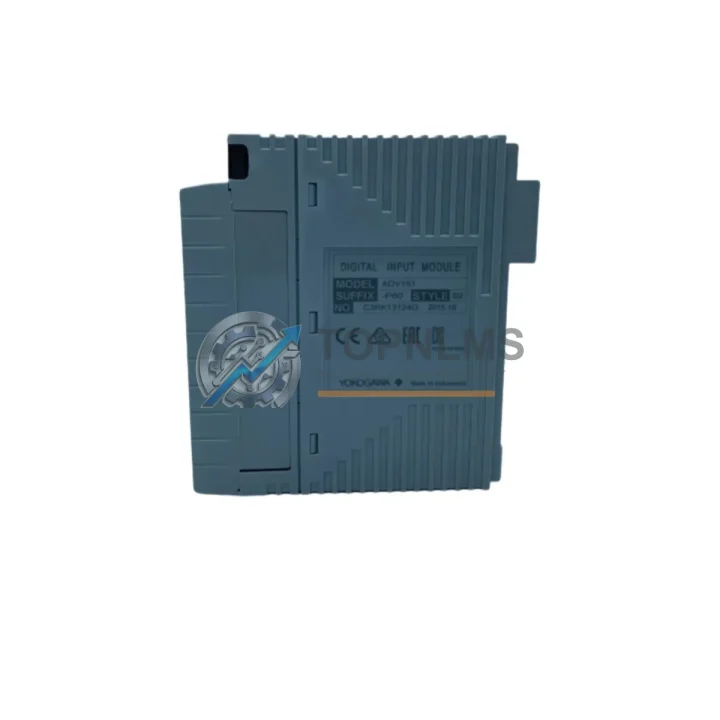
Send this exact part number, quantity and destination country. TOPNLMS will confirm availability, condition and export lead time before quotation.
The YOKOGAWA ADV151-P60 is an original digital input module designed for the CENTUM VP distributed control system — one of the most widely deployed DCS platforms in petrochemical, power generation, pulp & paper, and continuous process manufacturing environments. When a digital input channel fails or a module reaches end-of-life, unplanned downtime can cascade across an entire control loop. Stocking a verified original ADV151-P60 spare is the most direct way to eliminate that risk and restore system integrity within a single maintenance window.
This module handles field-side discrete signal acquisition — converting 24 VDC or 100/110 VAC field contact signals into digital data readable by the CENTUM VP controller. Its role in the I/O subsystem is foundational: process interlocks, motor run/stop feedback, valve position confirmation, and safety shutdown signals all depend on reliable digital input performance. A degraded or failed ADV151-P60 can silently corrupt process data, trigger nuisance alarms, or — in worst-case scenarios — disable critical safety functions.
| Parameter | Specification |
|---|---|
| Model / SKU | ADV151-P60 |
| Brand | YOKOGAWA Electric Corporation |
| Series | CENTUM VP DCS |
| Module Type | Digital Input (DI) Module |
| Input Signal | Dry contact / Voltage input (24 VDC typical) |
| Number of Channels | 60-channel digital input |
| Isolation | Optical isolation between field and system bus |
| Compatibility | CENTUM VP, CENTUM CS 3000 (with engineering verification) |
| Installation | Node unit / I/O nest hot-swap capable |
| Operating Temperature | 0°C to 55°C |
| Humidity | 10% to 90% RH (non-condensing) |
| Country of Origin | Japan |
| Condition | Original, new or refurbished-to-spec |
| Pre-shipment Testing | Functional test performed on every unit |
| Warranty | 12 Months from date of shipment |
A disciplined preventive maintenance program for a CENTUM VP installation goes well beyond replacing a single failed module. When scheduling a planned outage or responding to an unplanned shutdown, maintenance engineers should treat the ADV151-P60 replacement as an opportunity to audit the entire I/O nest and associated field wiring. Experience across process industries shows that when one digital input module degrades, adjacent modules and interconnected components are often operating under similar stress conditions.
During the same maintenance window, it is strongly recommended to inspect and — where service life warrants — replace the ADV151-P00 digital input module (the base-channel variant in the same ADV151 family) if it shares the same node unit. Likewise, the ADV551 analog input module serving the same process loop should be checked for drift or calibration deviation, as analog and digital I/O failures frequently co-occur in aging field cabinets.
The ADV161 digital output module paired with the ADV151-P60 in interlock circuits deserves equal attention — a healthy DI module feeding a degraded DO module still results in failed actuator response. Similarly, the ACM12 communication module responsible for Vnet/IP or ESB-Bus data transmission should be verified for error-free operation; communication faults can mask I/O module alarms and delay fault diagnosis.
Field-side components are equally critical. Terminal boards (such as the TB series used with CENTUM VP I/O modules) should be inspected for corrosion, loose screw terminals, and insulation degradation — particularly in high-humidity or chemically aggressive environments. Signal cables and field wiring harnesses connecting field instruments to the I/O nest are a common source of intermittent digital input faults that are misdiagnosed as module failures. Replacing the ADV151-P60 without inspecting field wiring may result in repeat failures within months.
For facilities running redundant CENTUM VP configurations, the RIO (Remote I/O) bus coupler module and associated power supply modules (such as the PW481 or PW482 series) should be included in the inspection checklist. A marginal power supply delivering voltage at the lower edge of specification will accelerate module wear across the entire node. Stocking a spare PW481 power supply module alongside the ADV151-P60 is a cost-effective hedge against cascading failures during critical production periods.
Finally, for plants with aging CENTUM VP HMI workstations, verifying that the HIS (Human Interface Station) software and associated FCS (Field Control Station) firmware are current ensures that a newly installed ADV151-P60 is recognized correctly and that diagnostic data is accurately reported to the operator console. Proactive spare parts planning — covering the ADV151-P60, companion I/O modules, communication modules, power supplies, and terminal boards — is the most reliable strategy for extending the operational life of a CENTUM VP system beyond its original design horizon.
Many process plants operating CENTUM VP or the earlier CENTUM CS 3000 platform face a common challenge: original spare parts are increasingly difficult to source through OEM channels as the installed base ages. The ADV151-P60 addresses this directly — as an original YOKOGAWA module, it provides a drop-in replacement that requires no re-engineering of I/O assignments, no changes to marshalling cabinets, and no modifications to the FCS configuration database.
For facilities that have already transitioned portions of their DCS to CENTUM VP R6 or later revisions, the ADV151-P60 maintains backward compatibility within the same node architecture, allowing mixed-generation I/O nests to operate without system-wide upgrades. This is particularly valuable for brownfield sites where a full DCS migration is not economically justified but individual module replacements are necessary to maintain process safety and regulatory compliance.
Compared to third-party or aftermarket alternatives, an original ADV151-P60 eliminates compatibility risk, preserves OEM diagnostic functionality, and ensures that the module’s behavior under fault conditions matches the assumptions built into the plant’s safety instrumented system (SIS) design. For facilities subject to IEC 61511 or ISA-84 compliance requirements, using original spare parts is often a documentation and audit requirement — not merely a preference.
Procurement lead times for YOKOGAWA DCS modules through standard OEM channels can extend to 12–26 weeks. Maintaining a buffer stock of critical I/O modules — including the ADV151-P60 — at the plant level or through a trusted industrial spare parts supplier reduces mean time to repair (MTTR) from weeks to hours, directly protecting production throughput and revenue.
Q1: Is the ADV151-P60 compatible with both CENTUM VP and CENTUM CS 3000 systems?
The ADV151-P60 is designed for the CENTUM VP platform. Compatibility with CENTUM CS 3000 depends on the specific node unit generation and firmware revision. We recommend providing your FCS model and software version for engineering verification before ordering if you are running a CS 3000 installation.
Q2: What testing is performed before shipment?
Every ADV151-P60 unit undergoes functional testing prior to shipment to verify channel integrity, optical isolation performance, and bus communication. A test report is available upon request. Units are packed in anti-static ESD-safe packaging with protective foam inserts to prevent transit damage.
Q3: What does the 12-month warranty cover?
The 12-month warranty covers manufacturing defects and functional failures under normal operating conditions from the date of shipment. It does not cover damage resulting from incorrect installation, overvoltage events, or physical mishandling. Warranty claims are processed with a replacement unit dispatched upon fault confirmation.
Q4: How should I manage spare parts inventory for a CENTUM VP system to minimize downtime risk?
Best practice for critical DCS installations is to maintain at least one spare unit for every module type installed in a critical process loop, with additional buffer stock for high-channel-count modules like the ADV151-P60. A rolling inspection cycle — typically aligned with annual turnaround schedules — should include functional verification of installed modules and rotation of long-stored spares to prevent shelf degradation. Consult your maintenance engineer or a qualified DCS integrator to develop a site-specific critical spare parts list.
YOKOGAWA AMN32 S1 original DCS I/O module for CENTUM VP systems. Verified spare, 12-month warranty, fast global shipping. Reduce downtime now.
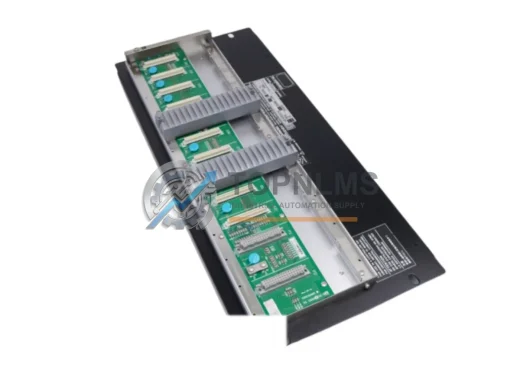
Yokogawa ANB10D-421 original 4-ch 4–20mA analog output module for CENTUM VP & CS 3000. Industrial spare, 12-month warranty, tested before shipment.
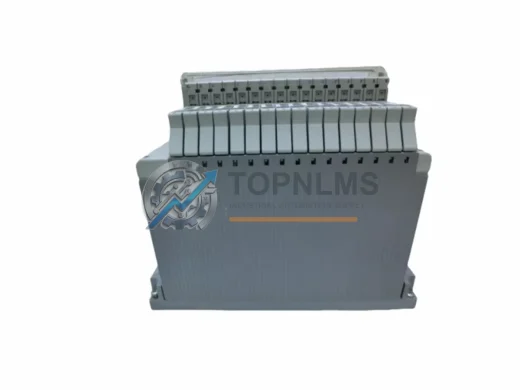
YOKOGAWA AMN21 replacement & upgrade solution for CENTUM CS3000/VP DCS. Compatible wiring, 12-month warranty, fast shipping. Contact: [email protected]
Yokogawa AMM12-S2 original analog input module for CENTUM DCS systems. Tested, 12-month warranty, fast worldwide shipping. Reduce downtime with genuine spares.
Click Quote This Model and the Part Number field will auto-fill with ADV151-P60.