
Yokogawa
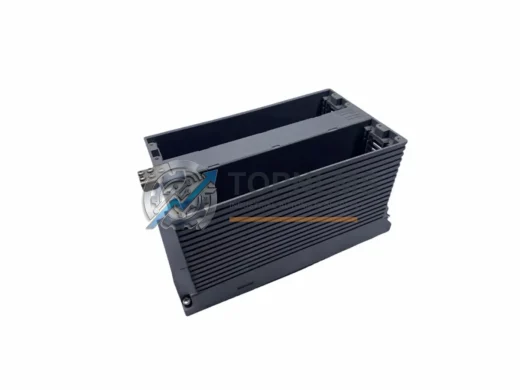
YOKOGAWA AMN32 S1 Original Industrial Spare CENTUM VP Compatible
AMN32 S1YOKOGAWA AMN32 S1 original DCS I/O module for CENTUM VP systems. Verified spare, 12-month warranty, fast global shipping. Reduce downtime now.
Request availability, condition, lead time and export shipping details for AAT145-S53 S1.
Send this exact part number, quantity and destination country. TOPNLMS will confirm availability, condition and export lead time before quotation.
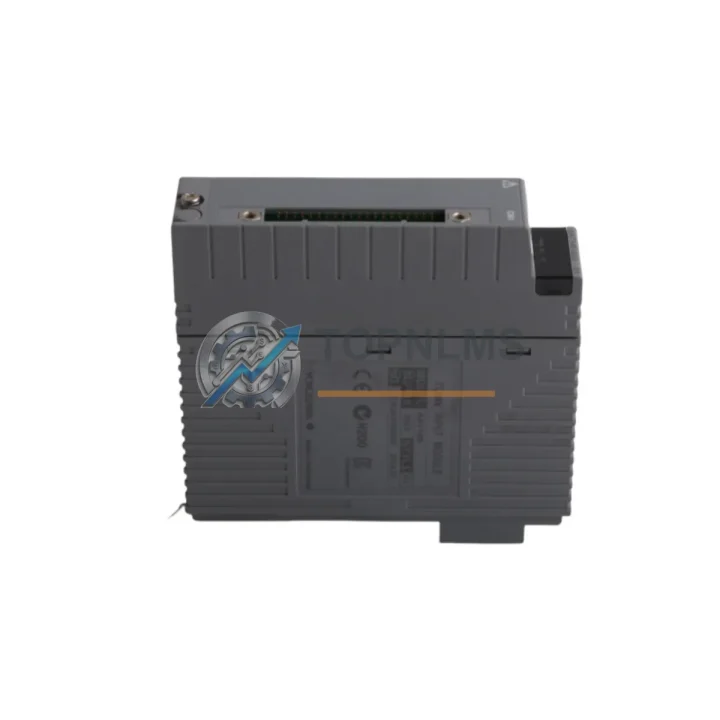
The YOKOGAWA AAT145-S53 S1 is a genuine analog input module engineered for deployment within YOKOGAWA’s CENTUM VP and CS 3000 Distributed Control Systems (DCS). In high-availability industrial environments — petrochemical plants, power generation facilities, pulp and paper mills, and continuous process manufacturing — the integrity of every analog input channel directly determines process visibility and control loop stability. Sourcing an original, factory-tested replacement module is not merely a procurement decision; it is a risk management strategy that protects uptime, product quality, and personnel safety.
When a field technician identifies a degraded or failed analog input module during a scheduled turnaround or an unplanned shutdown, every hour of delay translates into measurable production loss. The AAT145-S53 S1 is stocked and pre-tested at our facility, enabling same-day dispatch to minimize mean time to repair (MTTR). Each unit undergoes functional verification prior to shipment and is backed by a 12-month warranty, giving maintenance engineers the confidence to install and commission without hesitation.
| Parameter | Specification |
|---|---|
| Part Number | AAT145-S53 S1 |
| Brand / Manufacturer | YOKOGAWA Electric Corporation |
| Module Type | Analog Input Module (DCS) |
| Compatible Systems | CENTUM VP, CENTUM CS 3000 |
| Signal Type | 4–20 mA / 1–5 V DC analog input (field instrument signals) |
| Input Channels | Multi-channel analog input (per CENTUM VP/CS 3000 architecture) |
| Communication Interface | Internal V-net / ESB bus (CENTUM backplane) |
| Power Supply | Supplied via CENTUM VP/CS 3000 field control station (FCS) backplane |
| Country of Origin | Japan |
| Installation | Hot-swap capable within CENTUM VP/CS 3000 FCS nest (confirm with site SOP) |
| Operating Temperature | 0°C to 55°C (standard industrial control room environment) |
| Humidity | 5% to 95% RH, non-condensing |
| Applicable Standards | CE, UL (per YOKOGAWA CENTUM VP system certification) |
| Warranty | 12 Months from date of shipment |
| Condition | Original / Genuine — New or Tested Surplus |
Experienced maintenance planners know that a failed analog input module rarely fails in isolation. The AAT145-S53 S1 sits within a broader field control station ecosystem, and a disciplined preventive maintenance (PM) program should treat the entire nest and associated field wiring as a single reliability unit.
During a scheduled inspection or corrective replacement of the AAT145-S53 S1, maintenance teams should simultaneously audit the AAT141 and AAT143 analog input modules installed in adjacent slots — these share the same backplane power rail and ESB bus, and age-related drift in one module often signals similar degradation in neighboring units. The ACM12 and ACM22 communication modules that manage V-net connectivity for the FCS nest should be checked for firmware currency and connector integrity, as communication faults can masquerade as analog input errors during diagnostics.
Field wiring termination is another common failure point. Inspect the terminal board assemblies (TB series) connected to the AAT145-S53 S1’s marshalling cabinet for loose screw terminals, corrosion on signal conductors, and shield continuity. Paired signal isolators and barriers — particularly Zener barriers or galvanic isolators protecting intrinsically safe loops — should be tested for leakage current and isolation resistance, as degraded barriers introduce noise that appears as analog input instability.
The power supply modules (PW481 or PW482) feeding the FCS nest are critical infrastructure. A power supply operating near its rated load with aging capacitors will produce ripple that corrupts A/D conversion accuracy. Replacing or hot-swapping the power supply module during the same maintenance window as the AAT145-S53 S1 eliminates a common root cause of recurring analog faults. Similarly, the ESB bus coupler modules (EB401/EB501) should be inspected for connector wear if the FCS nest has experienced repeated module insertions.
For plants running CENTUM VP with integrated safety instrumented systems, the AAI141-S50 and AAI143-S50 analog input modules used in safety controller nests follow the same maintenance cadence. Aligning PM schedules across standard and safety-rated modules reduces total plant shutdown time and simplifies spare parts inventory management. Maintaining a minimum of one spare AAT145-S53 S1 alongside one spare AAT145-S00 (the base variant) ensures coverage across both S-suffix and standard configurations without overstocking.
Finally, review the FCS nest backplane (ANB10D or ANB11D) for physical damage, oxidized bus contacts, and proper module seating. A backplane fault can cause intermittent analog input errors that are misdiagnosed as module failures, leading to unnecessary module replacements and extended troubleshooting cycles.
The AAT145-S53 S1 is a direct replacement for earlier CENTUM CS 3000 analog input modules, providing a clear upgrade path for plants that have operated legacy DCS hardware beyond its original design life. YOKOGAWA’s CENTUM VP platform maintains backward compatibility with CS 3000 I/O modules, meaning the AAT145-S53 S1 can be installed into existing CS 3000 field control station nests without requiring software reconfiguration or engineering changes in most standard applications — a significant advantage when minimizing shutdown duration is the primary constraint.
For maintenance managers responsible for aging control systems, the strategic value of stocking original YOKOGAWA modules rather than third-party alternatives lies in guaranteed firmware compatibility, predictable calibration behavior, and full support from YOKOGAWA’s global service network. Counterfeit or non-original modules introduce calibration uncertainty and may not respond correctly to CENTUM VP’s self-diagnostic routines, creating hidden reliability risks that only surface during critical process upsets.
Our pre-shipment testing protocol includes power-on functional verification, channel-by-channel analog signal injection testing, and visual inspection for physical damage and connector integrity. Units that pass all test criteria are sealed, labeled with test date and technician ID, and shipped with documentation. This process reduces the risk of receiving a non-functional module and eliminates the need for incoming inspection at the customer’s facility, allowing direct installation from the shipping box to the control cabinet.
Q1: Is the AAT145-S53 S1 compatible with both CENTUM VP and CS 3000 systems?
Yes. The AAT145-S53 S1 is designed for YOKOGAWA CENTUM VP and is backward compatible with CENTUM CS 3000 field control station nests. The S53 suffix denotes a specific hardware revision; confirm your FCS nest model and existing module revision with your YOKOGAWA system documentation before installation to ensure full compatibility.
Q2: What does the 12-month warranty cover, and what is the claims process?
The 12-month warranty covers manufacturing defects and functional failures under normal operating conditions from the date of shipment. If a module fails within the warranty period, contact us at [email protected] with your order number and a description of the fault. We will arrange a replacement or repair at no additional cost. Warranty does not cover damage caused by incorrect installation, overvoltage, or physical mishandling.
Q3: How should I verify the module is functioning correctly after installation?
After installation, use YOKOGAWA’s CENTUM VP engineering environment (System View / HIS) to confirm the module is recognized on the ESB bus and that all configured analog input tags are reading within expected ranges. Perform a loop check by injecting a known 4 mA and 20 mA signal at the field terminal board and verifying the corresponding process variable reading in the DCS. Document the as-found and as-left readings in your maintenance management system.
Q4: What is the recommended spare parts inventory strategy for the AAT145-S53 S1?
For plants with 3 or more FCS nests containing AAT145-S53 S1 modules, we recommend maintaining a minimum of 2 spare units on-site. For single-nest installations, 1 spare is typically sufficient. Given the global supply chain variability for legacy DCS components, procuring spares proactively — rather than reactively after a failure — significantly reduces the risk of extended unplanned downtime. Coordinate spare parts reviews with your annual turnaround planning cycle.
YOKOGAWA AMN32 S1 original DCS I/O module for CENTUM VP systems. Verified spare, 12-month warranty, fast global shipping. Reduce downtime now.
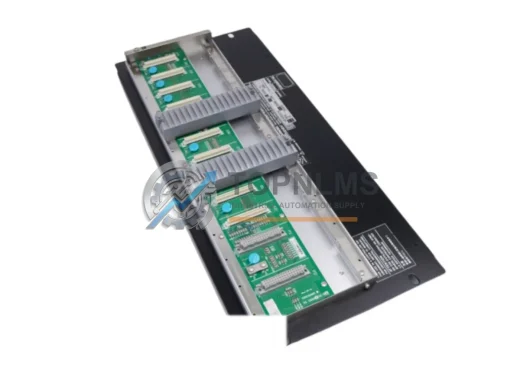
Yokogawa ANB10D-421 original 4-ch 4–20mA analog output module for CENTUM VP & CS 3000. Industrial spare, 12-month warranty, tested before shipment.
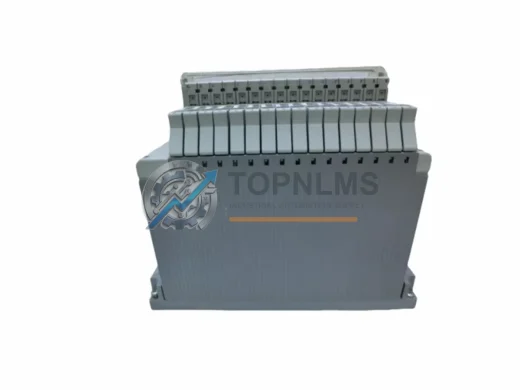
YOKOGAWA AMN21 replacement & upgrade solution for CENTUM CS3000/VP DCS. Compatible wiring, 12-month warranty, fast shipping. Contact: [email protected]
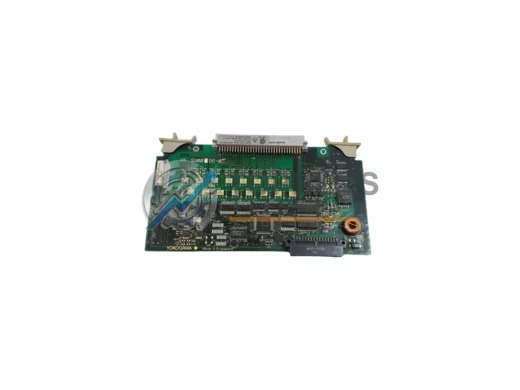
Yokogawa AMM12-S2 original analog input module for CENTUM DCS systems. Tested, 12-month warranty, fast worldwide shipping. Reduce downtime with genuine spares.
Click Quote This Model and the Part Number field will auto-fill with AAT145-S53 S1.