
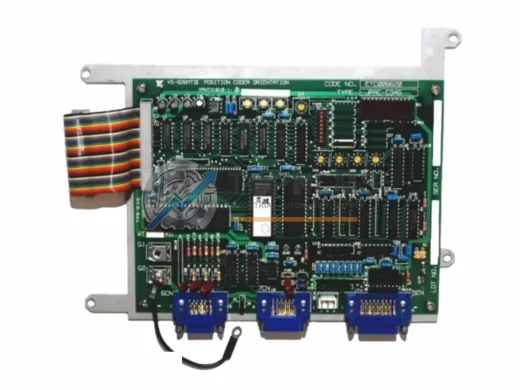
Yaskawa
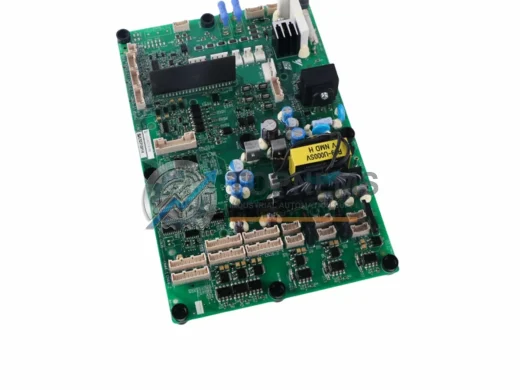
YASKAWA YPLT31006-1A Replacement for AC Drive Series
YPLT31006-1AYASKAWA YPLT31006-1A AC drive control PCB replacement & upgrade. Compatible with YASKAWA G7/F7/E7 series. 12-month warranty, fast shipping. Order now.
Request availability, condition, lead time and export shipping details for JZRCR-YSV24-111.
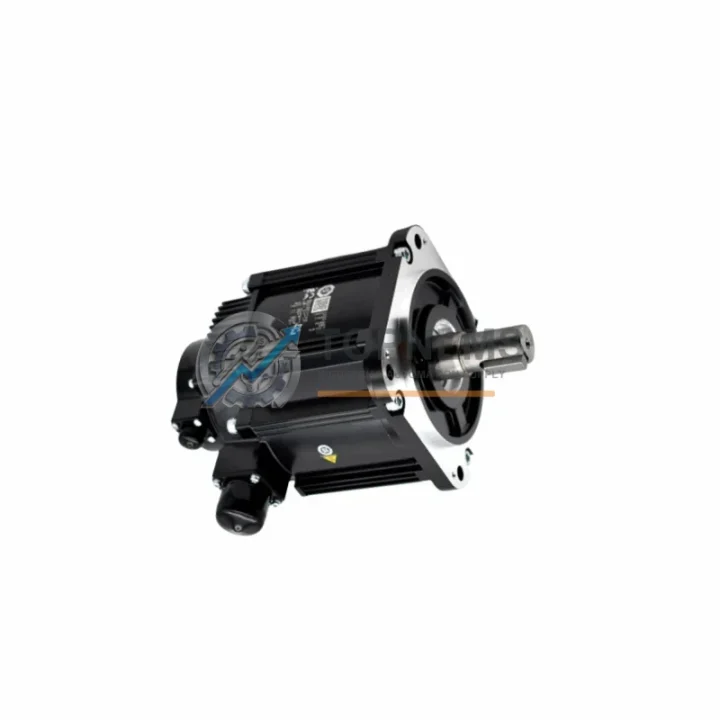
Send this exact part number, quantity and destination country. TOPNLMS will confirm availability, condition and export lead time before quotation.
The YASKAWA JZRCR-YSV24-111 — also referenced under the assembly designation PCU-ETHIOEI — is the dedicated Servo Communication Unit for the YASKAWA DX200 robot controller platform. In servo-driven manufacturing environments, this module forms the critical communication bridge between the DX200 controller and the servo amplifier axes, enabling precise motion coordination across multi-axis robotic systems. When this unit fails or degrades, the entire robot cell is at risk of unplanned downtime, making rapid access to a verified original spare an operational priority for any maintenance team.
Sourced directly from authorized supply channels and tested prior to dispatch, this unit is stocked to support emergency replacement, scheduled overhaul, and preventive spare inventory programs. Each unit ships with a 12-month warranty, giving procurement and maintenance managers confidence in both quality and lifecycle coverage.
| Part Number | JZRCR-YSV24-111 |
| Assembly / Module Code | PCU-ETHIOEI |
| Compatible Controller | YASKAWA DX200 Series Robot Controller |
| Function | Servo Communication Unit — axis communication between controller and servo amplifiers |
| Cable Interface | CBL-YRC-061-1 (8M, J-type) — X81 / X82 connector ports |
| Series | DX200 |
| Product Type | Servo Communication Unit / Robot Controller Spare |
| Origin | Japan |
| Condition | Original, New / Tested Surplus |
| Application Environment | Industrial robot cells, automotive assembly, arc welding, material handling, palletizing |
| Installation | Direct board-level replacement within DX200 controller cabinet |
| Maintenance Note | Inspect connector pins and cable harness at each scheduled PM interval |
| Warranty | 12 Months from date of shipment |
A servo communication fault on the DX200 platform rarely occurs in isolation. In most field cases, the JZRCR-YSV24-111 failure is accompanied by — or preceded by — degradation in adjacent components within the same controller cabinet and servo loop. A disciplined preventive maintenance program should treat this replacement as a trigger for a broader cabinet inspection.
Begin with the CBL-YRC-061-1 communication cable (X81/X82 ports, 8M J-type) that connects this unit to the servo amplifier rack. Cable jacket abrasion, connector pin oxidation, and repeated flex fatigue are common failure precursors — replacing the cable alongside the PCU-ETHIOEI unit eliminates a frequent callback cause. Next, inspect the DX200 servo amplifier modules (SGDV or CACR-series) for alarm history and thermal stress indicators; a communication unit failure can mask underlying amplifier faults that will resurface after the PCU is replaced.
The DX200 power supply unit (JZRCR-YPS01-1 or equivalent) should be load-tested during the same maintenance window — an unstable DC bus is a known contributor to communication module resets and intermittent axis faults. While the cabinet is open, verify the condition of the I/O module board and safety relay module within the DX200 rack; these components share the same backplane environment and are subject to the same thermal cycling and vibration stresses.
For sites running multiple DX200 controllers in a coordinated cell, the Ethernet communication module and fieldbus interface card (DeviceNet or PROFIBUS, depending on cell configuration) should be inspected for firmware currency and connector integrity. Signal integrity issues at the network layer can be misdiagnosed as servo communication faults, making a systematic check of the full communication chain essential.
Maintenance teams should also audit the teach pendant cable assembly (CPS-YRC-061-1 or equivalent) and the controller backplane connector board during any DX200 servo communication unit replacement. These components are frequently overlooked in reactive maintenance scenarios but are critical to sustained system reliability. Rounding out a comprehensive spare kit with a DX200 battery backup unit and a set of terminal block assemblies for the I/O section ensures that the next scheduled PM can be completed without a secondary parts order.
Stocking the JZRCR-YSV24-111 as a critical spare — alongside the cable kit and power supply module — reduces mean time to repair (MTTR) for DX200 servo faults from days to hours, a measurable impact on overall equipment effectiveness (OEE) in high-throughput robot cells.
The YASKAWA DX200 controller platform has been deployed globally across automotive, electronics, food processing, and heavy industry sectors since its introduction. Many of these installations are now in their second decade of operation, and original spare parts availability from standard distribution channels has tightened. The JZRCR-YSV24-111 is a direct OEM replacement — no firmware reconfiguration, no parameter migration, and no compatibility risk — making it the lowest-risk path to restoring a faulted DX200 system to full production status.
For sites managing a fleet of DX200 robots, a standardized spare-parts matrix that includes the PCU-ETHIOEI unit, the CBL-YRC-061-1 cable kit, and the servo amplifier module for each axis count significantly reduces the decision latency during an unplanned outage. Procurement teams that pre-qualify and stock these units eliminate the emergency sourcing premium and the lead-time risk that characterizes reactive spare parts purchasing.
For aging DX200 installations where a full controller upgrade is not yet budgeted, maintaining a verified stock of original communication and servo modules extends the productive life of the existing system by 3–5 years, deferring capital expenditure while sustaining production throughput. This lifecycle extension strategy is well-established in industrial maintenance practice and is directly supported by the availability of tested original spares such as the JZRCR-YSV24-111.
All units are tested for communication integrity and electrical continuity before dispatch. Shipment is supported by commercial invoice, packing list, and warranty documentation. Express international shipping is available for emergency requirements.
Q1: Is the JZRCR-YSV24-111 a direct drop-in replacement for the PCU-ETHIOEI in all DX200 configurations?
Yes. The JZRCR-YSV24-111 is the OEM part number for the PCU-ETHIOEI servo communication unit. It is a direct board-level replacement compatible with all standard DX200 controller configurations. No parameter changes or firmware updates are required for installation.
Q2: What does the 12-month warranty cover, and how is it validated?
The 12-month warranty covers manufacturing defects and functional failure under normal operating conditions from the date of shipment. Each unit is tested prior to dispatch. Warranty claims are supported by shipment documentation and test records. Contact [email protected] to initiate a warranty claim.
Q3: How should I verify compatibility before installation in my specific DX200 system?
Confirm your controller’s model plate designation (DX200) and cross-reference the existing PCU-ETHIOEI or JZRCR-YSV24-111 label on the installed unit. If your system uses a variant DX200 configuration (e.g., extended axis or specific robot model pairing), share your controller serial number and robot model with our technical team at [email protected] for pre-shipment compatibility confirmation.
Q4: What is the recommended spare inventory strategy for a multi-robot DX200 cell?
For cells with 3 or more DX200 controllers, we recommend stocking a minimum of one JZRCR-YSV24-111 unit per 3–5 robots, paired with at least one CBL-YRC-061-1 cable kit and one servo amplifier module per axis type in use. This ratio balances inventory carrying cost against MTTR risk and is consistent with best-practice spare parts management for robot-intensive production environments.
YASKAWA YPLT31006-1A AC drive control PCB replacement & upgrade. Compatible with YASKAWA G7/F7/E7 series. 12-month warranty, fast shipping. Order now.
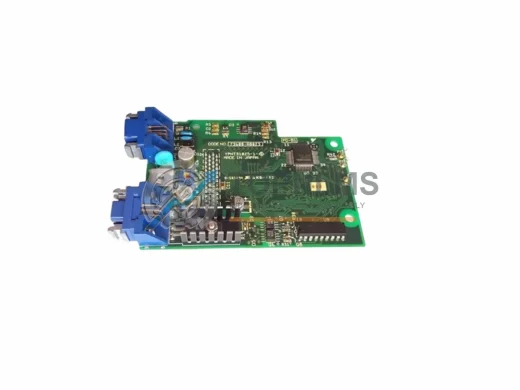
YASKAWA YPHT31033-1-1 73600-A0101 Drive Control PCB – direct replacement & upgrade solution for YPHT Series drives. Compatible wiring, 12-month warranty, fast ship.
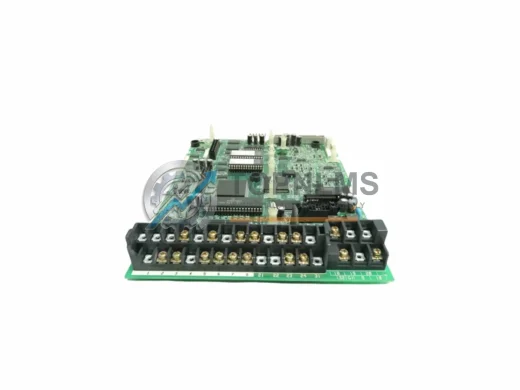
YASKAWA YPHT11013-1 Drive Control PCB — direct replacement & upgrade solution for legacy AC drive systems. In stock, tested, 12-month warranty. Fast global shipping.
Original YASKAWA YPCT31346-1C inverter drive PCB board for CIMR series. Industrial replacement, 12-month warranty, tested before shipment. Fast worldwide delivery.
Click Quote This Model and the Part Number field will auto-fill with JZRCR-YSV24-111.