
EATON
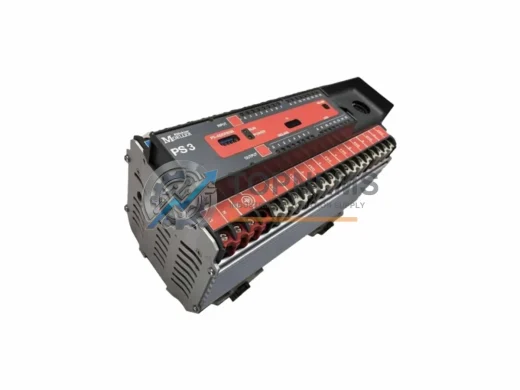
KLOCKNER MOELLER PS3-AC-EE Original Spare PS3 Compatible
PS3-AC-EEKLOCKNER MOELLER PS3-AC-EE original industrial spare for PS3 Series PLC. AC-powered controller replacement. In stock, tested, 12-month warranty. Fast global shipping.
Request availability, condition, lead time and export shipping details for EEA-PAM-513-A-32.
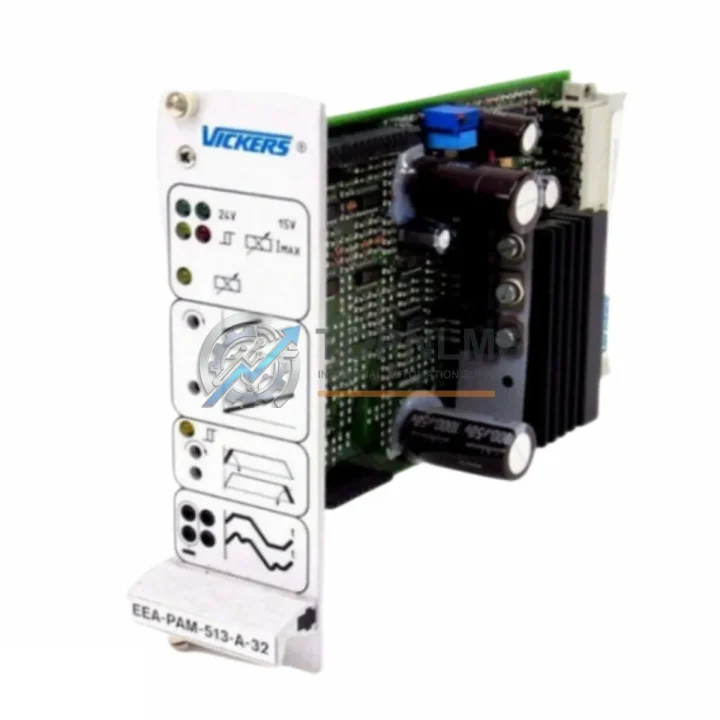
Send this exact part number, quantity and destination country. TOPNLMS will confirm availability, condition and export lead time before quotation.
When a proportional amplifier card fails in a hydraulic control system, every minute of downtime translates directly into lost production. The VICKERS EEA-PAM-513-A-32 is a precision proportional amplifier card engineered for the EEA-PAM Series, widely deployed in industrial hydraulic servo and proportional valve control applications across manufacturing, press, injection molding, and heavy machinery sectors. Whether you are replacing a failed unit, upgrading from an older EEA-PAM variant, or building a strategic spare inventory, the EEA-PAM-513-A-32 delivers the electrical compatibility and signal fidelity your system demands — without requiring rewiring, reprogramming, or mechanical modification.
Many facilities operating legacy hydraulic control cabinets built around VICKERS proportional valve technology face a common challenge: the original amplifier cards are no longer in active production, yet the surrounding system infrastructure — including the hydraulic power unit, directional control valves, pressure transducers, and PLC command interface — remains fully functional and cost-prohibitive to replace wholesale. The EEA-PAM-513-A-32 addresses this challenge directly by maintaining backward-compatible signal conditioning, enabling a drop-in replacement that preserves your existing wiring harness, DIN rail mounting footprint, and analog command signal interface.
| Parameter | EEA-PAM-513-A-32 (Current) | Legacy EEA-PAM Variants |
|---|---|---|
| Card Type | Proportional Amplifier Card | Proportional Amplifier Card |
| Series | EEA-PAM Series | EEA-PAM Series (older revisions) |
| Supply Voltage | 24 VDC (±10%) | 24 VDC |
| Command Signal Input | ±10 VDC / 4–20 mA (configurable) | ±10 VDC analog |
| Output Current | Up to 3.2 A peak per solenoid | Up to 3.0 A (older variants) |
| Mounting | DIN rail / panel mount | DIN rail / panel mount |
| Enable Input | Digital enable, 24 VDC logic | Digital enable, 24 VDC logic |
| Ramp Function | Independent acceleration/deceleration ramp | Single ramp (older variants) |
| Dither Frequency | Adjustable via onboard potentiometer | Fixed or limited adjustment |
| Connector Interface | Compatible with original EEA-PAM wiring harness | Same connector pinout |
| Installation Space | Standard EEA-PAM card footprint | Identical footprint |
| Origin | Germany | Germany |
| Warranty | 12-Month Warranty | N/A (legacy / EOL) |
| Replacement Recommendation | Direct drop-in for all EEA-PAM-513 variants | Upgrade recommended |
A successful migration from a legacy EEA-PAM amplifier card to the EEA-PAM-513-A-32 rarely involves the card alone. In practice, field engineers conducting a proportional valve amplifier replacement will simultaneously inspect and often replace several adjacent components to ensure the upgraded card operates within a clean, stable electrical environment.
The most common companion component is the proportional directional control valve itself — typically a VICKERS KDG4V or KBDG4V series proportional valve — whose solenoid coil condition should be verified before commissioning the new amplifier card. A degraded solenoid coil with elevated resistance or intermittent continuity will cause erratic output behavior even from a fully functional amplifier, making coil resistance measurement a mandatory pre-commissioning step.
The 24 VDC power supply feeding the amplifier card deserves equal attention. Many legacy control cabinets use aging SITOP PSU100S or equivalent DIN rail power supplies that may exhibit voltage ripple or transient spikes beyond the amplifier’s tolerance window. Replacing or verifying the power supply output quality — ideally with a regulated, low-ripple 24 VDC source — protects the new EEA-PAM-513-A-32 from premature failure caused by upstream power quality issues.
On the signal side, the analog command signal originating from the PLC analog output module — such as a Siemens SM 332 AO or Allen-Bradley 1756-OF8 AnalogOutput module — must be verified for signal integrity and calibrated to match the EEA-PAM-513-A-32’s input range. If the PLC analog output module is aging or showing drift, this is an opportune moment to replace it alongside the amplifier card to eliminate signal-chain uncertainty.
Where the command signal travels over longer cable runs within the control cabinet or between cabinets, signal isolation becomes critical. A DIN rail-mounted signal isolator or signal conditioner — such as a Phoenix Contact MINI MCR or equivalent — inserted between the PLC analog output and the amplifier card input eliminates ground loop interference that can cause valve hunting or instability after replacement.
Terminal blocks and wiring ferrules along the signal and power circuits should be inspected and re-torqued during the replacement procedure. Loose terminal connections on Weidmüller or Phoenix Contact terminal strips are a common root cause of intermittent amplifier faults that are misdiagnosed as card failures. Replacing suspect terminal blocks at the time of card replacement eliminates this failure mode from the post-commissioning troubleshooting list.
If the hydraulic system includes a pressure transducer or linear position transducer providing feedback to the amplifier or PLC, its calibration and output signal quality should be verified. A drifting 4–20 mA pressure transducer will cause the closed-loop position or pressure control to behave erratically regardless of the amplifier card’s condition. Verifying or replacing the transducer as part of the upgrade ensures the entire control loop is operating from accurate process data.
Finally, if the control cabinet houses an HMI panel — such as a Siemens SIMATIC HMI TP700 or equivalent — used to set proportional valve parameters or monitor system pressure and flow, its communication link to the PLC should be verified post-replacement to confirm that any parameter changes made during commissioning are correctly reflected in the operator interface.
Q1: Can the EEA-PAM-513-A-32 replace older EEA-PAM-513 revisions without rewiring?
Yes. The EEA-PAM-513-A-32 maintains the same connector pinout and DIN rail footprint as earlier EEA-PAM-513 revisions. In most installations, replacement requires only card removal, insertion of the new unit, and potentiometer re-adjustment for ramp time and dither frequency to match the original system tuning parameters. No rewiring or PLC program modification is required.
Q2: What communication protocol does the EEA-PAM-513-A-32 use with the PLC?
The EEA-PAM-513-A-32 operates on a standard analog command interface (±10 VDC or 4–20 mA), not a digital fieldbus protocol. It receives its command signal directly from the PLC’s analog output module. No protocol configuration, IP addressing, or network commissioning is required. This analog interface ensures compatibility with virtually all PLC platforms including Siemens S7, Allen-Bradley ControlLogix, Mitsubishi MELSEC, and Omron CJ/NJ series controllers.
Q3: How do I verify compatibility with my specific hydraulic valve model before ordering?
Confirm the solenoid coil resistance and rated current of your proportional valve against the EEA-PAM-513-A-32’s output current specification (up to 3.2 A peak). Also verify that your existing command signal source matches the card’s input range. If you have the original system wiring diagram or the legacy amplifier card’s part number, our technical team can confirm compatibility before shipment. Contact us at [email protected] with your system details.
Q4: What does the 12-month warranty cover, and what pre-shipment testing is performed?
Every EEA-PAM-513-A-32 unit undergoes functional electrical testing prior to shipment, including supply voltage input verification, analog command signal response, output current measurement, and enable logic verification. The 12-month warranty covers manufacturing defects and functional failures under normal operating conditions. Warranty replacement or repair support is provided with a target response time of 48 hours from fault confirmation. Units are shipped with protective packaging and ESD-safe handling to prevent transit damage.
KLOCKNER MOELLER PS3-AC-EE original industrial spare for PS3 Series PLC. AC-powered controller replacement. In stock, tested, 12-month warranty. Fast global shipping.
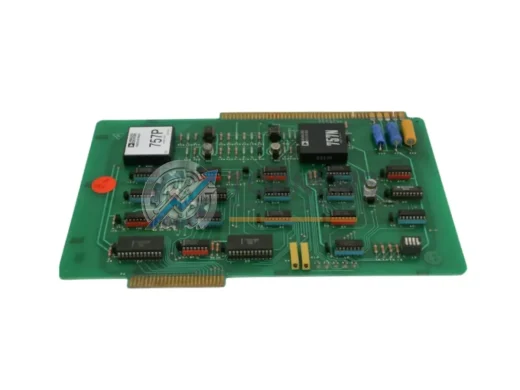
EATON 1401590 original PCB Remote Log Analog/Digital board for WDPF DCS systems. Compatible with 1501590 & 212691. Fast shipping, 12-month warranty.
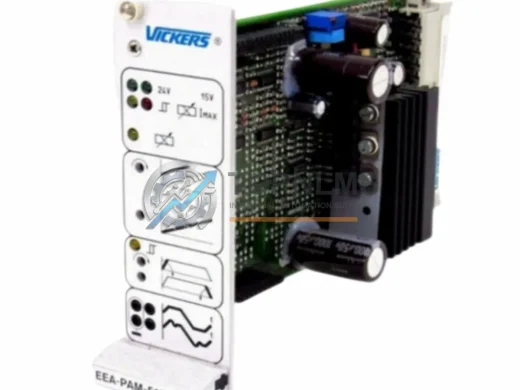
Drop-in replacement for Vickers EEA-PAM513A32-EN53 / 6025852-001. Compatible upgrade for EEA Series proportional amplifier. No rewiring. 12-month warranty.
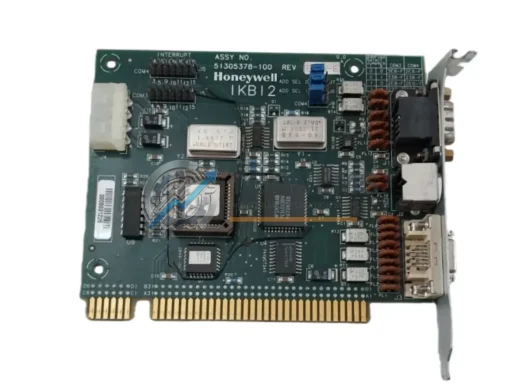
Honeywell 51305378-100 IKBI2 Printer Interface Board replacement for TDC 3000 DCS. Original spare, 12-month warranty, fast global shipping. Upgrade legacy systems now.
Click Quote This Model and the Part Number field will auto-fill with EEA-PAM-513-A-32.