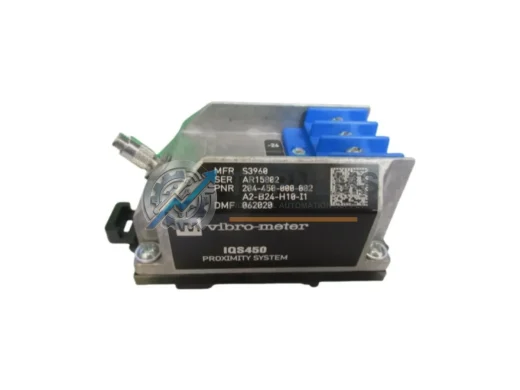
Product Overview
Vibro-Meter TQ402-111-402-000-013 Original Industrial Spare: System Stability & Torque Measurement Reliability
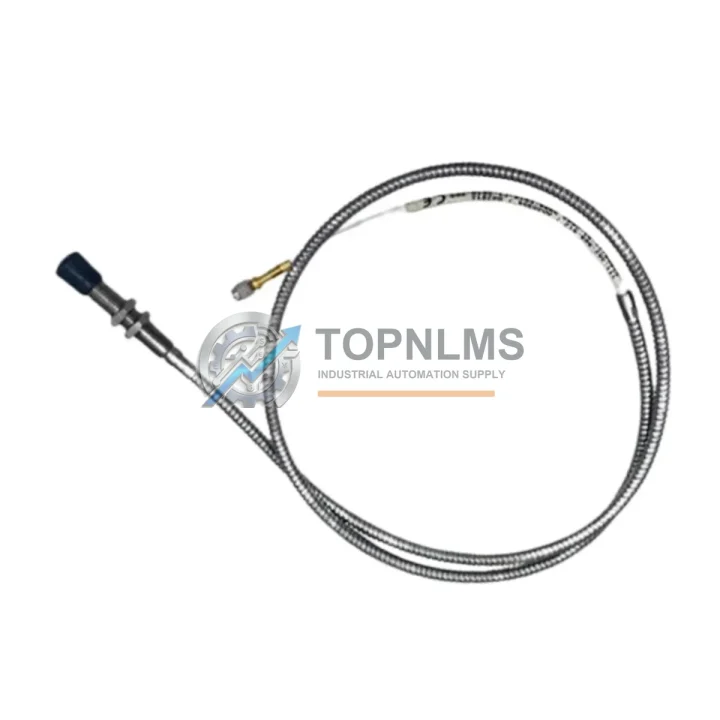
In high-demand industrial environments — rotating machinery, turbine test benches, compressor drives, and precision drive systems — torque measurement accuracy is not optional. The Vibro-Meter TQ402-111-402-000-013 is an original non-contact shaft torque sensor from the TQ Series, engineered for continuous, maintenance-free operation in demanding industrial applications. Whether you are managing a planned overhaul, responding to an unscheduled shutdown, or building a strategic spare parts inventory, securing a verified original TQ402-111-402-000-013 is a direct investment in system uptime and measurement integrity.
Vibro-Meter, a brand of Meggitt SA (Switzerland), has long been the benchmark for precision torque and vibration measurement in power generation, aerospace ground support, marine propulsion, and heavy industrial drive systems. The TQ Series sensors are designed for non-contact, non-intrusive shaft torque measurement — eliminating slip rings, reducing mechanical wear, and delivering stable analog output signals even under harsh environmental conditions. The TQ402-111-402-000-013 variant is configured for specific shaft diameter ranges, signal conditioning requirements, and installation geometries that must be matched precisely during replacement to maintain measurement chain integrity.
Critical Technical Specs
| Parameter |
Specification |
| Part Number |
TQ402-111-402-000-013 |
| Brand / Manufacturer |
Vibro-Meter (Meggitt SA, Switzerland) |
| Series |
TQ402 — Non-Contact Shaft Torque Sensor |
| Measurement Principle |
Non-contact magnetostrictive / inductive torque measurement |
| Output Signal |
Analog (typically ±10 V or 4–20 mA, configuration-dependent) |
| Measurement Range |
Per TQ402 series calibration (application-specific) |
| Operating Temperature |
-20°C to +85°C (sensor head); electronics per signal conditioner spec |
| Protection Class |
IP65 or higher (sensor head) |
| Shaft Compatibility |
TQ402 series — matched to specific shaft diameter and gap tolerance |
| Mounting |
Flange / bracket mount; non-contact air gap installation |
| Country of Origin |
Switzerland |
| Compatible Systems |
Vibro-Meter CM Series signal conditioners, VM600 rack systems, standalone analog inputs |
| Application Environments |
Power generation, turbine test rigs, marine drives, compressor trains, industrial gearboxes |
| Maintenance Recommendation |
Inspect air gap and sensor alignment every 12 months or at major overhaul intervals |
| Warranty |
12 Months — tested and verified before shipment |
Preventive Maintenance Strategy
A torque sensor replacement is rarely an isolated event. When the TQ402-111-402-000-013 is flagged for replacement — whether due to signal drift, physical damage, or scheduled lifecycle renewal — maintenance engineers should treat the intervention as an opportunity for a comprehensive drivetrain and measurement chain inspection.
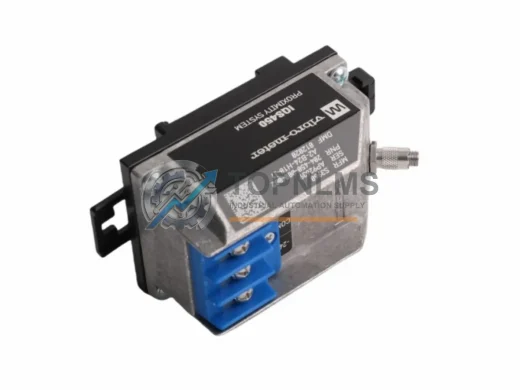
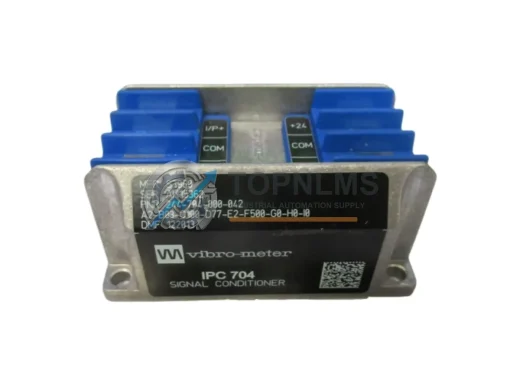
Begin with the signal conditioner: the TQ402 sensor is typically paired with a Vibro-Meter CM series signal conditioner or a VM600 rack-mounted conditioning module. Verify that the conditioner’s calibration coefficients match the replacement sensor’s sensitivity and zero-offset values. A sensor swap without recalibration of the associated VM600 torque input card or standalone conditioner is a common source of post-replacement measurement error.
Inspect the sensor cabling and connector assemblies — the coaxial or multi-pin cables running from the sensor head to the signal conditioner are subject to vibration fatigue, connector corrosion, and insulation degradation over time. Replacing the TQ402-111-402-000-013 while retaining aged cabling introduces a new failure point. Vibro-Meter-compatible sensor cables and connector kits should be part of any torque sensor replacement kit.
Check the shaft surface condition in the measurement zone. Non-contact torque sensors depend on consistent shaft surface properties — any corrosion, paint overspray, or mechanical damage in the sensing area will degrade signal quality. While the shaft is accessible, inspect adjacent proximity probes (such as Vibro-Meter PR9268 or equivalent eddy-current probes) used for speed and position reference, as these are often co-located with torque sensors in the same measurement plane.
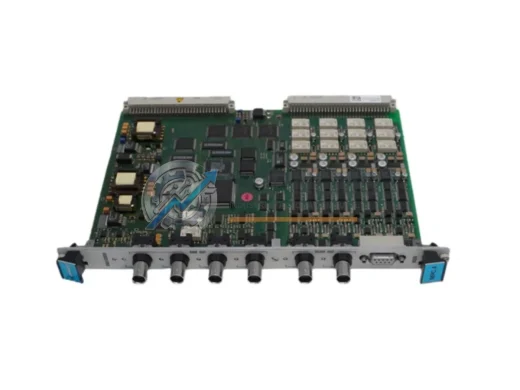
For systems integrated into a VM600 condition monitoring rack, this is also the right moment to inspect other rack-mounted modules: vibration input cards (MPC4), speed input modules, and relay output cards should all be checked for firmware currency and hardware condition. Rack backplane connectors and power supply modules within the VM600 chassis are long-lead items that benefit from proactive inspection during any planned sensor replacement outage.
If the drivetrain includes a gearbox or coupling between the torque measurement point and the driven load, inspect coupling element condition and gearbox oil levels during the same maintenance window. Torsional vibration anomalies that caused premature sensor wear may originate upstream in the mechanical train. Complementary accelerometers (such as Vibro-Meter CA series or equivalent ICP-type sensors) mounted on bearing housings adjacent to the torque measurement zone can provide early warning of developing mechanical faults before they propagate to the sensor.
Finally, review the earthing and shielding of the entire measurement chain. Ground loops and inadequate cable shielding are the leading causes of noise and drift in torque measurement systems. Ensure that the sensor body, cable shield, and signal conditioner chassis are all bonded to a clean instrument earth, separate from power earth.
Strategic Replacement Solutions
The TQ402-111-402-000-013 is a legacy-compatible original spare that allows direct replacement of aging TQ402 series sensors without requiring system reconfiguration, software parameter changes, or mechanical modifications to the sensor mounting bracket. This is a critical advantage in facilities where the control system or data acquisition platform was commissioned years or decades ago and where re-engineering the measurement chain is not operationally or economically viable.
For maintenance planners managing aging Vibro-Meter installations, the availability of original TQ402 series spares directly extends the operational life of the measurement system by 5–10 years beyond the point at which the OEM may have discontinued active production. Stocking one or two units of the TQ402-111-402-000-013 as a cold spare eliminates the risk of extended downtime caused by long procurement lead times — a risk that is particularly acute for non-contact torque sensors, which are precision-calibrated instruments with limited aftermarket alternatives.
Unlike generic or remanufactured alternatives, an original Vibro-Meter TQ402-111-402-000-013 ships with factory calibration data, ensuring that the replacement sensor’s sensitivity and linearity are within the original specification envelope. This is essential for applications where torque measurement feeds into process control loops, efficiency calculations, or condition monitoring alarm thresholds. Substituting a non-original sensor without recalibration of the entire measurement chain introduces systematic measurement error that may not be immediately apparent but will degrade process performance and maintenance decision quality over time.
All units supplied by TOPNLMS are sourced from verified supply channels, individually tested for electrical continuity, insulation integrity, and output signal functionality prior to shipment, and covered by a 12-month warranty from the date of delivery.
Support FAQ
Q1: What is the expected service life of the TQ402-111-402-000-013, and when should I plan for replacement?
Under normal operating conditions — clean environment, correct air gap, stable temperature — TQ402 series sensors typically achieve 8–15 years of service life. Replacement should be planned when signal drift exceeds calibration tolerance, when physical inspection reveals sensor head damage, or as part of a scheduled major overhaul at the 10-year mark. Stocking a spare unit before the sensor reaches end-of-life is strongly recommended to avoid unplanned downtime.
Q2: Is the TQ402-111-402-000-013 a direct drop-in replacement for my existing TQ402 installation?
Yes — provided the existing installation uses the same TQ402 series mounting bracket and shaft geometry. The -013 configuration suffix specifies the sensor’s electrical output range and connector type. Verify that your signal conditioner is configured for the same output range before installation. If you are replacing a sensor with a different suffix, contact our technical team to confirm compatibility before ordering.
Q3: How is the unit tested before shipment, and what does the 12-month warranty cover?
Each TQ402-111-402-000-013 unit undergoes electrical continuity testing, insulation resistance verification, and output signal functional testing prior to dispatch. The 12-month warranty covers manufacturing defects and functional failures under normal operating conditions. It does not cover damage resulting from incorrect installation, overvoltage, or mechanical impact. A test report is available upon request.
Q4: Can I order multiple units for strategic inventory, and what are the lead times?
Yes — TOPNLMS supports bulk and strategic inventory orders for maintenance departments and MRO procurement teams. Standard in-stock units ship within 3–5 business days. For larger quantities or specific configuration requirements, contact us directly for lead time confirmation and volume pricing. Building a minimum stock of 1–2 units per critical measurement point is recommended for facilities with no-downtime operational requirements.