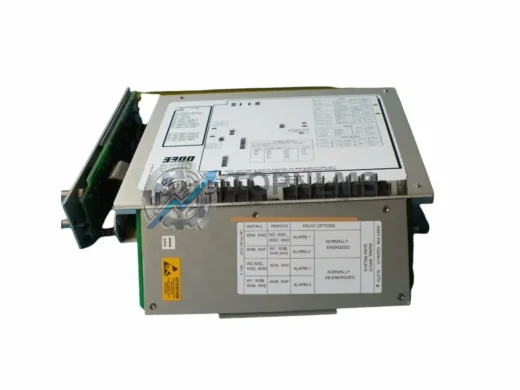
Product Overview
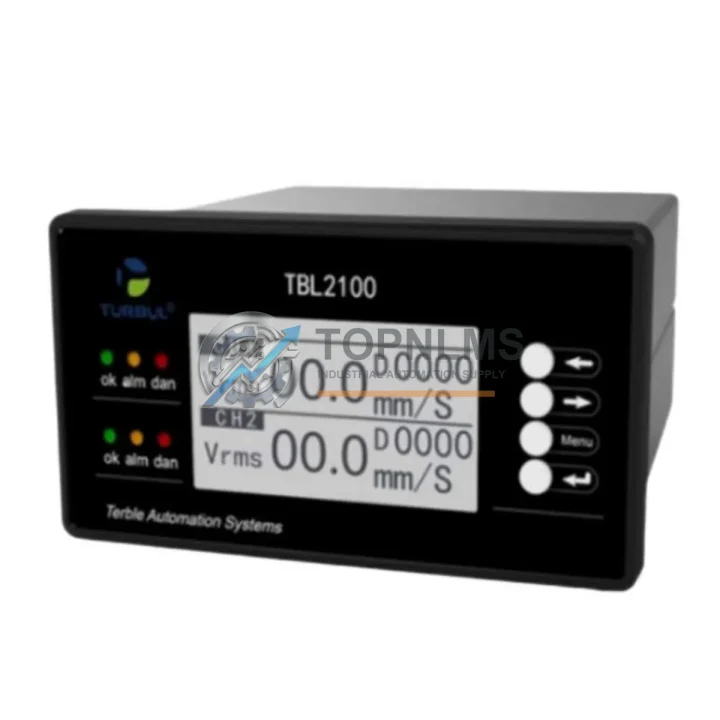
TURBUL TBL2100 Original Industrial Spare TBL Compatible: Sustaining System Stability Through Precision Vibration Monitoring
In industrial facilities where rotating machinery operates continuously — from high-speed turbines and centrifugal compressors to heavy-duty pumps and electric motors — the ability to detect early-stage mechanical anomalies is the cornerstone of uninterrupted production. The TURBUL TBL2100 Vibration Monitoring Module is an original spare component from TURBUL’s TBL series, purpose-built to deliver real-time vibration signal acquisition, conditioning, and transmission in demanding industrial environments. Whether you are replacing a failed unit, building a preventive maintenance inventory, or extending the operational life of an aging condition monitoring system, the TBL2100 provides a direct, fully compatible solution with no system reconfiguration required.
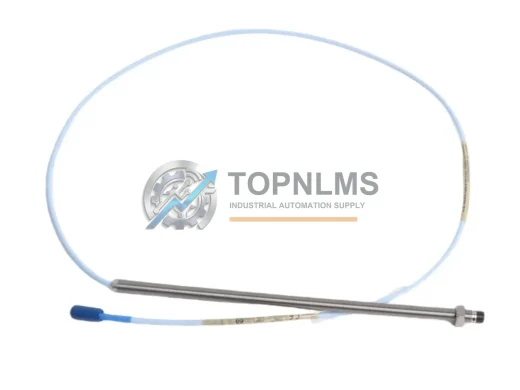
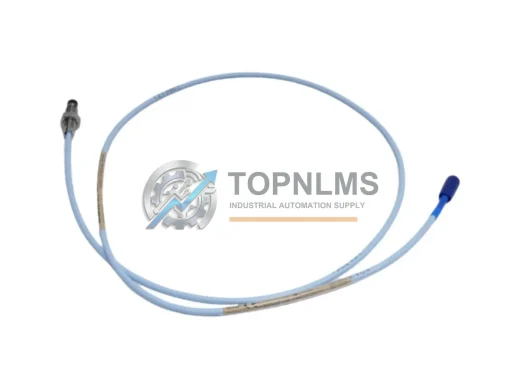
The TBL2100 is designed to interface seamlessly with TURBUL’s broader TBL series architecture, accepting inputs from standard industrial vibration transducers including velocity sensors, accelerometers, and proximity probes. Its signal conditioning circuitry filters out electrical noise and mechanical interference, ensuring that the vibration data forwarded to the monitoring system accurately reflects the true mechanical state of the asset — not artifacts introduced by the electrical environment. This level of signal fidelity is critical in facilities where false alarms trigger unnecessary shutdowns, or where missed alarms allow damage to propagate undetected.
Critical Technical Specs Table
| Parameter |
Specification |
| Model |
TBL2100 |
| Brand |
TURBUL |
| Series |
TBL Series |
| Module Type |
Vibration Monitoring Module |
| Input Signal |
Velocity / Acceleration / Proximity (configurable) |
| Measurement Range |
0–50 mm/s RMS (velocity); 0–20 g peak (acceleration) |
| Output Signal |
4–20 mA analog / digital relay alarm output |
| Power Supply |
24 VDC (±10%) |
| Operating Temperature |
-20°C to +70°C |
| Protection Rating |
IP20 (panel-mount); IP65 field enclosure optional |
| Communication Interface |
RS-485 / Modbus RTU |
| Mounting |
DIN Rail / Panel Mount |
| Weight |
500 g |
| Origin |
China |
| Compatibility |
TURBUL TBL Series monitoring systems; standard 4–20 mA DCS/PLC input cards |
| Application |
Turbines, compressors, pumps, motors, fans, gearboxes |
| Warranty |
12 Months — covers manufacturing defects and functional failure under normal operating conditions |
Preventive Maintenance Strategy
A vibration monitoring module does not operate in isolation — it is one node in a broader condition monitoring and control architecture. When planning a maintenance cycle or spare parts inventory around the TBL2100, experienced maintenance engineers consistently identify several companion components that should be inspected or replaced concurrently to avoid secondary failures after a module swap.
The TURBUL TBL2101 Signal Conditioner is the most common companion to the TBL2100, providing upstream signal amplification and filtering before the vibration data reaches the monitoring module. If the TBL2100 has been operating in a high-EMI environment, the TBL2101 should be inspected for drift or calibration offset at the same time. Similarly, the TURBUL TBL2200 Proximity Probe Interface Module is frequently installed alongside the TBL2100 in turbine monitoring panels, handling shaft displacement signals that complement the velocity and acceleration data captured by the TBL2100.
On the power supply side, the TURBUL PSU-24V DIN Rail Power Supply feeds the TBL series modules and should be load-tested during any planned maintenance window. A degraded power supply is one of the most common root causes of intermittent vibration monitoring faults that are incorrectly attributed to the monitoring module itself. Alongside the power supply, the terminal block assemblies connecting the transducer cables to the TBL2100 input terminals should be inspected for corrosion, loose crimps, and insulation degradation — particularly in high-humidity or chemically aggressive environments.
For facilities running integrated PLC or DCS architectures, the 4–20 mA analog input cards on the control system side — whether Siemens S7 SM331, Rockwell 1756-IF16, or equivalent — should be verified for channel accuracy after a TBL2100 replacement, as a failed monitoring module can sometimes cause signal clamping that masks input card degradation. The RS-485 communication cable connecting the TBL2100 to the SCADA or DCS host should also be continuity-tested, as cable insulation failures are common in high-vibration cable trays near rotating equipment.
Finally, the alarm relay output module downstream of the TBL2100 — typically a dedicated relay module or a DCS digital input card — should be functionally tested to confirm that high-vibration trip signals will correctly propagate to the safety interlock system. In critical rotating machinery applications, a vibration monitoring module that is functioning correctly but connected to a failed relay output provides no protection whatsoever.
Strategic Replacement Solutions
The TBL2100 has been deployed across a wide range of industrial installations over its production lifecycle, and many facilities are now operating aging TBL series panels where the original modules are approaching or have exceeded their recommended service life. TURBUL’s TBL series was designed with long-term backward compatibility as a core engineering principle, meaning that a new TBL2100 unit can be installed as a direct drop-in replacement for earlier production variants without firmware changes, wiring modifications, or recalibration of the host monitoring system.
This compatibility is particularly valuable in industries where the cost and risk of a full system upgrade — replacing the entire vibration monitoring panel with a new-generation platform — cannot be justified against the remaining operational life of the monitored asset. A single TBL2100 replacement module, installed during a planned maintenance window, can restore full monitoring capability to a panel that would otherwise require a capital project to replace. The module arrives pre-tested and ready for installation, with all factory calibration parameters set to TBL series defaults.
For facilities managing multiple rotating assets, we recommend maintaining a minimum of two TBL2100 units in on-site spare parts inventory. The module’s compact DIN rail form factor makes storage straightforward, and the 12-month warranty from date of shipment ensures that inventory stock remains covered during the storage period. In the event of an unplanned failure, having a spare TBL2100 on-site reduces mean time to repair (MTTR) from days — the typical lead time for emergency procurement — to hours.
Support FAQ
Q1: What does the 12-month warranty cover for the TBL2100?
The 12-month warranty covers all manufacturing defects and functional failures under normal operating conditions from the date of shipment. Each unit undergoes functional testing prior to dispatch, including signal input/output verification and communication interface checks. If a unit fails within the warranty period under normal operating conditions, we provide a replacement or full refund. The warranty does not cover damage resulting from incorrect installation, overvoltage events, or physical impact.
Q2: How do I verify that a TBL2100 is compatible with my existing TURBUL monitoring panel?
The TBL2100 is compatible with all standard TURBUL TBL series monitoring panels that accept 24 VDC-powered signal conditioning modules with 4–20 mA or RS-485 Modbus output. If you can share your panel model number or existing module part number, our technical team can confirm compatibility before shipment. We recommend providing the nameplate data from your existing module when placing an order.
Q3: What pre-shipment testing is performed on each TBL2100 unit?
Every TBL2100 unit is functionally tested before shipment. Testing includes power-on verification, analog output accuracy check across the full 4–20 mA range, alarm relay output actuation test, and RS-485 communication response verification. Units that do not pass all test criteria are not shipped. A test record is available upon request.
Q4: Can the TBL2100 be used as a long-term spare for an older TURBUL system that is no longer in production?
Yes. The TBL2100 is specifically recommended as a long-term spare for legacy TURBUL TBL series installations. Because TURBUL designed the TBL series with sustained backward compatibility, the TBL2100 functions as a direct replacement for earlier module variants. We maintain stock of TBL2100 units to support facilities that need to extend the operational life of existing monitoring systems without undertaking a full platform migration. Contact our team to discuss volume pricing for strategic spare parts inventory programs.