
Triconex
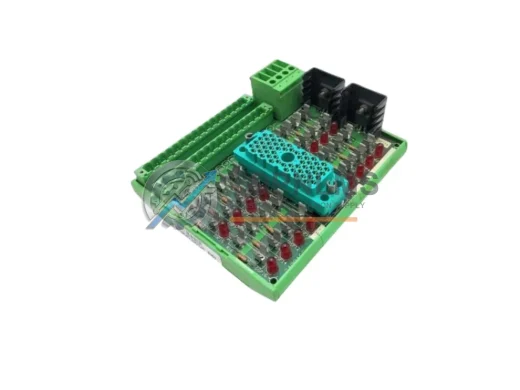
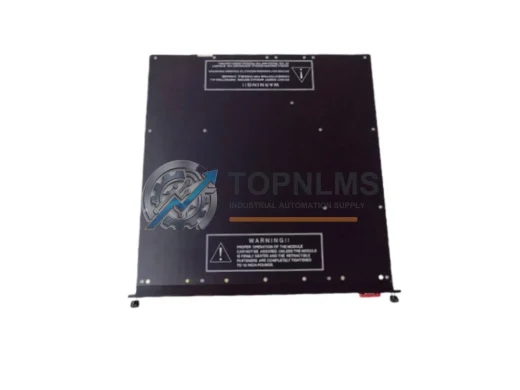
Triconex 9662-810 Ruggedized Termination Panel Harsh Environments
9662-810Triconex 9662-810 ruggedized termination panel for Tricon TMR safety systems. Harsh environment rated, 12-month warranty. In stock — fast shipping from TOPNLMS.
Request availability, condition, lead time and export shipping details for 4119.
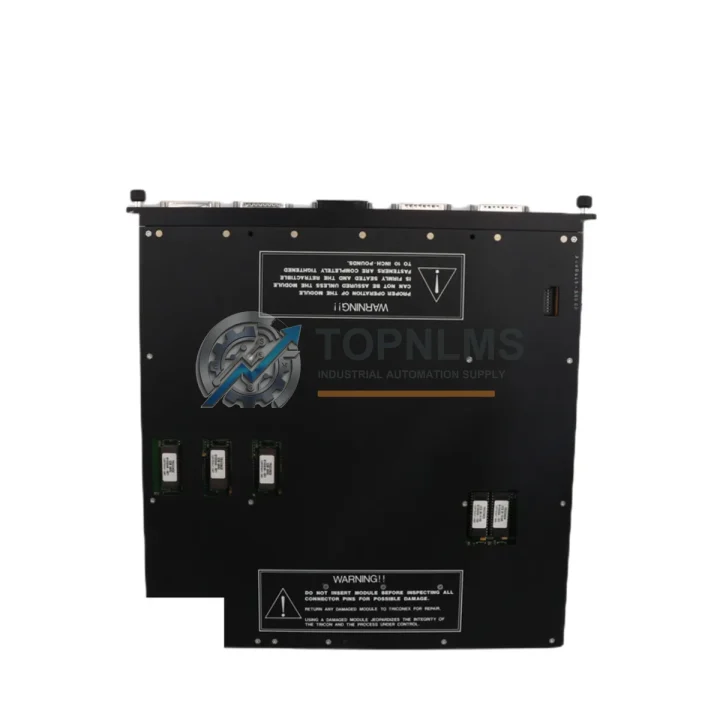
Send this exact part number, quantity and destination country. TOPNLMS will confirm availability, condition and export lead time before quotation.
The TRICONEX 4119 is an original enhanced intelligent module designed for the Tricon Triple Modular Redundancy (TMR) Safety Instrumented System (SIS), rated to SIL 3 under IEC 61511. In process industries where unplanned downtime carries six-figure hourly costs, maintaining a verified spare of the 4119 in your critical-spares inventory is one of the highest-return decisions a reliability engineer can make. This module supports the Tricon chassis architecture and is engineered to drop into an existing installation without reconfiguration, preserving the original system’s certified safety integrity level and diagnostic coverage.
Whether you are managing a refinery control room, a chemical plant emergency shutdown system, a turbine protection loop, or an offshore platform safety layer, the 4119 sits at the heart of the Tricon’s voting logic. Its TMR architecture means three independent processing channels continuously cross-check each other, and a single-channel fault does not interrupt the safety function. Replacing a degraded or failed 4119 with a tested original spare restores full TMR redundancy and returns the system to its designed fault-tolerance envelope — the only acceptable outcome in a SIL 3 application.
| Parameter | Specification |
|---|---|
| Part Number / SKU | 4119 |
| Brand | TRICONEX (Schneider Electric) |
| Series | Tricon TMR (Triple Modular Redundancy) |
| Module Type | Enhanced Intelligent Module |
| Safety Integrity Level | SIL 3 (IEC 61511 / IEC 61508) |
| Architecture | Triple Modular Redundancy (TMR) — 2oo3 voting |
| Chassis Compatibility | Tricon v9 / v10 / v11 main chassis |
| Communication | TriBus backplane interface |
| Operating Temperature | 0 °C to +60 °C |
| Relative Humidity | 5% to 95% non-condensing |
| Power Supply | Supplied via Tricon chassis backplane |
| Installation | Hot-swap capable (chassis-dependent); no system shutdown required in redundant configurations |
| Certifications | TÜV-certified SIL 3; FM; CE |
| Country of Origin | United States |
| Condition | Original / Genuine — fully tested before shipment |
| Warranty | 12 Months from date of shipment |
A scheduled inspection of the Tricon safety system should never focus on a single module in isolation. The 4119 operates within a tightly integrated control cabinet ecosystem, and the reliability of the overall SIS depends on the health of every component in the safety loop. During a planned turnaround or annual inspection, maintenance teams should simultaneously evaluate the Tricon Power Supply Module (e.g., 8312) that feeds the chassis — a degraded power supply is one of the leading causes of spurious trips and unexplained module faults. The Tricon Main Processor Module (e.g., 4351B or 4352) should be checked for firmware currency and diagnostic error logs, as processor anomalies can mask downstream module issues.
I/O integrity is equally critical. The Tricon Digital Input Module (e.g., 3501E) and Digital Output Module (e.g., 3603E) connected to field instruments should be tested for channel-level diagnostics and verified against the safety requirements specification. If the plant uses analog measurement loops, the Tricon Analog Input Module (e.g., 3700A) should be calibrated and its HART pass-through verified. Communication modules such as the Tricon Communication Module (TCM, e.g., 4119A or 4554) that link the Tricon to the DCS or historian should be inspected for network fault counters and redundancy status.
At the field wiring level, Tricon terminal assembly panels and field termination assemblies (FTAs) are often overlooked during module-focused inspections. Corroded terminals, loose ferrules, or degraded cable shields on the FTA can introduce signal noise that mimics module faults. Replacing aging FTA cables and verifying torque on terminal blocks during the same maintenance window as a 4119 replacement eliminates a common source of nuisance diagnostics. For plants running Modbus or OPC-based integration, verifying the Tricon Enhanced Intelligent Communication Module (EICM) configuration alongside the 4119 replacement ensures the safety system’s data interface remains stable after the swap.
Stocking a coordinated set of Tricon spares — including the 4119, a processor module, at least one I/O module per type in use, and a power supply — transforms reactive maintenance into a structured reliability program. The cost of holding these spares is a fraction of a single unplanned shutdown event.
The TRICONEX 4119 addresses one of the most persistent challenges in legacy SIS management: sourcing a verified original replacement for a module that may no longer be available through standard distribution channels. As Tricon systems age into their second and third decades of service, the installed base continues to operate reliably — but the supply of certified spare modules tightens. Procuring an original 4119 from a specialist industrial spare parts supplier allows plants to extend the operational life of their Tricon system without the capital expenditure and re-certification burden of a full system migration.
Unlike third-party or refurbished alternatives, an original 4119 maintains the system’s TÜV certification integrity. Introducing a non-original module into a SIL 3 loop can invalidate the safety case and trigger a mandatory re-validation under IEC 61511. Using a genuine TRICONEX 4119 eliminates this risk entirely — the module is a like-for-like replacement that requires no changes to the safety application program, no I/O mapping updates, and no re-download of the Tricon configuration. Downtime for the replacement is limited to the physical swap and the standard post-maintenance functional test, which can typically be completed within a single shift.
For plants managing multiple Tricon systems across different units or sites, establishing a centralized spare parts pool that includes the 4119 alongside processor and I/O modules reduces per-unit spare holding costs while maintaining system-wide coverage. This pooling strategy is particularly effective for organizations operating Tricon v9 and v10 chassis in parallel, where the 4119 is cross-compatible across chassis generations.
Q1: Is the TRICONEX 4119 tested before shipment?
Yes. Every 4119 unit is powered on and subjected to a functional diagnostic test prior to shipment. Test records are available upon request. The module ships with a 12-month warranty covering manufacturing defects and functional failures under normal operating conditions.
Q2: How do I verify compatibility with my existing Tricon chassis?
The 4119 is compatible with Tricon v9, v10, and v11 main chassis using the standard TriBus backplane. Confirm your chassis model number from the nameplate and cross-reference with the Tricon Hardware Planning and Installation Guide. If you require compatibility confirmation before purchase, contact us with your chassis model and firmware version and our technical team will verify fit.
Q3: What is the recommended spare holding strategy for the 4119?
For a single Tricon system, a minimum of one cold spare 4119 is recommended. For multi-system or multi-site installations, a ratio of one spare per three to five installed units is a common industry practice. Spares should be stored in anti-static packaging in a climate-controlled environment and inspected annually for physical condition.
Q4: What does the 12-month warranty cover, and what is the return process?
The warranty covers functional failure of the module under normal operating conditions for 12 months from the shipment date. It does not cover damage caused by incorrect installation, overvoltage, or physical impact. To initiate a warranty claim, contact [email protected] with your order number, a description of the fault, and any available diagnostic logs from the Tricon engineering workstation. Replacement or repair will be arranged within 5 business days of claim verification.
Triconex 9662-810 ruggedized termination panel for Tricon TMR safety systems. Harsh environment rated, 12-month warranty. In stock — fast shipping from TOPNLMS.
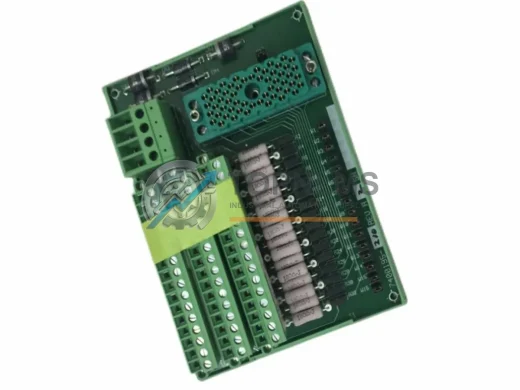
Triconex 7400169-310 9962-1XX ruggedized terminal panel for Tricon TMR SIS. In stock, tested, 12-month warranty. Fast shipping. Contact: [email protected]
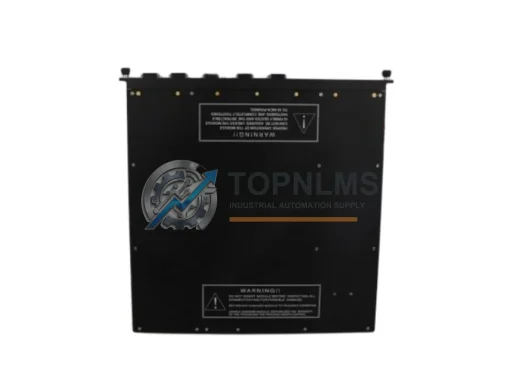
TRICONEX 9662-110 Panel Field Termination Assembly. Drop-in replacement & upgrade for Tricon TMR v9/v10. Compatibility verified, tested, 12-month warranty.
Triconex MP 3009X TMR Main Processor. SIL 3 certified Tricon series replacement. Compatible upgrade, 12-month warranty, fast global shipping from stock.
Click Quote This Model and the Part Number field will auto-fill with 4119.