
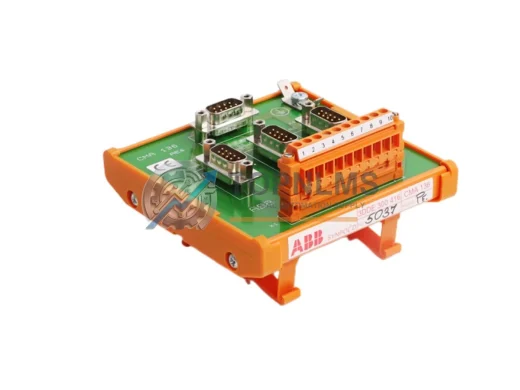
ABB
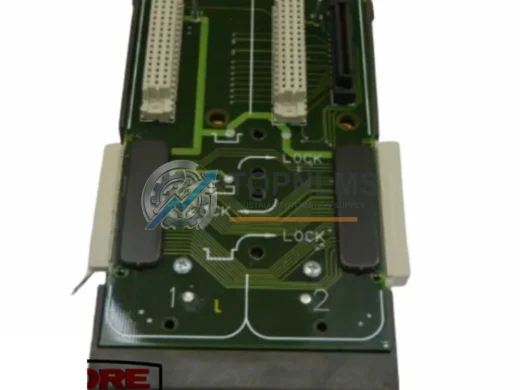
ABB CMA136 3DDE300416 Ruggedized Relay Terminal Module
CMA136 3DDE300416ABB CMA136 3DDE300416 ruggedized relay terminal module for UNITROL excitation systems. Original spare, tested, 12-month warranty, fast global shipping.
Request availability, condition, lead time and export shipping details for TH230D40NZ-3.
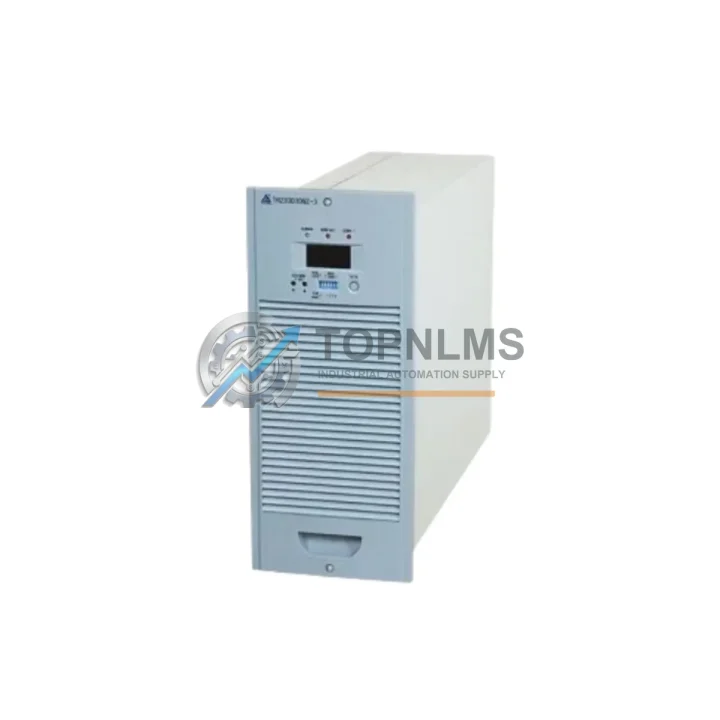
Send this exact part number, quantity and destination country. TOPNLMS will confirm availability, condition and export lead time before quotation.
The TONHE TH230D40NZ-3 is an original three-phase force-air cooled rectifier module engineered for demanding industrial power conversion environments. As a critical component within the TH Series rectifier lineup, this module delivers stable DC output from a three-phase AC supply, making it indispensable in drive systems, electroplating lines, battery charging stations, and heavy-duty industrial control cabinets. Sourced directly from verified supply channels, every unit shipped by TOPNLMS undergoes pre-shipment electrical testing to confirm output voltage, current rating, and thermal performance before dispatch.
In industrial maintenance operations, unplanned downtime caused by rectifier failure can cascade across an entire production line. The TH230D40NZ-3 is designed for rapid drop-in replacement within existing TH Series installations, preserving original wiring layouts and control interfaces without requiring system reconfiguration. Its force-air cooling design ensures sustained thermal management under continuous-duty cycles, a key requirement in high-current rectification applications where passive cooling is insufficient.
| Parameter | Specification |
|---|---|
| Model | TH230D40NZ-3 |
| Brand | TONHE |
| Series | TH Series |
| Phase Configuration | Three-Phase Input |
| Cooling Method | Force-Air Cooled (Fan-Assisted) |
| Input Voltage | 3-Phase AC (application-dependent; consult OEM datasheet) |
| Output Type | DC Rectified Output |
| Mounting | Panel / Cabinet Mount |
| Country of Origin | China (CN) |
| Compatibility | TH Series rectifier cabinets; compatible with standard three-phase industrial power systems |
| Application Environment | Industrial control cabinets, drive systems, electroplating, battery charging |
| Maintenance Recommendation | Inspect cooling fan, terminal connections, and output voltage quarterly |
| Warranty | 12 Months from date of shipment |
| Pre-Shipment Testing | Yes — electrical output and thermal performance verified |
When scheduling a rectifier module replacement or routine inspection of a TH Series power cabinet, experienced maintenance engineers treat the TH230D40NZ-3 swap as an opportunity to audit the surrounding electrical circuit for wear and latent failure risk. The rectifier module does not operate in isolation — its performance is directly influenced by the condition of upstream and downstream components.
Begin with the input AC contactor and circuit breaker feeding the rectifier. A worn contactor with pitting on its contacts will introduce voltage irregularities that stress the rectifier’s bridge diodes over time. While the cabinet is de-energized, inspect the three-phase input terminal blocks for signs of overheating, loose crimps, or insulation degradation — terminal failures are a leading cause of intermittent rectifier faults that are difficult to diagnose under load.
The cooling fan module integral to the TH230D40NZ-3’s force-air cooling system should be tested for bearing noise and airflow volume. In high-ambient-temperature environments, a degraded fan will cause the rectifier to operate above its thermal design point, accelerating diode aging. If the fan shows any sign of reduced RPM or intermittent operation, replace it concurrently with the rectifier module rather than deferring it to a future maintenance window.
On the DC output side, check the DC bus capacitor bank and any associated filter inductors or chokes for capacitance drift or physical swelling. These components absorb ripple current from the rectifier and their degradation directly impacts the quality of DC power delivered to downstream drives or charging systems. Similarly, inspect DC output fuse modules — a fuse that has experienced repeated overcurrent events may show increased resistance even if it has not blown, causing voltage drop under load.
For facilities running legacy drive systems powered by TH Series rectifiers, it is advisable to maintain a small buffer stock of SCR (Silicon Controlled Rectifier) modules or diode bridge assemblies compatible with the TH230D40NZ-3 form factor, as these are the components most likely to fail in aging rectifier stacks. Additionally, signal isolation modules used to interface the rectifier’s feedback signals with a PLC or DCS control system should be verified for calibration drift — a miscalibrated isolation module can cause the control system to misread output voltage, leading to unnecessary shutdowns or, worse, undetected overvoltage conditions.
Finally, review the communication interface module if the rectifier cabinet is integrated into a supervisory SCADA or PLC network. Firmware version mismatches or degraded RS-485/Profibus connections can cause intermittent loss of telemetry, making it impossible to monitor rectifier health remotely. Addressing these peripheral components during a planned TH230D40NZ-3 replacement maximizes the value of each maintenance window and significantly reduces the probability of a secondary unplanned outage within the following 12 months.
The TH230D40NZ-3 is positioned as a direct original replacement for aging or failed units within the TONHE TH Series product family. Unlike generic aftermarket substitutes, an original TONHE module ensures that the rectifier’s internal protection thresholds, thermal cutoff settings, and output regulation characteristics remain within the factory-specified tolerances that the surrounding system was designed around. This is particularly important in legacy installations where the control system’s voltage feedback loops were calibrated against original TONHE performance curves.
For facilities managing end-of-life production lines where the original equipment manufacturer no longer provides active support, stocking the TH230D40NZ-3 as a certified spare extends the operational lifespan of the rectifier cabinet by years without requiring a full system redesign. This approach — known as legacy system life extension — is a cost-effective alternative to capital-intensive control system upgrades, particularly in industries where the cost of requalifying a new system (electroplating chemistry, battery formation cycling, or precision DC drive applications) is prohibitive.
TOPNLMS maintains verified inventory of TH Series components to support rapid dispatch. Standard lead time for in-stock units is 3–7 business days internationally, with expedited options available for critical downtime situations. Each unit is individually tested, labeled with a unique shipment inspection record, and covered by a 12-month warranty against manufacturing defects and electrical failure under normal operating conditions.
Q1: Is the TH230D40NZ-3 compatible with all TH Series rectifier cabinets?
The TH230D40NZ-3 is designed for three-phase force-air cooled configurations within the TONHE TH Series. Compatibility depends on the cabinet’s input voltage rating and current capacity. We recommend cross-referencing your cabinet’s nameplate data with the module’s rated parameters before installation. Contact our technical team at [email protected] for compatibility verification support.
Q2: What does the 12-month warranty cover?
The warranty covers manufacturing defects and electrical failure under normal operating conditions for 12 months from the date of shipment. It does not cover damage resulting from incorrect installation, overvoltage events beyond rated input, or physical damage during handling. All warranty claims are processed with reference to the shipment inspection record issued at dispatch.
Q3: How is the unit tested before shipment?
Each TH230D40NZ-3 unit undergoes pre-shipment electrical testing covering output voltage regulation, cooling fan operation, and thermal performance verification. A shipment inspection record is generated for each unit and can be provided upon request.
Q4: Can I stock this module as a long-term spare without degradation?
Yes. Rectifier modules stored in a dry, temperature-controlled environment (typically 5–40°C, <85% RH non-condensing) maintain their electrical characteristics for extended periods. For long-term storage exceeding 24 months, we recommend a periodic power-on test to reform any electrolytic capacitors within the module’s filter stage. Contact us for storage and lifecycle management guidance specific to your facility’s inventory strategy.
ABB CMA136 3DDE300416 ruggedized relay terminal module for UNITROL excitation systems. Original spare, tested, 12-month warranty, fast global shipping.
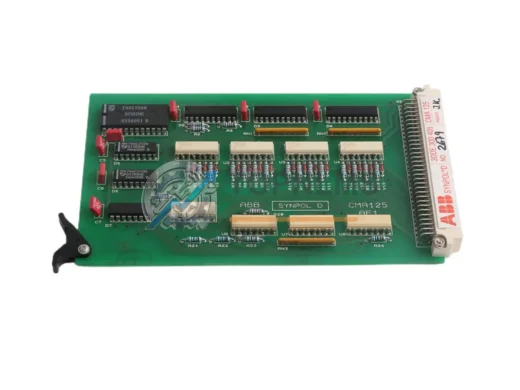
ABB CMA125 3DDE300405 original UNITROL excitation control card. Industrial replacement spare for synchronous generators. 12-month warranty, tested before shipment, fast global delivery.
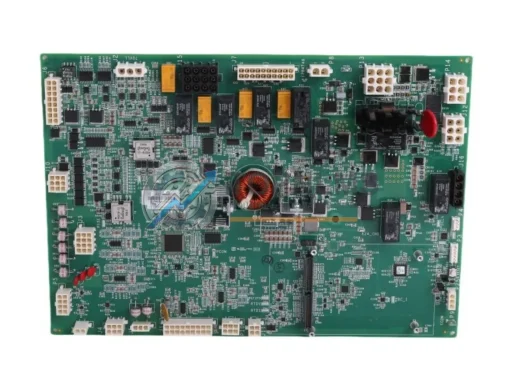
GE IS215WEPAH2B Mark VIe Excitation Control PCB. Ruggedized for harsh environments. 12-month warranty, tested, fast shipping. Reliable replacement & upgrade solution.
Emerson KJ4001X1-BA2 drop-in replacement for DeltaV DCS. Compatible wiring, comms & rack. 12-month warranty. Fast global shipping from TOPNLMS.
Click Quote This Model and the Part Number field will auto-fill with TH230D40NZ-3.