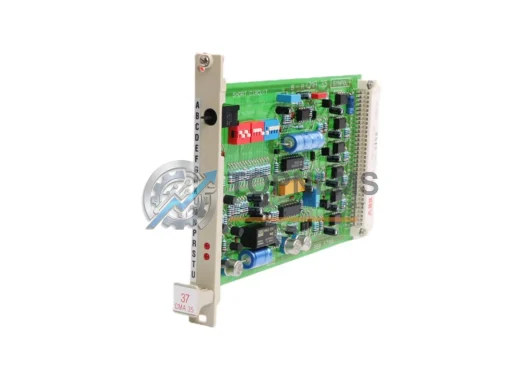
Product Overview
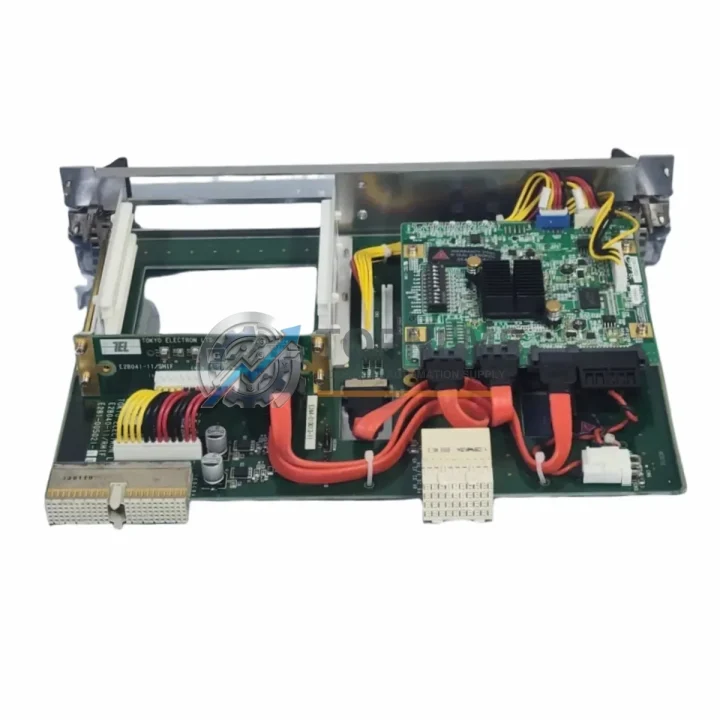
TOKYO E2B040-11 Original Industrial Spare RHIF Compatible: System Stability & Industrial Spare Parts Maintenance Value
The TOKYO E2B040-11 (cross-referenced as RHIF E281-005021-11 and E244-010035-11) is a precision-engineered industrial PCB control module designed for demanding factory automation environments. As a genuine original spare part, it delivers the signal integrity, thermal resilience, and long-term reliability that maintenance engineers depend on when managing aging control systems, executing planned shutdowns, or responding to unplanned equipment failures. Sourcing an authentic E2B040-11 is not merely a procurement decision — it is a system stability investment that directly reduces mean time to repair (MTTR) and protects production continuity.
Industrial facilities operating TOKYO-branded control architectures — including distributed control systems (DCS), programmable logic controller (PLC) panels, and hybrid relay-logic cabinets — frequently encounter board-level failures caused by capacitor aging, thermal cycling fatigue, solder joint degradation, and power surge events. The E2B040-11 module addresses these failure modes by providing a drop-in replacement that preserves original wiring harness compatibility, connector pinout, and firmware handshake behavior, eliminating the need for costly re-engineering or panel rewiring during emergency maintenance windows.
Critical Technical Specs Table
| Parameter |
Specification |
| Part Number |
E2B040-11 |
| Cross Reference |
RHIF E281-005021-11 / E244-010035-11 |
| Brand / Manufacturer |
TOKYO |
| Series |
RHIF / E281 / E244 |
| Module Type |
Industrial PCB Control Module |
| Country of Origin |
Japan |
| Application |
DCS / PLC Control Panels, Industrial Automation Systems |
| Connector Compatibility |
Original TOKYO RHIF-series backplane and wiring harness |
| Operating Temperature |
0°C to +55°C (standard industrial range) |
| Storage Temperature |
-20°C to +70°C |
| Humidity |
5% to 95% RH, non-condensing |
| Mounting |
DIN rail / panel-mount per original cabinet specification |
| Condition |
Original / Genuine — not refurbished, not counterfeit |
| Pre-shipment Testing |
Full functional test performed before dispatch |
| Warranty |
12 Months from date of shipment |
| Lead Time |
In-stock items ship within 1–3 business days |
Preventive Maintenance Strategy
Experienced maintenance planners know that a PCB module failure rarely occurs in isolation. When the TOKYO E2B040-11 is flagged for replacement during a scheduled outage or emergency shutdown, it is best practice to conduct a comprehensive inspection of the surrounding control cabinet to identify components approaching end-of-life. This approach transforms a reactive repair into a proactive maintenance event, dramatically reducing the probability of a secondary failure within the same maintenance cycle.
During the cabinet inspection that accompanies an E2B040-11 replacement, maintenance teams should verify the condition of the TOKYO RHIF-series power supply module, which provides regulated DC voltage to the PCB bus. Degraded power supply output — even within nominal tolerance — can accelerate board-level component aging and cause intermittent logic faults that are difficult to diagnose. Simultaneously, the E281-series I/O expansion modules sharing the same backplane should be checked for connector oxidation, loose terminal screws, and signal drift, as these symptoms often precede module failure.
The E244-series communication interface module installed in the same rack deserves particular attention: communication timeouts and CRC errors logged in the system historian are early indicators of module degradation that can be mistaken for network infrastructure problems. Replacing a failing communication module proactively — during the same window as the E2B040-11 swap — avoids a second unplanned shutdown weeks later.
Beyond the immediate rack, a thorough preventive maintenance plan for TOKYO-based control systems should include inspection of terminal block assemblies (particularly spring-clamp types subject to vibration loosening), 24VDC relay output modules whose contact surfaces wear with switching cycles, and signal isolator modules that protect analog input channels from ground loop interference. Facilities running legacy TOKYO DCS architectures should also audit their stock of fuse modules and miniature circuit breakers within the control panel, as these protective devices are frequently overlooked until a fault event exposes an unprotected circuit.
For plants with operator interface stations integrated into the same control loop, the TOKYO-compatible HMI interface board and its associated serial communication cable assemblies should be tested for signal integrity. Degraded RS-232 or RS-485 cable shielding is a common source of intermittent HMI communication faults in older installations. Finally, the controller backplane or rack chassis itself — the passive interconnect that carries power and data between all modules — should be visually inspected for burn marks, cracked PCB traces, or corroded edge connectors, as backplane damage can cause cascading module failures that are expensive to diagnose without a systematic approach.
Strategic Replacement Solutions
The TOKYO E2B040-11 serves as a direct, pin-compatible replacement for aging or failed units within the RHIF E281 and E244 control system families. Unlike generic third-party substitutes that may require firmware reconfiguration, jumper changes, or wiring modifications, the genuine E2B040-11 installs as a true drop-in replacement: remove the failed board, seat the replacement, restore power, and verify system status — typically within a single maintenance shift.
For facilities managing legacy TOKYO systems that are no longer supported by the original equipment manufacturer (OEM) under active service contracts, maintaining a strategic inventory of critical spare modules is the most cost-effective approach to system longevity. A single unplanned production stoppage caused by an unavailable spare part can generate downtime costs that far exceed the value of an entire spare parts inventory. Procurement teams are advised to evaluate their current mean time between failures (MTBF) data for installed TOKYO modules and establish minimum stock levels accordingly.
The E2B040-11 is particularly valuable in industries where control system replacement projects are deferred due to capital budget constraints — including chemical processing, water treatment, power generation, and discrete manufacturing. In these environments, extending the operational life of proven TOKYO control architectures by 5–10 years through strategic spare parts management is a well-established and financially sound maintenance strategy. Each genuine replacement module installed preserves the validated system configuration, avoids the risk and cost of a full control system migration, and maintains compliance with existing process safety documentation.
Support FAQ
Q1: Is the TOKYO E2B040-11 a genuine original part or a compatible substitute?
The E2B040-11 supplied by TOPNLMS is a genuine original TOKYO industrial PCB module — not a refurbished unit, not a third-party compatible, and not a counterfeit. Every unit undergoes functional testing prior to shipment and is covered by a 12-month warranty from the date of dispatch.
Q2: How do I verify compatibility with my existing RHIF / E281 / E244 control system before ordering?
Compatibility is confirmed by matching the full part number (E2B040-11) and cross-reference codes (RHIF E281-005021-11 / E244-010035-11) against your existing module label or system documentation. If you have the original cabinet wiring diagram or system BOM, our technical team can assist with verification before you place an order. Contact us at [email protected] with your system details.
Q3: What is the lead time and how is the module tested before shipment?
In-stock units are dispatched within 1–3 business days. Each module is subjected to a full functional test covering power-on self-test, I/O signal verification, and communication handshake checks before packaging. Units are shipped in anti-static packaging with appropriate cushioning to prevent transit damage.
Q4: What does the 12-month warranty cover, and what is the process for a warranty claim?
The 12-month warranty covers manufacturing defects and functional failures under normal operating conditions. It does not cover damage caused by incorrect installation, overvoltage events, or physical mishandling. To initiate a warranty claim, contact [email protected] with your order reference, a description of the fault, and photographic evidence. Our team will respond within 2 business days with return authorization and replacement instructions.