
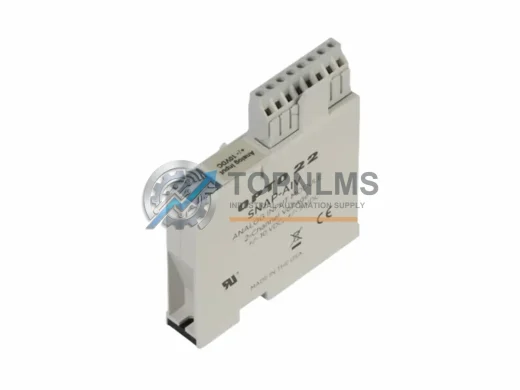
OPTO 22
OPTO 22 SNAP-AIV Replacement/Upgrade for SNAP I/O
SNAP-AIVOPTO 22 SNAP-AIV analog input voltage module replacement for SNAP I/O. Drop-in compatible, 12-month warranty, fast global shipping from Xiamen.
Request availability, condition, lead time and export shipping details for SNAP-LCM4-M4SENET-100.
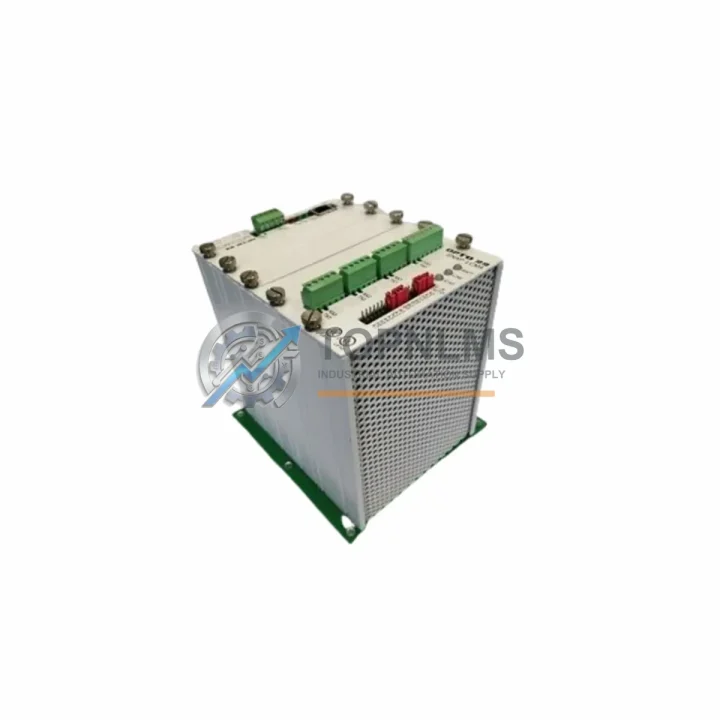
Send this exact part number, quantity and destination country. TOPNLMS will confirm availability, condition and export lead time before quotation.
In modern industrial automation environments, the reliability of your control architecture is only as strong as its most critical components. The OPTO 22 SNAP-LCM4-M4SENET-100 is an original Ethernet Local Control Module designed for the SNAP I/O platform — a distributed I/O system widely deployed across manufacturing, process control, utilities, and building automation facilities worldwide. When this module fails or degrades, the consequences extend far beyond a single rack: entire Ethernet-based control loops can go offline, production lines halt, and maintenance teams face mounting pressure to restore operations with minimal downtime.
Sourcing an original, tested replacement unit of the SNAP-LCM4-M4SENET-100 is not merely a procurement decision — it is a strategic investment in system continuity. This module serves as the intelligent brain of the SNAP I/O rack, executing ladder logic, flowchart programs, or function block diagrams locally while maintaining Ethernet communication with supervisory SCADA or DCS systems. Its ability to operate autonomously during network interruptions makes it indispensable in mission-critical applications where even brief communication losses cannot be tolerated.
| Parameter | Specification |
|---|---|
| Part Number / SKU | SNAP-LCM4-M4SENET-100 |
| Brand | OPTO 22 |
| Series | SNAP I/O Platform |
| Module Type | Ethernet Local Control Module (LCM) |
| Communication Interface | 10/100 Mbps Ethernet (RJ-45) |
| Protocol Support | OPTO 22 OptoMMP, Modbus/TCP, EtherNet/IP (read-only) |
| Local Control Capability | Ladder Logic, Flowchart, Function Block (via PAC Control or OptoScript) |
| Memory | 4 MB Flash / 4 MB SRAM (M4 designation) |
| Power Supply Voltage | 5 VDC (supplied via SNAP rack backplane) |
| Operating Temperature | 0°C to +70°C |
| Mounting | SNAP I/O rack (B1, B2, B3, SNAP-B series compatible) |
| Dimensions | Standard SNAP I/O module form factor |
| Weight | Approx. 2,000 g (packaged) |
| Country of Origin | United States |
| HS Code | 853710 |
| Compatibility | SNAP I/O racks; replaces SNAP-LCM4, SNAP-LCM4-M4S series variants |
| Application Environment | Industrial automation, process control, SCADA, building automation |
| Warranty | 12 Months — tested, inspected, and verified before shipment |
Experienced maintenance engineers understand that a failing SNAP-LCM4-M4SENET-100 rarely fails in isolation. The SNAP I/O platform is a tightly integrated ecosystem, and a scheduled inspection or emergency replacement of this local control module is the ideal opportunity to audit the health of the entire control cabinet.
Begin with the SNAP I/O rack backplane (such as the SNAP-B3 or SNAP-B6 series) — corrosion, bent connector pins, or cracked PCB traces on the backplane can cause intermittent module faults that are frequently misdiagnosed as LCM failures. While the rack is powered down for module swap, inspect the SNAP power supply module (e.g., SNAP-PS5U or SNAP-PS24) for output voltage drift, capacitor bulging, or thermal discoloration, as an aging power supply is a leading cause of premature LCM degradation.
Next, verify the integrity of the SNAP digital input modules (such as SNAP-IDC5 or SNAP-IAC5) and SNAP digital output modules (e.g., SNAP-ODC5, SNAP-OAC5) installed in the same rack. These I/O modules share the backplane bus with the LCM and can introduce noise or voltage irregularities that stress the control module over time. Similarly, inspect any SNAP analog input or output modules (SNAP-AIV, SNAP-AOV series) for calibration drift — a common issue in high-temperature or high-humidity environments.
The Ethernet communication path deserves equal attention. Check the RJ-45 patch cable connecting the SNAP-LCM4-M4SENET-100 to the plant network switch, and verify the managed Ethernet switch port configuration for duplex mismatch or VLAN misconfiguration, both of which can cause the LCM to appear unresponsive without triggering a hardware fault. If the system uses serial communication as a backup or legacy interface, inspect the SNAP serial communication module (e.g., SNAP-SCM-232 or SNAP-SCM-485) for firmware currency and connector wear.
For facilities running hybrid architectures, it is also prudent to verify the health of any SNAP-PAC-R series rack-mounted controllers or SNAP-PAC-S series standalone controllers that communicate with this LCM over the plant Ethernet backbone. A degraded peer controller can generate excessive broadcast traffic that overwhelms the LCM’s network stack, causing soft lockups that appear as random reboots. Finally, review the terminal block wiring on all I/O modules in the rack — loose field wiring connections are a persistent source of intermittent faults in industrial environments and should be re-torqued to specification during any planned maintenance window.
The OPTO 22 SNAP-LCM4-M4SENET-100 has been a cornerstone of distributed control architectures for over a decade. Many facilities continue to operate legacy SNAP I/O systems that were originally commissioned with earlier LCM variants such as the SNAP-LCM4 or SNAP-LCM4-M4S. The SNAP-LCM4-M4SENET-100 is the direct evolutionary replacement for these older modules, offering expanded memory (4 MB Flash / 4 MB SRAM), integrated 100 Mbps Ethernet, and full backward compatibility with existing SNAP I/O racks and PAC Control programming environments.
This means maintenance teams can execute a like-for-like swap without rack modifications, rewiring, or software migration — a critical advantage when minimizing mean time to repair (MTTR) during unplanned outages. The module’s support for Modbus/TCP and EtherNet/IP read access also enables integration into mixed-vendor environments, allowing facilities to extend the operational life of their SNAP I/O infrastructure while gradually migrating supervisory systems to modern SCADA platforms.
For facilities managing aging SNAP I/O deployments, maintaining a minimum of one spare SNAP-LCM4-M4SENET-100 in the on-site spare parts inventory is a recognized best practice. The cost of a single unplanned production stoppage — measured in lost output, emergency labor, and expedited freight — typically exceeds the cost of maintaining a strategic spare by an order of magnitude. Proactive spare parts planning, combined with a documented replacement procedure and pre-tested spare modules, is the most effective strategy for sustaining system uptime across the full lifecycle of the SNAP I/O platform.
All units supplied by TOPNLMS are sourced from verified supply channels, individually inspected, and functionally tested prior to shipment. Each module ships with a 12-month warranty, providing procurement teams and maintenance managers with the confidence to plan replacements without risk.
Q1: Is the SNAP-LCM4-M4SENET-100 compatible with my existing SNAP I/O racks and PAC Control programs?
Yes. The SNAP-LCM4-M4SENET-100 is fully compatible with all standard SNAP I/O rack backplanes (SNAP-B series) and is supported by OPTO 22 PAC Control and PAC Manager software. Existing control programs developed for earlier SNAP LCM variants can be downloaded to this module without modification in most cases, making it the preferred drop-in replacement for legacy SNAP-LCM4 and SNAP-LCM4-M4S units.
Q2: How is each unit tested before shipment, and what does the 12-month warranty cover?
Every SNAP-LCM4-M4SENET-100 unit supplied by TOPNLMS undergoes visual inspection, power-on verification, and communication interface testing prior to dispatch. The 12-month warranty covers manufacturing defects and functional failures under normal operating conditions. Units that fail within the warranty period are replaced or refunded — contact [email protected] for warranty claims.
Q3: What is the recommended spare parts inventory strategy for SNAP I/O LCM modules?
For facilities with 1–5 SNAP I/O racks, maintaining one spare SNAP-LCM4-M4SENET-100 is the minimum recommended posture. Facilities with 6 or more racks, or those operating in continuous-process environments where downtime costs are high, should consider maintaining two spare units. Spare modules should be stored in anti-static packaging in a climate-controlled environment and rotated into service on a planned basis to prevent shelf degradation.
Q4: Can this module be used to replace a failed unit in a live system without full system shutdown?
The SNAP-LCM4-M4SENET-100 supports hot-swap replacement in SNAP I/O racks that are designed for this capability. However, TOPNLMS recommends following your facility’s lockout/tagout (LOTO) procedures and consulting the OPTO 22 SNAP I/O User’s Guide before performing any module replacement. Pre-loading the control program onto the replacement module using PAC Manager before installation can significantly reduce switchover time and minimize process disruption.
© 2026 TOPNLMS. All rights reserved.
Original Source: https://topnlms.com
Contact: [email protected] | +86 18359293191
OPTO 22 SNAP-AIV analog input voltage module replacement for SNAP I/O. Drop-in compatible, 12-month warranty, fast global shipping from Xiamen.
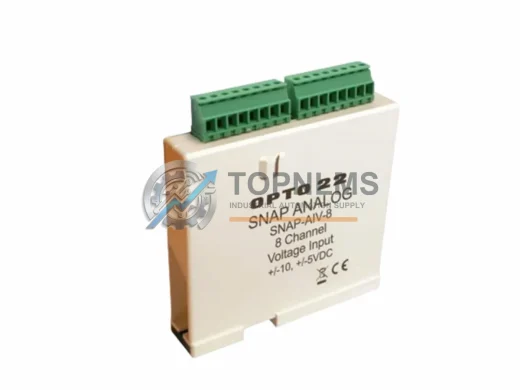
OPTO 22 SNAP-AIV-8 original 8-ch ±10V analog input module for SNAP PAC systems. Industrial spare, 12-month warranty, tested & shipped fast. topnlms.com
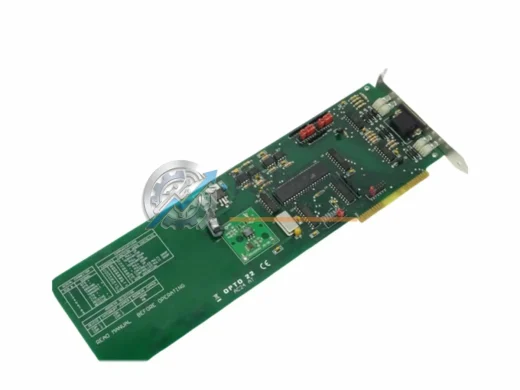
OPTO 22 001818K-AC24-AT G4 Discrete Input Module AC 24V replacement & upgrade. Compatible wiring, rack, and protocol. 12-month warranty. Fast global shipping.
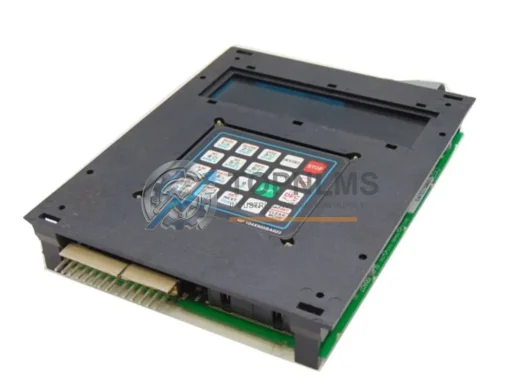
GE NP 104X905BA603 ruggedized membrane keypad panel for Mark IV/V turbine control. EMI-resistant, industrial-grade. In stock, tested, 12-month warranty.
Click Quote This Model and the Part Number field will auto-fill with SNAP-LCM4-M4SENET-100.