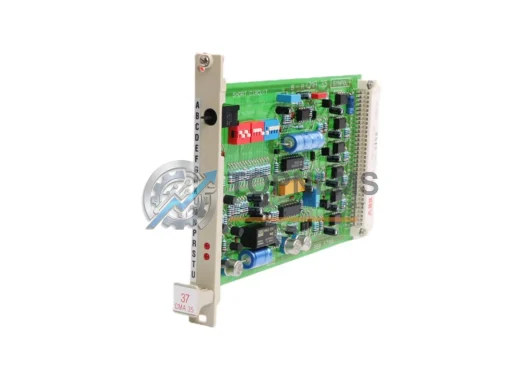
Product Overview
Schenck VSE20100 VLW20150 VSB20100 Original Spare Disocont — System Stability for Industrial Weighing Operations
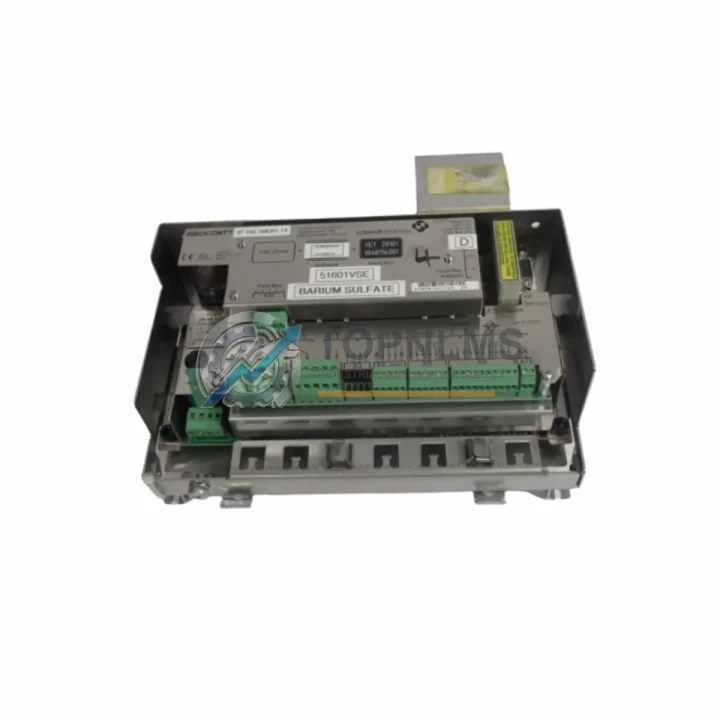
The Schenck Process VSE20100 / VLW20150 / VSB20100 is a core controller set within the Disocont weighing and dosing automation platform — one of the most widely deployed gravimetric control architectures in bulk material handling, cement, mining, and process industries worldwide. Maintaining an available spare of this module set is not optional for facilities running continuous weighing lines; it is a fundamental pillar of uptime assurance and preventive maintenance strategy.
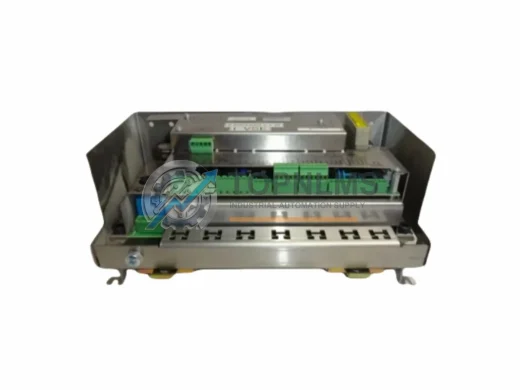
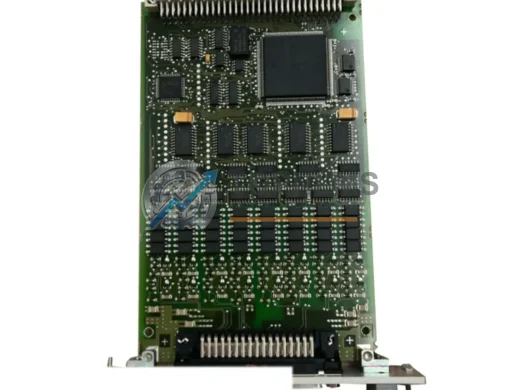
This listing covers the complete Disocont controller assembly comprising the VSE20100 (evaluation electronics unit), VLW20150 (load cell signal conditioner / weighing electronics), and VSB20100 (bus interface / backplane communication module). Together, these three modules form the signal acquisition, processing, and communication backbone of the Disocont Tersus and legacy Disocont V5 controller families. Each unit is sourced as an original Schenck Process component — not a clone, not a remanufactured substitute.
Critical Technical Specs
| Parameter |
Specification |
| Part Numbers |
VSE20100 / VLW20150 / VSB20100 |
| Brand |
Schenck Process |
| Series |
Disocont (Tersus / V5 compatible) |
| Module Type |
Weighing Controller Set (Evaluation + Signal Conditioner + Bus Interface) |
| Supply Voltage |
24 VDC (via backplane / DIN rail PSU) |
| Load Cell Interface |
Analog strain gauge, 4–6 wire, mV/V input (VLW20150) |
| Communication |
PROFIBUS-DP / Modbus RTU (VSB20100 dependent on variant) |
| Mounting |
Disocont backplane / DIN rail chassis |
| Operating Temperature |
0 °C to +55 °C |
| Protection Class |
IP20 (panel-mount installation) |
| Origin |
Germany |
| Compatibility |
Disocont Tersus, Disocont V5, legacy Schenck belt weigher and dosing systems |
| Application |
Belt weighers, loss-in-weight feeders, gravimetric dosing, bulk material handling |
| Warranty |
12 Months — covers manufacturing defects and functional failure under normal operating conditions |
| Pre-shipment Testing |
Full functional test performed before dispatch |
| Condition |
Original / New |
Preventive Maintenance Strategy
In any facility running Schenck Process Disocont-based weighing systems, the VSE20100 / VLW20150 / VSB20100 set sits at the center of the measurement and control loop. When planning a scheduled shutdown or annual calibration cycle, maintenance engineers should treat this controller set as the anchor point for a broader inspection sweep of the entire weighing control cabinet.
Begin with the load cell wiring and junction box — corroded terminals or moisture ingress at the load cell summing box are a leading cause of signal drift that eventually stresses the VLW20150 signal conditioner beyond its compensation range. Inspect and if necessary replace the shielded load cell cables running from the weigh frame to the controller cabinet; degraded cable shielding introduces noise that the VSE20100 evaluation unit cannot filter out in software alone.
Next, verify the 24 VDC DIN rail power supply module feeding the Disocont backplane. An aging PSU with output ripple above specification will cause intermittent resets of the VSE20100 and erratic totalizer readings — symptoms that are frequently misdiagnosed as controller failure when the root cause is upstream power quality. Stocking a spare Schenck Process or equivalent 24 VDC panel PSU alongside the VSE20100 set eliminates this diagnostic ambiguity during emergency callouts.
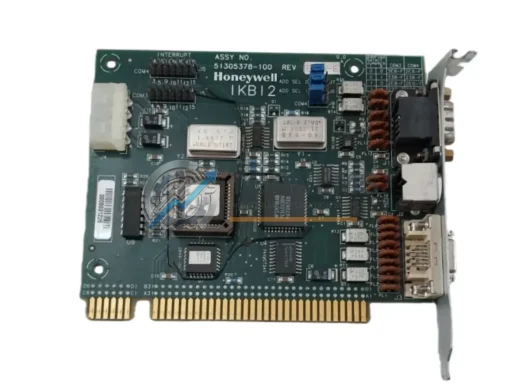
The VSB20100 bus interface module connects the Disocont controller to the plant PROFIBUS or Modbus network. During routine inspection, confirm that the PROFIBUS termination resistors at both ends of the segment are correctly installed and that the bus cable connectors show no signs of mechanical stress or pin corrosion. A failed bus termination is one of the most common causes of intermittent communication faults logged against the VSB20100 — replacing the module when the actual fault lies in the network infrastructure wastes both time and budget.
For facilities running multiple Disocont stations, it is sound practice to audit the Disocont Tersus HMI operator panel or the connected SCADA/DCS interface during the same maintenance window. Configuration data and calibration parameters stored in the VSE20100 should be backed up to the HMI or a portable service tool before any module swap — this step alone can reduce recommissioning time from several hours to under thirty minutes.
Where the Disocont system interfaces with a broader plant PLC — such as a Siemens S7-300 or S7-400 CPU receiving totalizer pulses or 4–20 mA analog outputs from the weighing controller — inspect the analog input modules (SM331/SM332) and digital I/O modules (SM321/SM322) at the PLC rack for signs of channel failure. A degraded analog input channel on the PLC side can mask correct output from the VSE20100, leading to false process alarms. Stocking a spare SM331 or equivalent analog input module as part of the same procurement order as the VSE20100 set is a cost-effective way to cover both ends of the signal chain.
Finally, inspect the relay output modules and terminal blocks within the weighing control panel. Disocont systems typically drive belt speed control, feeder gate actuators, and alarm outputs through relay interfaces — worn relay contacts or loose terminal connections are a disproportionate source of nuisance trips in mature installations. Including a set of DIN rail relay modules and Phoenix Contact or equivalent terminal blocks in your annual spare parts order ensures that these low-cost components do not become the bottleneck during an unplanned shutdown.
Strategic Replacement Solutions
The VSE20100 / VLW20150 / VSB20100 set has been in service across global installations for over a decade. Many facilities are now operating systems where the original Schenck Process service contracts have lapsed and local spare parts availability has become unreliable. Sourcing original modules through a specialist industrial spare parts supplier — rather than waiting for OEM lead times that can stretch to 8–16 weeks — is the most effective strategy for maintaining system uptime without committing to a full controller platform migration.
This controller set is directly compatible with existing Disocont V5 and Disocont Tersus backplanes, meaning replacement is a plug-and-swap operation once calibration data has been backed up. There is no requirement to modify field wiring, reconfigure the PROFIBUS network address, or retrain operators — the replacement module inherits the same parameter set after a standard restore procedure. This makes the VSE20100 set one of the most cost-efficient life-extension tools available for aging Schenck Process weighing installations, deferring the capital expenditure of a full system upgrade by three to five years in most cases.
For facilities managing multiple weighing stations, establishing a minimum stock level of one complete VSE20100 / VLW20150 / VSB20100 set per production line is the industry-standard recommendation. The cost of a single unplanned production stoppage — in lost throughput, emergency logistics, and overtime labor — typically exceeds the cost of maintaining a buffer stock by a factor of ten or more.
Support FAQ
Q1: Is this VSE20100 / VLW20150 / VSB20100 set compatible with both Disocont V5 and Disocont Tersus systems?
A: Yes. The VSE20100 evaluation unit and VLW20150 signal conditioner are mechanically and electrically compatible with both the legacy Disocont V5 backplane and the current Disocont Tersus chassis. The VSB20100 bus interface variant should be confirmed against your specific PROFIBUS or Modbus network configuration before ordering — please contact us with your existing module label if you require confirmation.
Q2: What pre-shipment testing is performed on this module set?
A: Each VSE20100 / VLW20150 / VSB20100 set undergoes a full functional test prior to dispatch, including power-on verification, signal conditioner calibration check, and bus interface communication test. A test report is available upon request. Units are packed in anti-static protective packaging with foam cushioning to prevent transit damage.
Q3: How long does delivery take, and what does the 12-month warranty cover?
A: Standard dispatch is within 3–5 business days of order confirmation for in-stock units. The 12-month warranty covers manufacturing defects and functional failure under normal operating conditions from the date of shipment. It does not cover damage resulting from incorrect installation, overvoltage events, or physical impact. Warranty claims are processed with a replacement unit dispatched upon receipt and inspection of the returned module.
Q4: Can I use this module set to replace a failed unit without a Schenck Process service engineer on-site?
A: In most cases, yes — provided that the calibration parameters and configuration data have been previously backed up using the Disocont service software (DISOPLAN or equivalent). The physical replacement is a backplane plug-in procedure. Parameter restore and zero/span calibration can be performed by a qualified maintenance technician familiar with the Disocont platform. We recommend consulting the Schenck Process Disocont service manual for your specific system version before proceeding.