Product Overview
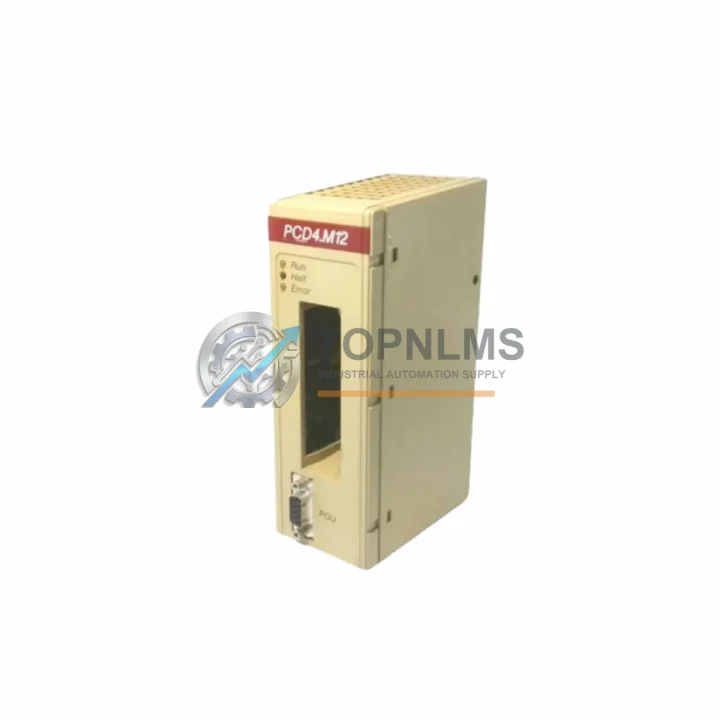
SAIA PCD4.M12 Original Industrial Spare PCD4 Compatible: System Stability and Industrial Spare Parts Maintenance Value
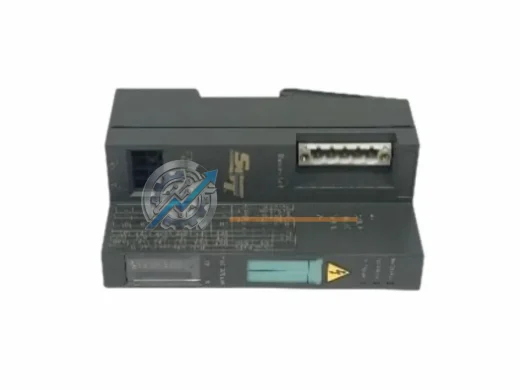
The SAIA PCD4.M12 is an original interface module designed for the SAIA-Burgess PCD4 programmable controller series — one of the most widely deployed modular PLC platforms in European and global industrial automation environments. For maintenance engineers managing aging control systems, the PCD4.M12 represents a critical spare part that directly determines whether a production line resumes operation within hours or remains idle for days awaiting procurement. Stocking this module as a verified original spare is not merely a purchasing decision — it is a risk management strategy for any facility running PCD4-based control architectures.
Industrial facilities operating SAIA PCD4 systems — including food processing plants, water treatment stations, building automation networks, and discrete manufacturing lines — depend on the uninterrupted performance of every module within the control cabinet. The PCD4.M12 interface module serves as a communication and I/O bridge within the PCD4 rack, and its failure can cascade into full system downtime if a replacement unit is not immediately available on-site. Experienced maintenance teams understand that the cost of a single unplanned shutdown far exceeds the cost of maintaining a strategic spare parts inventory.
Critical Technical Specs Table
| Parameter |
Specification |
| Model / SKU |
PCD4.M12 |
| Brand |
SAIA-Burgess (Saia-Burgess Controls AG) |
| Series |
PCD4 Modular PLC Series |
| Module Type |
PLC Interface / Communication Module |
| Country of Origin |
Switzerland (CH) |
| Compatibility |
SAIA PCD4 series rack and backplane systems |
| Installation |
Direct rack-mount into PCD4 base unit / expansion rack |
| Application Environment |
Industrial automation, building management, process control, utilities |
| Operating Temperature |
0°C to +55°C (typical for PCD4 series modules) |
| Product Weight |
1,330 g |
| Part Condition |
Original, new or tested-good surplus |
| Pre-shipment Testing |
Functional verification prior to dispatch |
| Warranty |
12 Months from date of shipment |
| Maintenance Recommendation |
Inspect annually; replace proactively if module age exceeds 8–10 years |
Preventive Maintenance Strategy
A disciplined preventive maintenance program for any SAIA PCD4 installation extends well beyond replacing a single module. When a maintenance team opens a PCD4 control cabinet for scheduled inspection or emergency repair, it is best practice to evaluate the condition of all adjacent components simultaneously — because modules that share the same rack, power bus, and communication backplane are subject to the same thermal cycling, vibration, and electrical stress over time.
During a PCD4.M12 replacement or inspection cycle, engineers should concurrently assess the status of the PCD4.C150 CPU module, which governs all program execution and I/O coordination within the rack. A CPU module approaching end-of-life will exhibit intermittent communication faults that are often misdiagnosed as interface module failures. Similarly, the PCD4.W300 power supply module should be load-tested during any cabinet opening — an aging power supply delivering marginal voltage can degrade the performance of every downstream module, including the PCD4.M12 itself.
I/O expansion is another area requiring attention. The PCD4.E16x digital input modules and PCD4.A4x analog output modules installed in adjacent rack slots should be inspected for terminal corrosion, loose wiring, and LED fault indicators. These modules handle field-level signals and are often the first to show wear in high-cycle applications. Replacing a faulty interface module while leaving degraded I/O modules in service is a common maintenance oversight that leads to repeat callouts within weeks.
Communication integrity is equally important. If the PCD4 system uses SAIA S-Bus or Modbus RTU communication over RS-485, the associated PCD4.R600 communication module and its terminal wiring should be verified for signal integrity. Noise-induced communication errors are frequently traced back to deteriorated shielding on communication cables or loose terminal connections rather than module failure itself. Stocking a spare communication module alongside the PCD4.M12 ensures that communication-layer faults can be resolved without waiting for additional procurement cycles.
For facilities with mixed SAIA PCD4 and PCD3 installations, it is advisable to maintain cross-series spares where form-factor and firmware compatibility allow. PCD3.M3020 CPU modules and PCD3.W200 power supplies serve similar roles in the PCD3 architecture and should be part of any comprehensive SAIA spare parts plan. Additionally, SAIA PCD display terminals (PCD7.D series HMI panels) connected to PCD4 controllers should be inspected for touchscreen responsiveness and backlight condition — HMI failures during a production run create operator visibility gaps that compound the impact of any underlying PLC fault.
Finally, passive components within the control cabinet — including DIN rail terminal blocks, fuse modules, and 24VDC signal isolators — should be checked during every scheduled maintenance window. These components are inexpensive relative to PLC modules but are frequently overlooked until they cause intermittent faults that are difficult to trace. A complete cabinet inspection that covers the PCD4.M12, associated CPU and power modules, I/O cards, communication modules, and passive wiring infrastructure represents the gold standard for SAIA PCD4 system longevity.
Strategic Replacement Solutions
The SAIA PCD4.M12 is an original-specification module that provides direct, plug-compatible replacement for failed or end-of-life units within existing PCD4 rack installations. Unlike generic third-party alternatives, an original SAIA module ensures full firmware compatibility with the PCD4 CPU, preserves existing I/O addressing and program logic without modification, and eliminates the risk of subtle incompatibilities that can cause intermittent faults or require costly re-commissioning work.
For facilities managing legacy PCD4 systems that are no longer in active production by the manufacturer, sourcing verified original spare modules is the most cost-effective strategy for extending system life by 5–10 years without undertaking a full control system migration. A single PCD4.M12 replacement can restore full system functionality in under two hours when the module is on-site and the maintenance team is familiar with the rack architecture — compared to weeks or months of lead time for a new control system design, procurement, installation, and commissioning.
Procurement teams should consider purchasing PCD4.M12 units in quantities of two or more for critical production lines, ensuring that a second spare is immediately available if the first replacement unit reveals a deeper system fault during commissioning. This dual-spare strategy is standard practice in industries where unplanned downtime carries significant financial or safety consequences.
All units supplied by TOPNLMS are subject to pre-shipment functional testing and are dispatched with documentation confirming test results. Shipment is available worldwide, with expedited options for urgent maintenance requirements. Each unit is covered by a 12-month warranty from the date of shipment, providing procurement and maintenance managers with the confidence to plan spare parts budgets accurately.
Support FAQ
Q1: How do I verify that the PCD4.M12 is compatible with my existing PCD4 rack configuration?
The PCD4.M12 is designed for direct installation into SAIA PCD4 series base units and expansion racks. Compatibility is determined by the rack backplane version and CPU firmware. Please provide your existing CPU model number (e.g., PCD4.C150 or PCD4.C200) and rack configuration when placing your order, and our technical team will confirm compatibility before shipment.
Q2: What is the recommended spare parts inventory strategy for a facility running multiple PCD4 systems?
For facilities with two or more PCD4 controllers, we recommend maintaining at minimum one spare PCD4.M12 interface module, one CPU module, and one power supply module per system type. For high-criticality lines, a dual-spare policy is advisable. Spare parts should be stored in anti-static packaging in a climate-controlled environment and rotated into service on a first-in, first-out basis to prevent shelf degradation.
Q3: What pre-shipment testing is performed on the PCD4.M12 before dispatch?
Each PCD4.M12 unit undergoes functional verification testing prior to shipment, including power-on self-test, communication interface check, and I/O signal validation where applicable. Test results are documented and available upon request. Units that do not pass all test criteria are not dispatched. The 12-month warranty covers any defects in materials or workmanship that manifest under normal operating conditions.
Q4: Can the PCD4.M12 be installed by an in-house maintenance technician, or is specialist commissioning required?
The PCD4.M12 is designed for field replacement by qualified maintenance personnel familiar with SAIA PCD4 system architecture. Installation involves rack slot insertion, backplane connection verification, and CPU recognition confirmation via the SAIA PG5 programming environment. No specialist commissioning is required for a like-for-like module replacement in an existing, unchanged rack configuration. TOPNLMS can provide basic installation guidance upon request.