
Rofin Sinar
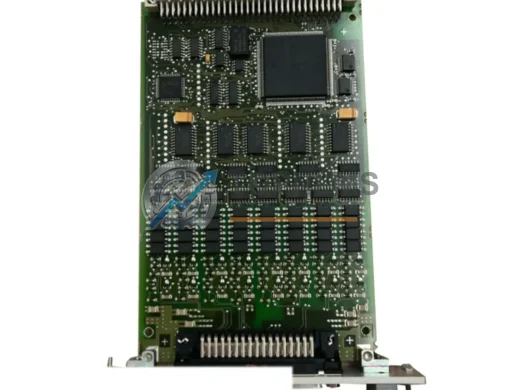
ROFIN RCULX500 Original Industrial Spare RCU-LX Compatible
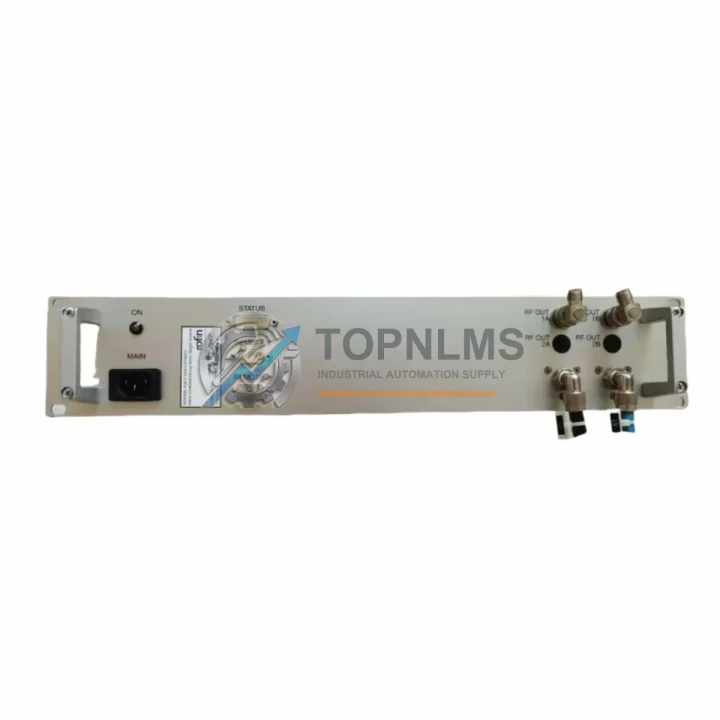
RCU-LXOriginal ROFIN RCULX500 (P/N 101110998) RCU-LX-500 Perform SP02 remote control unit. Genuine industrial spare, 12-month warranty, fast worldwide shipping.
Request availability, condition, lead time and export shipping details for S231-02.
Send this exact part number, quantity and destination country. TOPNLMS will confirm availability, condition and export lead time before quotation.
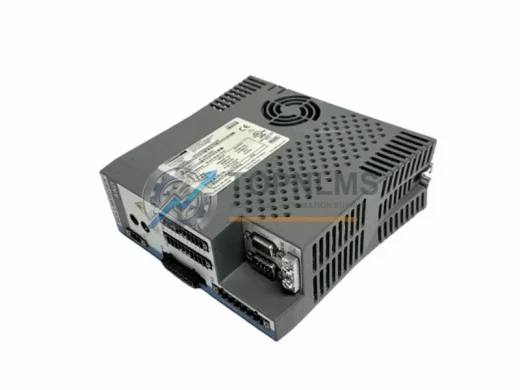
The Rofin S231-02 is an original DC servo drive and laser power controller module engineered for the Rofin-Sinar S231 Series laser systems. In high-throughput manufacturing environments — from precision metal cutting and welding lines to medical device fabrication — the S231-02 serves as the central power regulation and servo control node that governs beam output stability, drive response, and system synchronization. When this module degrades or fails, the entire laser cell is at risk of unplanned downtime, scrap rate increases, and costly emergency procurement. Stocking a verified original S231-02 spare is one of the most cost-effective decisions a maintenance team can make.
At TOPNLMS, every S231-02 unit is sourced from authorized industrial channels, individually inspected, function-tested against original Rofin-Sinar electrical specifications, and shipped with a 12-month warranty. Whether you are executing a planned overhaul, responding to an unscheduled fault, or building a strategic spare parts inventory for a multi-cell laser facility, the S231-02 from TOPNLMS delivers the confidence of a genuine original component with the logistics speed your operation demands.
| Parameter | Specification |
|---|---|
| Part Number / SKU | S231-02 |
| Brand / Manufacturer | Rofin-Sinar Technologies |
| Series | S231 Series |
| Module Function | DC Servo Drive & Laser Power Controller |
| Compatible Systems | Rofin-Sinar S231 Series Laser Systems (CO₂ / Nd:YAG variants) |
| Input Voltage | Per S231 system bus specification (24 VDC logic / high-voltage drive rail) |
| Control Interface | Internal S231 backplane / proprietary Rofin-Sinar bus |
| Installation Type | Module slot insertion — S231 laser controller cabinet |
| Operating Temperature | 0°C to +55°C (cabinet-cooled environment) |
| Origin | Germany (Original Rofin-Sinar manufacture) |
| Condition | Original / Genuine — tested before shipment |
| Warranty | 12 Months from date of shipment |
| Maintenance Recommendation | Inspect every 12–18 months; replace proactively at first sign of servo instability or power drift |
A laser system is only as reliable as its weakest module. When scheduling preventive maintenance around the Rofin S231-02, experienced maintenance engineers treat the inspection as an opportunity to audit the entire S231 controller cabinet and associated electrical circuits — not just the failed or suspect component.
During a planned S231-02 replacement or inspection cycle, it is standard practice to simultaneously verify the condition of the S231 Series power supply module, which feeds regulated DC voltage to the servo drive and controller boards. A degraded power supply is frequently the root cause of premature S231-02 failure, and replacing the drive module without addressing upstream power quality will shorten the new module’s service life. Similarly, the S231 I/O interface board should be checked for oxidized connectors and signal integrity, as corrupted I/O signals can cause erratic servo behavior that mimics a faulty S231-02.
The laser resonator cooling control module and associated temperature sensor assemblies are also critical co-inspection items: thermal excursions caused by cooling system faults place abnormal stress on the power controller circuitry. Maintenance teams should also inspect the S231 communication module (typically handling RS-232 or proprietary Rofin protocol links to the CNC or PLC host controller) for firmware integrity and connector wear, since communication faults can trigger false servo fault codes that are misdiagnosed as S231-02 failures.
At the cabinet level, inspect the 24 VDC logic power supply, EMC filter modules, and terminal block assemblies for signs of heat stress, loose terminations, or insulation degradation. Loose terminal connections are a leading cause of intermittent faults in servo drive systems and are often overlooked during reactive maintenance. If the facility operates multiple S231 laser cells, a signal isolation module between the laser controller and the plant-level PLC (such as a Siemens S7-300 or S7-1500 series CPU) should be verified for correct isolation resistance and signal level calibration.
For facilities running aging S231 systems beyond their original design life, proactive stocking of the S231-02 servo drive module, the S231 power controller board, and key fuse modules and circuit protection assemblies within the cabinet is strongly recommended. Rofin-Sinar legacy components have extended lead times on the open market; having critical spares on-hand reduces mean time to repair (MTTR) from days to hours.
The Rofin S231-02 is a legacy module that is no longer in active production, making sourcing from unauthorized channels a significant risk — counterfeit or refurbished units without proper testing can introduce new failure modes and void system warranties. TOPNLMS supplies original, traceable S231-02 units that maintain full compatibility with the S231 Series controller architecture, preserving your existing system configuration, calibration parameters, and safety interlocks without requiring firmware changes or hardware modifications.
For facilities managing a planned migration away from legacy Rofin-Sinar S231 systems, the S231-02 serves as a bridge component — extending the operational life of the existing laser cell while capital planning for a next-generation system proceeds. This approach eliminates the false choice between accepting unacceptable downtime risk and committing to premature capital expenditure. A single verified S231-02 spare can protect months of production continuity.
When replacing the S231-02 in the field, the module swap procedure is straightforward for qualified laser maintenance technicians: power down the S231 cabinet following Rofin-Sinar lockout/tagout procedures, discharge the high-voltage bus, extract the faulty module from its backplane slot, insert the replacement S231-02, restore power, and execute the standard S231 servo calibration and power output verification sequence. No special programming tools are required beyond the standard Rofin-Sinar service interface.
Q1: Is the S231-02 supplied by TOPNLMS an original Rofin-Sinar component or a compatible replacement?
All S231-02 units supplied by TOPNLMS are original Rofin-Sinar manufactured components sourced through verified industrial supply channels. Each unit undergoes pre-shipment functional testing against original electrical specifications. We do not supply counterfeit, cloned, or unauthorized reproductions.
Q2: What warranty coverage applies to the S231-02, and what does it include?
Every S231-02 ships with a 12-month warranty from the date of shipment. The warranty covers manufacturing defects and functional failures under normal operating conditions. TOPNLMS provides technical support for installation verification and fault diagnosis throughout the warranty period. Contact [email protected] for warranty claims.
Q3: How do I verify compatibility before ordering the S231-02 for my specific laser system?
Compatibility is confirmed by matching the module part number (S231-02) against your S231 Series laser system’s bill of materials or the module label on the installed unit. If you have the system serial number or cabinet configuration drawing, our technical team can perform a pre-order compatibility verification. Contact us at [email protected] or +86 18359293191 before ordering if you have any uncertainty.
Q4: What is the recommended inventory strategy for S231-02 and related S231 Series spares?
For facilities operating one to three S231 laser cells, we recommend maintaining a minimum of one S231-02 on-site at all times, given the extended open-market lead times for legacy Rofin-Sinar modules. For larger multi-cell installations or facilities with high production criticality, a two-unit buffer stock is advisable. Pairing the S231-02 with a stocked S231 power supply module and I/O interface board provides comprehensive coverage for the most common failure scenarios and minimizes MTTR to under four hours for most fault conditions.
Original ROFIN RCULX500 (P/N 101110998) RCU-LX-500 Perform SP02 remote control unit. Genuine industrial spare, 12-month warranty, fast worldwide shipping.
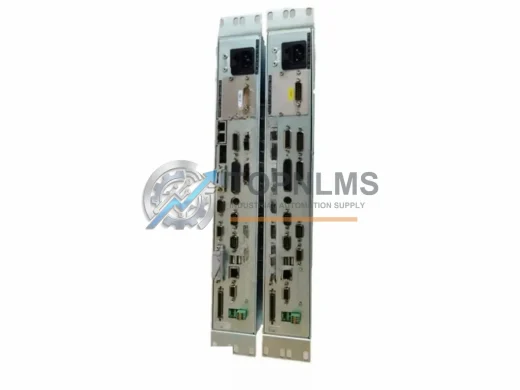
Rofin 101114102 DC Series CO₂ Laser Controller. Ruggedized for harsh environments. 12-month warranty, tested stock, fast shipping. Contact TOPNLMS.
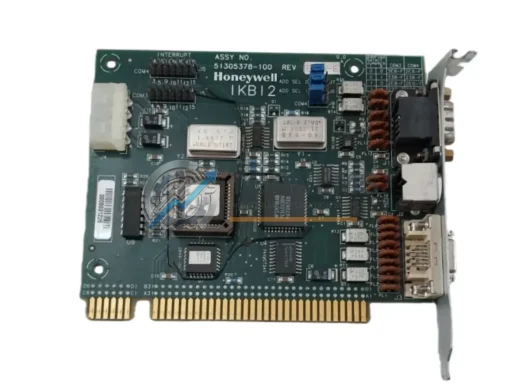
Honeywell 51305378-100 IKBI2 Printer Interface Board replacement for TDC 3000 DCS. Original spare, 12-month warranty, fast global shipping. Upgrade legacy systems now.
Siemens 6AR1302-0AA00-0AA0 CP51M1 SIMATIC TDC communication processor. Ruggedized for harsh environments. In stock, tested, 12-month warranty. Fast shipping.
Click Quote This Model and the Part Number field will auto-fill with S231-02.