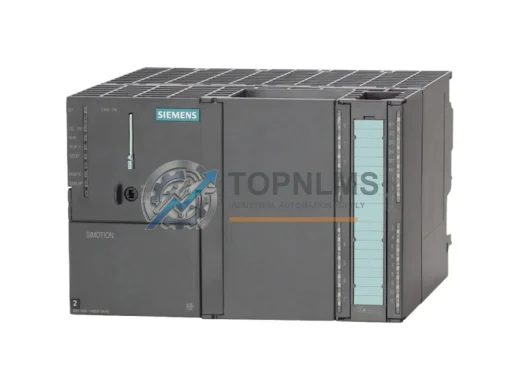
Product Overview
Oriental Motor D207F-A1-1 Original Industrial Spare ISE Compatible: System Stability and Industrial Spare Parts Maintenance Value
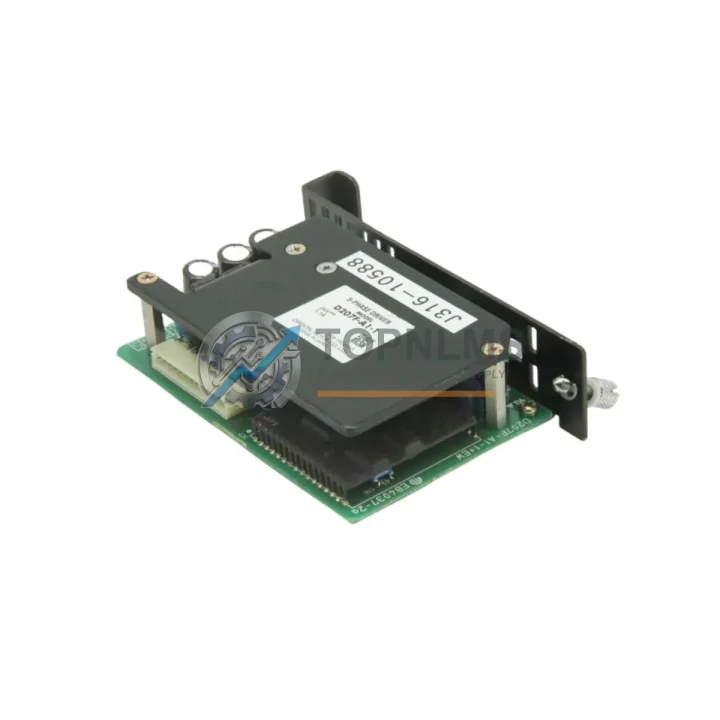
In modern industrial automation environments, the reliability of motion control systems is directly tied to the availability and quality of critical spare parts. The Oriental Motor D207F-A1-1 — part number 518-810617-001 — is a single-axis stepper motor driver card from the ISE R150 Series, engineered for precision positioning, smooth torque delivery, and long-term operational stability in demanding factory environments. Whether you are managing a scheduled maintenance window, responding to an unplanned line stoppage, or building a strategic spare parts inventory, securing an original D207F-A1-1 driver card is a foundational step in protecting your production continuity.
Oriental Motor’s ISE Series driver cards are widely deployed across packaging lines, semiconductor handling equipment, medical device assembly, precision dispensing systems, and general-purpose factory automation. The D207F-A1-1 is specifically designed for single-axis stepper motor control, offering stable pulse input response, compact DIN-rail or panel-mount installation, and compatibility with Oriental Motor’s standard stepper motor families. Its robust design ensures consistent performance across extended duty cycles, making it a preferred choice for maintenance engineers who cannot afford variability in motion control behavior.
Critical Technical Specs Table
| Parameter |
Specification |
| Model / SKU |
D207F-A1-1 (518-810617-001) |
| Brand |
Oriental Motor |
| Series |
ISE R150 |
| Type |
Single-Axis Stepper Motor Driver Card |
| Control Mode |
Pulse Input (2-phase / 1-2 phase excitation) |
| Compatible Motor Type |
Oriental Motor 2-phase stepper motors (ISE Series) |
| Installation |
Panel mount / DIN-rail compatible |
| Operating Temperature |
0°C to +50°C |
| Storage Temperature |
-20°C to +70°C |
| Origin |
Japan |
| Product Weight |
Approx. 700 g |
| Condition |
Original / Genuine Industrial Spare |
| Warranty |
12 Months from date of shipment |
| Shipping |
Inspected and tested prior to dispatch; worldwide shipping available |
| Compatibility |
ISE R150 Series stepper motor systems; drop-in replacement for legacy installations |
Preventive Maintenance Strategy
A stepper driver card like the D207F-A1-1 does not operate in isolation — it is one node in a broader motion control and power distribution ecosystem. When performing scheduled maintenance or responding to a fault condition involving this driver card, experienced maintenance engineers know that a thorough inspection of the surrounding components is equally important for preventing repeat failures and ensuring long-term system stability.
Begin by verifying the integrity of the motor power cables and encoder feedback cables connecting the D207F-A1-1 to the stepper motor. Cable insulation degradation, connector oxidation, and intermittent contact are among the most common root causes of driver card faults in aging installations. At the same time, inspect the 24VDC control power supply module feeding the driver card’s logic circuit — an unstable or under-rated power supply can cause erratic pulse response and premature driver failure.
Within the same control cabinet, check the condition of the I/O interface module responsible for transmitting pulse and direction signals from the host controller to the D207F-A1-1. Signal integrity issues at the I/O level — including noise, ground loops, or incorrect voltage levels — can mimic driver card faults and lead to unnecessary replacements. If the system uses a PLC digital output module to generate step pulses, verify that the output response time and current sourcing capacity are within the driver card’s input specifications.
For installations where the D207F-A1-1 is mounted in a shared control cabinet alongside other motion axes, inspect the terminal blocks and DIN-rail bus connectors for signs of thermal stress, loose torque, or corrosion. Loose terminal connections are a leading cause of intermittent faults that are difficult to reproduce during bench testing but cause repeated nuisance trips in production. Additionally, review the status of any fuse modules or circuit protection devices in the driver card’s power feed circuit — a blown fuse or a fuse holder with elevated contact resistance can cause the driver to behave erratically under load.
If the system includes a communication module or fieldbus interface (such as RS-485, MECHATROLINK, or EtherCAT) for coordinated multi-axis motion, verify that the network termination resistors are correctly installed and that the communication cycle time is within the controller’s configured parameters. For systems with an HMI or operator panel used to monitor axis position and fault status, confirm that the display is correctly reading the driver’s status outputs and that any alarm history has been reviewed for recurring fault codes.
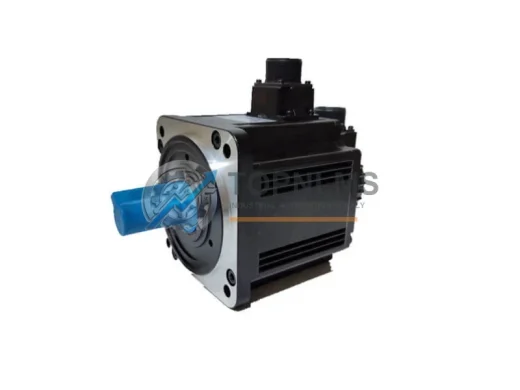
Finally, if the installation involves a stepper motor with an integrated brake, inspect the brake release circuit and verify that the brake coil resistance is within specification. A failing brake coil can draw excessive current through the driver card’s output stage, accelerating thermal wear and reducing the driver’s service life. Proactive replacement of the D207F-A1-1 driver card — combined with a systematic inspection of these surrounding components — is the most cost-effective strategy for eliminating unplanned downtime and extending the operational life of your motion control system.
Strategic Replacement Solutions
The D207F-A1-1 is a direct replacement for aging or failed ISE R150 Series driver cards in existing Oriental Motor stepper motor systems. Because it maintains full electrical and mechanical compatibility with the original installation, replacement does not require re-engineering the control cabinet, modifying the PLC program, or recalibrating the motion profile. This plug-and-play compatibility is a critical advantage in time-sensitive maintenance scenarios where minimizing mean time to repair (MTTR) is the primary objective.
For facilities managing legacy automation systems that are no longer supported by the original equipment manufacturer, stocking an original D207F-A1-1 driver card provides a cost-effective alternative to full system replacement. The total cost of a driver card replacement — including parts, labor, and lost production during the changeover — is typically a fraction of the cost of upgrading to a new motion control platform. By maintaining a small buffer stock of critical driver cards, maintenance teams can respond to failures within hours rather than days, significantly reducing the financial impact of unplanned stoppages.
When planning a strategic spare parts inventory for ISE Series stepper motor systems, consider stocking the D207F-A1-1 alongside compatible motor units and power supply modules to ensure that all failure modes can be addressed from on-site inventory. This approach is particularly valuable for facilities operating multiple identical axes, where a single driver card failure can be quickly resolved by swapping from the spare stock while the failed unit is returned for repair or disposal.
Support FAQ
Q1: What is the expected service life of the D207F-A1-1 driver card, and when should I plan for replacement?
Under normal operating conditions — including proper ventilation, stable power supply, and operation within rated load — Oriental Motor ISE Series driver cards are designed for extended service life. However, in high-cycle or thermally demanding environments, proactive replacement every 5–8 years is a common industry practice. If you observe increased motor noise, positioning errors, or intermittent fault alarms, these are early indicators that the driver card should be inspected and replaced before a complete failure occurs.
Q2: Is the D207F-A1-1 compatible with my existing stepper motor and PLC without any parameter changes?
Yes. The D207F-A1-1 is a direct replacement for the original ISE R150 Series driver card and maintains full electrical compatibility with Oriental Motor 2-phase stepper motors and standard pulse/direction PLC outputs. No changes to the PLC program, motor wiring, or mechanical installation are required for a like-for-like replacement. We recommend verifying the input voltage range and pulse signal specifications against your existing installation documentation before installation.
Q3: What pre-shipment testing and quality verification is performed on this unit?
Every D207F-A1-1 unit is inspected and functionally tested prior to dispatch. Testing includes verification of power input response, pulse signal reception, motor output continuity, and fault output behavior. Units that do not meet original specification are not shipped. All units are covered by a 12-month warranty from the date of shipment, providing assurance for both immediate replacement needs and strategic inventory purchases.
Q4: How should I manage my spare parts inventory for ISE Series stepper motor systems to minimize downtime risk?
For facilities with multiple ISE Series axes, we recommend maintaining a minimum of one D207F-A1-1 driver card per 5–10 installed axes as a buffer stock. For critical single-axis applications where a failure would halt an entire production line, a 1:1 spare ratio is advisable. Spare units should be stored in a dry, temperature-controlled environment, away from electromagnetic interference sources, and inspected annually to confirm storage condition. Coordinating driver card procurement with scheduled maintenance cycles — rather than waiting for a failure event — is the most effective strategy for controlling both cost and downtime risk.