
OPTO 22
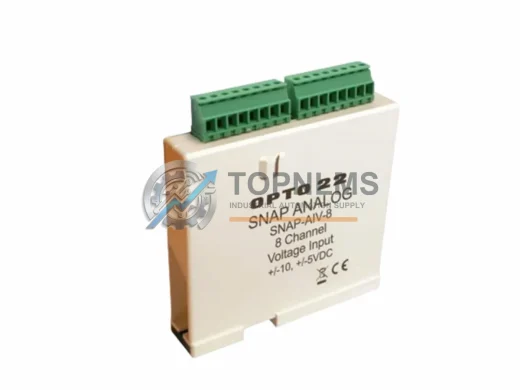
OPTO 22 SNAP-AIV-8 Original Industrial Spare SNAP PAC Compatible
SNAP-AIV-8OPTO 22 SNAP-AIV-8 original 8-ch ±10V analog input module for SNAP PAC systems. Industrial spare, 12-month warranty, tested & shipped fast. topnlms.com
Request availability, condition, lead time and export shipping details for SNAP-AIV.
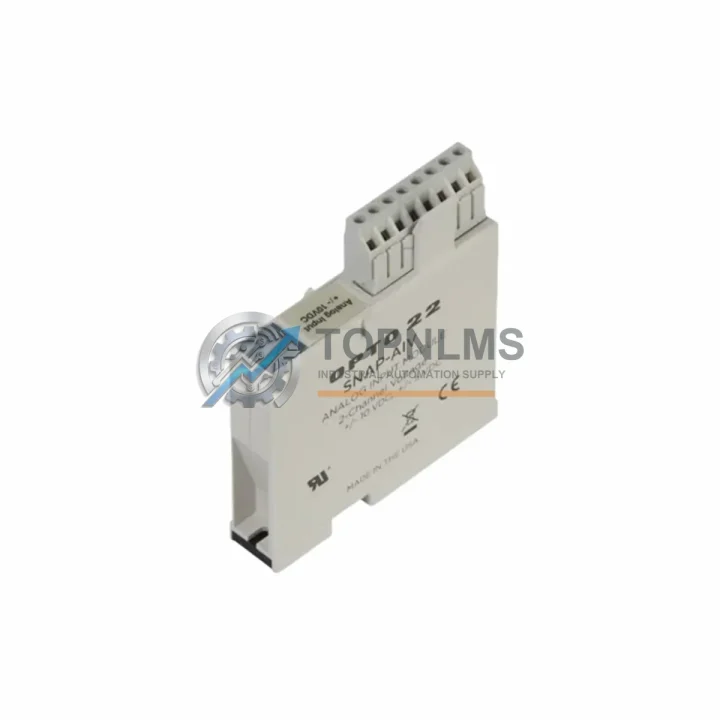
Send this exact part number, quantity and destination country. TOPNLMS will confirm availability, condition and export lead time before quotation.
The OPTO 22 SNAP-AIV is a high-performance analog input voltage module designed for the SNAP I/O distributed I/O platform. As industrial facilities transition away from aging control architectures — including legacy OPTO 22 SNAP-B brain boards, first-generation SNAP-PAC-R1 rack controllers, and discontinued SNAP-AIV-4 multi-channel predecessors — the SNAP-AIV remains a critical drop-in replacement that preserves existing wiring infrastructure, minimizes re-engineering costs, and dramatically reduces planned or unplanned downtime.
Whether your facility is migrating from an older SNAP-B-based distributed I/O node to a modern SNAP-PAC-EB1 Ethernet brain, or simply replacing a failed analog input channel in an active production line, the SNAP-AIV integrates directly into any standard SNAP mounting rack without modification. Its ±10 VDC input range and 12-bit resolution are fully compatible with field instruments already wired to legacy SNAP analog modules, meaning your existing signal cables, terminal blocks, and grounding schemes remain unchanged during the swap.
| Parameter | Legacy / Replaced Model | OPTO 22 SNAP-AIV (Current) |
|---|---|---|
| Module Type | SNAP-AIV-4, SNAP-AIMA, older analog input variants | Single-channel analog input voltage module |
| Input Range | ±10 VDC (varies by legacy model) | ±10 VDC |
| Resolution | 12-bit (legacy SNAP analog) | 12-bit |
| Mounting | Standard SNAP rack (4-position, 8-position, 16-position) | Standard SNAP rack — direct drop-in, no adapter required |
| Communication Interface | SNAP brain board (serial, Ethernet depending on brain) | Compatible with all SNAP brain boards: SNAP-B, SNAP-ENET-D64, SNAP-PAC-EB1, SNAP-PAC-EB2 |
| Wiring Compatibility | 2-wire voltage signal, existing field wiring retained | Direct wiring reuse — no rewiring required |
| Power Supply | Powered via SNAP rack backplane (5 VDC logic) | Powered via SNAP rack backplane — no external power wiring |
| Programming Impact | PAC Control / OptoScript tag reassignment may be needed | Same I/O point address retained if installed in same rack slot |
| Physical Dimensions | Standard SNAP module footprint | Identical SNAP module footprint |
| Warranty | Expired / no longer supported by OEM | 12-Month Warranty from TOPNLMS |
| Replacement Recommendation | Direct 1:1 slot replacement | ✅ Confirmed compatible — same rack slot, same wiring, same tag address |
A successful SNAP-AIV migration rarely involves a single module in isolation. In most retrofit projects, the SNAP-AIV replacement is part of a broader I/O node refresh or controller upgrade. When migrating from a legacy SNAP-B serial brain to a modern SNAP-PAC-EB1 Ethernet brain, the entire rack’s I/O complement — including analog output modules such as the SNAP-AOV-25 for ±2.5 VDC outputs and the SNAP-AOMA for milliamp analog outputs — must be verified for slot compatibility and address mapping in PAC Control.
For facilities running mixed analog and digital I/O, the SNAP-AIV typically coexists in the same rack with digital input modules like the SNAP-IDC5 (5–28 VDC discrete input) and digital output modules such as the SNAP-ODC5SRC. These modules share the same backplane power and communicate through the same brain board, so replacing the SNAP-AIV does not disrupt adjacent digital channels — a key advantage when minimizing production downtime during a partial rack upgrade.
In applications where the SNAP I/O node is connected to a SNAP-PAC-R1 or SNAP-PAC-R2 rack-mounted controller, the SNAP-AIV’s analog data is read directly via the controller’s internal I/O bus. Migrating from a standalone SNAP-B brain to an integrated PAC controller architecture may require updating PAC Control strategy files to reassign I/O point references, but the physical module and field wiring remain unchanged. For sites using OptoMMP memory-mapped protocol or Modbus TCP via the SNAP-PAC-EB brain, the SNAP-AIV’s data registers are accessible at the same memory addresses regardless of brain generation.
When the retrofit scope extends to the control cabinet level, engineers should also account for the SNAP-PS5 or SNAP-PS24 power supply modules that feed the SNAP rack backplane. Aging power supplies are a common failure point in legacy SNAP installations, and replacing the SNAP-AIV alongside a proactive power supply swap eliminates two of the most frequent causes of analog I/O faults in a single maintenance window. Signal conditioning accessories, including DIN-rail-mounted signal isolators for long cable runs or noisy industrial environments, are also recommended when the field wiring exceeds 30 meters or passes through variable-frequency drive (VFD) enclosures.
For sites planning a full migration from SNAP I/O to a next-generation platform, the SNAP-AIV serves as a bridge module — maintaining production continuity while the new control architecture is commissioned in parallel. This phased approach, supported by TOPNLMS’s in-stock inventory of SNAP series modules, allows engineering teams to replace modules one rack at a time without a full system shutdown.
Q: Can I replace a failed SNAP-AIV without rewiring the field instrument?
A: Yes. The SNAP-AIV uses the same 2-position screw terminal wiring as all legacy SNAP analog input voltage modules. Remove the failed module, insert the replacement in the same rack slot, and reconnect the existing field wires. No wiring changes are required.
Q: Will my PAC Control strategy need to be modified after replacing the SNAP-AIV?
A: If the replacement module is installed in the same rack slot as the original, the I/O point address in PAC Control remains identical. No strategy modification is needed. If the slot position changes, the corresponding I/O point tag must be reassigned in the PAC Control strategy and downloaded to the controller.
Q: Is the SNAP-AIV compatible with both serial and Ethernet SNAP brain boards?
A: Yes. The SNAP-AIV is compatible with all generations of SNAP brain boards, including the legacy SNAP-B serial brain, the SNAP-ENET-D64 Ethernet brain, and the current SNAP-PAC-EB1 and SNAP-PAC-EB2 Ethernet brains. The module communicates via the SNAP rack backplane and is brain-agnostic.
Q: What communication protocols are supported when using the SNAP-AIV with a SNAP-PAC-EB brain?
A: The SNAP-PAC-EB brain supports Ethernet/IP, Modbus TCP, and OptoMMP (OPTO 22’s native memory-mapped protocol). The SNAP-AIV’s analog data is accessible via all three protocols without any module-level configuration changes.
Q: Can the SNAP-AIV be installed in a rack that also contains SNAP-PAC-R series rack-mounted controllers?
A: Yes. The SNAP-AIV is fully compatible with SNAP-PAC-R1 and SNAP-PAC-R2 rack-mounted controller systems. It occupies a standard I/O slot and is addressed as a local I/O point within the PAC Control strategy.
Q: What is the physical installation space requirement?
A: The SNAP-AIV occupies one standard SNAP module slot (approximately 12.7 mm wide). It is compatible with all SNAP rack sizes: 4-slot, 8-slot, and 16-slot configurations. No additional mounting hardware or DIN rail adapters are required.
Every OPTO 22 SNAP-AIV module shipped by TOPNLMS is covered by a 12-month warranty from the date of delivery. Prior to shipment, each unit undergoes functional verification including analog input signal response testing, backplane connector inspection, and visual quality control to ensure it meets OPTO 22 specifications.
In the event of a confirmed module defect within the warranty period, TOPNLMS provides direct replacement support with priority processing. Our after-sales response team is reachable via email at [email protected] or by phone at +86 18359293191. Replacement units are dispatched from our Xiamen warehouse, with international express shipping available to minimize your system downtime.
For procurement teams requiring documentation, TOPNLMS can provide shipment inspection reports, packing lists, and commercial invoices upon request. Bulk orders for MRO (Maintenance, Repair & Operations) stocking programs are supported with lead-time commitments and reserved inventory arrangements.
TOPNLMS maintains in-stock inventory of SNAP series modules to support urgent replacement requirements. Same-day dispatch is available for orders confirmed before 14:00 CST on business days.
OPTO 22 SNAP-AIV-8 original 8-ch ±10V analog input module for SNAP PAC systems. Industrial spare, 12-month warranty, tested & shipped fast. topnlms.com
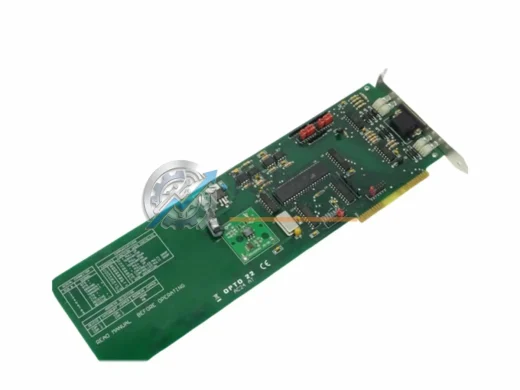
OPTO 22 001818K-AC24-AT G4 Discrete Input Module AC 24V replacement & upgrade. Compatible wiring, rack, and protocol. 12-month warranty. Fast global shipping.
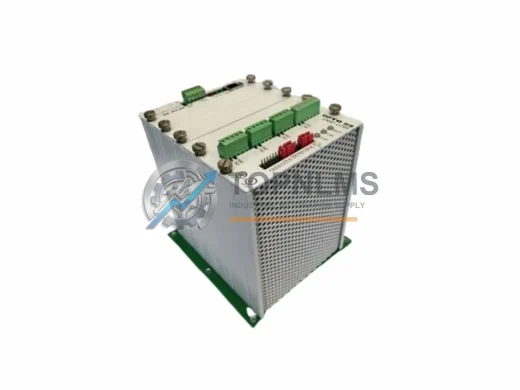
OPTO 22 SNAP-LCM4-M4SENET-100 original SNAP I/O Ethernet LCM spare. Drop-in replacement for SNAP-LCM4 series. Tested, 12-month warranty, fast shipment.
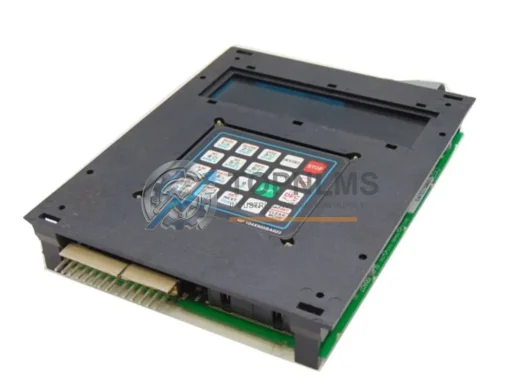
GE NP 104X905BA603 ruggedized membrane keypad panel for Mark IV/V turbine control. EMI-resistant, industrial-grade. In stock, tested, 12-month warranty.
Click Quote This Model and the Part Number field will auto-fill with SNAP-AIV.