
Omron
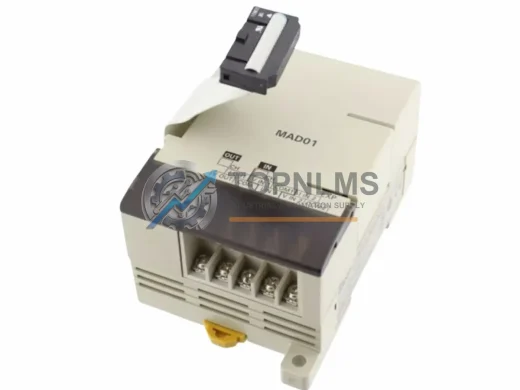
OMRON CPM1A-MAD01 Original Industrial Spare CPM1A Compatible
CPM1A-MAD01OMRON CPM1A-MAD01 original analog I/O expansion module. CPM1A series compatible industrial replacement. Tested, 12-month warranty. Fast worldwide shipping.
Request availability, condition, lead time and export shipping details for SRT2-VOD16ML-1.
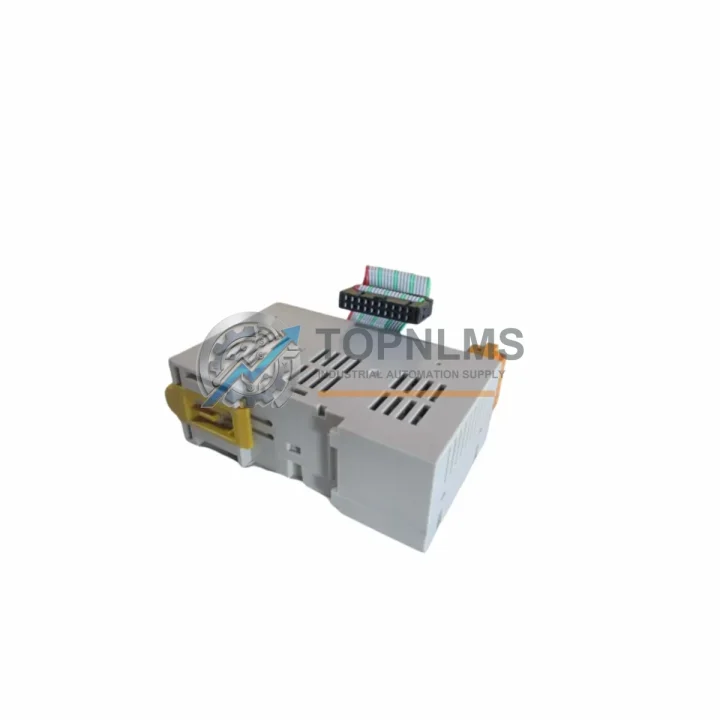
Send this exact part number, quantity and destination country. TOPNLMS will confirm availability, condition and export lead time before quotation.
The OMRON SRT2-VOD16ML-1 is a CompoBus/S (DeviceNet-compatible) NPN transistor 16-point digital output slave module from OMRON’s SRT2 Series. As industrial facilities worldwide accelerate migration away from aging SYSMAC C-series and CQM1 controllers toward modern CJ2M, CS1D, and NX1P2 platforms, the SRT2-VOD16ML-1 continues to serve as a critical field-level I/O node — and sourcing a verified replacement or upgrade-compatible unit is essential to maintaining production continuity.
At TOPNLMS, we stock the SRT2-VOD16ML-1 specifically to support engineers and procurement teams executing phased retrofits, emergency replacements, and system expansions. Every unit ships with a 12-month warranty, pre-shipment functional verification, and full documentation support.
| Parameter | SRT2-VOD16ML-1 (This Unit) | Typical Legacy / Replaced Models |
|---|---|---|
| Series | OMRON SRT2 (CompoBus/S) | SRT1 Series, C200H Remote I/O |
| Output Type | NPN Transistor, 16 Points | Relay or PNP variants (SRT2-VOD16ML) |
| Communication Protocol | CompoBus/S (High-speed / Long-distance mode) | SYSMAC BUS, C-series Remote I/O |
| Wiring Interface | MIL connector (ML suffix) | Screw terminal (SRT2-VOD16-1) |
| Output Voltage | 12–24 VDC | 12–24 VDC (compatible) |
| Max Output Current | 0.5 A per point | 0.3–0.5 A (verify per legacy model) |
| Node Address Setting | Rotary switch (0–63) | DIP switch (SRT1 series) |
| Installation | DIN rail or panel mount | DIN rail (same footprint as SRT2 family) |
| Compatible Master Units | SRM1, CS1W-SRM21, CJ1W-SRM21, CQM1-SRM21 | C200HW-SRM21, SRM1-C02 |
| Replacement Recommendation | Direct drop-in for SRT2-VOD16-1 (screw→ML adapter required) | SRT1-VOD16 requires node address reconfiguration |
| Warranty | 12 Months — Covered by TOPNLMS from date of shipment | |
A successful migration to or around the SRT2-VOD16ML-1 rarely involves a single component. In practice, field engineers replacing aging CompoBus/S nodes typically address the entire I/O subsystem in a coordinated sequence. When the SRT2-VOD16ML-1 is installed as a replacement output slave, the upstream CJ1W-SRM21 CompoBus/S Master Unit must be confirmed compatible and its node table updated to reflect the new slave address allocation. If the existing master is a legacy C200HW-SRM21, this retrofit is an ideal opportunity to migrate the master to a CJ2M or CS1D rack, using the CS1W-SRM21 as the new CompoBus/S master while retaining all existing SRT2-series slaves in the field — dramatically reducing rewiring scope.
On the power supply side, the SRT2-VOD16ML-1 requires a stable 24 VDC I/O power feed. If the control cabinet’s existing S8VS-series or S8JX-series power supply is undersized for the expanded I/O load, this is the time to upsize. The module’s MIL connector wiring harness should also be inspected: if the legacy installation used screw-terminal SRT2-VOD16-1 units, a MIL-to-screw terminal adapter block (such as the XW2B or XW2D series) eliminates the need to re-terminate field wiring, preserving existing cable runs and reducing commissioning time significantly.
For systems where the CompoBus/S network also carries input data, the companion SRT2-ID16ML-1 NPN 16-point input slave is the natural pairing — sharing the same MIL connector format, DIN rail footprint, and node address scheme. Mixed installations often include SRT2-ROC08 relay output slaves for high-current or AC-load switching alongside the transistor output modules. Where analog signals are present in the same cabinet, the SRT2-AD04 analog input slave integrates directly into the same CompoBus/S segment without requiring a separate fieldbus gateway.
Programming changes during this migration are minimal when the master platform is retained. The OMRON CX-Programmer or Sysmac Studio environment maps CompoBus/S slave I/O directly to PLC memory words; replacing a slave at the same node address requires only a network scan refresh, not a full program rewrite. If the migration involves moving from a CQM1 or C200H controller to a CJ2M, the CJ1W-PA202 or CJ1W-PA205R power supply unit and the appropriate CJ-series CPU backplane are typically part of the same BOM. Engineers should also verify that the CS1W-CN226 or CJ1W-CN226 programming cable is available on-site for initial commissioning and node diagnostics.
For installations where signal isolation between the CompoBus/S network and field devices is required — particularly in environments with heavy motor drives, inverters, or welding equipment — inline signal isolators or surge suppressors on the output wiring protect the SRT2-VOD16ML-1’s transistor outputs and extend service life between replacements.
Q: Can the SRT2-VOD16ML-1 replace an SRT2-VOD16-1 (screw terminal version) directly?
A: Electrically and functionally, yes. The output specifications, node address range, and CompoBus/S protocol behavior are identical. The only difference is the wiring connector: the ML suffix denotes a MIL (multi-pin inline) connector rather than screw terminals. Use an XW2B or XW2D terminal block adapter to connect existing screw-terminated field wiring to the MIL connector without re-terminating cables.
Q: Does replacing this slave require changes to the PLC program?
A: No program changes are required if the replacement unit is configured to the same node address as the original. The CompoBus/S master automatically maps the slave’s 16 output points to the same PLC memory words. After installation, perform a network scan in CX-Programmer or Sysmac Studio to confirm the slave is recognized, then verify output forcing in maintenance mode before returning to production.
Q: Is the SRT2-VOD16ML-1 compatible with both High-speed and Long-distance CompoBus/S modes?
A: Yes. The SRT2 series supports both operating modes. High-speed mode supports up to 32 nodes at 750 kbps; Long-distance mode supports up to 32 nodes at 93.75 kbps with extended cable runs up to 500 m. The mode is set at the master unit (e.g., CJ1W-SRM21), not at the slave — so no configuration change is needed on the SRT2-VOD16ML-1 itself when switching modes.
Q: What is the physical installation space requirement?
A: The SRT2-VOD16ML-1 mounts on standard 35 mm DIN rail. Its compact form factor is identical to other SRT2-series slaves, allowing direct slot-for-slot replacement in existing control cabinet layouts without panel modification. Ensure adequate clearance above and below the module for the MIL connector and wiring harness routing.
Q: Can this module be used with a DeviceNet master instead of a CompoBus/S master?
A: No. CompoBus/S and DeviceNet are distinct protocols despite sharing physical layer similarities. The SRT2-VOD16ML-1 is a CompoBus/S slave only and requires a CompoBus/S master unit (SRM1, CS1W-SRM21, CJ1W-SRM21, or CQM1-SRM21). For DeviceNet integration, OMRON’s DRT2-series slaves are the appropriate product family.
Q: What diagnostics are available if the module does not communicate after installation?
A: The SRT2-VOD16ML-1 provides onboard LED indicators for power (PWR), communication (COMM), and error (ERR) status. A solid ERR LED typically indicates a node address conflict or baud rate mismatch. Use CX-Programmer’s Network Configurator or the master unit’s built-in diagnostics to scan the CompoBus/S segment and identify the fault node. TOPNLMS technical support is available to assist with commissioning troubleshooting within the warranty period.
Every SRT2-VOD16ML-1 unit shipped by TOPNLMS is covered by a 12-month warranty from the date of shipment. Our pre-shipment inspection process includes:
If a unit fails within the 12-month warranty period due to a manufacturing defect or verified functional fault, TOPNLMS will arrange a replacement shipment at no additional cost. Our after-sales response target is within 24 hours of a warranty claim submission. For urgent production-down situations, we prioritize expedited dispatch from our Xiamen warehouse.
Procurement teams can request a Certificate of Conformance (CoC), batch test report, or country-of-origin documentation (Japan) at the time of order. We support standard B2B purchase order workflows, proforma invoice issuance, and TT/wire transfer payment terms for qualified buyers.
For volume orders, blanket PO arrangements, or consignment stocking of SRT2-series CompoBus/S modules, contact our industrial automation procurement team directly.
OMRON CPM1A-MAD01 original analog I/O expansion module. CPM1A series compatible industrial replacement. Tested, 12-month warranty. Fast worldwide shipping.
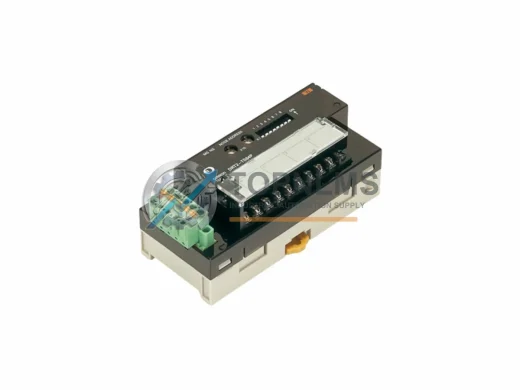
Buy OMRON DRT2-TS04P original industrial spare. 4-ch PNP thermocouple input, DRT2 series DeviceNet compatible. 12-month warranty. Fast global shipping.
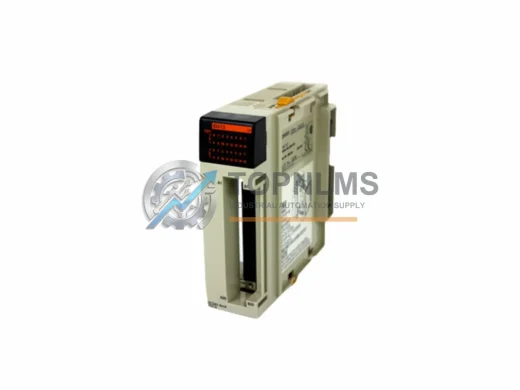
OMRON CQM1-ID213 original 16-point 24VDC DC input module for CQM1 PLC systems. Industrial replacement spare, compatibility verified, 12-month warranty. Ships fast.
OMRON C500-AD501-EU 4-ch analog input module. Drop-in replacement & upgrade for SYSMAC C500 series. 12-month warranty. Fast global shipping from Xiamen.
Click Quote This Model and the Part Number field will auto-fill with SRT2-VOD16ML-1.